Introduction
Imagine stepping into a world bathed in dappled sunlight, where colors dance and shimmer with an ethereal quality. This is the realm of Impressionism – a revolutionary art movement that forever altered how we perceive light, color, and the very essence of landscape painting.
Born in 19th-century France, Impressionism arose as a defiant response to the rigid academic traditions of the Salon system. A group of artists—Claude Monet, Edgar Degas, Pierre-Auguste Renoir, Camille Pissarro, and others—rejected the meticulous detail and historical or mythological subject matter favored by the establishment. Instead, they ventured en plein air – outdoors – to capture fleeting moments in nature directly on canvas.
Their canvases weren’t meant to be photographic representations of reality; rather, they were impressions – subjective experiences translated into vibrant brushstrokes and a celebration of light's ephemeral effects. This radical approach initially met with scorn and ridicule from critics who deemed their work unfinished or lacking in skill. Yet, these artists persevered, driven by a desire to portray the world as they saw it—a world alive with movement, color, and atmosphere.
The Impressionist Landscape wasn’t simply about depicting pretty scenes; it was a profound shift in artistic consciousness. It reflected a changing society – the rise of leisure culture, the impact of industrialization, and a growing fascination with modern life. These artists sought to capture not just what they saw, but how they saw it—the emotional resonance of a particular place and time.
Today, these masterpieces continue to captivate us with their beauty, innovation, and enduring power. They remind us to slow down, observe the world around us with fresh eyes, and appreciate the fleeting moments that make life so precious. Join us as we embark on a journey through ten iconic artworks that defined the Impressionist Landscape movement—each one a testament to the artists’ vision and their unwavering commitment to capturing the magic of light and color.
The Banks of the River Epte at Giverny - Claude Monet
 The Banks of the River Epte at Giverny - Claude Monet
A shimmering dance of sunlight on water—Claude Monet’s “The Banks of the River Epte at Giverny” is not simply a painting, but an invitation to lose oneself in a moment of pure Impressionistic bliss.
Painted in 1887, this work encapsulates everything that defines the movement: broken brushstrokes capturing the ephemeral quality of light, vibrant color palettes reflecting nature’s subtle shifts, and a rejection of academic rigidity in favor of subjective experience. Monet wasn't striving for photographic realism; he sought to convey the *feeling* of being there—the warmth of the sun on your skin, the gentle rustle of leaves, the tranquil flow of the river.
The scene, located in Giverny – Monet’s beloved home and garden – became a living laboratory for his artistic explorations. The interplay of warm yellows and oranges with cooler greens creates an optical vibrancy that seems to breathe on the canvas. This technique, pioneered by artists like Eugène Boudin, allows colors to blend not on the palette but within the viewer's eye, resulting in a uniquely immersive experience.
“The Banks of the River Epte at Giverny” continues to resonate today, inspiring interiors that prioritize natural light and soothing color palettes. It’s a reminder that beauty lies not in perfection, but in capturing the fleeting moments of everyday life—a philosophy perfectly suited for creating serene and inviting living spaces.
The Esterel Mountains - Claude Monet
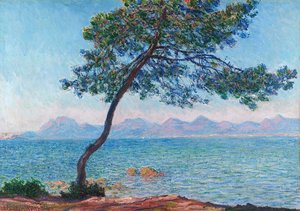 The Esterel Mountains - Claude Monet
To gaze upon Claude Monet’s “The Esterel Mountains” is to be transported—not merely to a specific location, but to a state of serene contemplation. Painted in 1888 during his travels along the French Riviera, this landscape isn't simply a depiction of mountains and sea; it’s an evocation of light itself.
What sets this work apart is Monet’s audacious embrace of fleeting impressions. He abandoned meticulous detail for broken brushstrokes—a technique honed with Eugène Boudin—allowing individual colors to shimmer and blend optically, creating a sense of movement and atmosphere that feels remarkably alive. The vibrant palette, dominated by blues, greens, and purples, captures the unique luminosity of the Mediterranean coastline.
The composition, anchored by a solitary tree leaning towards the ocean, speaks to both resilience and vulnerability—a subtle metaphor for the human condition. This painting exemplifies Monet’s ability to distill complex emotions into pure visual form, influencing generations of artists and shaping our very perception of landscape art.
At OriginalUniqueArt, we believe that masterpieces like “The Esterel Mountains” should be accessible to all. Our handmade oil reproductions faithfully capture the texture, color, and emotional depth of Monet’s original vision, allowing you to bring a touch of Impressionist serenity into your own home—a lasting reminder of the beauty found in fleeting moments.
The Jetty of Le Havre in Rough Weather - Claude Monet
 The Jetty of Le Havre in Rough Weather - Claude Monet
Imagine the salt spray on your face, the cries of gulls overhead, and the relentless energy of a churning sea—this is the world Claude Monet invites you into with “The Jetty of Le Havre in Rough Weather.” Painted in 1867, this early masterpiece isn’t merely a seascape; it's an emotional response to nature’s power.
Unlike the idealized landscapes of earlier generations, Monet captured the raw, untamed beauty of the harbor at Le Havre. His bold brushstrokes and vivid color palette—a departure from academic convention—convey the dynamic movement of water and sky with remarkable immediacy. The painting's strength lies in its ability to evoke a sense of both awe and vulnerability.
“The Jetty of Le Havre” was pivotal in Monet’s artistic development, marking his embrace of Impressionistic techniques that would revolutionize art history. It demonstrates his fascination with capturing fleeting moments—the way light dances on the waves, the shifting hues of the sky—and transforming them into enduring beauty.
Today, this painting continues to inspire a sense of calm and contemplation. A OriginalUniqueArt reproduction allows you to bring that same energy into your home—a faithful rendering of Monet’s vision, preserving the texture, color, and emotional depth of the original. It's a reminder that even in the midst of turbulence, there is beauty to be found.
A Seascape, Shipping by Moonlight - Claude Monet
 A Seascape, Shipping by Moonlight - Claude Monet
Close your eyes and imagine a cool breeze on your skin, the gentle lapping of waves against the shore, and the silvery glow of moonlight illuminating the water—this is the atmosphere Claude Monet masterfully evokes in “A Seascape, Shipping by Moonlight.” Painted in 1864, this early work isn’t simply a depiction of boats at sea; it's an invitation to experience the tranquility of a Normandy night.
What sets this painting apart is its revolutionary approach to capturing light and atmosphere. Monet, guided by his mentor Eugène Boudin, abandoned meticulous detail in favor of loose brushstrokes and vibrant color palettes—a technique that would become synonymous with Impressionism. The subtle interplay of blues, grays, and violets creates a sense of depth and luminosity, drawing the viewer into the scene.
“A Seascape, Shipping by Moonlight” is significant as one of Monet’s earliest explorations of plein air painting—a practice that fundamentally changed how artists approached landscape art. It demonstrates his commitment to capturing fleeting moments and transforming them into enduring beauty.
At OriginalUniqueArt, we believe that masterpieces like this should be accessible to all. Our handmade oil reproductions faithfully capture the texture, color, and emotional depth of Monet’s original vision, allowing you to bring a touch of Impressionist serenity into your own home—a lasting reminder of the beauty found in the quiet moments of life.
Jean-Pierre Hoschedé and Michel Monet on the Bank of the Epte - Claude Monet
 Jean-Pierre Hoschedé and Michel Monet on the Bank of the Epte - Claude Monet
Imagine a warm afternoon sun dappling through leaves, the gentle murmur of a river, and the quiet companionship of loved ones—this is the essence of Claude Monet’s “Jean-Pierre Hoschedé and Michel Monet on the Bank of the Epte.” Painted in 1890, this work isn't simply a portrait; it’s an intimate glimpse into a cherished moment.
What sets this painting apart is its ability to capture the fleeting beauty of everyday life. Monet, at the height of his Impressionistic powers, employed loose brushstrokes and a vibrant palette—dominated by greens and blues—to convey the immediacy of observation. The light shimmers on the water’s surface, creating an atmosphere of tranquility and peace.
This painting is particularly poignant as it depicts Monet with his stepdaughter Blanche Hoschedé, near Giverny – a location that became synonymous with his artistic vision. It exemplifies Impressionism's core philosophy: capturing subjective experience rather than objective reality.
A OriginalUniqueArt reproduction allows you to bring this same sense of calm and contemplation into your home—a faithful rendering of Monet’s vision, preserving the texture, color, and emotional depth of the original. It’s a reminder that beauty can be found in the simplest moments, shared with those we cherish.
Wheat Field with Cypresses - vincent willem van gogh
 Wheat Field with Cypresses - Vincent Willem van Gogh
A silent symphony of golden wheat and swirling skies—Vincent van Gogh’s “Wheat Field with Cypresses” isn't merely a landscape; it’s a window into the artist’s soul.
Painted in 1889 during his stay at Saint-Rémy, this work transcends Impressionistic representation. Van Gogh didn’t simply capture light and color; he infused them with raw emotion. The thick impasto—layers of paint applied with vigorous brushstrokes—creates a tactile surface that vibrates with energy, mirroring the artist's inner turmoil.
The towering cypress trees, traditionally symbols of mourning, reach towards the heavens, embodying both grief and aspiration. Their dark silhouettes against the luminous sky create a dramatic contrast that amplifies the painting’s expressive power. The golden wheat fields shimmer under the Provençal sun, offering a fleeting moment of serenity amidst despair.
A OriginalUniqueArt reproduction allows you to experience this masterpiece in your own home—a faithful rendering of Van Gogh’s vision, preserving the texture, color, and emotional depth that have captivated audiences for generations. It's a reminder that even in darkness, beauty can flourish.
The olive groves of l‘Estaque - Pierre-Auguste Renoir
 The olive groves of l‘Estaque - Pierre-Auguste Renoir
Imagine a gentle warmth on your skin, the scent of olive blossoms carried on the breeze—this is the feeling Pierre-Auguste Renoir captures in “The Olive Groves of l’Estaque.” Painted in 1882, this work isn't simply a depiction of Provence; it’s an invitation to experience the tranquility of the French countryside.
What sets this painting apart is its unique blend of Impressionistic techniques and structural form. Renoir, inspired by his friend Cézanne, employed parallel horizontal brushstrokes to represent nature with a sense of solidity and depth. The soft sunlight bathes the landscape in a luminous glow, creating an atmosphere of serene contemplation.
“The Olive Groves of l’Estaque” is significant as it marks a pivotal moment in Renoir’s artistic development—a dialogue between Impressionism's fleeting impressions and Cézanne’s emphasis on form. It exemplifies the artist’s commitment to capturing not just what he saw, but how he *felt*.
A OriginalUniqueArt reproduction allows you to bring this same sense of calm into your home—a faithful rendering of Renoir’s vision, preserving the texture, color, and emotional depth that have captivated audiences for generations. It's a reminder that beauty can be found in the simplest moments, surrounded by nature’s tranquility.
untitled (6729) - Claude Monet
 untitled (6729) - Claude Monet
Imagine a gentle sea breeze on your skin, the warmth of the sun filtering through an umbrella—this is the feeling Claude Monet captures in “Untitled” (6729). Painted circa 1886, this work isn’t simply a beach scene; it's an embodiment of Impressionism itself—a distillation of fleeting moments captured with unparalleled sensitivity.
What sets this painting apart is its masterful use of light and color. Monet, at the height of his powers in Giverny, employed his signature “broken color” technique—applying small strokes of pure pigment alongside each other—to create a vibrant atmosphere despite the overall muted palette. The soft haze subtly blurs the boundaries between sea and sky, inviting contemplation.
“Untitled” is significant as it exemplifies Impressionism’s rejection of academic conventions. Monet wasn't striving for photographic accuracy; instead, he sought to convey the *impression* of a summer day—the feeling of respite, the tranquility of natural surroundings. It reminds us that beauty can be found in the simplest moments.
At OriginalUniqueArt, we believe that masterpieces like this should be accessible to all. Our handmade oil reproductions faithfully capture the texture, color, and emotional depth of Monet’s original vision, allowing you to bring a touch of Impressionist serenity into your own home—a lasting reminder of the beauty found in fleeting moments.
Woman in an Orchard, Spring Sunshine in a Field, Eragny - Camille Pissarro
 Woman in an Orchard, Spring Sunshine in a Field, Eragny - Camille Pissarro
Imagine a gentle warmth on your skin, the scent of blossoms carried on the breeze—this is the feeling Camille Pissarro captures in “Woman in an Orchard, Spring Sunshine in a Field.” Painted in 1887, this work isn’t simply a depiction of rural life; it's an embodiment of Impressionism itself—a distillation of fleeting moments captured with unparalleled sensitivity.
What sets this painting apart is its ability to convey the emotional resonance of springtime. Pissarro, a master observer, employed loose brushstrokes and a vibrant palette—dominated by yellows and blues—to create a luminous atmosphere that evokes warmth and optimism. The dappled sunlight filtering through the orchard trees shimmers on the canvas, inviting contemplation.
“Woman in an Orchard” is significant as it exemplifies Impressionism’s embrace of modern life and its dedication to capturing subjective experience. Pissarro wasn't striving for photographic accuracy; instead, he sought to convey the *feeling* of being there—the tranquility of nature, the joy of a sunny day.
A OriginalUniqueArt reproduction allows you to bring this same sense of calm into your home—a faithful rendering of Pissarro’s vision, preserving the texture, color, and emotional depth that have captivated audiences for generations. It's a reminder that beauty can be found in the simplest moments, surrounded by nature’s tranquility.
Springtime - Claude Monet
 Springtime - Claude Monet
Close your eyes and imagine a gentle breeze rustling through blossoms, sunlight dappling on green grass—this is the feeling Claude Monet captures in *Springtime*. Painted in 1886, this work isn’t simply a depiction of a garden; it's an embodiment of Impressionism itself—a distillation of fleeting moments captured with unparalleled sensitivity.
What sets this painting apart is its masterful use of light and color. Monet employed loose brushstrokes and a vibrant palette to create a luminous atmosphere that evokes warmth and optimism. The interplay between sunlight and shadow, the subtle shifts in hue – these aren’t merely decorative; they convey the *feeling* of being immersed in spring.
*Springtime* is significant as it exemplifies Impressionism’s rejection of academic conventions. Monet wasn't striving for photographic accuracy; instead, he sought to capture the ephemeral qualities of light and color as they shifted throughout the day—a core principle of the movement.
At OriginalUniqueArt, we believe that masterpieces like this should be accessible to all. Our handmade oil reproductions faithfully capture the texture, color, and emotional depth of Monet’s original vision, allowing you to bring a touch of Impressionist serenity into your own home—a lasting reminder of the beauty found in fleeting moments.
Conclusion
As the light fades on our journey through these ten masterpieces, we’re left with more than just a collection of beautiful images—we carry echoes of sun-drenched fields, gentle breezes, and the quiet contemplation of nature. These paintings aren't simply relics of the past; they are living presences that continue to shape how we see the world around us.
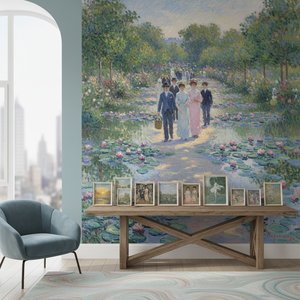
The Impressionists dared to capture not just *what* they saw, but *how* they felt—a revolutionary act that continues to resonate today. Their legacy extends far beyond museum walls, influencing everything from interior design to our own personal expressions of beauty and emotion. A Monet lily pond in your living room isn’t merely a decorative element; it's an invitation to experience the tranquility of Giverny, a moment of peace captured for eternity.
These artworks remind us that beauty can be found in the simplest moments—a fleeting ray of sunlight, the gentle sway of trees, the warmth of human connection. They invite us to slow down, observe, and appreciate the world around us with fresh eyes. And at OriginalUniqueArt, we are honored to play a small part in bringing these timeless visions into your homes, allowing you to experience their magic every day.
Explore our full collection and discover the Impressionist masterpiece that speaks to your soul. May it bring light, joy, and a touch of serenity into your life for years to come.