Introduction
Step into a world bathed in light, where fleeting moments are captured with breathtaking immediacy. The Impressionist movement, born from a rebellion against academic tradition, remains one of the most beloved and influential chapters in art history. These weren't artists striving for photographic realism; they sought to convey the sensation of a scene – the play of sunlight on water, the vibrancy of a bustling street, the ephemeral quality of atmosphere.
Emerging in France during the latter half of the 19th century, Impressionism coincided with a period of rapid social and technological change. The invention of portable paint tubes allowed artists to escape the confines of their studios and work en plein air – directly before their subjects. Simultaneously, the rise of photography challenged the very notion of painting’s role as a purely representational medium. Artists like Monet, Renoir, Degas, and others responded by embracing subjectivity, focusing on personal perception rather than objective reality.
Initially met with ridicule from critics who dismissed their work as “unfinished” or “sketchy,” the Impressionists persevered, organizing independent exhibitions that gradually garnered attention and acceptance. Their radical techniques – broken brushstrokes, vibrant color palettes, and an emphasis on light and shadow – paved the way for modern art.
But why do these paintings continue to resonate with us today? Beyond their aesthetic beauty, they offer a glimpse into a specific time and place, evoking a sense of nostalgia and wonder. They remind us to appreciate the simple joys of life, to find beauty in the everyday, and to embrace the power of individual expression.
Join us as we embark on a journey through ten masterpieces that define the Impressionist style – artworks that not only revolutionized painting but continue to inspire awe and captivate audiences worldwide. Prepare to be transported to sun-drenched gardens, lively cafes, and shimmering waterways, where the magic of Impressionism comes alive.
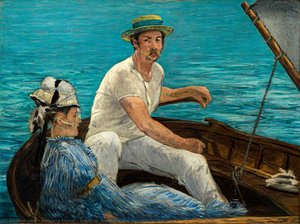
Boating, Metropolitan Museum of Art, New York - Édouard Manet
 Boating, Metropolitan Museum of Art, New York - Édouard Manet
To encounter Édouard Manet’s “Boating” at the Metropolitan Museum of Art is to stand before a quiet revolution, a painting that whispers rather than shouts its importance. This 1874 work isn't simply a depiction of leisure; it’s a pivotal moment in the transition from Realism to Impressionism , and a testament to Manet’s singular vision.
What sets “Boating” apart is its masterful capture of light and atmosphere. Observe how Manet doesn't meticulously detail every ripple or fold of fabric, but instead conveys the impression of sunlight dancing on the Seine. The broken brushstrokes, a hallmark of the Impressionist style , create a tactile surface that seems to shimmer before your eyes. This wasn’t about photographic accuracy; it was about evoking a feeling – the warmth of a summer afternoon, the gentle rocking of the boat, the quiet companionship shared between the figures.
The composition itself is deceptively simple, yet profoundly effective. The horizontal lines of water and sky create a sense of stability, while the vertical elements—the oar and the boat’s sides—add a subtle dynamism. A harmonious palette of cool blues and greens contrasts beautifully with warmer earthy tones, drawing the eye to the figures and enhancing the overall feeling of serenity.
“Boating” continues to captivate because it speaks to our universal desire for tranquility and connection. It’s a painting that feels both timeless and deeply personal – a reminder that even in the simplest moments, there is beauty to be found. For those seeking to infuse their interiors with refined aesthetics , this masterpiece offers a touch of understated elegance and enduring legacy .
Jeanne Samary - Pierre-Auguste Renoir
 Jeanne Samary - Pierre-Auguste Renoir
To gaze upon these ten masterpieces is to step directly into a world transformed by light – a world where fleeting moments are captured with an immediacy and vibrancy that continues to resonate across centuries. The Impressionist movement, born in the rebellious spirit of 19th-century France, wasn’t merely a shift in artistic technique; it was a fundamental reimagining of how we perceive reality itself.
Rejecting the rigid academic traditions and historical or mythological subjects favored by the Salon establishment, artists like Monet, Renoir, Degas, and Cassatt turned their attention to the everyday – bustling cityscapes, tranquil gardens, intimate portraits, and the shimmering effects of sunlight on water. This was a period of rapid social change, fueled by industrialization and urbanization. The rise of photography also challenged painting’s traditional role as a precise recorder of reality, freeing artists to explore subjective experience and personal interpretation.
These weren't paintings *of* things, but paintings *about* light, color, and atmosphere. They sought to convey the impression of a scene – a momentary glimpse, a sensory feeling – rather than meticulous detail. The brushstrokes are visible, often broken and unblended, creating a textured surface that seems to vibrate with life. This radical approach initially met with scorn and derision; critics dismissed their work as unfinished sketches. Yet, the Impressionists persevered, driven by an unwavering belief in their vision.
Today, these artworks hold a profound power because they speak directly to our own experience of the world. They remind us to slow down, to observe the beauty in the ordinary, and to appreciate the ephemeral nature of time and light. They invite us not just to *see* but to feel – to be transported by the warmth of a summer afternoon, the energy of a crowded café, or the quiet intimacy of a domestic scene.
Prepare to embark on a journey through ten iconic paintings that not only defined the Impressionist style but continue to inspire and captivate audiences worldwide. Each work represents a pivotal moment in this revolutionary movement, offering a unique window into the minds and hearts of these extraordinary artists.
Bouquet of Flowers in an Earthenware Pitcher - Pierre-Auguste Renoir
 Bouquet of Flowers in an Earthenware Pitcher - Pierre-Auguste Renoir
Imagine stepping into a world bathed in dappled sunlight, where colors dance and shimmer, and fleeting moments are captured with breathtaking immediacy. This is the essence of Impressionism – a revolutionary art movement that forever changed how we perceive light, color, and the very act of painting itself.
Born in 19th-century France, Impressionism arose as a defiant response to the rigid academic traditions of the Salon system. Artists like Monet, Renoir, Degas, and Pissarro rejected the meticulous detail and historical or mythological subject matter favored by the establishment. Instead, they ventured outdoors – en plein air – to paint directly from nature, seeking to capture the ephemeral qualities of light and atmosphere.
The cultural landscape of the time was undergoing rapid transformation. The rise of photography challenged painting’s role as a purely representational medium, prompting artists to explore new avenues of expression. Simultaneously, advancements in color theory revealed the power of juxtaposing pure hues to create vibrant optical effects. These influences converged, giving birth to a style characterized by loose brushstrokes, unconventional compositions, and an emphasis on subjective experience.
But why do these paintings – created over 150 years ago – continue to resonate so powerfully today? They offer more than just beautiful scenes; they invite us to see the world anew. To pause, observe, and appreciate the subtle nuances of light and color that often go unnoticed. They remind us of the beauty in everyday life, the joy of a fleeting moment, and the power of art to evoke emotion.
Over the next few pages, we’ll embark on a journey through ten masterpieces that define the Impressionist style. Each artwork represents a pivotal moment in the movement's evolution, showcasing the unique vision and technical brilliance of its leading practitioners. Prepare to be captivated by the shimmering surfaces, evocative atmospheres, and enduring legacy of these iconic paintings.
Suzanne Valadon - Pierre-Auguste Renoir
 Suzanne Valadon - Pierre-Auguste Renoir
Imagine stepping into a world bathed in dappled sunlight, where colors dance and shimmer with an almost ethereal quality. This is the realm of Impressionism – a revolutionary art movement that dared to capture not just *what* was seen, but *how* it was perceived, fleeting moments of light and atmosphere rendered with breathtaking immediacy.
Born in 19th-century France, Impressionism arose as a defiant response against the rigid academic traditions that dominated the art world. Artists like Monet, Renoir, Degas, and others rejected the polished perfection of historical painting, choosing instead to paint *en plein air* – outdoors, directly from nature. This radical shift wasn’t merely about technique; it was a reflection of a rapidly changing society, fueled by industrialization, urbanization, and a growing fascination with modern life.
The Impressionists weren't interested in grand narratives or allegorical symbolism. They sought to portray the everyday – bustling city streets, tranquil landscapes, intimate portraits – focusing on the ephemeral qualities of light and color that define our sensory experience. Their loose brushstrokes and vibrant palettes were initially met with scorn from critics who dismissed their work as unfinished sketches. Yet, these very qualities are what give Impressionist paintings their unique vitality and emotional resonance.
Today, these masterpieces continue to captivate us not only for their aesthetic beauty but also for the profound sense of atmosphere they evoke. They offer a glimpse into a bygone era, yes, but more importantly, they remind us to appreciate the fleeting moments of beauty that surround us – the warmth of sunlight on our skin, the gentle sway of trees in the breeze, the vibrant energy of human connection.
Join us as we embark on a journey through ten iconic artworks that defined the Impressionist style, each painting a testament to the power of observation, emotion, and the enduring allure of light. Prepare to be transported to a world where color reigns supreme and every brushstroke tells a story.
Chrysanthemums - Claude Monet
 Chrysanthemums - Claude Monet
Imagine stepping into a world bathed in dappled sunlight, where colors dance and shimmer with an almost ethereal quality. This is the essence of Impressionism – a revolutionary art movement that dared to capture not just what the eye sees, but how it perceives light, atmosphere, and fleeting moments in time. The ten masterpieces we’re about to explore aren't merely paintings; they are portals into a specific cultural moment, a rebellion against academic tradition, and a profound shift in how artists approached their craft.
Born in the mid-19th century France, Impressionism arose as a direct response to the rigid constraints of the Salon system – the official art exhibition that dictated artistic taste. Artists like Monet, Renoir, Degas, and others rejected the historical and mythological subjects favored by the establishment, instead turning their gaze towards modern life: bustling cityscapes, tranquil landscapes, intimate portraits, and everyday scenes. Their canvases became laboratories for exploring the effects of light and color, often painted en plein air – directly outdoors – to capture the immediacy of their observations.
These artists weren't simply documenting reality; they were interpreting it through a subjective lens, prioritizing personal experience over precise representation. The brushstrokes became looser, more visible, and intentionally fragmented, creating an impression of movement and vibrancy. This radical approach was initially met with scorn and ridicule from critics who deemed their work unfinished or lacking in skill.
Yet, despite the initial resistance, Impressionism quickly gained momentum, captivating audiences with its fresh perspective and evocative power. Today, these artworks continue to resonate deeply because they speak to something fundamental within us – a longing for beauty, a fascination with the ephemeral nature of time, and an appreciation for the simple joys of life. Over the next few moments, we will journey through ten iconic paintings that not only defined the Impressionist style but also forever changed the course of art history, inviting you to experience their magic firsthand.
Girl Reading - Pierre-Auguste Renoir
 Girl Reading - Pierre-Auguste Renoir
Imagine stepping into a world bathed in dappled sunlight, where colors dance and shimmer with an almost ethereal quality. This is the essence of Impressionism – a revolutionary art movement that dared to capture not just *what* was seen, but *how* it was perceived.
Born in 19th-century France, Impressionism arose as a rebellion against the rigid academic traditions of the time. Artists like Monet, Renoir, and Degas rejected the precise realism favored by the Salon, instead embracing fleeting moments, open air painting ( plein air ), and the subjective experience of light and color. It was a period of rapid social and technological change – the rise of photography challenged traditional notions of representation, while advancements in paint production allowed for greater experimentation with texture and hue.
These weren’t merely paintings; they were impressions—snapshots of a feeling, an atmosphere, a specific time of day. The movement faced initial scorn from critics who dismissed the works as unfinished or lacking in skill. Yet, these artists persevered, driven by a desire to authentically represent their world.
Today, Impressionist masterpieces continue to captivate and inspire us. They offer a glimpse into a bygone era, but more importantly, they remind us of the beauty inherent in everyday life—the gentle sway of water lilies, the bustling energy of Parisian streets, the intimate glow of a sun-drenched garden. The emotional resonance of these works transcends time, inviting us to connect with the artists’ vision and experience the world anew.
Join us as we embark on a journey through ten iconic artworks that defined the Impressionist style, exploring the stories behind them and uncovering the enduring legacy of this remarkable movement. Prepare to be transported by color, light, and the magic of a fleeting moment captured forever on canvas.
Still Life with Bouquet - Pierre-Auguste Renoir
 Still Life with Bouquet - Pierre-Auguste Renoir
Step into a world bathed in dappled sunlight, where fleeting moments are captured with breathtaking immediacy. The Impressionist movement, born in 19th-century France, wasn’t merely a shift in painting technique; it was a revolution in perception. Rejecting the rigid constraints of academic art, artists like Monet, Renoir, and Degas ventured outdoors – *en plein air* – to paint not what they knew objects to be, but what they saw them as, at a specific time, under a particular light.
This radical approach arose from a confluence of cultural shifts. The rise of photography challenged the traditional role of painting as a purely representational medium, while advancements in color theory liberated artists from conventional palettes. The burgeoning industrial revolution and urbanization also played a part; Impressionists often depicted scenes of modern life – bustling boulevards, railway stations, cafes – reflecting a changing society.
But beyond the historical context lies something profoundly human: a desire to capture the ephemeral beauty of existence. These artists weren’t interested in grand narratives or idealized forms; they sought to convey the sensation of being alive, the play of light on water, the warmth of a summer afternoon, the energy of a crowded street. The brushstrokes themselves became expressive, conveying movement and emotion with an unprecedented freedom.
Today, these masterpieces continue to resonate because they speak to our universal longing for beauty, connection, and authenticity. They remind us to slow down, observe the world around us, and appreciate the fleeting moments that make life so precious. Over the following pages, we’ll explore ten iconic works that not only defined the Impressionist style but also continue to inspire awe and wonder in viewers worldwide – a journey through light, color, and the enduring power of human perception.
Baudelaire de profil en chapeau - Édouard Manet
 Baudelaire de profil en chapeau - Édouard Manet
Imagine stepping into a world bathed in dappled sunlight, where colors dance and shimmer before your eyes—a realm captured not with meticulous detail, but with fleeting impressions of light and emotion. This is the essence of Impressionism, an art movement that irrevocably altered the course of painting history. For decades, artists had labored to depict reality with photographic precision; then came a radical shift: a focus on subjective experience, on how light itself shapes our perception.
Born in mid-19th century France, Impressionism arose as a rebellion against the rigid conventions of the Salon system and the academic art establishment. A group of artists—Monet, Renoir, Degas, Pissarro, Sisley, Morisot, and others—began to paint en plein air (outdoors), directly observing nature and striving to capture the ephemeral qualities of a moment in time. Their canvases weren’t meant to be perfect representations; they were explorations of color, light, and atmosphere. Initially met with scorn and ridicule – critics famously derided Monet's 'Impression, soleil levant' as merely a ‘sketch’—these artists persevered, driven by their vision.
The cultural context was one of rapid change: the rise of industrialization, urbanization, and photography all played a role. Photography challenged painting’s traditional role as a recorder of reality, freeing artists to explore more subjective forms of expression. The Impressionists embraced modern life—landscapes, city scenes, portraits of everyday people—rejecting historical or mythological subjects in favor of the world around them.
But why do these artworks continue to resonate so powerfully today? Perhaps it’s their ability to evoke a sense of nostalgia, a longing for beauty and tranquility. Perhaps it's the sheer joyfulness of color and light. Or perhaps it’s because they remind us that perception is subjective—that each of us experiences the world in our own unique way. Over the next few moments, we will embark on a journey through ten masterpieces that not only defined the Impressionist style but continue to inspire awe and wonder.
Prepare to be transported to sun-drenched gardens, bustling boulevards, and intimate scenes of Parisian life as we explore these iconic works—and discover the stories behind them. Let us begin…
Bather is Styling - Pierre-Auguste Renoir
 Bather is Styling - Pierre-Auguste Renoir
Imagine stepping into a world bathed in dappled sunlight, where colors dance and shimmer before your eyes, capturing not just what is seen, but the very impression of a fleeting moment. This is the essence of Impressionism – a revolutionary art movement that dared to break from tradition and embrace the subjective experience of light and color.
Born in the mid-19th century Paris, a city brimming with artistic ferment and social change, Impressionism arose as a reaction against the rigid academic standards of the Salon. Artists like Monet, Renoir, Degas, and Pissarro sought to depict modern life – not grand historical narratives or mythological scenes, but everyday moments: bustling boulevards, tranquil gardens, intimate portraits, and the ever-changing beauty of nature. They abandoned meticulous detail in favor of capturing the ephemeral qualities of light and atmosphere, often painting en plein air (outdoors) to directly observe these effects.
The initial reception was far from welcoming. Critics scoffed at their loose brushstrokes and unconventional compositions, labeling them as unfinished sketches rather than polished works of art. Yet, these artists persevered, driven by a shared vision and a desire to express the world as they truly saw it. Over time, their radical approach gained recognition, transforming the landscape of modern art.
Today, Impressionist masterpieces continue to captivate audiences with their vibrant energy, emotional resonance, and timeless beauty. They offer us a glimpse into a bygone era, but also speak to universal themes of perception, memory, and the human connection to nature. The following ten artworks represent pivotal moments in the movement’s evolution, each a testament to the power of capturing light, color, and the fleeting magic of life itself. Prepare to be transported – to experience not just paintings, but windows into another world, another time, another feeling.
The Village - Pierre-Auguste Renoir
 The Village - Pierre-Auguste Renoir
To gaze upon these ten canvases is to step directly into a world shimmering with light, color, and an unprecedented sense of immediacy. These aren’t simply paintings; they are captured moments – fleeting impressions of a rapidly changing Paris, and the artists who dared to see it anew.
The late 19th century was a period of immense upheaval. Industrialization reshaped cities, scientific advancements challenged traditional beliefs, and photography emerged as a rival medium, prompting painters to question their very purpose. Rejecting the rigid academic standards of the Salon, a group of artists – Monet, Renoir, Degas, Pissarro, Sisley, Morisot, and others – began working en plein air , directly observing nature and prioritizing the subjective experience of light and atmosphere over precise representation.
Initially met with scorn and ridicule, their work was dubbed “Impressionism” after Monet’s painting Impression, soleil levant . The name, intended as an insult, ultimately stuck. These artists weren't aiming to create photographic realism; they sought to convey the feeling of a scene – the way light dances on water, the bustling energy of a city street, the intimate warmth of domestic life.
But why do these paintings continue to resonate so powerfully today? Beyond their aesthetic beauty, they offer a glimpse into a pivotal moment in art history—a rebellion against convention and an embrace of individual perception. They remind us to slow down, observe the world around us with fresh eyes, and appreciate the ephemeral beauty that surrounds us.
Over the following pages, we will explore ten masterpieces that not only defined the Impressionist style but continue to inspire awe and wonder in viewers worldwide. Prepare to be transported to a Paris bathed in sunlight, where every brushstroke tells a story of innovation, passion, and a radical new way of seeing.
Conclusion
To gaze upon these ten masterpieces is to step into a world transformed by light, color, and a revolutionary spirit. The Impressionist movement, born in the heart of 19th-century France, was more than just a shift in artistic technique; it was a rebellion against tradition, a celebration of fleeting moments, and an embrace of subjective experience.
The mid-1800s saw Paris evolving—a city undergoing rapid modernization under Haussmann’s grand urban plan. This era of change fostered a new sensibility among artists who rejected the rigid academic standards of the Salon in favor of plein air painting, capturing the immediacy of their surroundings. They weren't interested in historical or mythological narratives; instead, they turned their attention to everyday life—landscapes, city scenes, portraits of friends and family—rendered with loose brushstrokes and vibrant palettes.
Initially met with scorn and ridicule from critics who deemed their work unfinished or lacking in skill, these artists persevered, driven by a shared vision. They organized independent exhibitions, challenging the established art world and paving the way for future generations of modern painters. Monet, Renoir, Degas, Cassatt, Pissarro… names that now resonate with timeless beauty were once considered radical.
But why do these paintings continue to captivate us today? Perhaps it’s their ability to evoke a sense of nostalgia—a longing for simpler times or the warmth of human connection. Or maybe it's the sheer joy they express, the celebration of light and color that lifts our spirits. These artworks remind us to slow down, to appreciate the beauty in the ordinary, and to see the world with fresh eyes.
Over the following pages, we will embark on a journey through ten iconic paintings that define the Impressionist style—each one a testament to the power of observation, innovation, and artistic freedom. Prepare to be transported to sun-drenched gardens, bustling boulevards, and intimate moments captured forever on canvas.