
Introduction
There are paintings that simply look beautiful, and then there are those rare works that reach into the chambers of your heart, stirring echoes of memories you didn’t even know you possessed. These are the artworks imbued with nostalgia – a bittersweet ache for times past, a longing for places we may never return to, or perhaps, for versions of ourselves we no longer are. This collection celebrates ten such masterpieces, each a portal to profound emotional resonance.
The power of art to evoke nostalgia isn’t accidental. Throughout history, artists have served as cultural memory-keepers, capturing the spirit of their age – its hopes, fears, and everyday realities. From the Romantic landscapes that idealized a vanishing rural world to the Impressionist glimpses of fleeting moments in modern life, paintings often function as visual time capsules. The very act of looking at these works can transport us, not just to a specific historical period, but also to deeply personal experiences connected to those times.
What makes an artwork truly nostalgic? It’s rarely about precise representation. More often, it's the atmosphere, the color palette, the subtle gestures of figures, or even the texture of the paint itself that unlocks a flood of feelings. These ten artworks, spanning centuries and styles, have consistently demonstrated this ability to transcend their historical context and speak directly to the human condition. They remind us that while time marches relentlessly forward, certain emotions – love, loss, longing, belonging – remain eternally relevant.
Prepare to embark on a journey through art history, not as detached observers, but as fellow travelers seeking connection and meaning. Each artwork below is accompanied by insights into its historical background and the emotional currents it embodies. We invite you to slow down, immerse yourself in the details, and allow these paintings to awaken your own personal memories and reflections.
I and the Village - Marc Chagall
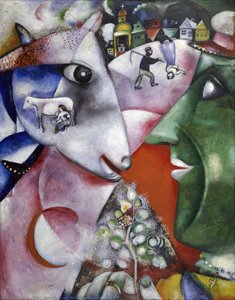 I and the Village - Marc Chagall
Marc Chagall’s 1911 masterpiece, I and the Village , isn't merely a painting; it’s a poignant distillation of memory itself. This work secures its place among the Top 10 artworks for its ability to tap into the universal human experience of longing for home – not necessarily a physical location, but a state of being rooted in childhood and belonging.
Created during a pivotal moment in Chagall’s artistic development, I and the Village blends Cubist fragmentation with vibrant Fauvist color and deeply personal Symbolism. The layered composition, populated by fragmented figures and scenes from his native Vitebsk, isn't about accurate representation but emotional truth. Two prominent faces anchor the scene, cradling within them a world of rolling hills, humble dwellings, and symbolic animals like the horse – often representing vitality and the artist’s own spirit.
What resonates so powerfully is Chagall’s rejection of linear perspective in favor of a dreamlike fluidity. Memories rarely arrive as neat narratives; they are fractured, overlapping, and imbued with feeling. This painting captures that essence perfectly. The bold use of color – blues, greens, and earthy tones – evokes both joy and melancholy, mirroring the bittersweet nature of nostalgia itself.
Today, I and the Village invites us to contemplate our own personal landscapes of memory. Its enduring appeal lies in its ability to remind us that home isn’t just a place on a map, but a feeling carried within – a timeless conversation between culture, identity, and the enduring power of art.
The Grand Canal and the Church of the Salute - giovanni antonio canal
 The Grand Canal and the Church of the Salute - giovanni antonio canal
Giovanni Antonio Canal’s The Grand Canal and the Church of the Salute , painted in 1730, isn't simply a depiction of Venice; it’s an invitation to step back in time and experience the city’s golden age. This artwork earns its place among the Top 10 for its unparalleled ability to evoke a sense of wistful nostalgia – a longing for a world of elegance, romance, and vibrant daily life.
Canaletto masterfully captures the shimmering light on the water, the intricate details of the palazzi lining the canal, and the bustling activity of gondolas and merchants. The iconic Church of the Salute serves as a majestic focal point, anchoring the composition and symbolizing faith and community. His technique, often employing the camera obscura, allowed for an unprecedented level of accuracy, yet it’s the warmth of his color palette and the fluidity of his brushwork that truly bring the scene to life.
More than just a visual record, this painting is a mood – a feeling of tranquility and timeless beauty. The interplay of light and shadow creates an atmosphere that invites contemplation, while the lively details offer glimpses into the everyday lives of Venetians centuries ago. Today, The Grand Canal continues to inspire, finding echoes in contemporary design sensibilities—from serene color palettes in home interiors to a renewed appreciation for handcrafted detail and romantic ambiance.
The Dance Class - Edgar Degas
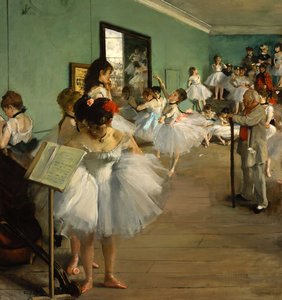 The Dance Class - Edgar Degas
 Close your eyes for a moment. Imagine the hushed stillness before a performance, the scent of rosin and sweat, the soft scuff of slippers on polished wood… This is the world Edgar Degas invites us into with The Dance Class , a 1874 masterpiece that transcends mere representation to become an embodiment of dedication, discipline, and fleeting youth. It’s no surprise this work consistently ranks among the Top 10 artworks for its profound emotional resonance.
Degas wasn't interested in portraying idealized ballerinas; he captured the reality of rehearsal – the awkward pauses, the focused concentration, the watchful gaze of the ballet master. The composition, divided between the energy of the foreground and the observing figures beyond, creates a compelling tension. His signature loose brushwork and subtle use of pastel colors evoke both grace and vulnerability.
What makes The Dance Class so enduring is its honesty. It’s a reminder that beauty requires relentless effort, and that even within moments of perfection, there exists a quiet struggle. Today, this painting speaks to our own pursuits – the passions we dedicate ourselves to, the sacrifices we make, and the bittersweet awareness of time passing. Bringing an image like The Dance Class into your home isn’t just about aesthetics; it's about inviting a sense of serenity, focus, and quiet contemplation into your daily life.
Peasant wedding - Pieter Bruegel the Elder
 Peasant wedding - Pieter Bruegel the Elder
Imagine a room filled with laughter, the clinking of mugs, and the aroma of freshly baked bread… This is the vibrant world Pieter Bruegel the Elder captures in Peasant Wedding , a 1568 masterpiece that resonates deeply with our shared human experience. It’s no accident this work consistently appears among the Top 10 artworks evoking nostalgia, as it offers a rare glimpse into the joys and complexities of everyday life.
Bruegel doesn't romanticize peasant life; he presents it with unflinching realism – the messy abundance, the boisterous energy, the subtle social dynamics. The densely populated composition, teeming with figures engaged in various activities, creates a sense of immersive chaos and warmth. His earthy color palette and meticulous attention to detail bring this historical scene vividly to life.
More than just a depiction of a wedding feast, Peasant Wedding is a celebration of community, resilience, and the simple pleasures of existence. Today, it reminds us of the importance of connection, shared meals, and finding joy in the everyday moments. Bringing an image like this into your home isn’t just about aesthetics; it's about inviting a sense of warmth, authenticity, and timeless human spirit into your daily life.
Family Reunion - Jean Frédéric Bazille
 Family Reunion - Jean Frédéric Bazille
Close your eyes and imagine a sun-dappled afternoon, the gentle murmur of conversation, the warmth of companionship… This is the feeling Jean Frédéric Bazille masterfully evokes in Family Reunion , painted in 1867. Its inclusion among the Top 10 artworks that stir deep nostalgic emotions isn’t accidental; it's a celebration of connection and the simple beauty of shared moments.
Bazille, a pivotal figure in the Impressionist movement, captures not just a scene but an atmosphere – one of relaxed elegance and genuine joy. The vibrant colors, intricate details, and carefully composed figures create a sense of immersive warmth. He redefined how light could be used to convey emotion, capturing the fleeting beauty of a summer afternoon.
Today, Family Reunion reminds us of the importance of gathering with loved ones, cherishing those precious moments of connection. At , we believe that art should live *with* you, enriching your daily life and inspiring meaningful conversations. Bringing this masterpiece into your home isn’t just about aesthetics; it's about inviting a sense of warmth, harmony, and timeless beauty into your personal sanctuary.
Snap the Whip - Winslow Homer
 Snap the Whip - Winslow Homer
 Unveiling Winslow Homer’s Snap the Whip is like discovering a perfectly preserved memory – a fleeting moment of pure joy captured for eternity. This 1872 masterpiece earns its place among the Top 10 artworks for its ability to evoke a profound sense of nostalgia, reminding us of simpler times and the boundless energy of youth.
Homer doesn’t simply depict children at play; he captures the very *essence* of childhood – the camaraderie, the competition, the uninhibited freedom. The dynamic composition, vibrant colors, and meticulous attention to detail bring this rural scene vividly to life. More than just a realistic portrayal, Snap the Whip is an emotional landscape, resonating with universal themes of community and innocence.
Today, this artwork continues to inspire, finding echoes in contemporary design sensibilities – from serene color palettes in home interiors to a renewed appreciation for handcrafted detail. At , we believe that art should elevate your living space, inviting a sense of warmth, authenticity, and timeless beauty into your daily life.
Young Girls at the Piano - Pierre-Auguste Renoir
 Young Girls at the Piano - Pierre-Auguste Renoir
A whisper of melody, a sunlit room, the gentle companionship of youth… Pierre-Auguste Renoir’s Young Girls at the Piano , painted in 1892, is more than just an image; it's an embodiment of serene domesticity. Its inclusion among the Top 10 artworks that evoke deep nostalgic emotions stems from its ability to capture a fleeting moment of pure beauty and tenderness.
Renoir’s signature Impressionist style – soft brushstrokes, luminous colors, and a focus on capturing light – elevates this scene beyond mere representation. The harmonious palette and delicate details create an atmosphere of warmth and intimacy, inviting us to share in the quiet joy of these two young girls. This artwork isn't simply about painting figures; it’s about conveying a feeling.
Today, Young Girls at the Piano continues to inspire, finding echoes in contemporary interiors that prioritize comfort, elegance, and a sense of timeless beauty. At , we believe art should transform your living space, inviting a sense of tranquility and grace into your daily life.
Rue Mosnier with Flags, J. Paul Getty Museum, Ma - Édouard Manet
 Rue Mosnier with Flags, J. Paul Getty Museum, Ma - Édouard Manet
A fleeting moment of Parisian joy, captured forever on canvas… Édouard Manet’s Rue Mosnier with Flags , painted in 1878, is more than just a street scene; it's an embodiment of celebration and community spirit. Its inclusion among the Top 10 artworks that evoke deep nostalgic emotions stems from its ability to capture the very *essence* of urban life – the energy, the vibrancy, and the shared humanity.
Manet’s pioneering Impressionistic style – loose brushstrokes, luminous colors, and a focus on capturing light – elevates this scene beyond mere representation. The dynamic composition draws us into the bustling street, inviting us to share in the festive atmosphere. More than just painting figures; it's about conveying a feeling of collective joy.
Today, Rue Mosnier with Flags continues to inspire, finding echoes in contemporary interiors that prioritize warmth, elegance, and a sense of timeless beauty. At , we believe art should transform your living space, inviting a sense of tranquility and grace into your daily life.
Free hour at Amsterdam orphanage - Max Liebermann
 Free hour at Amsterdam orphanage - Max Liebermann
A quiet moment of communal life, bathed in golden sunlight… Max Liebermann’s Free hour at Amsterdam orphanage , painted in 1876, is more than just a depiction of daily existence; it's an embodiment of warmth, heritage, and the enduring spirit of human connection. Its inclusion among the Top 10 artworks that evoke deep nostalgic emotions stems from its ability to capture the very *essence* of everyday life – the shared joy, the subtle interactions, and the quiet dignity of a community.
Liebermann’s masterful blend of realism and Impressionistic elements – loose brushstrokes, luminous colors, and a focus on capturing light – elevates this scene beyond mere representation. The dynamic composition draws us into the bustling courtyard, inviting us to share in the intimate moments unfolding before our eyes. More than just painting figures; it's about conveying a feeling of belonging.
Today, Free hour at Amsterdam orphanage continues to inspire, finding echoes in contemporary interiors that prioritize warmth, authenticity, and a sense of timeless beauty. At , we believe art should transform your living space, inviting a sense of tranquility and grace into your daily life.
Carnation, Lily, Lily, Rose - John Singer Sargent
 Carnation, Lily, Lily, Rose - John Singer Sargent
A whisper of twilight, a fleeting moment of childhood innocence… John Singer Sargent’s Carnation, Lily, Lily, Rose , painted between 1885 and 1886, is more than just a depiction of two young girls in an English garden; it's an atmospheric poem rendered in paint – a tranquil beauty captured with remarkable sensitivity. Its inclusion among the Top 10 artworks that evoke deep nostalgic emotions stems from its ability to capture the very *essence* of a summer evening and the ephemeral nature of youth.
Sargent masterfully blends Impressionistic techniques with subtle symbolic elements, creating a scene rich in texture and light. The loose brushwork and luminous colors draw us into the garden, inviting us to share in the quiet intimacy of the moment. More than just painting figures; it's about conveying a feeling of belonging and the gentle passage of time.
Today, Carnation, Lily, Lily, Rose continues to inspire, reminding us of the beauty found in simple moments. At , we believe art should transform your living space, inviting a sense of tranquility and grace into your daily life – faithful reproductions that preserve the emotion and texture of this timeless masterpiece.
Conclusion
As the light fades on our journey through these ten masterpieces, we are left not with a list of paintings admired, but with echoes of shared human experience. Each canvas—from the quiet intimacy of Sargent’s garden to Van Gogh’s swirling skies—holds a universe of emotion, a testament to the enduring power of art to transcend time and connect us across generations.
These are not simply historic treasures; they are living presences, capable of transforming a room, shaping a mood, and sparking a quiet moment of reflection in our own lives. To truly experience these works is to invite them into your daily world—to allow their colors, textures, and stories to become part of your own.
At , we believe that beauty should be accessible, not confined to museum walls. We are honored to offer hand-painted reproductions of these iconic artworks, crafted with the same passion and dedication as the originals. Bring the light of Monet’s water lilies into your home, or share in the quiet contemplation of Vermeer’s interiors—let these masterpieces become daily reminders of human creativity and grace.
Explore our full collection and discover the artwork that speaks to your soul. May it bring you joy, inspiration, and a deeper connection to the timeless beauty that surrounds us all.


