Switch to Print
 Read More







































 For artworks or reproductions larger than 105 cm (approximately 41 inches) on any side, the frame will be shipped as a kit, disassembled. This method ensures safe delivery and prevents damage during transport.


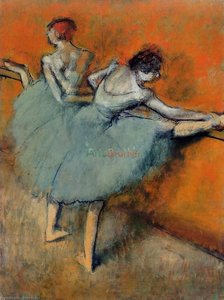
The Dance Class by Edgar Degas: A Masterpiece of Impressionist Realism
Subject and Composition
Edgar Degas' "The Dance Class" (1874) captures a lively ballet rehearsal studio, immersing viewers in the world of dance. The composition is divided into two main sections: the foreground features prominently displayed dancers, while the background reveals more performers and observers. Central to the scene is a young ballerina in a white tutu mid-plié, drawing immediate attention. Surrounding her are other dancers adjusting their positions, an older ballet master observing intently, and onlookers watching from the sidelines.
Style and Technique
Degas' work blends realistic detail with impressionistic touches, characteristic of his unique approach to 19th-century art. The painting is executed in oil, showcasing visible yet refined brushwork that captures both intricate details and the overall atmosphere. Degas employs a variety of lines to create movement and direction, with dancers' bodies forming graceful curves and diagonal lines. The vertical lines of ballet barres and horizontal lines of the floor provide structure and balance.
Color Palette
The color palette is dominated by soft pastels and muted tones, creating a calming yet vibrant atmosphere. Light blue-green walls serve as a serene backdrop, while white tutus add purity and innocence. Pops of color from red ribbons in the dancers' hair stand out against the subdued palette. The wooden floor adds warmth with its brown tones, contrasting with the cooler wall colors.
Historical Context
Degas created "The Dance Class" during a time when ballet was undergoing significant changes at the Paris Opéra. This period marked the transition from romantic ballet to more modern forms. Degas' fascination with dance led him to create numerous works on this theme, capturing both the grace and the rigorous nature of ballet as a profession.
Symbolism
The young ballerinas symbolize youth, discipline, and the pursuit of artistry. The ballet master represents guidance and mentorship, while the onlookers in the background may symbolize the audience or critics who will eventually judge the dancers' performances. Degas' portrayal of the dancers highlights the contrast between the artificiality of performance and the reality of rehearsal.
Emotional Impact
"The Dance Class" conveys a sense of motion and energy within a static image, making it feel almost tangible. The interplay of light and shadow adds depth and realism to the scene, drawing viewers into the dancers' world. The emotional resonance lies in its portrayal of dedication and passion inherent in the pursuit of dance, making it a compelling piece for art lovers and collectors alike.
Why Choose This Reproduction?
For interior designers and art enthusiasts seeking to elevate their spaces with timeless elegance, "The Dance Class" offers a captivating focal point. Its rich details, harmonious composition, and emotional depth make it an ideal addition to any collection. Whether displayed in a modern gallery setting or a classic interior, this masterpiece by Edgar Degas brings a touch of Parisian charm and artistic sophistication to your home or office.
Bring Home a Piece of Art History
Experience the beauty and intricacy of "The Dance Class" with our high-quality reproductions. Each piece is meticulously crafted to capture the essence of Degas' original work, ensuring that you can enjoy this iconic artwork in your own space. Elevate your decor with a masterpiece that celebrates the grace and passion of dance.
Questions & Answers
Toward which tone does "The Dance Class" lean?
An ochre to sepia hue runs through "The Dance Class" by Edgar Degas.
Where can I download "The Dance Class" by Edgar Degas?
The image of "The Dance Class" by Edgar Degas can be downloaded from the artwork's Download page: a high-resolution digital image download.
What emotion does the Impressionism work "The Dance Class" convey?
The nostalgic emotion of "The Dance Class" accompanies its Impressionism style.
More about this painting
 Preview
 Send
Send Share
Share
 Details
 Guide
Guide

 Download
 Similars
 X-Ray
X-Ray Diaporama
 Q&A
Q&A Stats
Stats