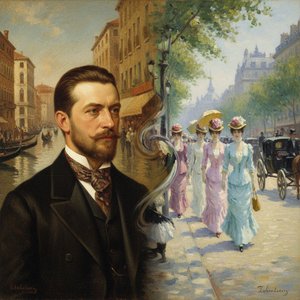
Early Life & Academic Foundations: Degas’s Formative Years
Hilaire-Germain-Edgar De Gas, born in Paris in 1834 into a family of modest wealth and refined sensibilities, embarked on an artistic journey that would ultimately redefine our perception of modern life. Unlike many of his contemporaries who embraced bohemian lifestyles from youth, Degas’s early years were steeped in the traditions of classical education. His father, a banker with a passion for art, recognized his son's talent and provided him with rigorous training – Latin, Greek, and ancient history formed the bedrock of his intellectual development alongside formal drawing lessons at the Lycée Louis-le-Grand. This foundation wasn’t merely academic; it instilled in Degas a deep respect for form, composition, and narrative—qualities that would subtly but powerfully inform his later work, even as he consciously moved away from historical subject matter.
The young artist began by meticulously copying Old Master paintings at the Louvre, absorbing the techniques of Michelangelo, Raphael, and Titian. His early ambition was to become a history painter, a prestigious calling demanding technical mastery and intellectual depth. A pivotal encounter with Jean-Auguste-Dominique Ingres in 1855 further solidified this direction; Ingres’s famous dictum – “Draw lines, young man, and still more lines” – became a guiding principle for Degas throughout his career. However, even within these early academic exercises, hints of his future preoccupations emerged—a fascination with the human figure, an eye for subtle gesture, and a nascent desire to capture fleeting moments rather than grand historical narratives.
Rejecting Convention: The Rise of Realism and Modern Subject Matter
 Wikipedia: Edgar Degas
Edgar Degas (UK: , US: ; born Hilaire-Germain-Edgar De Gas, French: [ilɛːʁ ʒɛʁmɛ̃ ɛdɡaʁ də ɡa]; 19 July 1834 – 27 September 1917) was a French Impressionist artist famous for his pastel drawings and oil paintings. Degas also produced bronze sculpture...
Despite his rigorous training, Degas found himself increasingly drawn to the realities of contemporary Parisian life. While he initially attempted large-scale history paintings – works like *Alexander and Bucephalus* and *The Daughter of Jephthah*—he grew disillusioned with their artificiality and lack of immediacy. A crucial turning point came through his friendship with Édouard Manet, whom he met in 1862 at the Louvre. Manet’s bold rejection of academic conventions – his focus on modern subjects, flattened perspective, and loose brushwork – proved profoundly influential. Degas began to explore scenes of urban leisure: horse racing, café-concert singers, and, most significantly, ballet dancers.
This shift wasn't a complete abandonment of tradition but rather a reorientation of its principles. Degas didn’t simply paint what he *saw*; he brought the analytical rigor of a history painter to bear on modern subject matter. He preferred to call himself a “Realist,” emphasizing his commitment to depicting the world as it was, without idealization or romanticism. However, his realism wasn't merely observational; it was infused with psychological complexity and a keen awareness of social dynamics. His paintings weren’t simply records of events but subtle commentaries on the lives and experiences of those he depicted.
The Ballet Dancer: An Exploration of Movement, Light, and Discipline
Impressionism was a 19th-century art movement characterized by visible brush strokes, open composition, emphasis on accurate depiction of light in its changing qualities (often accentuating the effects of the passage of time), ordinary subject matter...
More than half of Degas's oeuvre is devoted to ballet dancers, a testament to his enduring fascination with this unique world. However, these are rarely idealized portrayals of grace and beauty. Instead, Degas captured the grueling reality of a dancer’s life—the endless rehearsals, the demanding discipline, the often-precarious social circumstances. He wasn't interested in portraying ballerinas as ethereal creatures but as working women, subject to the same pressures and vulnerabilities as anyone else.
Degas’s approach to depicting movement was revolutionary. He abandoned traditional compositional techniques, employing unusual vantage points, asymmetrical framing, and cropped figures to create a sense of dynamism and immediacy. He studied dancers from every angle—during rehearsals, performances, and even in their dressing rooms—and meticulously analyzed their anatomy and gestures. His use of artificial light – the gaslight of theaters and cafés – further enhanced this effect, clarifying contours and creating dramatic contrasts. The resulting paintings aren’t simply representations of dance; they are explorations of energy, physicality, and the fleeting nature of time.
Beyond the Dance Studio: Horses, Portraits, and Parisian Life
While ballet dancers dominate his artistic output, Degas's interests extended far beyond the theater. He was a passionate horse racing enthusiast, captivated by the speed, power, and elegance of these animals. His paintings of racehorses and jockeys share many characteristics with his depictions of dancers—a focus on movement, asymmetrical composition, and an acute observation of anatomy. Similarly, his portraits are notable for their psychological complexity and unconventional approach. He wasn’t interested in capturing likenesses but rather in revealing the inner lives of his subjects.
Degas also documented the vibrant social life of Paris—scenes from cafés, laundries, and millineries offer glimpses into the everyday experiences of ordinary people. These paintings aren't simply genre scenes; they are subtle commentaries on class, gender, and modernity. He captured the energy and vitality of a rapidly changing city, portraying its inhabitants with both empathy and detachment.
Degas's Unique Perspective: Compositional Innovation & Japanese Influence
What truly sets Degas apart is his unique compositional approach. He consistently challenged conventional notions of perspective and balance, employing unusual vantage points, cropped figures, and asymmetrical framing to create a sense of dynamism and immediacy. This innovative style was partly influenced by the burgeoning interest in ukiyo-e, Japanese woodblock prints, which became increasingly accessible in Paris after 1854. Degas admired their bold compositions, flattened perspective, and emphasis on pattern and line.
He absorbed these influences not through imitation but through adaptation, integrating them into his own distinctive style. His paintings often feature unexpected viewpoints, creating a sense of intimacy and immediacy. He also experimented with different media—pastels, oil paintings, sculptures, prints—each offering unique possibilities for capturing movement and texture. Degas’s legacy lies in his ability to synthesize tradition and innovation, observation and interpretation, resulting in a body of work that continues to captivate and inspire.
Discover the masterpieces of Edgar Degas and experience the beauty of Parisian life through his eyes at OriginalUniqueArt.com, where you can find high-quality reproductions of his iconic works. Explore our collection today and bring a touch of Impressionist elegance to your home or office.