Portrait of Hans Multscher

The 23 Most Famous Hans Multscher Paintings, a Gallery Selection

Updated October 2026 · ranked by our popularity score (searches, visits and orders for each work) · 24 works by Hans Multscher in our catalogue

In short

Of all the originals Hans Multscher left, the most famous is Christ before Pilate (1437), in the collection of the Staatliche Museen zu Berlin, Berlin. Close behind it come Pentecost (1437) and Th Adoration of the Magi (1437). Our catalog holds 24 works by Hans Multscher; the gallery has kept the 23 the world admires most, each shown with its date, its museum and its story.

1400 – 1467, Leutkirch im Allgäu Most works: Staatliche Museen zu Berlin

Hans Multscher's top 10 paintings: the gallery's choice

1
Christ before Pilate (1437) by Hans Multscher

Christ before Pilate

1437 · Oil On Panel · Staatliche Museen zu Berlin, Berlin

To stand before this depiction of Christ before Pilate is to step directly into the crucible of human history and divine confrontation. Painted in 1437 by Hans Multscher, this work transcends a mere narrative scene; it is a profound meditation on innocence facing overwhelming temporal power. The composition immediately draws the eye to the central drama: Jesus, seated with an air of serene dignity, enduring the scrutiny of Pontius Pilate…

2
Pentecost (1437) by Hans Multscher

Pentecost

1437 · Oil On Canvas · Staatliche Museen zu Berlin, Berlin

To stand before Hans Multscher's depiction of Pentecost is to step directly into the charged atmosphere of early Renaissance spiritual awakening. This 1437 masterpiece does more than merely illustrate a biblical event; it captures a moment of profound, transformative energy. The scene unfolds within an intimate, richly detailed interior space, drawing the viewer immediately into the circle of disciples gathered in anticipation. At the heart of this gathering sits the…

3
Th Adoration of the Magi (1437) by Hans Multscher

Th Adoration of the Magi

1437 · Oil On Canvas · Staatliche Museen zu Berlin, Berlin

To stand before this depiction of The Adoration of the Magi is to step directly into the vibrant, devotional heart of early fifteenth-century Germany. Hans Multscher’s masterful rendering captures not merely a religious narrative, but a profound moment of human awe meeting divine mystery. The scene unfolds under a sheltering canopy, creating an intimate, almost sacred enclosure where light seems to emanate from the very presence of Mary and the…

4
Christ Carrying the Cross (1437) by Hans Multscher

Christ Carrying the Cross

1437 · Tempera · Staatliche Museen zu Berlin, Berlin

Hieronymus Bosch’s “Christ Carrying the Cross,” housed in Ghent Cathedral, stands as one of his most arresting depictions of Christian iconography—a painting that transcends mere representation to embody a profound meditation on suffering and mortality. Completed around 1510-1535, during Bosch's twilight years, this artwork exemplifies his signature style: grotesque realism infused with moral allegory.

5
Holy Trinity (1430) by Hans Multscher

Holy Trinity

1430 · Stone · Liebieghaus, Frankfurt

Holy Trinity by Hans Multscher – A Masterpiece Bridging Gothic and Renaissance The sculpture of Holy Trinity by Hans Multscher stands as a testament to the transformative period between late Gothic artistry and the burgeoning Renaissance in Germany—a moment where tradition wrestled with innovation, yielding an image that continues to resonate with profound spiritual significance. Crafted around 1430 from alabaster, a stone prized for its translucency and ability to capture…

6
The Wings of the Wurzach Altar (1437) by Hans Multscher

The Wings of the Wurzach Altar

1437 · Oil On Panel · Gemäldegalerie, Berlin

In the quiet, hallowed atmosphere of the 15th century, few works captured the intersection of divine miracle and human emotion as profoundly as Hans Multscher’s The Wings of the Wurzach Altar. Created in 1437, this masterpiece serves as a breathtaking window into the German Renaissance, offering more than just a religious tableau; it presents a visceral experience of faith. The painting depicts a sacred assembly, where figures are gathered within…
7
Model of a Tomb (1435) by Hans Multscher

Model of a Tomb

1435 · Stone · Bayerisches Nationalmuseum, Munich

The stone breathes with a quiet, solemn energy, holding a frozen moment of devotion within its pale, textured surface. Every chisel mark tells a story of hands working with purpose, carving out a sacred space where the earthly and the divine meet. In this relief, a hierarchy of existence unfolds vertically, drawing the eye upward from the heavy, grounded reality of the world toward the celestial heights. Angels hover in…

8
Reliquary Bust of a Female Saint (1460) by Hans Multscher

Reliquary Bust of a Female Saint

1460 · Bronze · The Frick Collection, New York City

The bronze reliquary bust of a female saint, attributed to the masterful German sculptor Hans Multscher (circa 1400-1467), offers a poignant window into the artistic and spiritual landscape of late medieval Europe. More than simply a portrait, it’s a meticulously crafted devotional object—a testament to both the burgeoning realism of the era and the enduring power of religious iconography. Created around 1460 in Ulm, Germany, this piece transcends its material…

9
The Wings of the Wurzach Altar (1437) by Hans Multscher

The Wings of the Wurzach Altar

1437 · Oil On Panel · Gemäldegalerie, Berlin

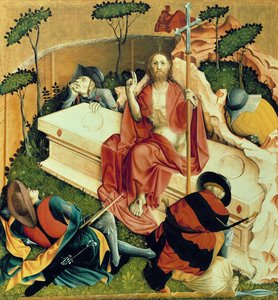
In the quiet corridors of art history, few works capture the raw, visceral essence of human suffering and divine purpose as profoundly as Hans Multscher’s The Wings of the Wurzach Altar. Created in 1437, this masterpiece serves as a breathtaking window into the late Gothic period, a time when the spiritual and the physical began to merge through an unprecedented lens of realism. The painting presents a harrowing yet sacred…

10
The Wings of the Wurzach Altar (1437) by Hans Multscher

The Wings of the Wurzach Altar

1437 · Oil On Panel · Gemäldegalerie, Berlin

Jesus sits upon a cold stone bench, his arms outstretched in a gesture of blessing or miracle. The light catches the heavy folds of his garments, grounding the divine in the weight of the physical world. Around him, the space is populated by silent witnesses. A figure stands in the upper left corner, watching from the periphery, while another lingers in the distance to the right. Two swords rest near…

The Hans Multscher selection continues, 11 to 23

Hans Multscher's famous paintings, period by period

The subjects that held Hans Multscher's eye

The four subjects that come back most often in these originals, each with its finest example.

The museums that keep Hans Multscher's originals

The 7 museums that hold the most of the paintings on this page.

Museum City Works by Hans Multscher Paintings from this list
Staatliche Museen zu Berlin, BerlinStaatliche Museen zu Berlin Berlin 11 Christ before Pilate, Pentecost, Th Adoration of the Magi
Gemäldegalerie, BerlinGemäldegalerie Berlin 6 The Wings of the Wurzach Altar, The Wings of the Wurzach Altar, The Wings of the Wurzach Altar
Liebieghaus, FrankfurtLiebieghaus Frankfurt 1 Holy Trinity
Bayerisches Nationalmuseum, MunichBayerisches Nationalmuseum Munich 1 Model of a Tomb
The Frick Collection, New York CityThe Frick Collection New York City 1 Reliquary Bust of a Female Saint
Cathedral, UlmCathedral Ulm 1 St George and St John the Evangelist
Szépművészeti Múzeum, BudapestSzépművészeti Múzeum Budapest 1 Fragment of a Female Saint

Hans Multscher decade by decade: the original that defines each

Works per decade

Pick a decade to see the original that defines it.

Collectors' questions about Hans Multscher's paintings

Which work is Hans Multscher most famous for?Reveal the answer

Christ before Pilate (1437), Staatliche Museen zu Berlin, Berlin. Pentecost (1437) and Th Adoration of the Magi (1437) come next.

What age was Hans Multscher when Christ before Pilate was made?Reveal the answer

37 years old: Christ before Pilate dates from 1437, and Hans Multscher was born in 1400.

What are the ten most famous Hans Multscher paintings?Reveal the answer

Christ before Pilate, Pentecost, Th Adoration of the Magi, Christ Carrying the Cross, Holy Trinity, The Wings of the Wurzach Altar, Model of a Tomb, Reliquary Bust of a Female Saint, The Wings of the Wurzach Altar and The Wings of the Wurzach Altar. The ranking above gives each one's year and museum.

How many paintings did Hans Multscher leave?Reveal the answer

Our catalog holds 24 works by Hans Multscher, dated from 1430 to 1460.

In which museums do Hans Multscher's masterpieces hang?Reveal the answer

Mostly in Staatliche Museen zu Berlin (Berlin), Gemäldegalerie (Berlin) and Liebieghaus (Frankfurt). The museum table above lists them all.

In which years did Hans Multscher paint the most famous works?Reveal the answer

In 1430s: 19 of the 23 works on this page were made then, Christ before Pilate among them.

What are the first and the last famous originals of Hans Multscher?Reveal the answer

On this page, the earliest is Holy Trinity (1430) and the latest Reliquary Bust of a Female Saint (1460).

Which subjects did Hans Multscher choose most often?Reveal the answer

Religious scene (5), Religious art (5) and Religion (4), across the 23 works on this page.

Which technique did Hans Multscher use most?Reveal the answer

Oil On Panel, for 9 of the 23 works on this page.

Which Hans Multscher works hang at the Staatliche Museen zu Berlin?Reveal the answer

Christ before Pilate, Pentecost and Th Adoration of the Magi: the Staatliche Museen zu Berlin, Berlin holds 11 of the works on this page.

Hans Multscher: life and work

A Pioneer of German Realism: The Life and Art of Hans Multscher

Born around 1400 in the small Bavarian town of Reichenhofen, now part of Leutkirch im Allgäu, Hans Multscher emerged as a pivotal figure bridging the stylistic transition from the late Gothic period to the burgeoning Renaissance in Germany. While precise details surrounding his early life remain scarce, it’s clear that Multscher possessed an inquisitive spirit and a keen eye for artistic innovation. He didn't simply absorb prevailing trends; he actively sought out new influences, embarking on journeys that would profoundly shape his unique aesthetic vision. These travels likely took him to the artistic centers of northern France and the Netherlands, exposing him to the burgeoning realism and meticulous detail characteristic of Early Netherlandish painting – a style that would become a defining feature of his own work. In 1427, Multscher established himself as a free citizen of Ulm, a thriving commercial hub on the Danube River, marking a turning point in his career. There he married Adelheid Kitzin and, alongside his brother Heinrich, founded a workshop that quickly gained prominence for its innovative sculptures and paintings.

The Workshop and Artistic Development

The Multscher workshop was not merely a place of production; it was a crucible of artistic experimentation. Hans oversaw a substantial team – records indicate as many as sixteen assistants at times – fostering an environment where traditional Gothic forms were gradually infused with the naturalism he had absorbed during his travels. This blend is particularly evident in his sculptural work, which moved away from the elongated figures and stylized drapery typical of the late Gothic period towards more anatomically accurate representations and a greater sense of emotional depth. His paintings, though fewer in number, demonstrate an equally compelling shift. The *Wurzacher Altar*, begun in 1437, stands as a testament to this evolving style. This ambitious project, originally intended for the church of St. James in Wurzach, showcases Multscher’s mastery of oil painting – a relatively new medium at the time – and his ability to render textures, light, and shadow with remarkable precision. The altar's panels depict scenes from the life of Christ and the Virgin Mary, each imbued with a sense of palpable humanity that set it apart from earlier devotional art. It’s important to note that Multscher wasn’t solely focused on religious subjects; his commissions also included secular works, such as the group of emperors adorning the eastern window of Ulm's city hall, demonstrating his versatility and appeal to a broad clientele.

Key Works and Lasting Legacy

Beyond the *Wurzacher Altar*, several other works cemented Multscher’s reputation as one of Germany’s most important artists. The sculpture of *Holy Mary Magdalen*, now housed in Frankfurt's Liebieghaus, is a particularly poignant example of his ability to convey profound emotion through sculpted form. Her sorrowful expression and the delicate rendering of her hair and clothing reveal a deep understanding of human psychology. Another notable work is the *Man of Sorrows* – copies of which can be found at Ulm Minster – a powerful depiction of Christ’s suffering that reflects the devotional fervor of the era. These pieces, along with his contributions to the Ulm city hall, demonstrate Multscher's skill in both sculpture and painting, as well as his ability to adapt his style to different contexts and patrons. His influence extended far beyond his own lifetime; the workshop he established continued to thrive after his death in 1467, disseminating his artistic principles throughout Swabia and beyond.

A Bridge Between Eras

Hans Multscher’s significance lies not only in the beauty and technical skill of his art but also in his role as a catalyst for change. He was among the first German artists to fully embrace the realism and naturalism that were transforming art in northern Europe, paving the way for subsequent generations of Renaissance masters. His work represents a crucial moment in the development of German art, marking a departure from the stylized conventions of the Gothic period towards a more humanistic and observational approach. While he didn’t entirely abandon traditional forms – elements of Gothic ornamentation can still be detected in his work – he skillfully integrated them with new techniques and aesthetic sensibilities, creating a unique artistic language that resonated deeply with his contemporaries and continues to captivate audiences today. He stands as a testament to the power of artistic exchange and the enduring legacy of those who dare to challenge convention.

Exploring Multscher’s World Today

Fortunately, numerous examples of Hans Multscher's artistry survive, allowing us to appreciate his genius firsthand. The Gemäldegalerie Alte Meister in Dresden houses an impressive collection of European paintings from the 15th to 18th centuries, offering a broader context for understanding Multscher’s place within art history. For those interested in exploring high-quality reproductions of his work, platforms like OriginalUniqueArt and OriginalUniqueArt offer meticulously hand-painted copies that capture the nuances of his original masterpieces. Furthermore, resources such as Wikipedia and the Web Gallery of Art provide valuable biographical information and detailed analyses of his artistic style. By engaging with these resources, we can continue to celebrate the life and legacy of Hans Multscher – a true pioneer of German realism whose art continues to inspire and move us centuries later.