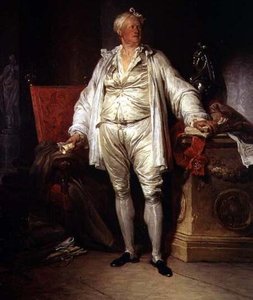
Portrait of François André Vincent

François André Vincent Paintings: The 64 Most Famous, Through a Gallery's Eye

Updated November 2026 · ranked by our popularity score (searches, visits and orders for each work) · 65 works by François André Vincent in our catalogue

In short

To the gallery's eye, François André Vincent's most famous painting is Alcibiades being taught by Socrates (1777), whose original hangs in the Nationalmuseum, Stockholm. La Mélancolie and Saint John the Evangelist (1793) complete the trio every eye recognises. Of the 65 works by François André Vincent in our catalog, the gallery presents the 64 most famous below, each original with its year, its museum and what makes it unique.

1746 – 1816, Paris Neoclassicism Most works: The Louvre

The gallery's top 10 François André Vincent paintings

1
Alcibiades being taught by Socrates (1777) by François André Vincent

Alcibiades being taught by Socrates

1777 · Oil On Canvas · Nationalmuseum, Stockholm

A single finger points toward the heavens, cutting through the heavy shadows of an interior room. This gesture from the seated philosopher, Socrates, anchors the entire composition. He sits in a blue cloak, his body leaning forward with the quiet gravity of a man who deals in truths rather than steel. Opposite him, Alcibiades stands poised for action. The young man is encased in a metallic cuirass and an ornate…

2
La Mélancolie by François André Vincent

La Mélancolie

Oil On Canvas

La Mélancolie is a painting by the French neoclassical artist François André Vincent. The work focuses on a solitary female figure positioned within a shadowy, overgrown landscape. This woman sits dejectedly upon a stone ledge, her head bowed and her hands clasped in a pose that conveys profound sadness. The subject matter centers on a woman in mourning or despair, appearing consumed by sorrow.

3
Saint John the Evangelist (1793) by François André Vincent

Saint John the Evangelist

1793 · Oil On Canvas · Detroit Institute of Arts, Detroit

In this Neoclassical portrait by François André Vincent, titled Saint John the Evangelist, the viewer is presented with a close-up, three-quarter view of the subject. The composition focuses intently on the torso, head, and hands of the young man. By positioning the perspective slightly from below, Vincent emphasizes the saintly, upward-looking gaze of the figure. This angle directs our attention to an expression of spiritual rapture or divine inspiration, as…

4
Portrait de Pierre Adrien Pâris by François André Vincent

Portrait de Pierre Adrien Pâris

Drawing

A man sits caught in a moment of quiet contemplation. Pierre Adrien Pâris, an architect of his era, gazes toward an unseen point beyond the frame. His presence is defined by the soft weight of a white shirt and the delicate ruffles of a collar that catch the light. A mustache traces his upper lip, adding a layer of maturity to a face rendered with precise, searching lines. The drawing…

5
Self-portrait with palette (1769) by François André Vincent

Self-portrait with palette

1769 · Oil On Canvas

A young man emerges from a dark, indistinct void, framed by the soft curve of an oval. He wears a wide-brimmed hat, its dark felt topped with a single white plume that catches the light. A ruffled lace collar rests against his neck, its delicate folds rendered with a tactile, painterly touch. He holds the tools of his trade: a wooden palette and several brushes, his fingers poised with a…

6
Henry IV Meeting Wounded Sully (1784) by François André Vincent

Henry IV Meeting Wounded Sully

1784 · Oil On Canvas · Musée national du château de Pau, Pau

In this 1784 oil on canvas, we find ourselves drawn into a crowded, emotionally charged military camp. The scene captures a profound human interaction: the meeting between Henry IV and the wounded Sully. There is a palpable sense of gravity in the way the figures are arranged, pulling our attention toward the central dialogue between the two men. The composition uses a dynamic, diagonal movement, particularly in the posture of…

7
Portrait of a Painter (1781) by François André Vincent

Portrait of a Painter

1781 · Oil On Canvas · Musée Des Beaux, Strasbourg

A young man is positioned in a three-quarter view, shown from the waist up against a dark, indistinct background. He is oriented slightly off-center, creating a sense of natural poise. His gaze is directed toward the viewer, accompanied by a slight, enigmatic smile. He wears an ornate grey coat featuring a prominent white fur collar and a white cravat. The textures of the fabric and fur are rendered with light-catching…

8
President Mole Manhandled by Insurgents (1778) by François André Vincent

President Mole Manhandled by Insurgents

1778 · Oil On Canvas · Detroit Institute of Arts, Detroit

In this oil on canvas, we find ourselves thrust into the chaotic streets of Paris during the Fronde of 1648. The scene captures the precise moment the statesman Mathieu Molé is confronted by an angry mob. There is a palpable sense of movement here, a sudden eruption of violence that disrupts the order of the urban setting. The composition relies on a pyramidal arrangement of figures, drawing our attention immediately…

9
The Greek Priest (1782) by François André Vincent

The Greek Priest

1782 · Oil On Canvas · Bavarian State Painting Collections, Munich

is an oil on canvas portrait by the French neoclassical painter François André Vincent. Executed about 1782, the work emerged during a period when Vincent was establishing his reputation within the academic traditions of Paris. Born in Paris in 1746, the artist would become a central figure in the transition toward Neoclassicism, bridging the gap between the elegance of the Rococo and the disciplined rigor of the new era.

10
William Tell Overturning the Boat on Which Governor Gessler Was Crossing Lake Lucerne (1791) by François André Vincent

William Tell Overturning the Boat on Which Governor Gessler Was Crossing Lake Lucerne

1791 · Oil On Canvas · Musée des Augustins, Toulouse

The oil on canvas work titled William Tell Overturning the Boat on Which Governor Gessler Was Crossing Lake Lucerne was executed by the French artist François André Vincent. Created about 1791, this large-scale historical painting captures a specific moment of conflict within a mountain landscape. The composition focuses on the physical struggle between the central figures as the vessel tilts into the water.

François André Vincent paintings, ranked 11 to 64

11The Farewells of Henri IV and Gabrielle d'Estrées (1786) by François André VincentThe Farewells of Henri IV and Gabrielle d'Estrées1786 · Musée national du château de Pau 12Portrait of Pierre-Jean-Baptiste Choudard (called Desforges) (1789) by François André VincentPortrait of Pierre-Jean-Baptiste Choudard (called Desforges)1789 · Dallas Museum of Art 13The French Actor Joseph-Jean-Baptiste Albouy, stage name Dazincourt (1792) by François André VincentThe French Actor Joseph-Jean-Baptiste Albouy, stage name Dazincourt1792 · Musée Des Beaux 14The ploughing lesson (1796) by François André VincentThe ploughing lesson1796 · Staatliche Kunsthalle Karlsruhe 15Poetry (1811) by François André VincentPoetry1811 · Bavarian State Painting Collections 16Astrology (1811) by François André VincentAstrology1811 · Bavarian State Painting Collections 17Allegory of Freedom for Ransomed Barbary Captives, in Gratitude to Jerome Bonaparte (1806) by François André VincentAllegory of Freedom for Ransomed Barbary Captives, in Gratitude to Jerome Bonaparte1806 · Gemäldegalerie Alte Meister im Schloss Wilhelmshöhe 18Portrait of a Man, François André Vincent, c. 1795 (1795) by François André VincentPortrait of a Man, François André Vincent, c. 17951795 · Rijksmuseum 19Henry IV Meets Wounded Sully Following the Battle of Ivry, after Les Mémoires de Sully (1875) by François André VincentHenry IV Meets Wounded Sully Following the Battle of Ivry, after Les Mémoires de Sully1875 · Musée de Picardie 20The Count de La Forest with his Wife and Daughter (1804) by François André VincentThe Count de La Forest with his Wife and Daughter1804 · Staatliche Kunsthalle Karlsruhe 21Portrait of Mademoiselle Duplant (1793) by François André VincentPortrait of Mademoiselle Duplant1793 · Calouste Gulbenkian Foundation 22Portrait de Marie de Broutin, baronne de Chalvet Souville by François André VincentPortrait de Marie de Broutin, baronne de Chalvet SouvilleThe Louvre 23LA BATAILLE DES PYRAMIDES by François André VincentLA BATAILLE DES PYRAMIDESThe Louvre 24Portrait of a Man (1774) by François André VincentPortrait of a Man1774 25Gentleman in his Study by François André VincentGentleman in his StudyDetroit Institute of Arts 26Zeuxis Choosing his Models for the Image of Helen from among the Girls of Croton (1789) by François André VincentZeuxis Choosing his Models for the Image of Helen from among the Girls of Croton1789 · Cantor Arts Center at Stanford University 27Head of Cicero, in profile, from an antique bust (1810) by François André VincentHead of Cicero, in profile, from an antique bust1810 28Gabrielle d'Estrées Fainting in the Presence of Threatening Henry IV and Sully by François André VincentGabrielle d'Estrées Fainting in the Presence of Threatening Henry IV and Sully 29Pietà with Saint Francis and Saint Mary Magdalene or The Dead Christ by François André VincentPietà with Saint Francis and Saint Mary Magdalene or The Dead Christ 30Henry IV and Sully at Fontainebleau by François André VincentHenry IV and Sully at Fontainebleau 31PORTRAIT DIT DE MONSIEUR HORTUS by François André VincentPORTRAIT DIT DE MONSIEUR HORTUS 32Portrait of Pierre Rousseau by François André VincentPortrait of Pierre Rousseau 33FRANCOIS GUILLAUME ANDRIEUX (1759 1833) by François André VincentFRANCOIS GUILLAUME ANDRIEUX (1759 1833) 34Henri IV à Lieusaint chez le meunier Michau by François André VincentHenri IV à Lieusaint chez le meunier Michau 35David vainqueur de Goliath by François André VincentDavid vainqueur de Goliath 36FRANCOIS BERNARD BOYER FONFREDE, ET SA FAMILLE by François André VincentFRANCOIS BERNARD BOYER FONFREDE, ET SA FAMILLE 37Portrait de femme Portrait de Madame Houel by François André VincentPortrait de femme Portrait de Madame Houel 38HENRI IV QUITTE GABRIELLE D'ESTREES by François André VincentHENRI IV QUITTE GABRIELLE D'ESTREES 39Henri IV et Sully à Fontainebleau by François André VincentHenri IV et Sully à Fontainebleau 40Henri IV rencontrant Sully blessé by François André VincentHenri IV rencontrant Sully blessé 41Buste de vieillard by François André VincentBuste de vieillard 42Guillaume Tell renversant la barque sur laquelle le gouverneur Gessler traversait le lac de Lucerne by François André VincentGuillaume Tell renversant la barque sur laquelle le gouverneur Gessler traversait le lac de Lucerne 43ANTOINE VINCENT ARNAULT, SECRETAIRE PERPETUEL DE L'ACADEMIE FRANCAISE (1766 1834) by François André VincentANTOINE VINCENT ARNAULT, SECRETAIRE PERPETUEL DE L'ACADEMIE FRANCAISE (1766 1834)Opera House 44L'ENLEVEMENT D'ORYTHIE by François André VincentL'ENLEVEMENT D'ORYTHIE 45Gabrielle d'Estrées évanouie en présence d'Henri IV menaçant et de Sully by François André VincentGabrielle d'Estrées évanouie en présence d'Henri IV menaçant et de Sully 46Henri IV rencontrant Sully blessé à la suite de la bataille d'Ivry by François André VincentHenri IV rencontrant Sully blessé à la suite de la bataille d'Ivry 47HENRI IV FAISANT ENTRER DES VIVRES DANS PARIS by François André VincentHENRI IV FAISANT ENTRER DES VIVRES DANS PARISThe Louvre 48L'ASSOMPTION DE LA VIERGE by François André VincentL'ASSOMPTION DE LA VIERGEThe Louvre 49PORTRAIT DE TROIS HOMMES (l'artiste, l'architecte Rousseau et un inconnu) by François André VincentPORTRAIT DE TROIS HOMMES (l'artiste, l'architecte Rousseau et un inconnu)The Louvre 50MADAME BOYER FONFREDE ET SON FILS HENRI by François André VincentMADAME BOYER FONFREDE ET SON FILS HENRIThe Louvre 51The death of Cato by François André VincentThe death of CatoMusée Fabre 52Portrait of Monsieur Bergeret de Grancourt by François André VincentPortrait of Monsieur Bergeret de GrancourtMusée des Beaux-Arts et d'Archéologie 53Portrait of François-André Vincent by François André VincentPortrait of François-André Vincent 54Portrait du peintre Jean Pierre Houel by François André VincentPortrait du peintre Jean Pierre Houel 55Scène de forge. Esquisse by François André VincentScène de forge. Esquisse 56Vieillard lisant by François André VincentVieillard lisant 57Germanicus Calms Sedition in his Camp (1768) by François André VincentGermanicus Calms Sedition in his Camp1768 58Alcibiades Receiving the Lessons of Socrates (1777) by François André VincentAlcibiades Receiving the Lessons of Socrates1777 · Musée Fabre 59La leçon de labourage by François André VincentLa leçon de labourageMusée des Beaux-Arts de Bordeaux 60Arria and Paetus (1784) by François André VincentArria and Paetus1784 · Saint Louis Art Museum 61President Molé Confronted by Insurgents (1779) by François André VincentPresident Molé Confronted by Insurgents1779 · Palais Bourbon 62Democritus among the Abderitans by François André VincentDemocritus among the AbderitansLos Angeles County Museum of Art 63ZEUXIS CHOISISSANT POUR MODELES LES PLUS BELLES FILLES DE CROTONE by François André VincentZEUXIS CHOISISSANT POUR MODELES LES PLUS BELLES FILLES DE CROTONEThe Louvre 64Belisarius (1776) by François André VincentBelisarius1776 · Musée Fabre

The subjects that held François André Vincent's eye

The four subjects that come back most often in these originals, each with its finest example.

The museums that keep François André Vincent's originals

The 8 museums that hold the most of the paintings on this page.

Museum City Works by François André Vincent Paintings from this list
The Louvre, ParisThe Louvre Paris 7 Portrait de Marie de Broutin, baronne de Chalvet Souville, LA BATAILLE DES PYRAMIDES, HENRI IV FAISANT ENTRER DES VIVRES DANS PARIS
Detroit Institute of Arts, DetroitDetroit Institute of Arts Detroit 3 Saint John the Evangelist, President Mole Manhandled by Insurgents, Gentleman in his Study
Bavarian State Painting Collections, MunichBavarian State Painting Collections Munich 3 The Greek Priest, Poetry, Astrology
Musée Fabre, MontpellierMusée Fabre Montpellier 3 The death of Cato, Alcibiades Receiving the Lessons of Socrates, Belisarius
Musée national du château de Pau, PauMusée national du château de Pau Pau 2 Henry IV Meeting Wounded Sully, The Farewells of Henri IV and Gabrielle d'Estrées
Staatliche Kunsthalle Karlsruhe, CarlsruheStaatliche Kunsthalle Karlsruhe Carlsruhe 2 The ploughing lesson, The Count de La Forest with his Wife and Daughter
Nationalmuseum, StockholmNationalmuseum Stockholm 1 Alcibiades being taught by Socrates
Musée Des Beaux, StrasbourgMusée Des Beaux Strasbourg 1 Portrait of a Painter

François André Vincent, one signature painting per decade

Works per decade

Pick a decade to see the original that defines it.

François André Vincent's paintings: the gallery answers

Which François André Vincent painting is the most famous of all?Reveal the answer

Alcibiades being taught by Socrates (1777), Nationalmuseum, Stockholm. La Mélancolie and Saint John the Evangelist (1793) come next.

How old was François André Vincent on completing Alcibiades being taught by Socrates?Reveal the answer

31 years old: Alcibiades being taught by Socrates dates from 1777, and François André Vincent was born in 1746.

Which are François André Vincent's top 10 paintings?Reveal the answer

Alcibiades being taught by Socrates, La Mélancolie, Saint John the Evangelist, Portrait de Pierre Adrien Pâris, Self-portrait with palette, Henry IV Meeting Wounded Sully, Portrait of a Painter, President Mole Manhandled by Insurgents, The Greek Priest and William Tell Overturning the Boat on Which Governor Gessler Was Crossing Lake Lucerne. The ranking above gives each one's year and museum.

How many works did François André Vincent create?Reveal the answer

Our catalog holds 65 works by François André Vincent, dated from 1768 to 1811.

Where do François André Vincent's most famous originals hang?Reveal the answer

Mostly in The Louvre (Paris), Detroit Institute of Arts (Detroit) and Bavarian State Painting Collections (Munich). The museum table above lists them all.

When did François André Vincent create the most famous paintings?Reveal the answer

In 1780s: 7 of the 64 works on this page were made then, Henry IV Meeting Wounded Sully among them.

Which are François André Vincent's earliest and latest famous works?Reveal the answer

On this page, the earliest is Germanicus Calms Sedition in his Camp (1768) and the latest Poetry (1811).

Which subjects did François André Vincent return to most?Reveal the answer

Man (15), Portraiture (5) and Woman (4), across the 64 works on this page.

Which medium did François André Vincent work in most?Reveal the answer

Oil On Canvas, for 26 of the 64 works on this page.

Which movement is François André Vincent associated with?Reveal the answer

Neoclassicism, judging by the originals on this page.

Which François André Vincent originals does the The Louvre hold?Reveal the answer

Portrait de Marie de Broutin, baronne de Chalvet Souville, LA BATAILLE DES PYRAMIDES and HENRI IV FAISANT ENTRER DES VIVRES DANS PARIS: the The Louvre, Paris holds 7 of the works on this page.

François André Vincent: the artist

The Neoclassical Vision of François-André Vincent

In the vibrant and turbulent landscape of late eighteenth-century France, few artists captured the transition from aristocratic elegance to revolutionary solemnity as masterfully as François-André Vincent. Born in Paris in 1746 into a lineage of artistic distinction—his father, François-Elie Vincent, was a renowned miniaturist—Vincent was destined for a life defined by the brush and the canvas. His early training under the esteemed Joseph-Marie Vien provided him with a rigorous foundation in the academic tradition, yet it was his innate ability to bridge the gap between the refined grace of the Rococo and the burgeoning discipline of Neoclassicism that would eventually secure his place in art history.

Vincent’s artistic soul was profoundly shaped by his transformative journey to Rome. Upon winning the prestigious Prix de Rome with his commanding work, Germanicus Calms Sedition, he gained unprecedented access to the timeless treasures of classical antiquity. Living and working within the historic Palazzo Mancini, Vincent immersed himself in the study of Raphael and the sculptural precision of ancient masters. This period was not merely an academic exercise but a spiritual awakening; it allowed him to infuse his compositions with a sense of monumental dignity and a harmonious balance that became his hallmark. While he drew deep inspiration from the classical past, he remained acutely aware of the living world around him, often blending historical grandeur with the subtle nuances of contemporary life.

A Master of Portraiture and Historical Narrative

The breadth of Vincent’s oeuvre is a testament to his versatility as a storyteller. He was equally adept at capturing the intimate psychological depth of an individual as he was at depicting the sweeping chaos of historical conflict. In his portraiture, one finds a remarkable ability to convey character through smooth brushstrokes and delicate tonal gradations. His portraits of contemporaries, including the legendary Jean-Honoré Fragonard, reflect a certain dynamism and elegance that suggest a deep connection to the stylistic fluidity of his era. These works serve as windows into the social fabric of pre-revolutionary France, capturing the poise and presence of the era's most notable figures.

However, it was in the realm of history painting where Vincent truly asserted his command over the Neoclassical idiom. His ability to translate complex historical narratives into visually arresting scenes allowed him to participate in the grandest dialogues of his time. A striking example is found in La Bataille des Pyramides, an impressive oil on canvas that commemorates Napoleon's decisive victory in 1798. In this work, Vincent moves away from static composition, instead utilizing loose brushstrokes and earthy tones to evoke the dust, movement, and atmospheric tension of a battlefield set against the backdrop of ancient Egyptian monuments. This capacity to blend the epic scale of history with an almost visceral sense of atmosphere distinguishes him from his more rigid contemporaries.

Legacy and Historical Significance

Throughout his career, Vincent occupied a unique position within the French art hierarchy. Often viewed as a sophisticated rival to Jacques-Louis David, he offered a stylistic alternative that was perhaps less dogmatic and more attuned to the subtle interplay of light and life. While David pushed toward a starker, more austere Neoclassicism, Vincent maintained a connection to the grace and fluidity inherited from his predecessors, creating a bridge between the old world and the new. His contributions to the institutionalization of art were equally significant, as he stood as a founding figure of the Académie des Beaux-Arts, helping to shape the pedagogical standards for generations of French painters.

The enduring legacy of François-André Vincent lies in his ability to harmonize contradictions: the ancient and the modern, the monumental and the intimate, the disciplined and the expressive. His work remains a vital touchstone for understanding the evolution of French art during one of its most transformative epochs. Through his meticulous technique and profound historical insight, Vincent did more than just record history; he breathed life into it, ensuring that the spirit of the Neoclassical era would continue to resonate long after the revolution had passed.