1


Updated November 2026 · ranked by our popularity score (searches, visits and orders for each work) · 110 works by David Bomberg in our catalogue
In short
To the gallery's eye, David Bomberg's most famous painting is Flowers, Evening Gold (1947), whose original hangs in the Reading Museum - Town Hall, Reading. Procession (1914) and Composition with Figures (1913) complete the trio every eye recognises. Of the 110 works by David Bomberg in our catalog, the gallery presents the 100 most famous below, each original with its year, its museum and what makes it unique.


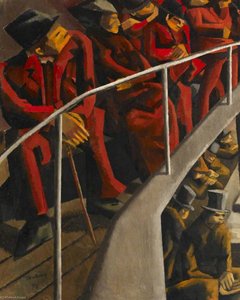
David Bomberg (1890–1957), one of the celebrated ‘Whitechapel Boys,’ stands as a pivotal figure in British avant-garde art. His oeuvre embodies a restless spirit, constantly experimenting with new approaches to visual representation—a characteristic that finds its most arresting expression in ‘Composition with Figures’ (1912–1913), currently housed at The Whitworth, University of Manchester.


 Self Portrait1937
12
 The Artist's Wife and Baby1937
13
 Alora, Andalucia1935 · Jerwood Gallery
14
 Bomb Store Study for Memorial Panel I1942 · The Ingram Collection of Modern British And Contemporary Art
15
 Ronda, Spain1957 · Ben Uri Gallery and Museum
16
 The Southeast Corner, Jerusalem (Palestinian Landscape)1926 · Pallant House Gallery
17
 The Family (Study for Ghetto Theatre II)1919 · Ben Uri Gallery and Museum
18
 The Moorish Wall, Cyprus1948 · Nottingham Castle Museum And Art Gallery
19
 Portrait of an Old Man1919 · The Mercer Art Gallery
20
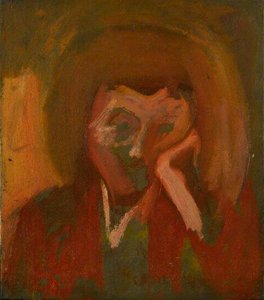 Diana1943 · Arts Council Collection
21
 Benchers Hall, Inner Temple1947 · Ben Uri Gallery and Museum
22
 Self Portrait (David)1937 · Arts Council Collection
23
 The Virgin of Peace in Procession through the Streets of Ronda, Holy Week1935 · Fitzwilliam College
24
 Self Portrait (verso)1937 · Pallant House Gallery
25
 English Woman1920 · Ben Uri Gallery - Museum
26
 Double Self Portrait (recto)1937 · The Hepworth Wakefield
27
 Interior of a Peasant House, Kolonia1923 · Pallant House Gallery
28
 Sunset, the Bay, North Devon1946 · Laing Art Gallery
29
 Study for In the Hold1913
30
 The Mud Bath1914
31
 Vision of Ezekiel1912
32
 Bathing Scene1912
33
 The Mud Bath1914
34
 Sappers at Work: A Canadian Tunnelling Company1919 · National Gallery of Canada
35
 Composition1919 · Harris Museum - Art Gallery
36
 Carnival1922
37
 Composition Stable Interior – Horses with Riders1919 · Harris Museum - Art Gallery
38
 At the Window1919 · Ben Uri Gallery - Museum
39
 The Studio1919 · Ben Uri Gallery - Museum
40
 Circus Folk1920 · Government Art Collection
41
 Study for 'Sappers at Work A Canadian Tunnelling Company, Hill 60, St Eloi'1918
42
 Hezekiah's Pool1924
43
 Outside Damascus Gate, Jerusalem1923
44
 Bab Es Siq, Petra1924
45
 Jerusalem, Looking to Mount Scopus1925
46
 Jerusalem, City and Mount of Ascension1925 · Ferens Art Gallery
47
 Imaginative Composition, Fishing Folk1923 · Herbert Art Gallery - Museum
48
 Mount Zion with the Church of the Dormition1923 · Ben Uri Gallery - Museum
49
 The South East Corner, Jerusalem1926 · Swindon Art Gallery
50
 The St John Ophthalmic Hospital, Jerusalem1927
51
 Interior of the Armenian Church1925
52
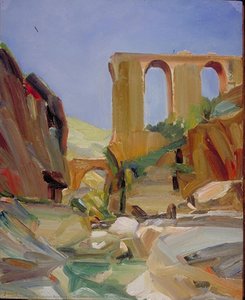 The Broken Aqueduct, Wadi Kelt near Jericho1926 · Ben Uri Gallery - Museum
53
 Lilian Painting David (Painting Lilian)1929
54
 Lilian1932
55
 Self Portrait with Palette1931
56
 Toledo, Spain1929
57
 San Justo, Toledo, Spain1929 · Ferens Art Gallery
58
 David Bomberg1937
59
 Valley of La Hermida Picos de Europa, Asturias, Spain1935
60
 John Rodker1936 · Ben Uri Gallery - Museum
61
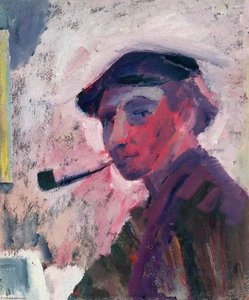 Double Self Portrait (verso)1937 · The Hepworth Wakefield
62
 The Man (recto)1937 · Pallant House Gallery
63
 The Gorge, Ronda, Spain1935 · Middlesbrough Institute of Modern Art
64
 Nude1943
65
 Bomb Store1942
66
 Jimmy Newmark1943 · Abbot Hall Art Gallery
67
 Underground Bomb Store1942 · Touchstones Rochdale
68
 Flowers1943 · Bristol Museum - Art Gallery
69
 Jim 19431943 · Towner
70
 Interior of the Armenian Church, Jerusalem1925 · Government Art Collection
71
 Trendrine, Cornwall1947 · Arts Council Collection
72
 Flower Group1943
73
 Ai Chrysostomos1948
74
 Mount St Hilarion, Cyprus1948
75
 Flowers and Silk, Blue Symphony1947
76
 Trendrine in Sun, Cornwall1947
77
 Tregor and Tregoff, Cornwall1947
78
 Flowers in a Terracotta Pot1945 · Jerwood Gallery
79
 Evening in the City of London1944
80
 Cyprus1948
81
 Man's Head1937
82
 Bideford, Devon1946 · Royal Albert Memorial Museum
83
 Storm Clouds1932 · Salford Museum - Art Gallery
84
 Ronda Bridge, Spain1935 · Pallant House Gallery
85
 Racehorses1913 · Ben Uri Gallery and Museum
86
 Cuenca1934 · Walker Art Gallery
87
 Washing of the Feet, Church of St James, Jerusalem1925 · London South Bank University
88
 Circus (Abstract Composition)1921 · The Ashmolean Museum of Art And Archaeology
89
 Figure Composition1913 · Bristol Museum - Art Gallery
90
 Sappers at Work : Canadian Tunnelling Company, R14, St Eloi1919 · Imperial War Museums
91
 The Bath1922
92
 Barges1919
93
 The Mud BathTate Britain
94
 Evening, Cornwall1947 · Herbert Art Gallery - Museum
95
 In the Hold
96
 Study for a Painting (Compositional Study)
97
 Flowers – RhythmLondon South Bank University
98
 Ghetto Theatre (study)Ben Uri Gallery - Museum
99
 Zahara Evening
100
 Figure CompositionBen Uri Gallery and Museum
The four subjects that come back most often in these originals, each with its finest example.
The 8 museums that hold the most of the paintings on this page.
| Museum | City | Works by David Bomberg | Paintings from this list |
|---|---|---|---|
 Ben Uri Gallery - Museum |
London | 8 | Ghetto Theatre, English Woman, At the Window |
 Ben Uri Gallery and Museum |
London | 8 | Armenian Church, Jerusalem, Ronda, Spain, The Family (Study for Ghetto Theatre II) |
 Pallant House Gallery |
Chichester | 5 | The Southeast Corner, Jerusalem (Palestinian Landscape), Self Portrait (verso), Interior of a Peasant House, Kolonia |
 Arts Council Collection |
London | 3 | Diana, Self Portrait (David), Trendrine, Cornwall |
 Bristol Museum - Art Gallery |
Bristol | 3 | Flowers, Figure Composition |
 The Ashmolean Museum of Art And Archaeology |
Oxford | 2 | Procession, Circus (Abstract Composition) |
 New Walk Museum - Art Gallery |
Leicester | 2 | Flowers in Sunlight, Grief |
 Towner |
Eastbourne | 2 | Kitty, the Artist's Sister, Jim 1943 |
Pick a decade to see the original that defines it.

In this 1957 work, we find ourselves looking upon Ronda, Spain, through a lens that favors feeling over mere topography. The scene captures a town nestled within rugged mountains, yet the landscape is far from a literal record. Instead, there is an emphasis on the energy of the terrain. A winding road snakes through the foreground, pulling the eye upward toward distant hills and stone structures. The composition avoids symmetry,…
Flowers, Evening Gold (1947), Reading Museum - Town Hall, Reading. Procession (1914) and Composition with Figures (1913) come next.
57 years old: Flowers, Evening Gold dates from 1947, and David Bomberg was born in 1890.
Flowers, Evening Gold, Procession, Composition with Figures, Flowers in Sunlight, Players (formerly 'Fiesta'), Grief, Ghetto Theatre, Armenian Church, Jerusalem, Self Portrait and Kitty, the Artist's Sister. The ranking above gives each one's year and museum.
Our catalog holds 110 works by David Bomberg, dated from 1912 to 1957.
Mostly in Ben Uri Gallery - Museum (London), Ben Uri Gallery and Museum (London) and Pallant House Gallery (Chichester). The museum table above lists them all.
In 1920s: 28 of the 100 works on this page were made then, Players (formerly 'Fiesta') among them.
On this page, the earliest is Vision of Ezekiel (1912) and the latest Ronda, Spain (1957).
Portrait (7), Landscape (5) and Architecture (4), across the 100 works on this page.
Oil On Canvas, for 11 of the 100 works on this page.
Expressionism, judging by the originals on this page.
Ghetto Theatre, English Woman and At the Window: the Ben Uri Gallery - Museum, London holds 8 of the works on this page.
Born to Polish-Jewish immigrant parents, Abraham and Rebecca Bomberg, initially studied at the City and Guilds Technical Art School before training as a lithographer in Birmingham.
Studied under Walter Sickert at Westminster School of Art (1908-1910), influenced by Sickert's focus on form and urban life. Significant exposure to Paul Cézanne through the 1910 Roger Fry exhibition "Manet and the Post-Impressionists." Attended the Slade School of Art (1911), winning the Tonks Prize for his drawing of fellow student Isaac Rosenberg.
Experiences as a private soldier during World War I profoundly impacted his artistic vision, leading to a move away from abstraction.
The 1920s saw Bomberg adopt a more figurative style, focusing on portraits and landscapes drawn directly from nature. Developed an increasingly expressionist technique, marked by textured impasto and emotional intensity.
Extensive travels through the Middle East (particularly Palestine) and Europe significantly influenced his later work. His depictions of Jerusalem are particularly notable.