Text size

() ·

A painting made for you, by hand

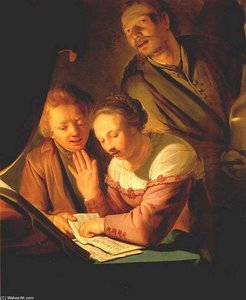
Musical Trio

Hand Made Oil Reproduction

Hand-painted oil on canvas in your size and frame, made to order by our artists. ( Switch to Print Switch to Digital Image)

Collectible Description

Experience Pieter de Grebber's 'Musical Trio' (1623), a captivating Baroque scene of shared music and quiet contemplation. Explore the Dutch Golden Age masterpiece!

Artist Biography

Discover Pieter de Grebber, a Dutch Golden Age painter known for classicist landscapes & portraits. Explore his unique style influenced by Rubens & Rembrandt.

from ·

Chapter 1

How large should it be?

Slide to change the size; the picture on the left shows the frame at its real width. The proportions of the original are kept.

Standard
custom
CM
INCH

Pick from our preset sizes that match the artwork's original proportions.

width
height

Type the width and the height you need, to fit your frame or your wall. This is hand-painted, so for a size with a different shape the artist can paint a bit more around the picture, or cut a bit — you choose. We send you a digital mockup to approve before the painting starts. The picture shown on this page does not show the real result — only the mockup does.

Chapter 2

How should it arrive?

Choose the edges of the stretched canvas

Choose your frame

Corner sample of the WhiteWrap canvas edge finish, stretched on solid wood bars
White $1
Corner sample of the BlurSideWrap canvas edge finish, stretched on solid wood bars
Blurside $1
Corner sample of the ExtendedWrap canvas edge finish, stretched on solid wood bars
Extended $1
Corner sample of the P118B picture frame: moulded polystyrene, 5 cm wide and 3 cm thick
P118B $10
Corner sample of the P118H picture frame: moulded polystyrene, 5 cm wide and 3 cm thick
P118H $10
Corner sample of the P118W picture frame: moulded polystyrene, 5 cm wide and 3 cm thick
P118W $10
Corner sample of the P438Z picture frame: moulded polystyrene, 5.5 cm wide and 3.5 cm thick
P438Z $10
Corner sample of the P508JH picture frame: moulded polystyrene, 7 cm wide and 3.5 cm thick
P508JH $12
Corner sample of the P508YH picture frame: moulded polystyrene, 7 cm wide and 3.5 cm thick
P508YH $12
Corner sample of the P805H picture frame: moulded polystyrene, 5 cm wide and 3.5 cm thick
P805H $10
Corner sample of the P805Z picture frame: moulded polystyrene, 5 cm wide and 3.5 cm thick
P805Z $10
Corner sample of the P919BZ picture frame: moulded polystyrene, 7 cm wide and 3.5 cm thick
P919BZ $10
Corner sample of the P919G picture frame: moulded polystyrene, 7 cm wide and 3.5 cm thick
P919G $10
Corner sample of the P919XJ picture frame: moulded polystyrene, 7 cm wide and 3.5 cm thick
P919XJ $10
Corner sample of the P959ZH picture frame: moulded polystyrene, 5 cm wide and 3 cm thick
P959ZH $10
Corner sample of the P968JZ picture frame: moulded polystyrene, 6 cm wide and 4 cm thick
P968JZ $12
Corner sample of the W106C picture frame: solid wood, 5 cm wide and 3 cm thick
W106C $8
Corner sample of the W218G picture frame: solid wood, 5 cm wide and 3 cm thick
W218G $10
Corner sample of the W218JH picture frame: solid wood, 5 cm wide and 3 cm thick
W218JH $8
Corner sample of the W218Y picture frame: solid wood, 5 cm wide and 3 cm thick
W218Y $10
Corner sample of the W307PJ picture frame: solid wood, 6 cm wide and 3 cm thick
W307PJ $10
Corner sample of the W316G picture frame: solid wood, 6 cm wide and 3 cm thick
W316G $10
Corner sample of the W316PJ picture frame: solid wood, 6 cm wide and 3 cm thick
W316PJ $8
Corner sample of the W316Y picture frame: solid wood, 6 cm wide and 3 cm thick
W316Y $10
Corner sample of the W398PJ picture frame: solid wood, 5 cm wide and 3 cm thick
W398PJ $8
Corner sample of the W4111J picture frame: solid wood, 6.5 cm wide and 3.5 cm thick
W4111J $10
Corner sample of the W500HY picture frame: solid wood, 7 cm wide and 5 cm thick
W500HY $15
Corner sample of the W500JH picture frame: solid wood, 7 cm wide and 5 cm thick
W500JH $15
Corner sample of the W692G picture frame: solid wood, 8 cm wide and 4 cm thick
W692G $12
Corner sample of the W849H picture frame: solid wood, 5 cm wide and 3 cm thick
W849H $8
Corner sample of the W940BG picture frame: solid wood, 7.5 cm wide and 4.5 cm thick
W940BG $15
Corner sample of the W953PJ picture frame: solid wood, 6 cm wide and 3.5 cm thick
W953PJ $8
Corner sample of the H24-GOLD picture frame: carved wood with gesso, 10 cm wide and 6 cm thick
H24-GOLD $30
Corner sample of the H24-SILVER picture frame: carved wood with gesso, 10 cm wide and 6 cm thick
H24-SILVER $30
Corner sample of the H36-GOLD picture frame: carved wood with gesso, 15 cm wide and 6.5 cm thick
H36-GOLD $45
Corner sample of the H36-SILVER picture frame: carved wood with gesso, 15 cm wide and 6.5 cm thick
H36-SILVER $45
Frame preview
Framed

Moulding: . Overall size with the frame: .

Chapter 3

Who paints it, and should anything change?

Examples of what can be changed: Replace face with customer photo; Add pet (e.g., replace cat with dog); Include hidden message in background; Change background landscape or elements.
After order, OriginalUniqueArt.com team will email client for instructions and provide a mockup preview

Worldwide Delivery () in 3/4 weeks instead of standard 5 weeks. (4 November). No compromise on quality.

Chapter 4

The finishing touches

A nameplate, as in a museum?

Engraved Bronze Plaque Details

This elegant plaque features the artist's name and the title of the artwork, finely engraved for a timeless presentation.

It is made from bronze with a refined, elegant finish. The text is precisely laser-engraved for a sharp and permanent result. Measuring 9x2 cm, the plaque is compact yet easy to read. It's built to be durable and scratch-resistant, offering a professional, museum-quality look. Mounting is simple thanks to the included adhesive backing.

Transparent Acrylic Plaque Details

The plaque includes essential engraved details such as the artist's name, the title of the artwork, the date it was created, the type of media used-like oil on canvas or watercolor-a brief description of the piece, and a QR code that links to the complete artwork information.

It is crafted from clear acrylic, offering a sleek, modern appearance. The text is UV-engraved in black to ensure strong visual contrast. With a size of 10x15 cm, it ensures optimal readability. It comes equipped with two metal hooks for secure wall mounting. The plaque is designed to be weather-resistant, making it suitable for various environments, and it includes interactive features that work seamlessly with smartphone scanning.

Black Acrylic Plaque Details

This elegant plaque includes engraved information such as the artist's name, the title of the artwork, the date it was created, the type of media used (like oil on canvas or watercolor), a short description of the artwork, and a QR code for quick access to more information.

The plaque itself is made from refined black acrylic with a premium finish. The text is laser-engraved in white for high contrast and readability. Its size is 10x15 cm, designed to be easy to read. It comes with two metal hooks for professional mounting. The design is sleek and fits any interior style. It is also weather-resistant and durable, with built-in digital integration for mobile compatibility.

A protective varnish?

When do you need it?

Chapter 5

Your painting, as you ordered it

Musical Trio

Reproduction Medium

Reproduction Size

-

Elite Senior Artist

More detail, finesse, and extra production time

-

Reproduction Frame

-

-

For artworks or reproductions larger than 105 cm (approximately 41 inches) on any side, the frame will be shipped as a kit, disassembled. This method ensures safe delivery and prevents damage during transport.

Professional assembly required - this is not a DIY product.
The kit must be assembled and the canvas stretched by an experienced professional framer, using wood glue (not supplied), a canvas stretching plier and clamps to hold the bars square while the glue dries. Incorrect assembly or uneven canvas tension can permanently damage the artwork and is not covered by our warranty.

  • All solid wood bars are included, precisely cut to size.

  • Assembled with the screws provided, plus wood glue for the corner joints, which is not supplied and must be sourced by your framer.

  • Professional tools are required and not included: a canvas stretching plier (tensioner) and clamps to hold the bars square while the glue dries.

Important:
The corner joints require wood glue, the bars must be held with clamps until the glue is fully dry, and tightening the canvas on the assembled frame requires a canvas stretching plier. None of these are included in the kit. Please arrange an experienced professional framer before ordering this size.

Nameplate

-

-

Protective Varnish

Glossy Varnish (enhances colors, protects against light/moisture)

-

Customize My Artwork

Examples of what can be changed: Replace face with customer photo; Add pet (e.g., replace cat with dog); Include hidden message in background; Change background landscape or elements.

-

Urgent

Worldwide Delivery () in 3/4 weeks instead of standard 5 weeks. (4 November). No compromise on quality.

-

Express Shipping

Worldwide Delivery () in 5 weeks. (11 November).

Included

Total Price

$ 300

Total Price $ 300

Glass option is only available in size under 110 CM

Included with every order

  • Free Worldwide Express Shipping
  • High-Quality Linen Canvas
  • Full Shipping Insurance
  • Customs Tax Refund Guarantee
  • True Color Matching Guarantee
  • 100-Day Return Policy (Defects Only)
  • 100% Money-Back Guarantee
  • Bulk Discount Offer

A Moment of Refined Leisure: Pieter de Grebber's "Musical Trio"

Step into a world of quiet elegance and artistic refinement with Pieter de Grebber’s captivating “Musical Trio,” painted in 1623. This exquisite oil on canvas transports us to the intimate setting of a Dutch Golden Age home, where music and intellectual pursuits intertwine. The scene depicts three figures – a woman seated at a desk, a gentleman attentively listening, and a young boy observing with rapt attention – engaged in what appears to be a shared musical experience. De Grebber masterfully captures a fleeting moment of domestic harmony, inviting viewers to contemplate the values and aesthetics of 17th-century Dutch society.

Style & Technique: Baroque Realism

De Grebber’s style firmly resides within the Baroque tradition, yet infused with a distinct classicist sensibility influenced by his exposure to Peter Paul Rubens' work. The painting showcases remarkable realism, evident in the meticulous rendering of fabrics – note the delicate lace and intricate embroidery adorning the woman’s attire – and the nuanced expressions on each figure’s face. The artist employs chiaroscuro—the dramatic use of light and shadow—to create depth and three-dimensionality, drawing the eye to the central figures while subtly obscuring the background. This technique not only enhances the realism but also contributes to a sense of intimacy and focused attention within the scene. The brushwork is smooth and controlled, characteristic of Dutch Golden Age painting, allowing for incredible detail without sacrificing overall harmony.

Historical Context & Symbolism

Created during the Dutch Golden Age (roughly 1602-1702), a period of unprecedented economic prosperity and cultural flourishing in the Netherlands, "Musical Trio" reflects the era’s emphasis on education, domesticity, and refined leisure. Music was highly valued within Dutch society, often associated with intellectual pursuits and social status. The presence of the open book suggests literacy and learning, further reinforcing the image of a cultured household. The figures' attire—particularly the woman’s elaborate dress—indicates their position within the upper echelons of society. While overt symbolism is subtle, the attentive gaze of the gentleman and boy towards the woman could be interpreted as representing respect for female intellect or perhaps hinting at familial relationships and mentorship. De Grebber's connection to Jan Albertszoon Ban, a priest and musicologist, further underscores the painting’s engagement with musical culture.

Emotional Impact & Artistic Legacy

"Musical Trio" evokes a sense of tranquility, intellectual curiosity, and shared enjoyment. The quiet intimacy of the scene invites viewers to step into this world and momentarily share in their experience. De Grebber's ability to capture subtle emotions—the woman’s focused concentration, the gentleman’s attentive listening, the boy’s eager observation—is a testament to his skill as a portraitist and genre painter. As a student of Hendrick Goltzius and influenced by Rubens, de Grebber contributed significantly to the development of Dutch Golden Age painting, leaving behind a legacy of refined realism and evocative depictions of domestic life. His influence can be seen in later artists like Gerbrand van den Eeckhout and his own pupils, solidifying his place as a key figure in 17th-century art.

Questions & Answers

Is a high-resolution download of "Musical Trio" available?

To get a digital file of "Musical Trio" by Pieter De Grebber, order a high-resolution digital image download on its Digital Image page.

Which artist and which style stand behind "Musical Trio"?

Pieter De Grebber created "Musical Trio" within the Baroque movement.

How do the colors of "Musical Trio" relate to each other?

"Musical Trio" by Pieter De Grebber displays a strong color unity color harmony.

More about this painting

Preview AR preview Switch to Print Switch to Digital Image Send
Details Guide Add to favorites Download Similars X-Ray Diaporama Q&A Stats

In numbers

  • 1623the year it was painted
  • 29frames to choose from
  • standard sizes, in its own proportions
  • 5weeks to paint and deliver it
Pieter De Grebber

Pieter De Grebber

1600 - 1652, Netherlands

Quick facts about Pieter De Grebber

  • Full Name: John Testicle
  • Date Of Birth: 1600
  • Date Of Death: 1652
  • Place Of Birth: Haarlem, Netherlands
  • Artistic Movement Or Style: Baroque
  • Artists Who Influenced This Artist:
    • Caravaggio
    • Rubens
    • Maíno
    • Hals
    • Lan Ying
    • Honthorst

Artist Biography

The Master of Haarlem Classicism

In the vibrant tapestry of the Dutch Golden Age, few threads are as elegantly woven as those spun by Pieter de Grebber. Born in 1600 in the historic city of Haarlem, De Grebber emerged from a lineage deeply rooted in both artistry and faith. As the eldest son of the painter and embroiderer Frans Pietersz de Grebber, his apprenticeship began within the intimate confines of a family workshop, where the rhythms of brush and needle were part of daily life. This early immersion in a Catholic artistic household provided him with a unique cultural perspective, one that would later allow him to navigate both the public grandeur of official commissions and the more discreet, spiritual requirements of hidden Catholic churches.

De Grebber’s education was far from provincial; he refined his craft under the guidance of the legendary Hendrick Goltzius, absorbing the sophisticated Mannerist traditions that preceded the rise of classicism. His journey was marked by a remarkable ability to synthesize diverse influences into a singular, personal vision. He drew strength from the dramatic chiaroscuro of the Utrecht Caravaggists, the robust energy of Peter Paul Rubens, and the psychological depth found in the works of Rembrandt. This synthesis allowed him to become a primary architect of Haarlem Classicism, a movement characterized by a refined clarity, well-organized compositions, and a delicate use of light tints that breathed life into every canvas.

A Legacy of Light and Composition

The breadth of De Grebber’s oeuvre is a testament to his versatility as a storyteller through paint. While he was a master of the portrait, capturing the dignity and character of his subjects with a steady hand, it was in his history paintings and landscapes that his true stylistic innovation shone. His work often moved away from the heavy shadows of his predecessors toward a more luminous, balanced aesthetic. This approach made him a sought-after talent for prestigious architectural projects; he contributed significantly to the decoration of the Huis Honselaarsdijk in Naaldwijk and worked upon the Paleis Noordeinde at Huis ten Bosch in The Hague.

Beyond his brushwork, De Grebber was a man of intellectual depth. His commitment to the formal principles of art led him to author the treatise Regulen welcke by... in 1649, a work that sought to codify the rules of painting for future generations. This scholarly pursuit, combined with his role as a teacher to notable pupils such as Nicolaes Pietersz Berchem and Dirck Helmbreeker, ensured that his influence would ripple through the Dutch art scene long after his passing in 1652.

To understand the essence of Pieter de Grebber is to appreciate the following pillars of his career:

  • Artistic Lineage: Raised in a prominent Haarlem artistic family, learning directly from his father and the great Goltzius.
  • Stylistic Innovation: A pioneer of Haarlem Classicism, blending the drama of Caravaggism with the grace of Rubens.
  • Prestigious Commissions: Trusted by the Stadholder Frederik Hendrik to decorate significant royal and state residences.
  • Intellectual Contribution: An accomplished theorist who sought to define the formal standards of his era through written treatise.

Though he lived a relatively quiet life in the Haarlem Béguinage during his later years, the impact of his luminous landscapes and structured histories remains indelible. He stands not merely as a painter of his time, but as a bridge between the turbulent energy of the early seventeenth century and the poised, classical elegance that would define the height of Dutch mastery.

Quick Facts

  • Artist: Pieter de Grebber
  • Year: 1623
  • Medium: Oil on canvas
  • Artistic style: Baroque
  • Movement: Dutch Golden Age

Art Quiz

There is only one correct answer for each question.

Question 1:
What year was the painting "Musical Trio" by Pieter de Grebber created?
Question 2:
Which artistic period is 'Musical Trio' most closely associated with?
Question 3:
What medium was used to create this artwork?
Question 4:
Based on the description, what is a prominent characteristic of Pieter de Grebber's painting style evident in 'Musical Trio'?
Question 5:
What does the presence of a lute suggest about the scene depicted in "Musical Trio"?