Text size

() ·

A painting made for you, by hand

Lady with an Ermine

Hand Made Oil Reproduction

Hand-painted oil on canvas in your size and frame, made to order by our artists. ( Switch to Print Switch to Digital Image)

Collectible Description

Admire Leonardo da Vinci's 'Lady with an Ermine'! This Renaissance masterpiece showcases Cecilia Gallerani, revealing power & grace through symbolism and Da Vinci’s sfumato technique.

Artist Biography

Renaissance master Leonardo da Vinci created the Mona Lisa. Discover his legendary paintings and scientific genius today.

from ·

Chapter 1

How large should it be?

Slide to change the size; the picture on the left shows the frame at its real width. The proportions of the original are kept.

Standard
custom
CM
INCH

Pick from our preset sizes that match the artwork's original proportions.

width
height

Type the width and the height you need, to fit your frame or your wall. This is hand-painted, so for a size with a different shape the artist can paint a bit more around the picture, or cut a bit — you choose. We send you a digital mockup to approve before the painting starts. The picture shown on this page does not show the real result — only the mockup does.

Chapter 2

How should it arrive?

Choose the edges of the stretched canvas

Choose your frame

Corner sample of the WhiteWrap canvas edge finish, stretched on solid wood bars
White $1
Corner sample of the BlurSideWrap canvas edge finish, stretched on solid wood bars
Blurside $1
Corner sample of the ExtendedWrap canvas edge finish, stretched on solid wood bars
Extended $1
Corner sample of the P118B picture frame: moulded polystyrene, 5 cm wide and 3 cm thick
P118B $10
Corner sample of the P118H picture frame: moulded polystyrene, 5 cm wide and 3 cm thick
P118H $10
Corner sample of the P118W picture frame: moulded polystyrene, 5 cm wide and 3 cm thick
P118W $10
Corner sample of the P438Z picture frame: moulded polystyrene, 5.5 cm wide and 3.5 cm thick
P438Z $10
Corner sample of the P508JH picture frame: moulded polystyrene, 7 cm wide and 3.5 cm thick
P508JH $12
Corner sample of the P508YH picture frame: moulded polystyrene, 7 cm wide and 3.5 cm thick
P508YH $12
Corner sample of the P805H picture frame: moulded polystyrene, 5 cm wide and 3.5 cm thick
P805H $10
Corner sample of the P805Z picture frame: moulded polystyrene, 5 cm wide and 3.5 cm thick
P805Z $10
Corner sample of the P919BZ picture frame: moulded polystyrene, 7 cm wide and 3.5 cm thick
P919BZ $10
Corner sample of the P919G picture frame: moulded polystyrene, 7 cm wide and 3.5 cm thick
P919G $10
Corner sample of the P919XJ picture frame: moulded polystyrene, 7 cm wide and 3.5 cm thick
P919XJ $10
Corner sample of the P959ZH picture frame: moulded polystyrene, 5 cm wide and 3 cm thick
P959ZH $10
Corner sample of the P968JZ picture frame: moulded polystyrene, 6 cm wide and 4 cm thick
P968JZ $12
Corner sample of the W106C picture frame: solid wood, 5 cm wide and 3 cm thick
W106C $8
Corner sample of the W218G picture frame: solid wood, 5 cm wide and 3 cm thick
W218G $10
Corner sample of the W218JH picture frame: solid wood, 5 cm wide and 3 cm thick
W218JH $8
Corner sample of the W218Y picture frame: solid wood, 5 cm wide and 3 cm thick
W218Y $10
Corner sample of the W307PJ picture frame: solid wood, 6 cm wide and 3 cm thick
W307PJ $10
Corner sample of the W316G picture frame: solid wood, 6 cm wide and 3 cm thick
W316G $10
Corner sample of the W316PJ picture frame: solid wood, 6 cm wide and 3 cm thick
W316PJ $8
Corner sample of the W316Y picture frame: solid wood, 6 cm wide and 3 cm thick
W316Y $10
Corner sample of the W398PJ picture frame: solid wood, 5 cm wide and 3 cm thick
W398PJ $8
Corner sample of the W4111J picture frame: solid wood, 6.5 cm wide and 3.5 cm thick
W4111J $10
Corner sample of the W500HY picture frame: solid wood, 7 cm wide and 5 cm thick
W500HY $15
Corner sample of the W500JH picture frame: solid wood, 7 cm wide and 5 cm thick
W500JH $15
Corner sample of the W692G picture frame: solid wood, 8 cm wide and 4 cm thick
W692G $12
Corner sample of the W849H picture frame: solid wood, 5 cm wide and 3 cm thick
W849H $8
Corner sample of the W940BG picture frame: solid wood, 7.5 cm wide and 4.5 cm thick
W940BG $15
Corner sample of the W953PJ picture frame: solid wood, 6 cm wide and 3.5 cm thick
W953PJ $8
Corner sample of the H24-GOLD picture frame: carved wood with gesso, 10 cm wide and 6 cm thick
H24-GOLD $30
Corner sample of the H24-SILVER picture frame: carved wood with gesso, 10 cm wide and 6 cm thick
H24-SILVER $30
Corner sample of the H36-GOLD picture frame: carved wood with gesso, 15 cm wide and 6.5 cm thick
H36-GOLD $45
Corner sample of the H36-SILVER picture frame: carved wood with gesso, 15 cm wide and 6.5 cm thick
H36-SILVER $45
Frame preview
Framed

Moulding: . Overall size with the frame: .

Chapter 3

Who paints it, and should anything change?

Examples of what can be changed: Replace face with customer photo; Add pet (e.g., replace cat with dog); Include hidden message in background; Change background landscape or elements.
After order, OriginalUniqueArt.com team will email client for instructions and provide a mockup preview

Worldwide Delivery () in 3/4 weeks instead of standard 5 weeks. (2 November). No compromise on quality.

Chapter 4

The finishing touches

A nameplate, as in a museum?

Engraved Bronze Plaque Details

This elegant plaque features the artist's name and the title of the artwork, finely engraved for a timeless presentation.

It is made from bronze with a refined, elegant finish. The text is precisely laser-engraved for a sharp and permanent result. Measuring 9x2 cm, the plaque is compact yet easy to read. It's built to be durable and scratch-resistant, offering a professional, museum-quality look. Mounting is simple thanks to the included adhesive backing.

Transparent Acrylic Plaque Details

The plaque includes essential engraved details such as the artist's name, the title of the artwork, the date it was created, the type of media used-like oil on canvas or watercolor-a brief description of the piece, and a QR code that links to the complete artwork information.

It is crafted from clear acrylic, offering a sleek, modern appearance. The text is UV-engraved in black to ensure strong visual contrast. With a size of 10x15 cm, it ensures optimal readability. It comes equipped with two metal hooks for secure wall mounting. The plaque is designed to be weather-resistant, making it suitable for various environments, and it includes interactive features that work seamlessly with smartphone scanning.

Black Acrylic Plaque Details

This elegant plaque includes engraved information such as the artist's name, the title of the artwork, the date it was created, the type of media used (like oil on canvas or watercolor), a short description of the artwork, and a QR code for quick access to more information.

The plaque itself is made from refined black acrylic with a premium finish. The text is laser-engraved in white for high contrast and readability. Its size is 10x15 cm, designed to be easy to read. It comes with two metal hooks for professional mounting. The design is sleek and fits any interior style. It is also weather-resistant and durable, with built-in digital integration for mobile compatibility.

A protective varnish?

When do you need it?

Chapter 5

Your painting, as you ordered it

Lady with an Ermine

Reproduction Medium

Reproduction Size

-

Elite Senior Artist

More detail, finesse, and extra production time

-

Reproduction Frame

-

-

For artworks or reproductions larger than 105 cm (approximately 41 inches) on any side, the frame will be shipped as a kit, disassembled. This method ensures safe delivery and prevents damage during transport.

Professional assembly required - this is not a DIY product.
The kit must be assembled and the canvas stretched by an experienced professional framer, using wood glue (not supplied), a canvas stretching plier and clamps to hold the bars square while the glue dries. Incorrect assembly or uneven canvas tension can permanently damage the artwork and is not covered by our warranty.

  • All solid wood bars are included, precisely cut to size.

  • Assembled with the screws provided, plus wood glue for the corner joints, which is not supplied and must be sourced by your framer.

  • Professional tools are required and not included: a canvas stretching plier (tensioner) and clamps to hold the bars square while the glue dries.

Important:
The corner joints require wood glue, the bars must be held with clamps until the glue is fully dry, and tightening the canvas on the assembled frame requires a canvas stretching plier. None of these are included in the kit. Please arrange an experienced professional framer before ordering this size.

Nameplate

-

-

Protective Varnish

Glossy Varnish (enhances colors, protects against light/moisture)

-

Customize My Artwork

Examples of what can be changed: Replace face with customer photo; Add pet (e.g., replace cat with dog); Include hidden message in background; Change background landscape or elements.

-

Urgent

Worldwide Delivery () in 3/4 weeks instead of standard 5 weeks. (2 November). No compromise on quality.

-

Express Shipping

Worldwide Delivery () in 5 weeks. (9 November).

Included

Total Price

$ 300

Total Price $ 300

Glass option is only available in size under 110 CM

Included with every order

  • Free Worldwide Express Shipping
  • High-Quality Linen Canvas
  • Full Shipping Insurance
  • Customs Tax Refund Guarantee
  • True Color Matching Guarantee
  • 100-Day Return Policy (Defects Only)
  • 100% Money-Back Guarantee
  • Bulk Discount Offer

Lady with an Ermine: A Renaissance Masterpiece

  • Title: Lady with an Ermine
  • Artist: Leonardo da Vinci
  • Date: ca. 1489–1491
  • Medium: Oil on panel

A Portrait of Cecilia Gallerani

Leonardo da Vinci's "Lady with an Ermine" is a captivating portrait depicting Cecilia Gallerani, the renowned mistress of Ludovico Sforza, Duke of Milan. Painted around 1489-1491 during Da Vinci’s first Milanese period, this artwork offers a glimpse into the opulent world of Renaissance court life and showcases the artist's exceptional skill in capturing human likeness and emotion. The painting was initially acquired in Italy around 1800 by Adam Jerzy, son of Princess Izabela Czartoryska, and later donated to the Museum in Puławy, where it resided for several decades before becoming property of the Republic of Poland in 2016.

Renaissance Style and Technique

The "Lady with an Ermine" exemplifies the High Renaissance style, characterized by its meticulous detail, realistic portrayal, and harmonious composition. Da Vinci masterfully employs *sfumato*, a technique utilizing subtle gradations of light and shadow to create a soft, hazy effect that blurs harsh lines and adds depth to the figure. The painting’s color palette is predominantly warm and muted, with rich browns, golds, and blues creating an atmosphere of elegance and refinement. Da Vinci's anatomical accuracy is evident in Cecilia's pose and features, demonstrating his profound understanding of human form. The shallow perspective draws attention directly to the subject, emphasizing her presence and importance.

Symbolism and Interpretation

Beyond its aesthetic beauty, "Lady with an Ermine" is rich in symbolism. The ermine itself holds significant meaning; it was a heraldic symbol of Duke Ludovico Sforza, who was often referred to as “il Moro” (the Moor) and also “Ermellino Bianco” (White Ermine). The presence of the lion cub at Cecilia’s feet further reinforces her connection to the Duke, symbolizing his power and lineage. Cecilia's serene expression and dignified posture suggest her status as a noblewoman and a woman of intelligence and grace. The original background, now overpainted with black, was likely modeled with light, creating an illusion of depth and suggesting that Cecilia is emerging from shadows—a visual metaphor for her position within the court.

Emotional Impact and Legacy

"Lady with an Ermine" evokes a sense of serenity, dignity, and idealized beauty. Da Vinci’s skill in capturing human emotion shines through in Cecilia's gentle gaze and subtle smile, creating a portrait that is both intimate and regal. The painting stands as a testament to the Renaissance ideal of portraying human vitality and serves as a powerful reminder of Leonardo da Vinci’s genius—a true polymath who excelled as an artist, scientist, inventor, and more. Today, it resides in the Czartoryski Museum in Kraków, Poland, where it continues to captivate audiences with its timeless beauty and historical significance.

Questions & Answers

What color intensity does "Lady with an Ermine" by Leonardo da Vinci have?

"Lady with an Ermine" by Leonardo da Vinci shows a monochromatic color intensity.

From which country does the High Renaissance work "Lady with an Ermine" come?

"Lady with an Ermine" was created by Leonardo da Vinci, born in Italy, within the High Renaissance movement. The artist's origin links the work to High Renaissance as practiced by artists from Italy.

What is the dominant color of "Lady with an Ermine" by Leonardo da Vinci?

The dominant color of "Lady with an Ermine" by Leonardo da Vinci is phthalo green (#282826).

More about this painting

Preview AR preview Switch to Print Switch to Digital Image Send
Details Guide Add to favorites Download Similars X-Ray Diaporama Q&A Stats

In numbers

  • 29frames to choose from
  • standard sizes, in its own proportions
  • 5weeks to paint and deliver it
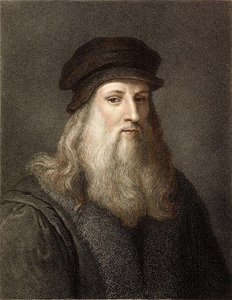
Leonardo da Vinci

Leonardo da Vinci

1452 - 1519, Italy

Quick facts about Leonardo da Vinci

  • Artistic Movement Or Style: Renaissance
  • Artists Or Movements Influenced By This Artist: ['Western art']
  • Artists Who Influenced This Artist: ['Andrea del Verrocchio']
  • Full Name: Lionardo di ser Piero da Vinci
  • Nationality: Italian
  • Notable Artworks:
    • Mona Lisa
    • The Last Supper
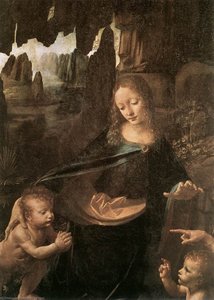
    • Virgin of the Rocks
    • Annunciation
  • Place Of Birth: Vinci, Italy
  • Date Of Birth: 1452
  • Date Of Death: 1519

Artist Biography

The Boy from Vinci

In the quiet hills near the village of Vinci, a child named Lionardo di ser Piero da Vinci entered a world that would never truly contain his restless mind. Born to a Florentine notary and a peasant woman, his very beginnings were marked by an unconventional path, as his illegitimacy meant he was not destined to follow in his father's legal footsteps. Instead, this freedom allowed him to wander into the workshop of Andrea del Verrocchio in Florence. It was here, amidst the scent of oils and the dust of marble, that a young apprentice learned that seeing was the highest form of understanding. He did not merely study the brush; he studied the way light clings to a curved surface and how shadow dissolves the edges of a limb.

His early years in Florence were defined by this intense observation. He absorbed the technical rigors of metalworking, carpentry, and drawing, building a foundation that merged the physical with the cerebral. While others sought only to replicate what they saw, he sought to understand the mechanics behind it. This period of growth was not marked by a sudden burst of fame, but by a slow, methodical accumulation of knowledge that would later allow him to bridge the gap between the artist's eye and the scientist's inquiry.

The Milanese Years and the Pursuit of Motion

When the winds of political change blew toward Milan, Leonardo followed the service of Ludovico Sforza. This move transformed him from a talented painter into a multifaceted presence within the ducal court. He arrived not merely as an artist, but as an engineer and designer, tasked with creating fortifications and even theatrical stage sets. It was during this long residency in Milan that he began to grapple with the profound drama of human interaction. In the refectory of Santa Maria delle Grazie, he applied his observations of psychology to a large-scale fresco, capturing the precise, heavy moment of betrayal within a group of apostles.

His mind during these years wandered far beyond the walls of the monastery. He filled notebooks with sketches of flying machines, advanced weaponry, and hydraulic systems, driven by a desire to map the hidden laws of nature. Yet, his ambitions often outpaced his ability to finish. A great equestrian statue, intended to honor the Sforza family, remained a dream of clay that was eventually shattered by invading French forces. This pattern of unfinished greatness followed him; he was a man who often found more satisfaction in the discovery of a principle than in the completion of a canvas.

The Final Light in France

A return to Florence brought with it a period of profound refinement. It was here that he worked on the portrait of a woman whose subtle, enigmatic expression would later haunt the halls of history. Through his use of sfumato, a technique where colors and tones blend so softly that they appear like smoke, he removed the harsh outlines of the world, creating an atmosphere that felt alive with breath and movement. His anatomical studies grew more precise during this time as well, fueled by his habit of dissecting cadavers to map the intricate architecture of bone and muscle.

In his final years, under the invitation of King Francis I, Leonardo moved to the Château du Clos Lucé in France. Even as age perhaps slowed his hand, his intellect remained sharp, focused on the study of optics, geology, and botany. He died in 1519, leaving behind a legacy that was never truly finished, much like his many drawings. His life remains a singular example of what can be achieved when the boundaries between art and science are erased, proving that to truly see the world, one must be willing to study every shadow and every muscle within it.

Quick Facts

  • Subject or theme: Cecilia Gallerani, mistress
  • Artist: Leonardo da Vinci
  • Notable elements or techniques:
    • Sfumato
    • Anatomical accuracy
  • Artistic style: Renaissance portraiture
  • Title: Lady with an Ermine

Art Quiz

There is only one correct answer for each question.

Question 1:
Who is believed to be the subject of Leonardo da Vinci’s ‘Lady with an Ermine’?
Question 2:
What animal is depicted with the lady in the portrait?
Question 3:
The ermine in the painting serves as an allusion to:
Question 4:
What artistic technique is prominently displayed in 'Lady with an Ermine', contributing to the hazy and soft appearance?
Question 5:
What was initially overpainted on the original background of the painting in the 19th century?