
 Preview
 Send
Send Share
Share
 Details
 Guide
Guide

 Download
 Similars
 X-Ray
X-Ray Diaporama
 Q&A
Q&A Stats
StatsMelancholy


 Read More
Get a print-ready file that goes far beyond the web preview. Every digital image we sell comes from a high-resolution master in our stock database — usually 5,000 to 15,000 pixels wide — so you can print large, crop tightly, or reproduce fine detail with confidence.
No file leaves our studio untouched. A digital expert checks the colors against the original painting and corrects them if needed, then improves clarity and detail with professional retouching tools — always staying faithful to the artist's brushwork and style. The result is an image that looks like the painting, not like a filtered scan.
You approve before you're done: our expert sends the image by e-mail within 72 hours for your review. Not satisfied? Ask for improvements or corrections, or request a refund if the quality falls short.
This is the quality relied on by publishers, design studios, galleries and print shops.
Digital Image
Download a high-resolution file for personal display, printing, and creative projects. ( Switch to Print Buy Hand Made Painting)
Included in Every Digital Image Order
Expert Digital Delivery, Guaranteed
When you choose OriginalUniqueArt.com, you're not just getting an image - you're receiving a professionally enhanced digital artwork, crafted with precision and backed by a satisfaction guarantee. Here's everything that comes with your order, automatically:

Fast Email Delivery
Your high-resolution digital image file will be emailed to you within 72 hours of ordering - ready for immediate use.

AI-Enhanced Digital File
Your artwork is professionally optimized using advanced AI tools and manual editing, ensuring maximum detail, clarity, and color accuracy.

Free Lifetime Re-Delivery
Accidentally deleted or lost your file? No worries - we'll resend it to you anytime, free of charge.

No Import Fees - Ever
Enjoy your artwork instantly with zero customs, duties, or delivery fees - digital downloads are always tax-free.

Color Accuracy Guarantee
We ensure your digital image reflects the original colors as closely as possible using professional tools and color management.

100-Day Satisfaction Guarantee
If you're not satisfied with your digital image, we'll revise it or refund 100% within 100 days - no questions asked.

100% Money-Back Guarantee
Not satisfied? Get a full refund within 100 days of receiving your digital file - no questions asked.

Bulk Order Discounts
Buy 3 images, save 10% - Buy 5, save 15% - Buy 10+, save 20%. Great for creative projects, galleries, and agencies.
The Enigmatic Depths of “Melancholy” by Edgar Degas
Edgar Degas, a name synonymous with Impressionism yet profoundly resistant to easy categorization, offers us in "Melancholy" (1874) a work that transcends simple portraiture. Housed within the esteemed Phillips Collection, this painting isn’t merely a depiction of a woman; it's an invitation into the quiet contemplation of the human psyche—a testament to Degas’s extraordinary ability to capture not just appearances but the very essence of emotion. The piece immediately draws the eye with its carefully orchestrated composition: a woman, partially veiled by a curtain, positioned within a space defined by rich, layered colors and subtle gestures. It's a scene pregnant with unspoken narratives, inviting viewers to become active participants in deciphering her inner world.
Degas’s artistic vision is rooted in his meticulous observation of the world around him, a characteristic that aligns perfectly with his self-proclaimed status as a realist. He wasn’t interested in grand historical scenes or idealized beauty; instead, he sought to portray the everyday lives of ordinary people—and here, particularly, the complexities of female experience. The painting's palette is masterfully controlled – the dominant red of the woman’s clothing and furnishings creates a vibrant focal point, expertly balanced against the cooler blues and greens that permeate the background. This interplay of color isn’t merely decorative; it subtly reinforces the mood of introspection and perhaps even sadness that permeates the scene.
Symbolism Woven into the Fabric of the Image
The most striking element of “Melancholy” is undoubtedly the woman herself, her face partially obscured by the curtain. This deliberate concealment isn’t simply a stylistic choice; it functions as a potent metaphor for the barriers we erect between ourselves and our own emotions. The curtain becomes a visual representation of the ‘veil’ separating the external world from the internal landscape—a space where thoughts, feelings, and memories reside in quiet contemplation. Her downward gaze, tilted slightly to the left, is crucial. It speaks volumes about her state of mind: she's not looking outward, but inward, lost in a private reverie.
Beyond this central image, subtle details contribute to the painting’s layered symbolism. The arrangement of furniture—a sofa, a fireplace—suggests a domestic setting, yet it feels strangely sterile and devoid of warmth. This contributes to the overall sense of isolation and melancholy. Even the lighting, with its dramatic interplay of light and shadow, reinforces this mood, casting long shadows that seem to deepen the woman’s solitude.
A Masterpiece within the Context of Symbolism
“Melancholy” is a pivotal work in Degas's oeuvre, firmly situated within the broader context of Symbolist painting. Emerging in the late 19th century, Symbolism sought to explore the realm of subjective experience—the hidden depths of human consciousness and the power of emotions. Artists like Edvard Munch and James Ensor were deeply influenced by this movement’s emphasis on capturing inner states rather than simply representing external reality. Degas, while resisting the label of “Impressionist,” shared many affinities with Symbolists in his interest in portraying psychological complexity and emotional nuance.
The painting's creation coincided with a period of significant social and cultural change—a time when traditional values were being questioned and new forms of artistic expression were emerging. Degas’s willingness to delve into the darker aspects of human experience, as evidenced by “Melancholy,” reflects this broader shift in sensibility. It’s a work that speaks not only to the artist's personal vision but also to the anxieties and uncertainties of his era.
A Legacy Enduring Through Reproduction
“Melancholy” remains a profoundly moving artwork, captivating viewers with its evocative atmosphere and subtle symbolism. Its influence can be seen in countless subsequent works of art—from Expressionist paintings that sought to convey intense emotional states to contemporary artists who continue to explore the complexities of human psychology. For those seeking to experience Degas’s genius firsthand, OriginalUniqueArt offers meticulously crafted hand-painted reproductions of this iconic masterpiece. These high-quality reproductions capture not only the painting's visual beauty but also its emotional depth, allowing you to bring this timeless work into your own home or office.
Beyond “Melancholy,” exploring Degas’s other works—such as “Dancers at the Barre” and “Ballet Rehearsal on the Set”—provides a deeper understanding of his artistic range and his fascination with movement, light, and human interaction. For further insight into Impressionism and Symbolism, we encourage you to visit “Discover the Musée Des Beaux-Arts Tourcoing, France” or consult resources like Wikipedia’s entry on Symbolist Painting.
Questions & Answers
How is "Melancholy" recommended to be printed - what size, what orientation?
large size, landscape orientation: that is the print setup suggested for "Melancholy" by Edgar Degas.
What is the recommended print size for "Melancholy" by Edgar Degas?
The recommended print size for "Melancholy" by Edgar Degas is large.
Is "Melancholy" one of Edgar Degas's most popular works?
"Melancholy" by Edgar Degas has an iconic popularity level. This classification reflects how widely the work is recognized.
Artist Biography
The Life of Edgar Degas
Paris, 1834. A child is born into a moderately wealthy family to Hilaire-Germain-Edgar De Gas. The name he would eventually simplify to Edgar Degas marks the beginning of a life defined by the tension between social expectation and artistic obsession. He grows up within the sophisticated atmosphere of the French capital, a setting that will later serve as the backdrop for his observations of modern life.
The years pass in a blur of study and shifting interests. He moves from the structured environment of his upbringing toward the grit of the city's working spaces. He does not seek the sunlight of the outdoors, preferring the controlled, artificial light of the studio and the theater. His gaze settles on the dancers, the laundresses, and the racehorses of Paris, capturing the physical toll of labor and the fleeting movements of the stage. He remains a man of contradictions, often resisting the labels his contemporaries apply to him, insisting instead on his identity as a realist.
The end comes in Paris on 27 September 1917. He leaves behind a vast body of work that spans many decades, including:
- Procession on a road near Florence (about 1860)
- The Dancing Class (1874)
- The Absinthe Drinker (1876)
- The Tub (about 1886)
- Three Dancers in Red Costume (1896)
Early Life, Family and Training
Paris, 1834. The son of a banker and Célestine Musson De Gas, a Creole from New Orleans, Louisiana, Hilaire-Germain-Edgar De Gas enters a world of bourgeois stability. At eleven, he is enrolled at the Lycée Louis-le-Grand. The academic path is set, yet the boy’s focus drifts toward the halls of the Louvre. By 1853, having graduated from the Lycée with a baccalauréat in literature, he bypasses his father's expectations of a legal career. Instead, he registers as a copyist in the Louvre Museum, spending his hours tracing the lines of the masters.
The training intensifies at the École des Beaux-Arts in Paris. He moves through the rigors of classical instruction, honing a precision that would define his later work. In 1855, a meeting occurs that leaves a permanent mark on his development: he meets Jean-Auguste-Dominique Ingres. The encounter cements a respect for draftsmanship and the importance of the line, even as he begins to move toward the modern subjects that would eventually define his career.
Technique and Artistic Style
Degas rejects the label of Impressionist. He prefers the term "Realist," a choice that dictates his entire approach to the canvas. He avoids the outdoor landscape and the loose, flickering brushstrokes favored by his contemporaries. Instead, he retreats into the controlled environment of the studio. Here, he masters the human form through rigorous draftsmanship. He is a superb draftsman, possessing a specific, technical command over the depiction of movement. He does not wait for the sun to hit a subject; he constructs his scenes through careful study in pencil or pastel. This preparation allows him to freeze a fleeting moment of motion with anatomical precision.
Light in a Degas composition is rarely natural. He utilizes artificial light to emphasize the figures, creating a sense of theatricality and depth. One notable method is contre-jour, where he places his subject in shadow while the background remains brightly lit. This technique isolates the figure, pulling it forward from the environment. The result is a tension between the subject and the space they inhabit, often revealing the physical strain or the quiet, unposed reality of modern life.
- The Dance Class (1874)
- Interior (1868–1869)
- Madame de Rutte
Key Works and Subjects
The stage and the stable dominate his visual world. More than half of his output focuses on dancers, capturing them in moments of rehearsal and performance. He moves between the grace of a pirouette and the physical strain of the dance class. Beyond the theater, he turns his gaze toward the speed of the racetrack, documenting racehorses and the jockeys who ride them. These subjects are not merely decorative; they are studies in tension and movement.
His reach extends into the private and the psychological. He produces portraits that reveal a complex inner life, often using unconventional angles to isolate his subjects. This focus on the human form is not limited to oil on canvas. He works through a variety of media, including prints, drawings, and wax sculptures. His ability to render the human figure is evident in his many studies of women, often focusing on the body in private, unobserved moments.
- The Dancing Class, about 1874
- The Dance Class, 1874
- The Ballet Class, 1874–1876
- Interior, 1868–1869
- Scene from the Steeplechase: The Fallen Jockey, 1866
Legacy and Lasting Impact
The shift in late 19th-century art finds a central figure in Degas. Though he resisted the label, his presence helped establish the foundations of Impressionism. He moved away from the rigid, historical subjects of the academy, choosing instead to document the grit and grace of modern Parisian life. This departure from tradition paved the way for future generations of artists to explore the unvarnished reality of the human condition.
His influence reaches far beyond the initial Impressionist circle. The structural innovations and unconventional compositions he developed left a mark on the trajectory of modern art. Specifically, his approach to form and movement can be seen in the later works of Pablo Picasso and Henri Matisse. He taught the art world to look at the world through asymmetrical angles and unexpected crops, turning the private, fleeting moments of a dancer or a laundress into permanent studies of motion.
- The Dance Class
- The Ballet Class
- Interior
Where to See the Works Today
The traces of Degas's observation remain scattered across major institutions, preserved in the quiet halls of Paris and beyond. In France, the Musée d'Orsay holds significant collections of his work, capturing the movement he spent a lifetime studying. The Louvre Museum also houses his art, while the Bibliothèque Nationale de France in Paris maintains his works within its archives. These collections offer a direct look at the technical precision and the study of form that defined his career.
Across the Atlantic, the reach of his vision extends into the United States. The Metropolitan Museum of Art in New York holds his paintings, providing a window into the modern life he depicted with such scrutiny. In Philadelphia, the Philadelphia Museum of Art contains his works, ensuring his influence remains accessible to international audiences. These sites act as physical anchors for his legacy, where the lines and light he mastered are still visible to the modern eye.
- The Dance Class (1874)
- Interior (1868–1869)
- The Tub 1 (1886)
- Dancers in Pink (1885)
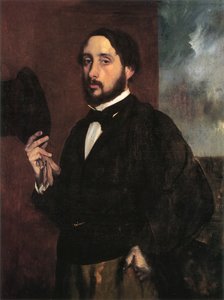
Edgar Degas
1834 - 1917 , France
Quick Facts
- Artistic Movement Or Style: Realism
- Artists Or Movements Influenced By This Artist:
- Pablo Picasso
- Henri Matisse
- Artists Who Influenced This Artist:
- Jean-Auguste-Dominique Ingres
- Gustave Courbet
- Full Name: Hilaire-Germain-Edgar Degas
- Nationality: French
- Notable Artworks:
- Dancer
- A Group of Dancers
- Women Combing Their Hair
- Place Of Birth: Paris, France
- Date Of Birth: 1834
- Date Of Death: 1917