Text size

() ·

A painting made for you, by hand

Melancholy

Hand Made Oil Reproduction

Hand-painted oil on canvas in your size and frame, made to order by our artists. ( Switch to Print Switch to Digital Image)

Collectible Description

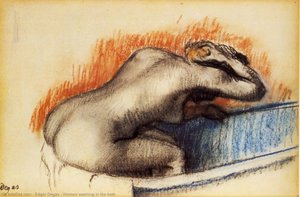
Experience Edgar Degas's 'Melancholy,' a poignant portrait capturing introspection and emotion. This masterpiece from 1874, housed at the Phillips Collection, showcases his signature style & psychological depth.

Artist Biography

Edgar Degas: A revolutionary French artist known for his captivating ballet dancers, Parisian scenes, and innovative techniques—a true master of modern art.

from ·

Chapter 1

How large should it be?

Slide to change the size; the picture on the left shows the frame at its real width. The proportions of the original are kept.

Standard
custom
CM
INCH

Pick from our preset sizes that match the artwork's original proportions.

width
height

Type the width and the height you need, to fit your frame or your wall. This is hand-painted, so for a size with a different shape the artist can paint a bit more around the picture, or cut a bit — you choose. We send you a digital mockup to approve before the painting starts. The picture shown on this page does not show the real result — only the mockup does.

Chapter 2

How should it arrive?

Choose the edges of the stretched canvas

Choose your frame

Corner sample of the WhiteWrap canvas edge finish, stretched on solid wood bars
White $1
Corner sample of the BlurSideWrap canvas edge finish, stretched on solid wood bars
Blurside $1
Corner sample of the ExtendedWrap canvas edge finish, stretched on solid wood bars
Extended $1
Corner sample of the P118B picture frame: moulded polystyrene, 5 cm wide and 3 cm thick
P118B $10
Corner sample of the P118H picture frame: moulded polystyrene, 5 cm wide and 3 cm thick
P118H $10
Corner sample of the P118W picture frame: moulded polystyrene, 5 cm wide and 3 cm thick
P118W $10
Corner sample of the P438Z picture frame: moulded polystyrene, 5.5 cm wide and 3.5 cm thick
P438Z $10
Corner sample of the P508JH picture frame: moulded polystyrene, 7 cm wide and 3.5 cm thick
P508JH $12
Corner sample of the P508YH picture frame: moulded polystyrene, 7 cm wide and 3.5 cm thick
P508YH $12
Corner sample of the P805H picture frame: moulded polystyrene, 5 cm wide and 3.5 cm thick
P805H $10
Corner sample of the P805Z picture frame: moulded polystyrene, 5 cm wide and 3.5 cm thick
P805Z $10
Corner sample of the P919BZ picture frame: moulded polystyrene, 7 cm wide and 3.5 cm thick
P919BZ $10
Corner sample of the P919G picture frame: moulded polystyrene, 7 cm wide and 3.5 cm thick
P919G $10
Corner sample of the P919XJ picture frame: moulded polystyrene, 7 cm wide and 3.5 cm thick
P919XJ $10
Corner sample of the P959ZH picture frame: moulded polystyrene, 5 cm wide and 3 cm thick
P959ZH $10
Corner sample of the P968JZ picture frame: moulded polystyrene, 6 cm wide and 4 cm thick
P968JZ $12
Corner sample of the W106C picture frame: solid wood, 5 cm wide and 3 cm thick
W106C $8
Corner sample of the W218G picture frame: solid wood, 5 cm wide and 3 cm thick
W218G $10
Corner sample of the W218JH picture frame: solid wood, 5 cm wide and 3 cm thick
W218JH $8
Corner sample of the W218Y picture frame: solid wood, 5 cm wide and 3 cm thick
W218Y $10
Corner sample of the W307PJ picture frame: solid wood, 6 cm wide and 3 cm thick
W307PJ $10
Corner sample of the W316G picture frame: solid wood, 6 cm wide and 3 cm thick
W316G $10
Corner sample of the W316PJ picture frame: solid wood, 6 cm wide and 3 cm thick
W316PJ $8
Corner sample of the W316Y picture frame: solid wood, 6 cm wide and 3 cm thick
W316Y $10
Corner sample of the W398PJ picture frame: solid wood, 5 cm wide and 3 cm thick
W398PJ $8
Corner sample of the W4111J picture frame: solid wood, 6.5 cm wide and 3.5 cm thick
W4111J $10
Corner sample of the W500HY picture frame: solid wood, 7 cm wide and 5 cm thick
W500HY $15
Corner sample of the W500JH picture frame: solid wood, 7 cm wide and 5 cm thick
W500JH $15
Corner sample of the W692G picture frame: solid wood, 8 cm wide and 4 cm thick
W692G $12
Corner sample of the W849H picture frame: solid wood, 5 cm wide and 3 cm thick
W849H $8
Corner sample of the W940BG picture frame: solid wood, 7.5 cm wide and 4.5 cm thick
W940BG $15
Corner sample of the W953PJ picture frame: solid wood, 6 cm wide and 3.5 cm thick
W953PJ $8
Corner sample of the H24-GOLD picture frame: carved wood with gesso, 10 cm wide and 6 cm thick
H24-GOLD $30
Corner sample of the H24-SILVER picture frame: carved wood with gesso, 10 cm wide and 6 cm thick
H24-SILVER $30
Corner sample of the H36-GOLD picture frame: carved wood with gesso, 15 cm wide and 6.5 cm thick
H36-GOLD $45
Corner sample of the H36-SILVER picture frame: carved wood with gesso, 15 cm wide and 6.5 cm thick
H36-SILVER $45
Frame preview
Framed

Moulding: . Overall size with the frame: .

Chapter 3

Who paints it, and should anything change?

Examples of what can be changed: Replace face with customer photo; Add pet (e.g., replace cat with dog); Include hidden message in background; Change background landscape or elements.
After order, OriginalUniqueArt.com team will email client for instructions and provide a mockup preview

Worldwide Delivery () in 3/4 weeks instead of standard 5 weeks. (2 November). No compromise on quality.

Chapter 4

The finishing touches

A nameplate, as in a museum?

Engraved Bronze Plaque Details

This elegant plaque features the artist's name and the title of the artwork, finely engraved for a timeless presentation.

It is made from bronze with a refined, elegant finish. The text is precisely laser-engraved for a sharp and permanent result. Measuring 9x2 cm, the plaque is compact yet easy to read. It's built to be durable and scratch-resistant, offering a professional, museum-quality look. Mounting is simple thanks to the included adhesive backing.

Transparent Acrylic Plaque Details

The plaque includes essential engraved details such as the artist's name, the title of the artwork, the date it was created, the type of media used-like oil on canvas or watercolor-a brief description of the piece, and a QR code that links to the complete artwork information.

It is crafted from clear acrylic, offering a sleek, modern appearance. The text is UV-engraved in black to ensure strong visual contrast. With a size of 10x15 cm, it ensures optimal readability. It comes equipped with two metal hooks for secure wall mounting. The plaque is designed to be weather-resistant, making it suitable for various environments, and it includes interactive features that work seamlessly with smartphone scanning.

Black Acrylic Plaque Details

This elegant plaque includes engraved information such as the artist's name, the title of the artwork, the date it was created, the type of media used (like oil on canvas or watercolor), a short description of the artwork, and a QR code for quick access to more information.

The plaque itself is made from refined black acrylic with a premium finish. The text is laser-engraved in white for high contrast and readability. Its size is 10x15 cm, designed to be easy to read. It comes with two metal hooks for professional mounting. The design is sleek and fits any interior style. It is also weather-resistant and durable, with built-in digital integration for mobile compatibility.

A protective varnish?

When do you need it?

Chapter 5

Your painting, as you ordered it

Melancholy

Reproduction Medium

Reproduction Size

-

Elite Senior Artist

More detail, finesse, and extra production time

-

Reproduction Frame

-

-

For artworks or reproductions larger than 105 cm (approximately 41 inches) on any side, the frame will be shipped as a kit, disassembled. This method ensures safe delivery and prevents damage during transport.

Professional assembly required - this is not a DIY product.
The kit must be assembled and the canvas stretched by an experienced professional framer, using wood glue (not supplied), a canvas stretching plier and clamps to hold the bars square while the glue dries. Incorrect assembly or uneven canvas tension can permanently damage the artwork and is not covered by our warranty.

  • All solid wood bars are included, precisely cut to size.

  • Assembled with the screws provided, plus wood glue for the corner joints, which is not supplied and must be sourced by your framer.

  • Professional tools are required and not included: a canvas stretching plier (tensioner) and clamps to hold the bars square while the glue dries.

Important:
The corner joints require wood glue, the bars must be held with clamps until the glue is fully dry, and tightening the canvas on the assembled frame requires a canvas stretching plier. None of these are included in the kit. Please arrange an experienced professional framer before ordering this size.

Nameplate

-

-

Protective Varnish

Glossy Varnish (enhances colors, protects against light/moisture)

-

Customize My Artwork

Examples of what can be changed: Replace face with customer photo; Add pet (e.g., replace cat with dog); Include hidden message in background; Change background landscape or elements.

-

Urgent

Worldwide Delivery () in 3/4 weeks instead of standard 5 weeks. (2 November). No compromise on quality.

-

Express Shipping

Worldwide Delivery () in 5 weeks. (9 November).

Included

Total Price

$ 300

Total Price $ 300

Glass option is only available in size under 110 CM

Included with every order

  • Free Worldwide Express Shipping
  • High-Quality Linen Canvas
  • Full Shipping Insurance
  • Customs Tax Refund Guarantee
  • True Color Matching Guarantee
  • 100-Day Return Policy (Defects Only)
  • 100% Money-Back Guarantee
  • Bulk Discount Offer

The Enigmatic Depths of “Melancholy” by Edgar Degas

Edgar Degas, a name synonymous with Impressionism yet profoundly resistant to easy categorization, offers us in "Melancholy" (1874) a work that transcends simple portraiture. Housed within the esteemed Phillips Collection, this painting isn’t merely a depiction of a woman; it's an invitation into the quiet contemplation of the human psyche—a testament to Degas’s extraordinary ability to capture not just appearances but the very essence of emotion. The piece immediately draws the eye with its carefully orchestrated composition: a woman, partially veiled by a curtain, positioned within a space defined by rich, layered colors and subtle gestures. It's a scene pregnant with unspoken narratives, inviting viewers to become active participants in deciphering her inner world.

Degas’s artistic vision is rooted in his meticulous observation of the world around him, a characteristic that aligns perfectly with his self-proclaimed status as a realist. He wasn’t interested in grand historical scenes or idealized beauty; instead, he sought to portray the everyday lives of ordinary people—and here, particularly, the complexities of female experience. The painting's palette is masterfully controlled – the dominant red of the woman’s clothing and furnishings creates a vibrant focal point, expertly balanced against the cooler blues and greens that permeate the background. This interplay of color isn’t merely decorative; it subtly reinforces the mood of introspection and perhaps even sadness that permeates the scene.

Symbolism Woven into the Fabric of the Image

The most striking element of “Melancholy” is undoubtedly the woman herself, her face partially obscured by the curtain. This deliberate concealment isn’t simply a stylistic choice; it functions as a potent metaphor for the barriers we erect between ourselves and our own emotions. The curtain becomes a visual representation of the ‘veil’ separating the external world from the internal landscape—a space where thoughts, feelings, and memories reside in quiet contemplation. Her downward gaze, tilted slightly to the left, is crucial. It speaks volumes about her state of mind: she's not looking outward, but inward, lost in a private reverie.

Beyond this central image, subtle details contribute to the painting’s layered symbolism. The arrangement of furniture—a sofa, a fireplace—suggests a domestic setting, yet it feels strangely sterile and devoid of warmth. This contributes to the overall sense of isolation and melancholy. Even the lighting, with its dramatic interplay of light and shadow, reinforces this mood, casting long shadows that seem to deepen the woman’s solitude.

A Masterpiece within the Context of Symbolism

“Melancholy” is a pivotal work in Degas's oeuvre, firmly situated within the broader context of Symbolist painting. Emerging in the late 19th century, Symbolism sought to explore the realm of subjective experience—the hidden depths of human consciousness and the power of emotions. Artists like Edvard Munch and James Ensor were deeply influenced by this movement’s emphasis on capturing inner states rather than simply representing external reality. Degas, while resisting the label of “Impressionist,” shared many affinities with Symbolists in his interest in portraying psychological complexity and emotional nuance.

The painting's creation coincided with a period of significant social and cultural change—a time when traditional values were being questioned and new forms of artistic expression were emerging. Degas’s willingness to delve into the darker aspects of human experience, as evidenced by “Melancholy,” reflects this broader shift in sensibility. It’s a work that speaks not only to the artist's personal vision but also to the anxieties and uncertainties of his era.

A Legacy Enduring Through Reproduction

“Melancholy” remains a profoundly moving artwork, captivating viewers with its evocative atmosphere and subtle symbolism. Its influence can be seen in countless subsequent works of art—from Expressionist paintings that sought to convey intense emotional states to contemporary artists who continue to explore the complexities of human psychology. For those seeking to experience Degas’s genius firsthand, OriginalUniqueArt offers meticulously crafted hand-painted reproductions of this iconic masterpiece. These high-quality reproductions capture not only the painting's visual beauty but also its emotional depth, allowing you to bring this timeless work into your own home or office.

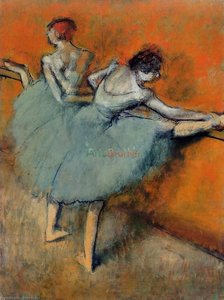
Beyond “Melancholy,” exploring Degas’s other works—such as “Dancers at the Barre” and “Ballet Rehearsal on the Set”—provides a deeper understanding of his artistic range and his fascination with movement, light, and human interaction. For further insight into Impressionism and Symbolism, we encourage you to visit “Discover the Musée Des Beaux-Arts Tourcoing, France” or consult resources like Wikipedia’s entry on Symbolist Painting.

Questions & Answers

How is "Melancholy" recommended to be printed - what size, what orientation?

large size, landscape orientation: that is the print setup suggested for "Melancholy" by Edgar Degas.

What is the recommended print size for "Melancholy" by Edgar Degas?

The recommended print size for "Melancholy" by Edgar Degas is large.

Is "Melancholy" one of Edgar Degas's most popular works?

"Melancholy" by Edgar Degas has an iconic popularity level. This classification reflects how widely the work is recognized.

More about this painting

Preview AR preview Switch to Print Switch to Digital Image Send
Details Guide Add to favorites Download Similars X-Ray Diaporama Q&A Stats

In numbers

  • 1874the year it was painted
  • 29frames to choose from
  • standard sizes, in its own proportions
  • 5weeks to paint and deliver it
Edgar Degas

Edgar Degas

1834 - 1917, France

Quick facts about Edgar Degas

  • Artistic Movement Or Style: Impressionism, Realism
  • Artists Or Movements Influenced By This Artist:
    • Picasso
    • Matisse
  • Artists Who Influenced This Artist:
    • Ingres
    • Courbet
    • Pissarro
  • Date Of Birth: 1834
  • Date Of Death: 1917
  • Full Name: Hilaire-Germain-Edgar De Gas
  • Nationality: French
  • Notable Artworks:
    • Dancer and Tambourine
    • The Ballet Class
    • Degas in a Green Jacket
    • The Collector
    • Women Combing Their Hair
  • Place Of Birth: Paris, France

Artist Biography

A Life Immersed in Movement

Born Hilaire-Germain-Edgar De Gas in Paris, 1834, Edgar Degas was an artist of fascinating contradictions. While often grouped with the Impressionists—Monet, Renoir, and others who revolutionized painting in the late 19th century—he actively resisted that label, identifying instead as a realist. This commitment stemmed from his meticulous observation of the world around him and a dedication to portraying it with unflinching honesty. Degas’s early life was comfortably bourgeois; his father was a banker, and his mother hailed from a Creole family in New Orleans. This background afforded him access to education and artistic training, though he often chafed against academic constraints. He initially enrolled at the Lycée Louis-le-Grand, but his true education began when he started copying works in the Louvre, honing his skills and igniting a lifelong passion for classical art. However, Degas’s path wasn't one of strict adherence to tradition; it was marked by constant questioning and reevaluation of artistic norms. He possessed an independent spirit that would define his entire career.

Beyond Impressionism: A Unique Artistic Vision

While contemporaries like Monet chased the fleeting effects of light outdoors, Degas largely worked within the confines of his studio, meticulously constructing scenes from observation and memory. His subject matter was decidedly modern—a departure from the historical or mythological themes favored by many academic painters. He found inspiration in the everyday lives of Parisians: laundresses, cabaret singers, milliners, and, most famously, dancers. It is this fascination with ballet that defines much of his oeuvre. Degas didn’t simply paint beautiful ballerinas; he captured the grueling reality of their profession—the endless rehearsals, the physical strain, the fleeting moments of grace amidst a world of hard work. His compositions are often unconventional, cropping figures in unexpected ways and utilizing asymmetrical arrangements that create a sense of dynamism and immediacy. He was a master of capturing movement, not through blurred lines or hazy effects, but through precise observation and careful rendering of form. Dancer, A Group of Dancers, and Women Combing Their Hair are prime examples of this dedication to portraying the human figure in motion and revealing the complexities of modern life. He wasn’t interested in superficial beauty; he sought to reveal the truth beneath the surface.

Influences and Artistic Development

Degas’s artistic journey was shaped by a diverse range of influences. His early training emphasized classical principles, particularly the work of Jean-Auguste-Dominique Ingres, whose emphasis on draftsmanship and precise form left a lasting impression. However, Degas also admired the Realists, such as Gustave Courbet, who challenged academic conventions and championed the depiction of contemporary life. A pivotal moment in his development came through his association with Camille Pissarro, a leading Impressionist who introduced him to other artists and encouraged him to experiment with new techniques. He was captivated by Japanese prints—Ukiyo-e—which influenced his use of asymmetrical compositions, flattened perspectives, and bold patterns. He also embraced photography, recognizing its potential as a tool for studying movement and capturing fleeting moments in time. This willingness to incorporate diverse influences into his work is what sets Degas apart and contributes to the unique character of his art. He wasn’t afraid to borrow from different sources, synthesizing them into something entirely new.

Legacy and Lasting Impact

Edgar Degas died in Paris in 1917, leaving behind a body of work that continues to captivate and inspire audiences today. His innovative approach to composition, his masterful draftsmanship, and his unflinching portrayal of modern life have had a profound impact on the course of art history. He paved the way for future generations of artists who sought to break free from traditional conventions and explore new ways of representing the world around them. His influence can be seen in the work of Pablo Picasso and Henri Matisse, among others. Museums worldwide—including the Musée d'Orsay and the Musée de l’Orangerie in Paris—house significant collections of his paintings, pastels, sculptures, and prints, ensuring that his legacy will endure for generations to come. Degas wasn’t merely a painter of dancers or racehorses; he was a keen observer of human nature, a master of form and movement, and a true innovator who redefined the possibilities of art.

  • A Master of Line: Degas's exceptional draftsmanship set him apart.
  • Modern Life as Subject: He focused on contemporary Parisian scenes, breaking from tradition.
  • Influence on Future Artists: His work profoundly impacted Picasso and Matisse.

Quick Facts

  • Artist: Edgar Degas
  • Artistic style: Symbolic realism
  • Movement: Impressionism
  • Medium: Oil on canvas
  • Subject or theme: Introspection, sadness

Art Quiz

There is only one correct answer for each question.

Question 1:
What is the primary emotion conveyed by Edgar Degas’s ‘Melancholy’?
Question 2:
What element in the painting contributes to a sense of mystery and intrigue?
Question 3:
In what artistic movement did Edgar Degas primarily work, and which broader cultural movement influenced it?
Question 4:
The woman in ‘Melancholy’ is depicted looking downward. What does this pose primarily suggest?
Question 5:
Which of the following best describes the overall composition of ‘Melancholy’?