
Introduction
Imagine standing before a canvas where the world isn't just seen, but felt through its very bones. There is a profound, quiet magic in the works of Paul Cézanne , an artist who taught us that a simple apple or a distant mountain holds the structural secrets of the entire universe. To wander through his collection is to step away from the fleeting, blurry moments of Impressionism and enter a realm of permanence, where color builds volume and every brushstroke acts like a tiny architectural brick.
Born in the sun-drenched landscapes of Aix-en-Provence, Cézanne moved through the art world not as a mere observer, but as an architect of form. While his contemporaries were chasing the shimmering, transient light of a passing afternoon, Cézanne was searching for something deeper—the geometry of nature . He looked at the rugged peaks of Mont Sainte-Victoire and saw cones and cylinders; he looked at a tabletop arrangement and saw a rhythmic dance of spheres and masses. His journey from the heavy, dramatic shadows of his youth to a revolutionary technique of layered, constructive patches of color changed the course of art history forever, paving the way for the Cubist movement and modern abstraction.
Today, these masterpieces remain deeply resonant because they speak to our desire for stability in a changing world. In an era of digital perfection, there is something incredibly soulful about his visible, rhythmic brushwork and the way he celebrates the weight and texture of everyday life. Whether it is the monumental presence of his landscapes or the intimate, tactile beauty of his still lifes, his work invites us to slow down, look closer, and rediscover the structural poetry in the ordinary.
In the following curation, we invite you to embark on a visual journey through twenty-five of his most transformative works. From the iconic vistas of Provence to his profound studies of light and form, each piece serves as a window into the mind of the man who redefined how we perceive reality. Prepare to see the world through a new lens—one built of color, courage, and timeless elegance.
The Card Players - Paul Cézanne
 The Card Players - Paul Cézanne
What if I told you that The Card Players by Paul Cézanne was born from a moment of profound stillness—a deliberate pause against the rushing tide of modern life? This masterpiece is far more than a depiction of a simple game; it is a masterclass in weight, texture, and the quiet dignity of the human spirit. Its inclusion in our top 25 artworks is essential because it represents the very moment art transitioned from capturing fleeting light to discovering permanent structure.
Cézanne uses a soulful palette of earthy ochres, deep browns, and muted greens, applying paint with a rhythmic, constructive brushstroke that gives the figures a sculptural, almost monumental presence. There is a beautiful tension in the air—a blend of strategy and fate reflected in the players' focused expressions. At OriginalUniqueArt.com, we believe art should do more than decorate; it should ground your environment. Imagine this piece anchoring your study or living room, where its heavy, tactile textures and contemplative mood turn a simple wall into a sanctuary of stability and timeless sophistication.
Large Bathers (Philadelphia) - Paul Cézanne
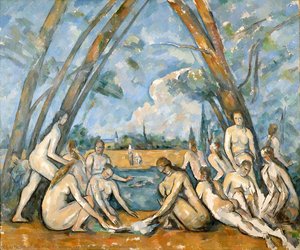 Large Bathers (Philadelphia) - Paul Cézanne
What story does the lush, verdant landscape in Large Bathers (Philadelphia) by Paul Cézanne tell? It is a tale of profound transformation, where the fleeting light of Impressionism meets a new, structural permanence. Emerging from years of meticulous labor between 1898 and 1905, this monumental masterpiece broke ground by treating the human form not as a separate subject, but as an organic extension of the trees, water, and earth itself. Cézanne uses rhythmic, constructive brushstrokes to build shapes from cylinders and cones, effectively paving the way for the Cubist revolution.
For those looking to curate a sense of timelessness in their own homes, this painting offers a breathtaking escape into a world of tranquil blues, deep greens, and earthy ochres. It brings a sophisticated, architectural weight to any room, inviting a meditative atmosphere that feels both ancient and modern. As one of the top 25 artworks of Paul Cézanne , it serves as a window into a period of radical discovery, perfect for adding a soulful, historical depth to your personal gallery.
Curtain, Jug and Fruit - Paul Cézanne
 Curtain, Jug and Fruit - Paul Cézanne
There is a profound, quiet magic in the way Paul Cézanne’s Curtain, Jug and Fruit invites us to slow down. It captures that fleeting, beautiful moment of domestic stillness—the soft weight of a draped cloth, the earthy glow of an orange, and the steady presence of a ceramic jug. This masterpiece earns its place among the top 25 artworks of Paul Cézanne because it does more than depict objects; it reconstructs them through a revolutionary language of color and form, bridging the gap between Impressionism and the birth of Cubism.
As you gaze at the thick, textured brushstrokes and the harmonious dance of muted greens and warm ochres, you feel the tactile soul of the Post-Impressionist movement. At OriginalUniqueArt.com, we believe this level of prestige should be accessible to every home. Our hand-painted oil reproductions are meticulously crafted to preserve these very textures—the visible impasto and the subtle play of light—allowing you to bring Cézanne’s timeless, structural beauty into your own living space with authentic, museum-quality emotion.
Mont Sainte-Victoire Seen from the Bibemus Quarry - Paul Cézanne
 Mont Sainte-Victoire Seen from the Bibemus Quarry - Paul Cézanne
What if I told you that Mont Sainte-Victoire Seen from the Bibemus Quarry by Paul Cézanne was born from a moment of rebellion—a stroke of defiance against the ordinary? This is not merely a landscape; it is a manifesto of form. Its place in our Top 25 is demanded by history, as it marks the exact moment Cézanne began to dismantle traditional perspective to reveal the geometric soul of nature.
In this masterpiece, the rugged textures of Provence are rendered through thick, rhythmic brushstrokes that pulse with life. You can almost feel the warmth of the sun-drenched earth tones clashing beautifully against the cool, misty blues of the mountain peak. It is a breathtaking dance of color and structure that bridges the gap between Impressionism and the dawn of Cubism.
Imagine this revolutionary vision hanging in your own sanctuary, turning a quiet corner of your home into a window to the French countryside. At OriginalUniqueArt.com, we believe such profound beauty should be lived with, not just observed. Bringing this textured, soulful reproduction into your space ensures that every glance becomes a reminder: your space is not just a room; it is a statement of timeless elegance.
The bay from l'estaque - Paul Cézanne
 The bay from l'estaque - Paul Cézanne
In The bay from l'estaque , the lines of the Mediterranean coast aren’t merely drawn; they are choreographed . This isn't just a landscape; it is a dance frozen in time , where the sun-drenched rooftops of the village perform a rhythmic duet with the cool, undulating blues of the sea. Cézanne masterfully uses patches of warm terracotta and vibrant ochre to anchor the architecture, while loose, expressive brushstrokes allow the distant mountains to dissolve into a soft, atmospheric haze.
As you gaze upon this masterpiece, notice how the composition balances the weight of the rocky shoreline with the infinite openness of the horizon. It captures that fleeting, shimmering quality of light that defines the Impressionist spirit, yet possesses a structural soul that points toward Modernism. What if your living room could hold that same equilibrium? Imagine your walls breathing rhythm through these tranquil tones. Bringing this piece into your home offers more than decor; it invites a sense of peaceful reflection and a permanent connection to the serene beauty of Provence.
Chateau Noir - Paul Cézanne
 Chateau Noir - Paul Cézanne
Imagine standing on a sun-drenched hillside in Provence, where the warm scent of pine fills the air and the only sound is the gentle rustle of leaves. In Chateau Noir , Paul Cézanne invites us into this very moment of stillness. This masterpiece captures a quaint settlement nestled within lush, vibrant greenery, creating a profound sense of harmony between human life and the natural world.
As one of the top 25 artworks of Paul Cézanne , this piece is essential because it showcases his revolutionary transition from Impressionism to a more structured, architectural way of seeing. Through bold, textured brushstrokes and a palette of warm ochres contrasted against deep forest greens, Cézanne builds volume and life onto the canvas. It is more than just a landscape; it is a study of stability and peace. Bringing a work like this into your home offers a daily window into serenity, allowing the rhythmic energy of his Post-Impressionist technique to transform a modern room into a sanctuary of timeless beauty and thoughtful reflection.
Jourdan’s Shed - Paul Cézanne
 Jourdan’s Shed - Paul Cézanne
What if I told you that Jourdan’s Shed by Paul Cézanne was born from a moment of quiet rebellion—a stroke of defiance against the fleeting nature of light? While his contemporaries chased the ephemeral, Cézanne looked at this humble rustic structure and saw the eternal geometry of the world. This masterpiece earns its place in our top 25 artworks because it marks the pivotal transition where Impressionism began to solidify into the structural rigor of Cubism.
In this painting, sun-drenched yellows meet cool, receding blues, creating a rhythmic vibration that breathes life into the canvas. The shed is not merely wood and stone; it is an anchor of stability, a deliberate arrangement of planes that invites you to find order within nature. At OriginalUniqueArt.com, we believe art should do more than decorate; it should ground your environment. Imagine this piece as a focal point in your study or living room—a sophisticated statement of strength and permanence that turns any room into a curated sanctuary of modern thought.
Basket of Apples - Paul Cézanne
 Basket of Apples - Paul Cézanne
When you stand before Cézanne’s Basket of Apples , you aren't just looking at a collection of fruit; you are witnessing the moment light becomes structure. In this 1895 masterpiece, the artist doesn't merely capture illumination—he composes it. He treats every apple and pear not as fleeting impressions, but as sculptural elements built from rhythmic, constructive brushstrokes that bridge the gap between Impressionism and the dawn of Cubism.
The palette is a warm, inviting dance of reds, oranges, and sun-drenched yellows, set against the cool, stabilizing presence of muted blues and whites. There is a profound, quiet magic in how he arranges these everyday objects—the bread, the bottle, the draped cloth—to create a sense of eternal stability. It is a sensory experience where the texture of the paint feels as tactile as the fruit itself. This painting belongs in a top 25 collection because it transforms the ordinary into the monumental, offering a soulful, geometric beauty that is ready to turn any room into a sanctuary of thoughtful design.
Self Portrait (8) - Paul Cézanne
 Self Portrait (8) - Paul Cézanne
In the quiet intimacy of Self Portrait (8) , we encounter Paul Cézanne not as a distant legend, but as a man caught in a moment of profound introspection. Painted in 1880, this work invites you to step into the artist's private studio, where the weight of his revolutionary vision begins to take shape. Clad in a formal suit and tie, Cézanne gazes thoughtfully off-camera, his expression anchored by a rugged beard and a steady, searching gaze that seems to look through the canvas itself.
The composition is a masterclass in texture; notice how the patterned wall behind him provides a rhythmic depth, echoing the structured, constructive brushstrokes that would later define the birth of Cubism. Owning such a piece from the top 25 artworks of Paul Cézanne isn’t merely about decoration—it is an inheritance of his contemplative spirit. Bringing this portrait into your home allows you to participate in a lineage of taste, where the heavy, soulful tones of the Post-Impressionist era transform your walls into a personal gallery of historical significance.
Seated Man - Paul Cézanne
 Seated Man - Paul Cézanne
What story does the quiet, interrupted moment in Seated Man by Paul Cézanne tell? As we gaze upon this 1900 masterpiece, we find ourselves in a room frozen in contemplation. A man sits in formal attire, hands clasped, his gaze drifting toward an unseen horizon while a discarded book rests near his feet. This subtle narrative suggests a profound pause in a life of intellect and ceremony.
As one of the top 25 artworks of Paul Cézanne , this piece marks a pivotal era where the artist moved away from vibrant Impressionism toward a more subdued, structural palette. Through a masterful use of light and shadow, Cézanne creates a sense of weight and permanence that feels incredibly grounded. For those looking to curate a meaningful space in a modern home, this painting offers a sophisticated escape—a window into a world of stillness and deep thought. It is not merely a portrait; it is an invitation to embrace the beauty of quiet reflection within your own interior design.
Portrait of the Painter, Achille Emperaire - Paul Cézanne
 Portrait of the Painter, Achille Emperaire - Paul Cézanne
What story does the quiet, sun-dappled environment in Portrait of the Painter, Achille Emperaire by Paul Cézanne tell us about the sanctity of the creative mind? In this 1868 masterpiece, we aren't just looking at a man reading; we are invited into a private sanctuary of thought. As Achille sits composed with his book, flanked by delicate vases, the atmosphere radiates a profound sense of stillness and focus.
This work is a vital inclusion in our collection of the top 25 artworks of Paul Cézanne because it captures the pivotal moment where traditional portraiture began to evolve into something much more structural. By subtly flattening the depth and using rhythmic, constructive brushstrokes, Cézanne laid the groundwork for Cubism. For those looking to curate a meaningful space at home, this painting offers a perfect 'escape'—bringing a sense of intellectual calm and historical weight to a modern living room or study. It is more than a portrait; it is an invitation to slow down and find beauty in the quiet moments of life.
Fruit and Jug on a Table - Paul Cézanne
 Fruit and Jug on a Table - Paul Cézanne
There is a profound, quiet intimacy to find in Fruit and Jug on a Table . As you gaze upon this 1894 masterpiece, you aren't just looking at a collection of objects; you are invited into a moment of stillness where time seems to pause. The vibrant oranges and crisp apples rest atop a wooden table draped in a cool, blue cloth, creating a sensory harmony that feels both grounded and ethereal. Cézanne’s signature constructive brushstrokes build a sense of weight and permanence, turning simple fruit and a jug of wine into symbols of life's enduring beauty.
As one of the top 25 artworks of Paul Cézanne , this piece offers more than just visual delight; it provides a psychological anchor. The way light dances across the ceramic surfaces invites a sense of deep contemplation. Bringing such an evocative work into your home can transform a quiet corner or a sunlit dining room into a personal sanctuary for reflection, surrounding you with the same structural elegance and calm that defined the Post-Impressionist master's vision.
Still Life with Flower Holder - Paul Cézanne
 Still Life with Flower Holder - Paul Cézanne
Imagine stepping into a quiet, sun-drenched studio where time seems to slow down, allowing every shadow and shape to take on a life of its own. This is the magic found in Still Life with Flower Holder by Paul Cézanne . Created in 1905, this masterpiece serves as a profound bridge between the fleeting light of Impressionism and the structured revolution of Cubism. It is an essential inclusion in our collection of the top 25 artworks of Paul Cézanne because it captures the very moment art began to look beneath the surface of reality.
The canvas is a sensory feast; you can almost feel the weight of the apples and pears, rendered with a deliberate, sculptural solidity. Cézanne uses a warm, earthy palette of ochres and deep greens, punctuated by vibrant splashes of color that breathe life into the earthenware bowls and delicate blossoms. His signature constructive brushstrokes build volume, turning a simple domestic arrangement into a monumental study of geometry and light. Bringing such a piece into your home does more than decorate a wall; it invites a sense of permanent, structural beauty and contemplative calm into your daily life.
The Eternal Woman - Paul Cézanne
 The Eternal Woman - Paul Cézanne
What story does the mysterious, crowded atmosphere of The Eternal Woman by Paul Cézanne tell us about the boundaries of reality? Painted in 1877, this masterpiece serves as a profound bridge between the fleeting light of Impressionism and the structured geometry that would later inspire Cubism. The central figure—a woman resting in a state of serene enigma—is surrounded by a fragmented assembly of musicians and admirers, creating a scene that feels both like a classical myth and a modern dream.
Cézanne uses rhythmic, constructive brushstrokes to build volume, turning a gathering of figures into a study of weight and color. The triangular canopy above the woman acts as a subtle, halo-like symbol, adding a layer of divine mystery to the composition. For those looking to curate a meaningful escape within their own homes, this painting offers more than just decor; it brings an atmosphere of deep contemplation and historical grandeur. As one of the top 25 artworks of Paul Cézanne , it remains a revolutionary testament to how art can transform a simple space into a sanctuary of intellectual discovery.
Rocks at Fontainebleau - Paul Cézanne
 Rocks at Fontainebleau - Paul Cézanne
What story do the shadowed, ancient corridors of the Fontainebleau Forest tell in Rocks at Fontainebleau ? In this evocative work, Paul Cézanne moves beyond mere landscape to reveal the very architecture of the earth. Emerging from a period where he sought to find permanent structure within the fleeting light of Impressionism, this painting stands as a cornerstone among the top 25 artworks of Paul Cézanne because it bridges the gap between the transient and the eternal.
The composition invites you into a contemplative sanctuary, where rugged, weathered boulders are bathed in a delicate, dappled sunlight. Earthy browns and deep mossy greens harmonize with unexpected flashes of warm gold, creating a moody, tranquil atmosphere that is perfect for bringing a sense of historical depth to a modern living space. For the contemporary decorator, this piece offers more than just color; it provides a curated escape—a window into a world where nature is treated with the geometric dignity of a sculpture. It is an invitation to find stability and quiet strength within your own home through the masterful, rhythmic brushstrokes of a true Post-Impressionist legend.
Landscape with Viaduct - Mont Sainte-Victoire - Paul Cézanne
 Landscape with Viaduct - Mont Sainte-Victoire - Paul Cézanne
Acquiring a piece like Landscape with Viaduct - Mont Sainte-Victoire by Paul Cézanne is more than an aesthetic choice; it is an investment in a profound artistic legacy and a testament to discerning taste. As one of the most significant works within the top 25 artworks of Paul Cézanne, this 1885 masterpiece holds immense historical weight, acting as the vital bridge between the fleeting light of Impressionism and the structured revolution of Cubism. Its market value and influence are anchored in how Cézanne deconstructs the Provençal landscape into a rhythmic dance of geometric planes and earthy ochres.
The canvas breathes with the quiet prestige of the French countryside, where the majestic mountain rises through layers of deliberate, constructive brushstrokes. The viaduct introduces a striking architectural rhythm, cutting through lush greens and sun-drenched textures to create a sense of enduring stability. For the modern collector, a high-quality handmade oil reproduction of this work brings an unparalleled aesthetic authority to a luxury interior. Whether placed in a sunlit study or a grand living space, its textured depth and structural soul command attention, offering a timeless connection to the very bones of nature.
The House with the Cracked Walls - Paul Cézanne
 The House with the Cracked Walls - Paul Cézanne
In The House with the Cracked Walls , Paul Cézanne invites us into a world where architecture and nature merge through a masterful use of geometry. The composition is a rhythmic dance of interlocking shapes; the sharp, angular planes of the house’s yellow facade contrast beautifully with the organic, textured forms of the surrounding rocks and greenery. By utilizing these structural elements—the receding lines of the walls and the weight of the earth—Cézanne achieves a sense of permanent, timeless perfection that makes this one of the most essential pieces in our collection of the top 25 artworks of Paul Cézanne .
There is a profound, quiet strength in this balance that feels remarkably modern. Much like the principles of modern minimalist design , the painting strips away the unnecessary to focus on pure form and color modulation. The way the warm ochres interact with cool, shadowed greens creates a grounded, serene atmosphere, making it an ideal inspiration for anyone looking to bring a sophisticated, contemporary aesthetic to a clean, curated home space.
Madame Cezanne with Unbound Hair - Paul Cézanne
 Madame Cezanne with Unbound Hair - Paul Cézanne
In Madame Cézanne with Unbound Hair , we step away from the sweeping landscapes of Provence and into a quiet, profoundly intimate corner of the artist's private world. This 1890 portrait of his wife, Hortense Fiquet, is far more than a simple likeness; it is a psychological window into a shared life. Cézanne moves beyond the fleeting light of Impressionism to capture something much more enduring: the weight of presence.
The palette is masterfully subdued, utilizing earthy browns, deep grays, and charcoal tones that lend the piece a melancholic, introspective mood. Notice how the artist uses visible, constructive brushstrokes to build form, treating the face not as a smooth surface, but as a series of textured planes. Her unbound hair and averted gaze suggest a moment of vulnerability, inviting you to contemplate her inner thoughts. To bring this masterpiece into your home is to invite that same sense of soulful reflection. It is not merely a painting on a wall; it is an invitation to find beauty in the quiet, structural truths of human emotion.
Old Woman with a Rosary - Paul Cézanne
 Old Woman with a Rosary - Paul Cézanne
Imagine stepping into a quiet corner of the National Gallery, where the bustling world fades into a profound, hushed stillness. In Old Woman with a Rosary , Paul Cézanne invites us into this very moment of sacred introspection. The painting centers on an elderly woman, her face a beautiful map of lived experience, captured in a state of deep, silent prayer. Her simple black attire and white head covering create a striking contrast against the muted, earthy tones of the background, drawing all focus to the delicate texture of the rosary held in her hands.
Cézanne’s mastery is felt in every deliberate, constructive brushstroke; he moves beyond mere Impressionism to build a sense of permanent, sculptural form. The palette of deep browns and soft grays evokes a somber yet serene atmosphere, perfect for creating a sanctuary of calm in a modern home. Whether you are drawn to its spiritual symbolism or its revolutionary Post-Impressionist technique, this masterpiece serves as a timeless anchor for any collection, inspiring a sense of peace and thoughtful reflection in any living space.
Chrysanthemums - Paul Cézanne
 Chrysanthemums - Paul Cézanne
In Chrysanthemums by Paul Cézanne, we encounter a masterclass in structural harmony that feels both ancient and remarkably modern. Rather than mere floral decoration, this 1898 masterpiece uses interlocking planes and bold, rhythmic shapes to build a sense of weight and permanence. The composition is a beautiful dance of geometry; the vase and surrounding objects are constructed from deliberate, overlapping patches of color that guide the eye through a landscape of textured ochre, deep reds, and warm yellows.
This careful balance of form creates a sense of timeless perfection, making it a standout among the top 25 artworks of Paul Cézanne . There is a quiet prestige in how Cézanne distills nature into its essential bones, much like the principles of modern minimalist design. The painting’s ability to ground a space with its earthy palette and organized simplicity makes it an ideal inspiration for contemporary interiors seeking a soulful, sophisticated anchor. It is not just a still life; it is a serene, architectural moment captured in oil.
untitled (7260) - Paul Cézanne
 untitled (7260) - Paul Cézanne
In untitled (7260) by Paul Cézanne, the light does not merely illuminate; it breathes life into a moment of profound stillness. Rather than the flickering, ephemeral light of the Impressionists, Cézanne uses a masterful play of cool tones to create a sense of structural permanence. The way the soft, ambient light catches the floral accents of the woman's hat and settles into the deep, contemplative blues of her dress creates a captivating chiaroscuro effect that feels both heavy and ethereal.
This command of illumination is precisely what secures this piece among the top 25 artworks of Paul Cézanne . He uses light to sculpt form, turning a simple portrait into an architectural study of color. When brought into a contemporary home, a high-quality reproduction of this work adds incredible layers of depth and luxury. The serene blue palette and the rhythmic, textured brushstrokes act as a sophisticated anchor for a modern room, inviting a sense of calm, museum-grade elegance to your walls.
Bibemus. The Red Rock - Paul Cézanne
 Bibemus. The Red Rock - Paul Cézanne
What story does the rugged, sun-drenched landscape of Bibémus: The Red Rock by Paul Cézanne tell? This masterpiece transports us to the deserted quarries near Aix-en-Provence, where the artist captured the raw, geological soul of France. Emerging around 1897, this work represents a pivotal moment in art history, acting as the bridge between the fleeting light of Impressionism and the structured geometry of Cubism. Cézanne breaks all the rules of traditional perspective, using vibrant orange rocks and rhythmic, cross-hatched brushstrokes to create a sense of monumental solidity.
For those looking to curate a meaningful escape within their own home, this painting offers more than just decor; it provides a window into a serene, ancient world. The interplay of deep greenery against the warm, tectonic forms creates a soothing yet intellectually stimulating atmosphere. As one of the top 25 artworks of Paul Cézanne , integrating this piece into your space brings a sense of historical depth and architectural strength, making it a perfect centerpiece for a modern, soulful interior.
Still Life Bread and Leg of Lamb - Paul Cézanne
 Still Life Bread and Leg of Lamb - Paul Cézanne
In Still Life Bread and Leg of Lamb by Paul Cézanne, a deep, earthy umber dominates the canvas, casting a mood of profound stillness and rustic warmth. This somber, grounded palette does more than just depict a simple meal; it establishes a sense of permanence that makes this work a vital entry in our collection of the top 25 artworks of Paul Cézanne . By focusing on these heavy, tonal shadows, Cézanne moves away from the fleeting light of Impressionism toward a structured, sculptural reality.
For those decorating a dining room or a cozy breakfast nook, this painting serves as an incredible anchor. The muted, organic tones and the weight of the composition can harmonize beautifully with modern minimalist decor or a more traditional, textured interior. Integrating this piece allows you to introduce a sense of historical gravity and intellectual depth to your home, using its quiet, rhythmic shadows to curate a space that feels both sophisticated and incredibly grounded.
The Temptation of Saint Anthony - Paul Cézanne
 The Temptation of Saint Anthony - Paul Cézanne
Imagine standing before a canvas where the boundary between spiritual struggle and physical reality begins to dissolve. In “The Temptation of Saint Anthony” by Paul Cézanne , we encounter a profound psychological landscape that marks a pivotal moment in the artist's journey toward structural mastery. This work is essential to our collection of the top 25 artworks of Paul Cézanne because it captures the raw, emotive energy of his early years, blending Romantic drama with the revolutionary techniques that would later define Post-Impressionism.
The scene is a vibrant, almost dizzying dance of color and form. Cézanne utilizes thick, tactile brushstrokes to render figures draped in scarlet and deep blues, creating a sense of weight and movement. As the Saint faces the seductive pull of the figures around him, the composition uses fractured planes and striking chiaroscuro to mirror an internal storm of the soul. The interplay of light on the white drapery against earthy, atmospheric tones creates a tension that is both haunting and beautiful. Today, this masterpiece continues to transform modern interiors, offering a window into a timeless struggle that resonates with anyone seeking depth and emotion in their home decor.
Self-Portrait in a Straw Hat - Paul Cézanne
 Self-Portrait in a Straw Hat - Paul Cézanne
In the quiet gaze of Self-Portrait in a Straw Hat , we encounter a moment of profound stillness, where time seems to pause amidst the soft, golden whispers of a French afternoon. This masterpiece stands as one of the top 25 artworks of Paul Cézanne because it captures the exact heartbeat where Impressionism begins to evolve into something more structured and eternal. The painting is a masterclass in balance; the somber elegance of his black attire contrasts beautifully with the warm, sun-drenched yellowish hues of the background, creating a sense of intimate, domestic peace.
Cézanne’s serious expression, framed by the rustic texture of his straw hat, invites us into his analytical mind—a mind seeking the permanent geometry within nature. The subtle presence of two small birds adds a delicate, living rhythm to the composition, preventing the stillness from becoming heavy. For the modern collector, this piece brings an unparalleled sense of sophisticated calm and intellectual depth to a room, acting as a soulful anchor that celebrates the beauty of thoughtful observation.
Conclusion
As the light fades on our journey through Cézanne’s world, we are left not just with images of mountains and fruit, but with a profound sense of how structure and soul can coexist. These masterpieces are far more than historic treasures locked behind museum glass; they are living presences. When you bring the rhythmic brushstrokes of a Mont Sainte-Victoire or the quiet weight of a still life into your own space, you aren't just decorating—you are inviting a timeless conversation into your home. His ability to find the eternal within the everyday continues to move hearts and shape the way we perceive the beauty in our own surroundings.
At OriginalUniqueArt.com , we believe that every refined interior deserves a centerpiece that tells a story. Whether you are an interior designer curating a boutique hotel, an architect breathing life into a modern villa, or a homeowner seeking to anchor a room with meaning, we serve as your dedicated creative partner. We specialize in transforming these legendary works into museum-quality, hand-painted oil reproductions that capture the true tactile depth and impasto texture of Cézanne’s genius. Through our professional digital mockup service, we help you visualize exactly how a specific palette or scale will interact with your unique lighting and architecture, ensuring every selection is an intentional artistic statement.
We invite you to continue your discovery and find the piece that resonates with your spirit by exploring our full collection . Let us help you turn your next design project into a lasting legacy of beauty, one brushstroke at a time.


