


What is the most famous painting of Jesus?
In our ranking, The Transfiguration by Raphael (1520), in Vatican Museums, then Christ in the Storm on the Sea of Galilee by Rembrandt and The Annunciation by Fra Angelico.
Famous paintings by subject
1333 – 1938
The masters our own painters keep coming back to. The life of Christ is the most painted story in Western art: the Annunciation and the Nativity, the Baptism, the Last Supper, the Crucifixion and the Resurrection. Here are 24 masterpieces of the kind, each with its painter, its date and the museum that keeps it.
Our artists keep returning to The Transfiguration by Raphael, Christ in the Storm on the Sea of Galilee by Rembrandt and The Annunciation by Fra Angelico. Here are 24 great paintings of Jesus, each with painter, date and museum.

The list
RaphaelHigh Renaissance
Vatican Museums, Vatican City1520Oil on panel410 × 279 cm
The painting portrays the Transfiguration of Christ on Mount Tabor, as recounted in the Gospels. Jesus is shown radiant with divine light, flanked by Moses and Elijah – representing the Law and the Prophets – signifying his fulfillment of ancient scripture. Commissioned for the church of San Pietro in Montorio in Rome, “The Transfiguration” was intended as an altarpiece. The work demonstrates Raphael's ability to synthesize influences from Leonardo da Vinci (in the atmospheric perspective) and Michelangelo (in the energetic figure groupings).
Look forearthly realmsdramatic lighting

Isabella Stewart Gardner Museum, Boston1633Oil on canvas128 × 168 cm
The arrangement of these elements echoes an Adriaen Collaert print from 1583, providing a structured foundation for the chaos unfolding on the canvas. In 1898, the painting was acquired for Isabella Stewart Gardner by Bernard Berenson. It remained a cornerstone of the museum's collection until it was taken from its position in 1990.

Fra AngelicoEarly Renaissance
Museo Diocesano de Arte Sacro, Basque Country1433–1434Tempera on panel175 × 180 cm
The inclusion of Adam and Eve, often depicted outside the garden walls in similar works by Fra Angelico, subtly references the redemption offered through Christ’s incarnation. Fra Angelico, a Dominican friar himself, infused his art with deep religious conviction.
Look forcolonnadesymbolic vegetation

Paul GauguinPost-Impressionism
Buffalo AKG Art Museum1889Oil on canvas91 × 73 cm
Far removed from traditional religious iconography, it is a powerful statement of spiritual questioning and emotional distance, marking a significant departure within Post- Impressionist painting. The figure’s yellowish-green skin tone and elongated form immediately challenge conventional portrayals of Christ's suffering.
Look forbreton figuressymbolic landscape

Santa Maria del Popolo, Rome1600–1601Oil on canvas230 × 175 cm
In a striking detail rooted in tradition, Peter requested to be crucified upside down, deeming himself unworthy to die as Christ had. The early 17th century was a period of religious upheaval, with the Catholic Church actively responding to the challenges posed by the Protestant Reformation.
Look forinverted crossrealism

Jacopo TintorettoMannerism
San Giorgio Maggiore, Venice1594Oil on canvas365 × 568 cm
This monumental fresco captures not a peaceful meal, but the immediate aftermath of Christ’s announcement of his impending betrayal – a moment suspended between faith and despair. At the heart of the composition, Christ gestures towards the bread and wine – potent symbols representing his body and blood, central tenets of Christian Eucharist.

Hieronymus BoschEarly Netherlandish Painting
Städel Museum, Frankfurt1500Oil on oak panel60 × 71 cm
Executed in oil paints on wood panel, this Ecce Homo exemplifies the meticulous detail characteristic of the Early Netherlandish painting tradition. The Ecce Homo motif was a common subject in Christian art, serving as a powerful reminder of Christ’s sacrifice.
Look forgrief of onlookersdramatic lighting

Rogier van der WeydenEarly Netherlandish Painting
Museo del Prado, Madrid1435Oil on panel220 × 262 cm
Jesus’s lifeless body, cradled by his grieving mother Mary and Nicodemus, occupies the visual center, immediately commanding attention. However, Van der Weyden pushed beyond mere imitation, imbuing his figures with an unprecedented level of emotional intensity.
Look forgrieving figuresskulls

El GrecoMannerism
Museo del Prado, Madrid1594Oil on canvas312 × 169 cm
El Greco's unique style blends elements of Mannerism with Byzantine influences, resulting in elongated figures and expressive gestures. Painted during the Counter-Reformation period, "The Crucifixion" reflects the religious fervor and devotion of the time. This artwork is not only a religious icon but also a powerful evocation of human emotion and spiritual devotion.
Look fororganic and geometric shapesvaried textures

Piero della FrancescaEarly Renaissance
National Gallery, London1470Oil on panel124 × 122 cm
“The Nativity” is rich in symbolic detail, each element carefully chosen to convey a specific meaning. The magpie, a detail often noted in Piero’s work, adds an intriguing element of folklore and symbolism.
Look forgeometric perspective

Tretyakov Gallery, Moscow1872Oil on canvas180 × 210 cm
One of his most famous works is 'Christ in the Desert,' which depicts Jesus Christ during His 40-day fast in the wilderness. Ivan Nikolaevich Kramskoy (1837-1887) was a Russian painter and art critic who played a significant role in the development of realism in Russia. The painting was completed in 1872 and is currently housed in the Tretyakov Gallery in Moscow. 'Christ in the Desert' is an interpretation of the biblical story of Jesus Christ's 40-day fast in the wilderness.

Honoré DaumierRealism
Museum Folkwang, Essen1852Oil on canvas160 × 127 cm
Produced during a period of social upheaval and political unrest in France, Daumier’s work often reflected his commitment to social justice and critique of societal injustices. This scene, inspired by the biblical account of Barabbas and Jesus, symbolizes themes of innocence, guilt, and societal choice.
Look forpowerful emotional sceneexpressive brushwork

James EnsorExpressionism
Getty Center, Los Angeles1888Oil253 × 431 cm
The artwork depicts a bustling scene filled with grotesque figures wearing masks, clowns, and other fantastical characters. Painted in 1888, "Entry of Christ Into Brussels" was initially rejected by the artistic group Les XX and kept in Ensor's house in Ostend.
Look forChrist figure almost hidden in the center

Simone MartiniInternational Gothic
Galleria degli Uffizi, Florence1333Tempera on panel184 × 210 cm
Every line is deliberate, every curve of a cloak or fold of a garment serves to enhance the courtly refinement that defines Martini’s unique style. Even the architectural details—the intricately carved throne and the ornate surroundings—speak to the high status of the figures, reflecting the aristocratic ideals of 14th-century Siena.

Andrea MantegnaItalian Renaissance
Pinacoteca di Brera, Milan1483Tempera on canvas68 × 81 cm
Unlike many contemporaries who drew inspiration from classical models, Mantegna possessed a singular fervor for recreating the spirit of Rome within the burgeoning Italian Renaissance. This technique, perfected in monumental frescoes like “The Camera degli Sposi,” revolutionized artistic practice and established Mantegna as a pioneer of Renaissance innovation.

Jan van EyckEarly Netherlandish Painting
National Gallery of Art, Washington1435Oil on panel (transferred to canvas)90.2 × 34.1 cm
The lilies surrounding Mary represent her purity and virginity, while the dove descending from heaven symbolizes the Holy Spirit. Mary’s seated position and open book suggest contemplation and acceptance of God's will. As court painter to Philip the Good, Duke of Burgundy, van Eyck enjoyed considerable patronage and influence.
Look forlinear perspectivesymbolic intent (lilies

Museo di Capodimonte, Naples1630Oil on canvas257 × 179 cm
The painting depicts a pivotal moment in Christian theology – the Annunciation, wherein Mary receives divine news of Jesus’s imminent birth from Gabriel, an angel dispatched by God to deliver this momentous proclamation.

MichelangeloHigh Renaissance
National Gallery, London1510Oil and tempera on panel159 × 149 cm
In this unfinished oil-on-panel work, Michelangelo depicts the somber burial of Jesus Christ. It was commissioned in 1500 for a funerary chapel located within the church of Sant’Agostino in Rome. It was from his possession that the work was acquired in 1868.

CaravaggioBaroque Painting
Музей витончених мистецтв Нансі, Nancy1609Oil285 × 205 cm
The Annunciation is an oil painting by the Italian master Michelangelo Merisi da Caravaggio, finished around 1608. It is housed in the Musée des Beaux-Arts de Nancy. Caravaggio was an Italian maestro who left an indelible mark on Baroque painting.

Johannes VermeerDutch Golden Age
Scottish National Gallery, Edinburgh1656Oil on canvas158 × 141 cm
Johannes Vermeer produced the oil painting on canvas titled Christ in the House of Martha and Mary. This work is dated 1654. Similarly, The Lacemaker captures a sense of intense, concentrated focus within a small scale, measuring 24.5 cm by 21 cm.

John Everett MillaisPre-Raphaelite
Tate Britain, London1849–1850Oil on canvas39 × 86 cm
The oil painting titled Christ in the House of His Parents (`The Carpenter's Shop') was created by John Everett Millais between 1849 and 1850. It captures a quiet, industrious moment within Saint Joseph's carpentry workshop. The scene focuses on the Holy Family, grounding the sacred in the grit of manual labor. In this work, John Everett Millais depicts Jesus as a young boy. One prominent critic saw only a wry-necked, blubbering red-headed boy in a bed-gown, a figure stripped of all divine grace.

Art Institute of Chicago1938Oil on canvas154.62 × 140 cm
This Christ wears a prayer shawl, a tallit, draped across his body. The palette is drained of much color, leaving a landscape of muted greys and whites. The composition links the suffering of the crucified figure to the contemporary persecution of Jewish communities in Germany.

El GrecoMannerism
Toledo Museum of Art1599Oil on canvas289 × 147 cm
Known to history by his birth name, Doménikos Theotokópoulos, the painter brought a singular vision to this piece. The artist achieved a unique blend of Byzantine traditions with Western painting techniques, creating a visual language that feels both ancient and modern.

CaravaggioBaroque
Museo di Capodimonte, Naples1607Oil286 × 213 cm
Commissioned by Tommaso de' Franchis for a chapel in the church of San Domenico Maggiore, Naples, this painting arose during Caravaggio’s first sojourn in the city. It was conceived as part of a larger project alongside The Seven Works of Mercy, demonstrating the artist’s ambition and burgeoning reputation.
Look forchiaroscurodramatic lighting
Where to see them
The artists

1571–1610 · Italy · 3
Italian Baroque painter of dramatic tenebrism, using violent light and shadow to capture the grit of laborers and outcasts in Rome.
5. The Crucifixion of Saint Peter, 19. The Annunciation, 24. Flagellation of Christ

1541–1614 · Greece · 2
Spanish Mannerist known for elongated figures and dramatic, spiritual light in Toledo, blending Byzantine roots with Venetian color.

1483–1520 · Italy · 1
Italian High Renaissance master of harmonious Madonnas and monumental Vatican frescoes, known for clarity of form and graceful composition.
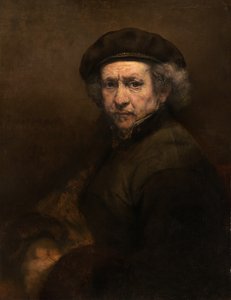
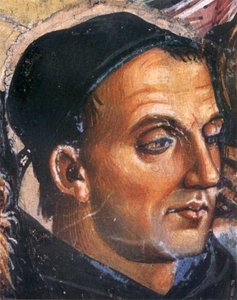
1395–1455 · Italy · 1
Italian Renaissance Dominican friar known for luminous frescoes and serene religious narratives painted with manuscript illumination precision.
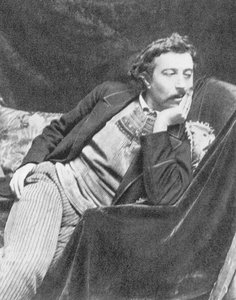
1848–1903 · France · 1
French Post-Impressionist known for Synthetist style, bold outlines, and vivid depictions of Tahitian life and spiritual landscapes.

1519–1594 · Italy · 1
Venetian Mannerist known for rapid brushwork and dramatic chiaroscuro in intense religious scenes, often featuring muscular figures in motion.
Questions and answers
In our ranking, The Transfiguration by Raphael (1520), in Vatican Museums, then Christ in the Storm on the Sea of Galilee by Rembrandt and The Annunciation by Fra Angelico.
Caravaggio (3), El Greco (2) and Raphael (1), out of 24 works.
Museo del Prado holds 2 of the 24 works on the list, then National Gallery (2), Museo di Capodimonte (2) and Vatican Museums (1).
From 1333 (The Annunciation and Two Saints by Simone Martini) to 1938 (White Crucifixion by Marc Chagall).
5,309 works; this page shows the 24 most famous of them, by 21 artists.
London, with 3 of the 24; then Madrid (2), Naples (2) and Vatican City (1).
Our ranking draws on Wikipedia, the manual rank our editors give each artist and artwork, and the visits each page receives every month.