Pop Art
Cactus (David Hockney)
David Hockney (1937–2026) made Cactus. It belongs to the Pop Art movement. It is made in acrylic on canvas.
- Acrylic On Canvas

 Preview

 Hand Made Oil Painting
 Send
 Share
 Fact sheet


 Download
 Similars
 X-Ray
 Diaporama
 Q&A

 Stats
Cactus, in brief
- Title
- Cactus
- Artist
- David Hockney (1937–2026)
- Artist born in
- Bradford, United Kingdom
- Medium
- Acrylic On Canvas
- Movement
- Pop Art
- Period
- Modern
- Subject
- cactus painting, david hockney art, yellow bowl scene, pop art style, desert flora, table composition
What does Cactus depict?
David Hockney’s ‘Cactus’: A Pop Art Still Life Rooted in Observation
David Hockney's “Cactus,” a seemingly simple depiction of a solitary cactus within a vibrant yellow bowl, reveals itself to be far more than just a botanical study. It’s a quintessential example of Hockney’s signature style – a masterful blend of meticulous observation and bold, playful experimentation that has cemented his place as one of the 20th century's most influential artists. This particular piece, painted with an eye attuned to the burgeoning pop art movement, invites us to consider beauty in the commonplace, elevating the ordinary cactus to a subject worthy of artistic contemplation.
A Bradford-Born Vision: Hockney’s Early Influences
Born in 1937 in Bradford, England, David Hockney's artistic journey was profoundly shaped by his surroundings. The industrial landscape of Yorkshire – the brick factories, the bustling markets, and the resilient spirit of its people – instilled a deep appreciation for detail and an inherent skepticism towards traditional artistic conventions. His father, Kenneth Hockney, a conscientious objector during World War II, fostered a critical mind and encouraged independent thought, values that would become central to Hockney’s creative philosophy. This early exposure is palpable in “Cactus,” evidenced by the precise rendering of the cactus's spikes and leaves – a testament to Hockney’s unwavering commitment to accurate representation, even within a deliberately stylized framework.
Pop Art and the Celebration of Color
“Cactus” exemplifies the key tenets of pop art. The use of saturated yellows, greens, and browns isn't merely decorative; it’s strategically employed to draw attention and create visual impact. Hockney’s technique relies on flat planes of color applied with a confident, almost graphic stroke – a characteristic borrowed from commercial illustration and advertising. This approach rejects the subtle gradations and atmospheric perspective favored by earlier artistic movements, embracing instead a directness and clarity that aligns perfectly with the pop art ethos. The bowl itself, presented as a bold geometric form, further reinforces this stylistic choice, echoing the influence of artists like Andy Warhol who were similarly exploring the relationship between high art and popular culture.
Symbolism and the Desert Within
Beyond its aesthetic qualities, “Cactus” carries subtle symbolic weight. The cactus, an enduring emblem of resilience, survival, and adaptation, speaks to a primal human fascination with endurance in harsh environments. Its placement within a domestic setting – the table and bowl – introduces a layer of irony, suggesting that even the most rugged elements of nature can be integrated into our everyday lives. The surrounding smaller cacti subtly reinforce this theme, creating a miniature desert landscape contained within the confines of the still life. This juxtaposition invites contemplation on themes of isolation, strength, and the delicate balance between the natural world and human intervention.
A Timeless Reproduction: Bringing ‘Cactus’ into Your Space
OriginalUniqueArt.com offers meticulously crafted hand-painted reproductions of David Hockney's “Cactus,” ensuring that you experience the full impact of this iconic artwork. Each reproduction is created using archival quality materials and techniques, faithfully capturing the vibrancy of Hockney’s original palette and the precision of his brushwork. Whether adorning a gallery wall or gracing a contemporary interior, this piece offers an accessible entry point into the world of one of Britain's most beloved and enduring artists – a timeless celebration of observation, color, and the beauty found in unexpected places.
High-resolution images of Cactus
Protected by copyright: the image is shown for reference only.
Other sizes, crops and citation →David Hockney, Cactus.
Questions on Cactus, answered
What technique was used for "Cactus" by David Hockney?
David Hockney used the acrylic on canvas technique for "Cactus". The technique defines the material nature of the original work.
What subjects appear in "Cactus" by David Hockney?
The themes present in "Cactus" by David Hockney include cactus painting, david hockney art, yellow bowl scene, pop art style, desert flora, table composition, minimalist still life. Together they summarize the artwork's subject matter.
Can the image of "Cactus" by David Hockney be freely reproduced?
Regarding copyright, "Cactus" is still protected by copyright.
Who created "Cactus"?
The artist behind "Cactus" is David Hockney. The work is catalogued under David Hockney's name.
What art movement does "Cactus" by David Hockney belong to?
"Cactus" is a work of Pop Art. The movement indicates the artistic tradition the work is part of.
What stage of David Hockney's development does "Cactus" represent?
Within David Hockney's career, "Cactus" falls in the Mature Period. The phase helps compare it with the artist's other works.
Is "Cactus" by David Hockney in the public domain, and why?
The copyright status of "Cactus" - still protected by copyright - follows from the artist's death in 2026.
What does "Cactus" share with the rest of David Hockney's output?
"Cactus" shares with David Hockney's other works its Pop Art style and the recorded themes: british pop art influence, domesticity, everyday objects, color field exploration”, “light and perspective study”, “recurring still life motifs”.
Is "Cactus" typical of what David Hockney usually created?
David Hockney's recurring themes include british pop art influence, domesticity, everyday objects, color field exploration”, “light and perspective study”, “recurring still life motifs”; "Cactus" focuses on cactus painting, david hockney art, yellow bowl scene, pop art style, desert flora, table composition, minimalist still life.
About the artist, David Hockney
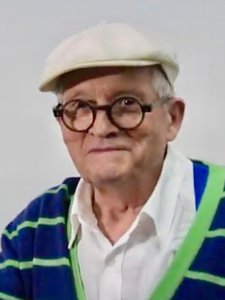
1937–2026, United Kingdom
David Hockney
The Formative Years and Artistic Education Born in Bradford, United Kingdom, David Hockney grew up in a household of five children. His father, Kenneth Hockney, worked as an accountant's clerk and had been a conscientious objector during the Second World War, while his mother, Laura, was a Methodist and a strict vegetarian. His early years were spent in the industrial landscape of Yorkshire, characterized by brick factories and bustling markets. His formal training began at the Bradford School of Art from 1953 to 1957, where he focused on drawing from life and portraiture.
Also by David Hockney
 Portrait of an artist pool with two figures1971
 A bigger splash1967
 Pool 2 figures
 Nichols canyon
Essays around Cactus
 Beyond the Bowl: The Symbolic Depth and Formal Precision of Still Life PaintingExplore the symbolic depth of still life from Baroque vanitas to Cézanne. Discover the evolution of the genre now.
 Tactile Maximalism: The Expert Guide to Styling Bold Pop Art for Dopamine Decor InteriorsMaster the art of Dopamine Decor with our expert guide to Tactile Maximalism. Learn how to professionally style bold Pop Art through textur…
 David Hockney: A Retrospective on Pop Art's Chronicler of Light, Space, and the EverydayExplore the life & work of David Hockney, Pop Art's master chronicler. Discover his iconic paintings, Californian landscapes, and lasting i…