Preview
 Send
Send Share
Share
 Details
 Guide
Guide

 Download
 Similars
 X-Ray
X-Ray Diaporama
 Stats
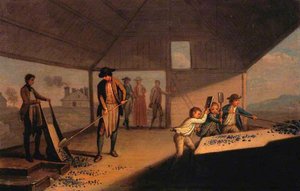
StatsLead Processing at Leadhills Pounding the Ore


 Read More
Giclée / Art Print
Museum-quality giclée or canvas print with fast production and flexible finish options. ( Buy Hand Made Painting Switch to Digital Image)




P118B $10

P118H $10

P118W $10

P438Z $10

P508JH $12

P508YH $12

P805H $10

P805Z $10

P919BZ $10

P919G $10

P919XJ $10

P959ZH $10

P968JZ $12

W106C $8

W218G $10

W218JH $8

W218Y $10

W307PJ $10

W316G $10

W316PJ $8

W316Y $10

W398PJ $8

W4111J $10

W500HY $15

W500JH $15

W692G $12

W849H $8

W940BG $15

W953PJ $8




Pick from our preset sizes that match the artwork's original proportions.

Type the width and the height you need, to fit your frame or your wall. A print can only be cut, never made bigger than the picture, so a size with a different shape loses a part of the image. We send you a digital mockup to approve before we print anything. The picture shown on this page does not show the real cut — only the mockup does.
Worldwide Delivery () in 2 weeks instead of standard 4/5 weeks. (24 October)

Free Worldwide Express Shipping

High-Quality Linen Canvas

Full Shipping Insurance

Customs Tax Refund Guarantee

True Color Matching Guarantee

100-Day Return Policy (Defects Only)

100% Money-Back Guarantee

Bulk Discount Offer
 Glass option is only available in size under 110 CM

Lead Processing at Leadhills Pounding the Ore
Giclée / Art Print
Reproduction Size
-


Total Price
$ 81
Lead Processing at Leadhills Pounding the Ore
David Allan’s “Lead Processing at Leadhills” isn't merely a depiction of labor; it’s a snapshot of Scotland grappling with the Enlightenment’s fascination for industry and observation. Painted in 1789, this monumental canvas captures a scene unfolding within the Leadhills Pounding – one of Scotland’s earliest lead smelting operations – offering a rare glimpse into the daily life of miners and craftsmen during a transformative era. Allan, having spent formative years absorbing classical ideals in Rome under Gavin Hamilton, brought a disciplined approach to capturing the physicality of work and the spirit of scientific inquiry.- Subject Matter: The painting portrays twelve men engaged in the arduous process of extracting lead ore from the hillside pits. Tasks include pounding the ore with hammers, sorting it by size and purity, and meticulously cleaning up slag – remnants of unwanted material – demonstrating a keen awareness of geological processes.
- Style: Allan’s style leans heavily toward Neoclassicism, mirroring the artistic sensibilities prevalent in Rome at the time. The composition is carefully balanced, emphasizing geometric forms and conveying a sense of order and grandeur despite the gritty realities of the mining environment.
- Historical Context: The painting reflects Scotland’s burgeoning industrial revolution, fueled by advancements in mining technology and driven by a desire to harness natural resources for economic prosperity. It aligns with Enlightenment thinkers’ belief in reason and observation as instruments of progress – mirroring the scientific methods employed by Allan himself.
- Symbolism: The scene embodies several symbolic elements. The hammering represents relentless effort, while the sorting process symbolizes methodical analysis. Furthermore, the overall atmosphere conveys a sense of communal labor—a testament to the importance of collaboration in achieving ambitious goals.
Questions & Answers
How does "Lead Processing at Leadhills Pounding the Ore" balance light and dark?
"Lead Processing at Leadhills Pounding the Ore" is deep_shadow overall, and its luminance is dark.
What is a reproduction of "Lead Processing at Leadhills Pounding the Ore" by David Allan recommended for?
A reproduction of "Lead Processing at Leadhills Pounding the Ore" by David Allan is recommended for accent. This suggestion follows from the work's subject, mood and colors.
Who sells hand-painted copies of "Lead Processing at Leadhills Pounding the Ore" by David Allan?
You can order a hand-painted reproduction of "Lead Processing at Leadhills Pounding the Ore" by David Allan directly on its Hand-Painted Reproduction page: a hand-painted oil reproduction on linen canvas, made to order.
Artist Biography
A Scottish Voice in the Age of Enlightenment
David Allan, born in Alloa, Scotland, in 1744, emerged as a significant figure during a period of profound artistic and intellectual change. His father’s position as harbor master instilled an early connection to the world beyond Scotland's shores, hinting at influences that would later shape his artistic vision. Though details of his earliest training remain scarce, it is clear that a natural talent blossomed from youth, setting him on a path toward becoming one of Scotland’s most celebrated painters. This path led him, in 1764, to Rome – a pivotal journey for any aspiring artist of the time. For ten years, Allan immersed himself in the study of classical art and architecture, diligently copying masterpieces like the Borghese Gladiator, honing his skills in form and technique under the guidance of Gavin Hamilton. This Italian sojourn wasn’t merely about technical mastery; it was an immersion into a world of ideals that would subtly permeate his later work.Blending Worlds: Neoclassicism with Scottish Life
Upon returning to Scotland around 1770, Allan established himself in Edinburgh, quickly becoming a leading artist within the city’s vibrant cultural scene. His style is remarkable for its unique synthesis of Neoclassical precision and Rococo elegance. While embracing the classical ideals of order, balance, and clarity – hallmarks of the Neoclassical movement – he retained a decorative sensibility evident in his use of color and composition. This wasn't a rigid adherence to any single school but rather a thoughtful blending of influences. Allan excelled in both portraiture and genre painting, demonstrating a keen observational skill and an ability to capture the essence of his subjects. His portraits weren’t simply likenesses; they possessed psychological depth, revealing character and personality. However, it was perhaps in his genre scenes that Allan truly distinguished himself, offering intimate glimpses into 18th-century Scottish life – from bustling market days to quiet domestic moments. Works like “Lead Processing at Leadhills Washing the Ore” are not merely depictions of industry but insightful social commentaries rendered with remarkable realism and attention to detail. He also ventured into historical subjects, such as "Hope (triptych, centre panel)", showcasing his ambition and versatility while skillfully integrating classical influences with religious themes.The ‘Scottish Hogarth’ and a Legacy Forged in Observation
Allan's dedication to depicting contemporary life earned him the moniker “the Scottish Hogarth,” a comparison that highlights his contributions to genre painting and social commentary through art. While not directly emulating Hogarth’s often satirical style, Allan shared a similar interest in portraying everyday scenes with honesty and insight. He possessed an exceptional ability to capture the nuances of human interaction and the textures of daily life, elevating seemingly ordinary subjects to artistic significance. His association with the Foulis Academy, a prominent center for artistic training in Edinburgh, further solidified his role in shaping Scottish art during this period. Allan wasn’t just creating paintings; he was contributing to the development of a distinct national artistic identity. He influenced subsequent generations of Scottish artists, encouraging them to look inward and find inspiration in their own culture and surroundings.A Lasting Impression
David Allan's impact extends beyond his individual artworks. His illustrations for Allan Ramsay’s *The Gentle Shepherd* are particularly noteworthy, demonstrating a playful wit and an ability to capture the spirit of Scottish pastoral life. He was a master of both large-scale historical compositions and intimate domestic scenes, showcasing a remarkable range of skill and sensitivity. His death in 1796 marked the loss of a truly original voice in British art. Today, his paintings continue to be admired for their technical brilliance, insightful portrayals of Scottish society, and enduring artistic merit. Allan’s legacy lies not only in the beauty of his creations but also in his ability to bridge classical ideals with distinctly Scottish subject matter, leaving an indelible mark on the cultural landscape of his time and inspiring artists for generations to come. He remains a testament to the power of observation, the importance of artistic training, and the enduring appeal of capturing the human experience.
David Allan
1744 - 1796 , United States of America
Quick Facts
- Full Name: David Allan
- Nationality: Scottish
- Date Of Birth: 1744
- Date Of Death: 1796
- Place Of Birth: Akron, United States of America
- Notable Artworks:
- Lead Processing at Leadhills
- The Family of Procida
- Hope (triptych)
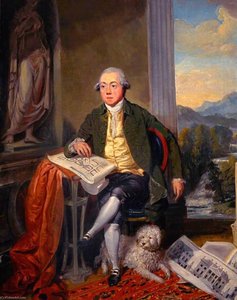
- James Craig, Architect
- The Children of David Allan
- Artistic Movement Or Style: Neoclassicism & Rococo
- Artists Who Influenced This Artist: ['Gavin Hamilton']
- Artists Or Movements Influenced By This Artist: ['Scottish artists']
Related Articles
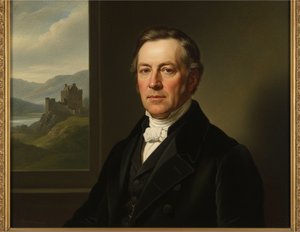
Henry Raeburn: A Scottish Portraitist's Mastery of Light, Character & National Identity
Explore the life & work of Henry Raeburn, a master Scottish portraitist. Discover his innovative techniques, captivating portraits of the Enlightenment era, and lasting legacy in art history. Learn more at OriginalUniqueArt.

Jacques-Louis David: Neoclassical Ideals & Revolutionary Witness
Explore the life & art of Jacques-Louis David, leading Neoclassical painter of the French Revolution. Discover iconic works like 'The Death of Marat' and his lasting impact on art history. Expert analysis & high-quality reproductions at OriginalUniqueArt.
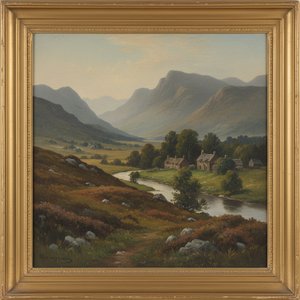
Sir John Watson Gordon: A Study in Scottish Landscape Painting & Tonal Impressionism
Explore the captivating portraits of Sir John Watson Gordon, a leading Scottish master. Discover his evolution from neoclassical style to atmospheric Tonalism and influence on 19th-century British art. Learn about his iconic sitters & legacy.
Illuminating the Enlightenment: Art & Sociopolitical Context of the 18th Century
Explore the art of the Enlightenment! Discover Rococo's elegance, Neoclassicism’s virtue, & David’s revolutionary masterpieces. Uncover the sociopolitical context shaping 18th-century European painting.
George Paul Chalmers: Rediscovering the Angus Rembrandt & Scottish Colourist Roots
Explore the captivating world of George Paul Chalmers (1833-1878), a pivotal Scottish painter. Discover his landscapes, portraits & connection to the Aesthetic Movement and Colourists. Learn about this 'Angus Rembrandt's' legacy with OriginalUniqueArt.