

 Preview
 Send
Send Share
Share
 Details
 Guide
Guide

 Download
 Similars
 X-Ray
X-Ray Diaporama
 Stats
StatsGouverneur Morris


 Read More
Giclée / Art Print
Museum-quality giclée or canvas print with fast production and flexible finish options. ( Buy Hand Made Painting Switch to Digital Image)




P118B $10

P118H $10

P118W $10

P438Z $10

P508JH $12

P508YH $12

P805H $10

P805Z $10

P919BZ $10

P919G $10

P919XJ $10

P959ZH $10

P968JZ $12

W106C $8

W218G $10

W218JH $8

W218Y $10

W307PJ $10

W316G $10

W316PJ $8

W316Y $10

W398PJ $8

W4111J $10

W500HY $15

W500JH $15

W692G $12

W849H $8

W940BG $15

W953PJ $8




Pick from our preset sizes that match the artwork's original proportions.

You may enter your own dimensions to fit a specific frame or space. If your selected size does not match the original image's proportions, we will either crop the artwork or extend the image with a mirrored or solid-fill edge. A digital mockup will be sent for your approval before production begins.
Please note that the on-screen preview does not reflect the actual cropping or extension. Only the mockup will accurately show the final composition.
While custom sizes are available, we recommend selecting a dimension from the predefined list to preserve the original proportions.
Worldwide Delivery () in 2 weeks instead of standard 4/5 weeks. (26 September)

Free Worldwide Express Shipping

High-Quality Linen Canvas

Full Shipping Insurance

Customs Tax Refund Guarantee

True Color Matching Guarantee

100-Day Return Policy (Defects Only)

100% Money-Back Guarantee

Bulk Discount Offer
 Glass option is only available in size under 110 CM

Gouverneur Morris
Giclée / Art Print
Reproduction Size
-


Total Price
$ 81
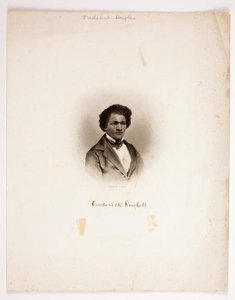
Gouverneur Morris Jr.: A Portrait of Enlightenment Ambition
The engraving depicting Gouverneur Morris Jr., executed by Benjamin Bartoell Ellis in 1817, transcends mere likeness; it embodies the spirit of a pivotal figure in American history—a man grappling with ideals of liberty and responsibility amidst the turbulent currents of his time. Ellis’s masterful draughtsmanship captures not only Morris's physical appearance but also an aura of intellectual seriousness, reflecting the broader cultural landscape of early 19th-century New York City.- Subject Matter: The portrait portrays Gouverneur Morris Jr., son of the celebrated Founding Father Gouverneur Morris, as a prominent railroad executive and philanthropist. This positioning underscores his role in shaping the economic development of the burgeoning nation while simultaneously highlighting his commitment to social betterment—a duality that resonates throughout the engraving’s composition.
- Style & Technique: Ellis employs a technique characteristic of neoclassicism, prioritizing clarity and precision in line work and tonal shading. The engraving's subdued palette – dominated by browns and grays – lends an air of dignified restraint to the depiction, mirroring Morris’s measured demeanor and intellectual pursuits.
- Historical Context: Created during the era of Andrew Jackson’s presidency, the portrait reflects the anxieties surrounding westward expansion and the ongoing debate over slavery. Morris's involvement in the Republican Party signaled a commitment to preserving the Union and advocating for abolitionist principles—themes subtly conveyed through the engraving’s formal arrangement.
- Symbolism: The inclusion of books symbolizes Morris’s erudition and engagement with philosophical discourse, aligning him with the Enlightenment ideals that underpinned the American Revolution. Furthermore, the carefully positioned spectacles emphasize his intellectual curiosity and dedication to reasoned thought.
- Emotional Impact: Despite its formal aesthetic, the engraving possesses a palpable sense of gravitas—a reflection of Morris’s unwavering conviction in the pursuit of justice and virtue. Ellis's skillful rendering captures not merely an image but also an essence of character, inviting viewers to contemplate the legacy of a man who played a crucial role in shaping the nation’s destiny.
Detailed Examination of Composition & Rendering
Ellis’s compositional choices contribute significantly to the engraving's impact. The central figure is positioned against a textured wallpaper pattern—a deliberate stylistic device that introduces visual complexity without disrupting the overall balance. This subtle layering enhances depth and creates an immersive experience for the viewer, mirroring Morris’s multifaceted intellect and ambition. The artist’s meticulous attention to detail—evident in the rendering of Morris's clothing folds and facial features—demonstrates a mastery of draughtsmanship that elevates the portrait beyond mere representation.- Lighting: Ellis utilizes chiaroscuro – dramatic contrasts between light and shadow – to sculpt Morris’s form and imbue him with an inner radiance. This technique underscores his moral fortitude and conveys a sense of dignified solemnity, aligning with the artistic conventions of the neoclassical tradition.
- Texture: The engraving's surface texture—created through hatching and cross-hatching—mimics the materiality of Morris’s attire and adds visual richness to the composition. This textural element reinforces Ellis’s commitment to realism while simultaneously conveying a sense of timelessness.
Morris Jr.’s Legacy & Artistic Significance
Gouverneur Morris Jr.'s portrait stands as a testament to Benjamin Bartoell Ellis's artistic prowess and his ability to capture the spirit of an era—the dawn of American industrialization and the burgeoning struggle for social reform. Ellis’s engraving serves not only as a visual record but also as a conduit for understanding Morris’s intellectual convictions and his enduring contribution to the nation’s formative years. It remains a compelling exemplar of neoclassicism, demonstrating how art can illuminate history and convey profound emotional resonance.Artist Biography
Allan Ramsay: A Pioneer of British Portraiture
Born in Edinburgh on October 13, 1713, Allan Ramsay emerged as a pivotal figure in the burgeoning world of British art during the mid-18th century. His life was inextricably linked to the cultural and artistic currents sweeping through Scotland and England, shaping him into one of the most celebrated portrait painters of his time. Ramsay’s career unfolded against a backdrop of intellectual ferment, influenced by the Enlightenment and a renewed interest in classical art – a legacy he skillfully integrated into his distinctive style.
His early artistic training began under Duncan Forbes, a prominent Scottish painter known for his historical works, and later with Francis Egerton, 3rd Duke of Bridgewater, a wealthy patron who provided Ramsay with invaluable opportunities to study in Rome and Naples. These formative years exposed him to the techniques and aesthetics of Italian masters like Francesco Solimena and Giuseppe Bartolomeo Campana, profoundly impacting his approach to composition, color, and handling of paint. Ramsay’s time in Italy wasn't merely a period of imitation; he absorbed and adapted these influences, ultimately forging a unique style that blended classical elegance with a distinctly British sensibility.
Upon returning to England, Ramsay quickly established himself as the portraitist of choice for the aristocracy and gentry. His ability to capture not only physical likeness but also personality and character was remarkable. He possessed an intuitive understanding of his subjects, skillfully employing subtle gestures, expressions, and clothing details to reveal their inner lives. His portraits were commissioned by prominent figures like Archibald Campbell, 3rd Duke of Argyll (whose image became the iconic design for the Royal Bank of Scotland banknotes), George III, and numerous members of the landed elite. The enduring popularity of his work speaks volumes about his artistic skill and his ability to connect with his subjects on a deeper level.
The Art of the Portrait: Technique and Style
Ramsay’s portraiture is characterized by its refined elegance, delicate color palette, and masterful use of light. He favored a technique known as “alla prima,” working directly onto the canvas without preliminary sketches, allowing for spontaneity and immediacy in his brushwork. His compositions were typically balanced and symmetrical, reflecting the classical ideals he had absorbed during his time in Italy. However, unlike many of his Italian contemporaries, Ramsay avoided overly theatrical poses or dramatic lighting effects, instead opting for a more naturalistic approach that emphasized grace and composure.
His use of color was particularly noteworthy. He employed subtle gradations of tone to create a sense of depth and volume, while his palette generally consisted of muted earth tones—ochres, browns, and grays—interspersed with touches of red, blue, and green. Ramsay’s attention to detail was meticulous, evident in the rendering of fabrics, jewelry, and facial features. He was a skilled draughtsman, as evidenced by his extensive collection of preparatory chalk drawings, which offer valuable insights into his working methods.
Social Connections and Literary Circles
Ramsay’s life extended beyond the realm of art; he was a prominent figure in Edinburgh's intellectual and literary circles. He maintained close relationships with poets like James Thomson and Robert Ferguson, and his salon became a gathering place for artists, writers, and musicians. His own father, Allan Ramsay (the poet), exerted a significant influence on his artistic development, fostering an appreciation for literature and the arts. Ramsay’s social connections provided him with access to influential patrons and helped shape his artistic vision.
His correspondence reveals a keen interest in art theory and criticism, as well as a fascination with classical archaeology. He traveled extensively throughout Italy, revisiting sites of historical significance and studying ancient ruins. These experiences further enriched his understanding of the classical world and informed his approach to portraiture – he sought to capture not just likeness but also the character and spirit of his subjects.
Legacy and Influence
Allan Ramsay’s impact on British art is undeniable. He established a new standard for portrait painting, elevating it from a mere exercise in likeness to an exploration of human psychology and social status. His elegant style and refined technique influenced generations of artists who followed, including Thomas Gainsborough and George Romney. His portraits continue to be admired for their beauty, grace, and enduring appeal.
Ramsay died on August 10, 1784, in Dover, leaving behind a substantial body of work that remains a testament to his artistic skill and vision. His legacy as one of the most important portrait painters of the 18th century is firmly secured, and his paintings continue to be exhibited and studied by art historians and enthusiasts around the world.
benjamin barton ellis
1784 - 1855 , United States of America
Quick Facts
- Artistic Movement Or Style: Portrait painting
- Artists Or Movements Influenced By This Artist: ['Thomas Hudson']
- Artists Who Influenced This Artist:
- Duncan Forbes
- Francis Egerton
- Date Of Birth: 13 Oct 1713
- Date Of Death: 10 Aug 1784
- Full Name: Allan Ramsay
- Nationality: Scottish
- Notable Artworks:
- Duncan Forbes
- Archibald Campbell
- Place Of Birth: Edinburgh, Scotland
Related Articles

Benjamin West: Transatlantic Ambition & Shaping American Art
Explore the life & legacy of Benjamin West, pioneering American artist and Royal Academy president. Discover his Neoclassical masterpieces, transatlantic influence, and lasting impact on art history. Learn more at OriginalUniqueArt.

Engraving: A Historical Survey of Technique, Artistic Expression & Enduring Legacy
Explore the rich history of engraving with OriginalUniqueArt. Discover techniques, iconic artists like Dürer & Callot, collecting tips, and expert guidance for preserving your art investment. Learn about intaglio printing & more!
Engraving's Golden Age: 10 Masterpieces That Redefined Art | OriginalUniqueArt
Journey through art history with our Top 10 Legendary Engravings! Explore masterpieces by Dürer, Rembrandt & Goya. Discover the stories behind these iconic prints and find museum-quality reproductions for your home at OriginalUniqueArt.com.

The Intricate World of Engraving: A Historical Survey of Technique, Artistic Expression & Enduring Legacy
Explore the rich history of engraving with OriginalUniqueArt. Discover techniques, iconic artists like Dürer & Callot, collecting tips, and expert guidance for preserving your art investment. Learn about intaglio printing & more!

Grant Wood & American Regionalism: Identity, Myth & the Rural Landscape
Explore the world of Grant Wood & American Regionalism with OriginalUniqueArt. Discover the symbolism behind 'American Gothic', recurring themes, and the movement's lasting impact on art history. High-quality reproductions available.
