
 Preview
 Send
Send Share
Share
 Details
 Guide
Guide

 Download
 Similars
 X-Ray
X-Ray Diaporama
 Q&A
Q&A Stats
StatsGouverneur Morris


 Read More
Get a print-ready file that goes far beyond the web preview. Every digital image we sell comes from a high-resolution master in our stock database — usually 5,000 to 15,000 pixels wide — so you can print large, crop tightly, or reproduce fine detail with confidence.
No file leaves our studio untouched. A digital expert checks the colors against the original painting and corrects them if needed, then improves clarity and detail with professional retouching tools — always staying faithful to the artist's brushwork and style. The result is an image that looks like the painting, not like a filtered scan.
You approve before you're done: our expert sends the image by e-mail within 72 hours for your review. Not satisfied? Ask for improvements or corrections, or request a refund if the quality falls short.
This is the quality relied on by publishers, design studios, galleries and print shops.
Digital Image
Download a high-resolution file for personal display, printing, and creative projects. ( Switch to Print Buy Hand Made Painting)
Included in Every Digital Image Order
Expert Digital Delivery, Guaranteed
When you choose OriginalUniqueArt.com, you're not just getting an image - you're receiving a professionally enhanced digital artwork, crafted with precision and backed by a satisfaction guarantee. Here's everything that comes with your order, automatically:

Fast Email Delivery
Your high-resolution digital image file will be emailed to you within 72 hours of ordering - ready for immediate use.

AI-Enhanced Digital File
Your artwork is professionally optimized using advanced AI tools and manual editing, ensuring maximum detail, clarity, and color accuracy.

Free Lifetime Re-Delivery
Accidentally deleted or lost your file? No worries - we'll resend it to you anytime, free of charge.

No Import Fees - Ever
Enjoy your artwork instantly with zero customs, duties, or delivery fees - digital downloads are always tax-free.

Color Accuracy Guarantee
We ensure your digital image reflects the original colors as closely as possible using professional tools and color management.

100-Day Satisfaction Guarantee
If you're not satisfied with your digital image, we'll revise it or refund 100% within 100 days - no questions asked.

100% Money-Back Guarantee
Not satisfied? Get a full refund within 100 days of receiving your digital file - no questions asked.

Bulk Order Discounts
Buy 3 images, save 10% - Buy 5, save 15% - Buy 10+, save 20%. Great for creative projects, galleries, and agencies.
Gouverneur Morris Jr.: A Portrait of Enlightenment Ambition
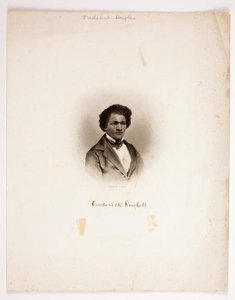
The engraving depicting Gouverneur Morris Jr., executed by Benjamin Bartoell Ellis in 1817, transcends mere likeness; it embodies the spirit of a pivotal figure in American history—a man grappling with ideals of liberty and responsibility amidst the turbulent currents of his time. Ellis’s masterful draughtsmanship captures not only Morris's physical appearance but also an aura of intellectual seriousness, reflecting the broader cultural landscape of early 19th-century New York City.- Subject Matter: The portrait portrays Gouverneur Morris Jr., son of the celebrated Founding Father Gouverneur Morris, as a prominent railroad executive and philanthropist. This positioning underscores his role in shaping the economic development of the burgeoning nation while simultaneously highlighting his commitment to social betterment—a duality that resonates throughout the engraving’s composition.
- Style & Technique: Ellis employs a technique characteristic of neoclassicism, prioritizing clarity and precision in line work and tonal shading. The engraving's subdued palette – dominated by browns and grays – lends an air of dignified restraint to the depiction, mirroring Morris’s measured demeanor and intellectual pursuits.
- Historical Context: Created during the era of Andrew Jackson’s presidency, the portrait reflects the anxieties surrounding westward expansion and the ongoing debate over slavery. Morris's involvement in the Republican Party signaled a commitment to preserving the Union and advocating for abolitionist principles—themes subtly conveyed through the engraving’s formal arrangement.
- Symbolism: The inclusion of books symbolizes Morris’s erudition and engagement with philosophical discourse, aligning him with the Enlightenment ideals that underpinned the American Revolution. Furthermore, the carefully positioned spectacles emphasize his intellectual curiosity and dedication to reasoned thought.
- Emotional Impact: Despite its formal aesthetic, the engraving possesses a palpable sense of gravitas—a reflection of Morris’s unwavering conviction in the pursuit of justice and virtue. Ellis's skillful rendering captures not merely an image but also an essence of character, inviting viewers to contemplate the legacy of a man who played a crucial role in shaping the nation’s destiny.
Detailed Examination of Composition & Rendering
Ellis’s compositional choices contribute significantly to the engraving's impact. The central figure is positioned against a textured wallpaper pattern—a deliberate stylistic device that introduces visual complexity without disrupting the overall balance. This subtle layering enhances depth and creates an immersive experience for the viewer, mirroring Morris’s multifaceted intellect and ambition. The artist’s meticulous attention to detail—evident in the rendering of Morris's clothing folds and facial features—demonstrates a mastery of draughtsmanship that elevates the portrait beyond mere representation.- Lighting: Ellis utilizes chiaroscuro – dramatic contrasts between light and shadow – to sculpt Morris’s form and imbue him with an inner radiance. This technique underscores his moral fortitude and conveys a sense of dignified solemnity, aligning with the artistic conventions of the neoclassical tradition.
- Texture: The engraving's surface texture—created through hatching and cross-hatching—mimics the materiality of Morris’s attire and adds visual richness to the composition. This textural element reinforces Ellis’s commitment to realism while simultaneously conveying a sense of timelessness.
Morris Jr.’s Legacy & Artistic Significance
Gouverneur Morris Jr.'s portrait stands as a testament to Benjamin Bartoell Ellis's artistic prowess and his ability to capture the spirit of an era—the dawn of American industrialization and the burgeoning struggle for social reform. Ellis’s engraving serves not only as a visual record but also as a conduit for understanding Morris’s intellectual convictions and his enduring contribution to the nation’s formative years. It remains a compelling exemplar of neoclassicism, demonstrating how art can illuminate history and convey profound emotional resonance.Questions & Answers
How many people view "Gouverneur Morris"?
A Stats page exists for "Gouverneur Morris". It charts the monthly visits of the artwork and of the artist's other works, with country and language breakdowns.
What are the author and date of "Gouverneur Morris"?
"Gouverneur Morris" was created by Benjamin Barton Ellis in 1783.
What is "Gouverneur Morris" made with, and in which style?
"Gouverneur Morris" is made in acrylic on canvas, in the Romantic Portraiture style.
Artist Biography
The Precision of a Neoclassical Master
Benjamin Barton Ellis stands as a distinguished figure in the history of American printmaking, a master of neoclassical engraving whose work serves as a window into the intellectual fervor of the early nineteenth century. Born in Philadelphia, United States of America, Ellis developed a reputation for extraordinary draughtsmanship, characterized by a meticulous attention to detail and a profound ability to capture the essence of his subjects. His artistry was not merely about recording physical likenesses but about translating the very spirit of an era defined by Enlightenment ideals into the permanent medium of engraving.
The hallmark of Ellis’s technique lies in his command over line work and tonal shading. In his most celebrated works, such as the portrait of Gouverneur Morris, he utilized a subdued palette of browns and grays to instill a sense of dignified restraint. This approach allowed him to achieve a level of clarity and precision that became synonymous with the neoclassical style. Through his skilled use of the engraving tool, Ellis could imbue a static image with an aura of intellectual seriousness, making his portraits feel like living embodiments of the era's philosophical pursuits.
Symbolism and the Spirit of Enlightenment
Beyond the technical mastery of his engravings, Ellis possessed a remarkable talent for incorporating subtle symbolism that enriched the narrative depth of his portraits. His work often functioned as a complex visual language, communicating the values and social standing of his subjects through carefully placed objects and compositions. In his depiction of Gouverneur Morris Jr., for instance, the inclusion of books serves to highlight the subject's erudition and engagement with philosophical discourse, while the presence of spectacles emphasizes a dedication to reasoned thought and intellectual curiosity.
This ability to weave historical context into his art allowed Ellis to capture the turbulent currents of American history. His engravings reflect the broader cultural landscape of the early 19th century, touching upon themes of economic development, social responsibility, and the shifting political tides of the nation. By focusing on the interplay between individual character and societal role, Ellis created works that transcend mere portraiture, offering instead a profound meditation on the human condition during a period of significant national transformation.
Legacy in American Engraving
The historical significance of Benjamin Barton Ellis resides in his contribution to the visual identity of a burgeoning nation. As an engraver capable of capturing both the physical and the metaphysical, he helped document the faces and the ideals of the American Enlightenment. His precise and disciplined style provided a sense of permanence to the portraits of pivotal figures, ensuring that their intellectual legacies would be preserved through the enduring medium of print.
While much of his work remains a treasure for scholars and art enthusiasts alike, the impact of his craftsmanship continues to resonate. Through his mastery of neoclassical engraving, Ellis achieved a rare feat: he captured the fleeting spirit of an age, leaving behind a body of work that invites modern viewers to rediscover the profound intellectual gravity of the past.
Benjamin Barton Ellis
1784 - 1855 , United States of America
Quick Facts
- Artistic Movement Or Style: Neoclassical engraving
- Full Name: Benjamin Barton Ellis
- Notable Artworks: ['Gouverneur Morris']
- Place Of Birth: Philadelphia, United States of America
- Date Of Birth: 1784
- Date Of Death: 1855