

 Preview
 Send
Send Share
Share
 Details
 Guide
Guide

 Download
 Similars
 X-Ray
X-Ray Diaporama
 Stats
StatsGouverneur Morris


 Read More
Hand Made Oil Reproduction
Hand-painted oil on canvas in your size and frame, made to order by our artists. ( Switch to Print Switch to Digital Image)




P118B $10

P118H $10

P118W $10

P438Z $10

P508JH $12

P508YH $12

P805H $10

P805Z $10

P919BZ $10

P919G $10

P919XJ $10

P959ZH $10

P968JZ $12

W106C $8

W218G $10

W218JH $8

W218Y $10

W307PJ $10

W316G $10

W316PJ $8

W316Y $10

W398PJ $8

W4111J $10

W500HY $15

W500JH $15

W692G $12

W849H $8

W940BG $15

W953PJ $8




Pick from our preset sizes that match the artwork's original proportions.

You may enter your own dimensions to fit a specific frame or space. If your selected size does not match the original image's proportions, we will either crop the artwork or extend the painting with additional hand-painted elements. A digital mockup will be sent for your approval before production begins.
Please note that the on-screen preview does not reflect the actual cropping or extension. Only the mockup will accurately show the final composition.
While custom sizes are available, we recommend selecting a dimension from the predefined list to preserve the original proportions.
After order, OriginalUniqueArt.com team will email client for instructions and provide a mockup preview
Worldwide Delivery () in 3/4 weeks instead of standard 5 weeks. (13 October). No compromise on quality.

Free Worldwide Express Shipping

High-Quality Linen Canvas

Full Shipping Insurance

Customs Tax Refund Guarantee

True Color Matching Guarantee

100-Day Return Policy (Defects Only)

100% Money-Back Guarantee

Bulk Discount Offer
 Glass option is only available in size under 110 CM

Gouverneur Morris
Reproduction Medium
Reproduction Size
-


Total Price
$ 300
Gouverneur Morris Jr.: A Portrait of Enlightenment Ambition
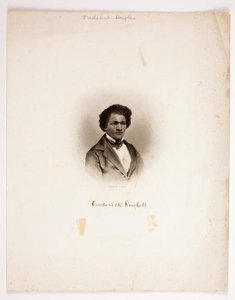
The engraving depicting Gouverneur Morris Jr., executed by Benjamin Bartoell Ellis in 1817, transcends mere likeness; it embodies the spirit of a pivotal figure in American history—a man grappling with ideals of liberty and responsibility amidst the turbulent currents of his time. Ellis’s masterful draughtsmanship captures not only Morris's physical appearance but also an aura of intellectual seriousness, reflecting the broader cultural landscape of early 19th-century New York City.- Subject Matter: The portrait portrays Gouverneur Morris Jr., son of the celebrated Founding Father Gouverneur Morris, as a prominent railroad executive and philanthropist. This positioning underscores his role in shaping the economic development of the burgeoning nation while simultaneously highlighting his commitment to social betterment—a duality that resonates throughout the engraving’s composition.
- Style & Technique: Ellis employs a technique characteristic of neoclassicism, prioritizing clarity and precision in line work and tonal shading. The engraving's subdued palette – dominated by browns and grays – lends an air of dignified restraint to the depiction, mirroring Morris’s measured demeanor and intellectual pursuits.
- Historical Context: Created during the era of Andrew Jackson’s presidency, the portrait reflects the anxieties surrounding westward expansion and the ongoing debate over slavery. Morris's involvement in the Republican Party signaled a commitment to preserving the Union and advocating for abolitionist principles—themes subtly conveyed through the engraving’s formal arrangement.
- Symbolism: The inclusion of books symbolizes Morris’s erudition and engagement with philosophical discourse, aligning him with the Enlightenment ideals that underpinned the American Revolution. Furthermore, the carefully positioned spectacles emphasize his intellectual curiosity and dedication to reasoned thought.
- Emotional Impact: Despite its formal aesthetic, the engraving possesses a palpable sense of gravitas—a reflection of Morris’s unwavering conviction in the pursuit of justice and virtue. Ellis's skillful rendering captures not merely an image but also an essence of character, inviting viewers to contemplate the legacy of a man who played a crucial role in shaping the nation’s destiny.
Detailed Examination of Composition & Rendering
Ellis’s compositional choices contribute significantly to the engraving's impact. The central figure is positioned against a textured wallpaper pattern—a deliberate stylistic device that introduces visual complexity without disrupting the overall balance. This subtle layering enhances depth and creates an immersive experience for the viewer, mirroring Morris’s multifaceted intellect and ambition. The artist’s meticulous attention to detail—evident in the rendering of Morris's clothing folds and facial features—demonstrates a mastery of draughtsmanship that elevates the portrait beyond mere representation.- Lighting: Ellis utilizes chiaroscuro – dramatic contrasts between light and shadow – to sculpt Morris’s form and imbue him with an inner radiance. This technique underscores his moral fortitude and conveys a sense of dignified solemnity, aligning with the artistic conventions of the neoclassical tradition.
- Texture: The engraving's surface texture—created through hatching and cross-hatching—mimics the materiality of Morris’s attire and adds visual richness to the composition. This textural element reinforces Ellis’s commitment to realism while simultaneously conveying a sense of timelessness.
Morris Jr.’s Legacy & Artistic Significance
Gouverneur Morris Jr.'s portrait stands as a testament to Benjamin Bartoell Ellis's artistic prowess and his ability to capture the spirit of an era—the dawn of American industrialization and the burgeoning struggle for social reform. Ellis’s engraving serves not only as a visual record but also as a conduit for understanding Morris’s intellectual convictions and his enduring contribution to the nation’s formative years. It remains a compelling exemplar of neoclassicism, demonstrating how art can illuminate history and convey profound emotional resonance.Questions & Answers
Who created "Gouverneur Morris" and in what year?
The author of "Gouverneur Morris" is Benjamin Barton Ellis, and the work is dated 1783.
What atmosphere would a reproduction of "Gouverneur Morris" by Benjamin Barton Ellis bring to a room?
"Gouverneur Morris" by Benjamin Barton Ellis has an elegant atmosphere and is recommended for a living room. The mood is what the work brings to the space around it.
What palette and what feeling does "Gouverneur Morris" combine?
"Gouverneur Morris" by Benjamin Barton Ellis combines a neutrals palette with a romantic tone.
What are the date and style of "Gouverneur Morris" by Benjamin Barton Ellis?
"Gouverneur Morris" by Benjamin Barton Ellis is dated 1783 and belongs to Romantic Portraiture.
How well known is "Gouverneur Morris" by Benjamin Barton Ellis?
The popularity level recorded for "Gouverneur Morris" by Benjamin Barton Ellis is iconic.
What other names is Benjamin Barton Ellis known by?
Benjamin Barton Ellis is also known as B. B. Ellis.
Does "Gouverneur Morris" by Benjamin Barton Ellis use strong contrasts or soft harmonies?
The color composition of "Gouverneur Morris" by Benjamin Barton Ellis combines a balanced contrast with a unified palette harmony.
What technique was used for "Gouverneur Morris", and when was it created?
"Gouverneur Morris" was created in 1783 using the acrylic on canvas technique. Material and date describe how and when the original was made.
Artist Biography
The Precision of a Neoclassical Master
Benjamin Barton Ellis stands as a distinguished figure in the history of American printmaking, a master of neoclassical engraving whose work serves as a window into the intellectual fervor of the early nineteenth century. Born in Philadelphia, United States of America, Ellis developed a reputation for extraordinary draughtsmanship, characterized by a meticulous attention to detail and a profound ability to capture the essence of his subjects. His artistry was not merely about recording physical likenesses but about translating the very spirit of an era defined by Enlightenment ideals into the permanent medium of engraving.
The hallmark of Ellis’s technique lies in his command over line work and tonal shading. In his most celebrated works, such as the portrait of Gouverneur Morris, he utilized a subdued palette of browns and grays to instill a sense of dignified restraint. This approach allowed him to achieve a level of clarity and precision that became synonymous with the neoclassical style. Through his skilled use of the engraving tool, Ellis could imbue a static image with an aura of intellectual seriousness, making his portraits feel like living embodiments of the era's philosophical pursuits.
Symbolism and the Spirit of Enlightenment
Beyond the technical mastery of his engravings, Ellis possessed a remarkable talent for incorporating subtle symbolism that enriched the narrative depth of his portraits. His work often functioned as a complex visual language, communicating the values and social standing of his subjects through carefully placed objects and compositions. In his depiction of Gouverneur Morris Jr., for instance, the inclusion of books serves to highlight the subject's erudition and engagement with philosophical discourse, while the presence of spectacles emphasizes a dedication to reasoned thought and intellectual curiosity.
This ability to weave historical context into his art allowed Ellis to capture the turbulent currents of American history. His engravings reflect the broader cultural landscape of the early 19th century, touching upon themes of economic development, social responsibility, and the shifting political tides of the nation. By focusing on the interplay between individual character and societal role, Ellis created works that transcend mere portraiture, offering instead a profound meditation on the human condition during a period of significant national transformation.
Legacy in American Engraving
The historical significance of Benjamin Barton Ellis resides in his contribution to the visual identity of a burgeoning nation. As an engraver capable of capturing both the physical and the metaphysical, he helped document the faces and the ideals of the American Enlightenment. His precise and disciplined style provided a sense of permanence to the portraits of pivotal figures, ensuring that their intellectual legacies would be preserved through the enduring medium of print.
While much of his work remains a treasure for scholars and art enthusiasts alike, the impact of his craftsmanship continues to resonate. Through his mastery of neoclassical engraving, Ellis achieved a rare feat: he captured the fleeting spirit of an age, leaving behind a body of work that invites modern viewers to rediscover the profound intellectual gravity of the past.
Benjamin Barton Ellis
1784 - 1855 , United States of America
Quick Facts
- Artistic Movement Or Style: Neoclassical engraving
- Full Name: Benjamin Barton Ellis
- Notable Artworks: ['Gouverneur Morris']
- Place Of Birth: Philadelphia, United States of America
- Date Of Birth: 1784
- Date Of Death: 1855
Related Articles

Engraving: A Historical Survey of Technique, Artistic Expression & Enduring Legacy
Explore the rich history of engraving with OriginalUniqueArt. Discover techniques, iconic artists like Dürer & Callot, collecting tips, and expert guidance for preserving your art investment. Learn about intaglio printing & more!
Engraving's Golden Age: 10 Masterpieces That Redefined Art | OriginalUniqueArt
Journey through art history with our Top 10 Legendary Engravings! Explore masterpieces by Dürer, Rembrandt & Goya. Discover the stories behind these iconic prints and find museum-quality reproductions for your home at OriginalUniqueArt.com.

Benjamin West: Transatlantic Ambition & Shaping American Art
Explore the life & legacy of Benjamin West, pioneering American artist and Royal Academy president. Discover his Neoclassical masterpieces, transatlantic influence, and lasting impact on art history. Learn more at OriginalUniqueArt.

Grant Wood & American Regionalism: Identity, Myth & the Rural Landscape
Explore the world of Grant Wood & American Regionalism with OriginalUniqueArt. Discover the symbolism behind 'American Gothic', recurring themes, and the movement's lasting impact on art history. High-quality reproductions available.

The Intricate World of Engraving: A Historical Survey of Technique, Artistic Expression & Enduring Legacy
Explore the rich history of engraving with OriginalUniqueArt. Discover techniques, iconic artists like Dürer & Callot, collecting tips, and expert guidance for preserving your art investment. Learn about intaglio printing & more!
