Pop Art
Mickey (Andy Warhol)
Andy Warhol (1928–1987) made Mickey. It belongs to the Pop Art movement. It is made in acrylic on canvas.
- Acrylic On Canvas

 Preview

 Hand Made Oil Painting
 Send
 Share
 Fact sheet


 Download
 Similars
 X-Ray
 Diaporama
 Q&A

 Stats
Mickey, in brief
- Title
- Mickey
- Artist
- Andy Warhol (1928–1987)
- Artist born in
- Pittsburgh, United States
- Medium
- Acrylic On Canvas
- Movement
- Pop Art
- Period
- Modern
- Subject
- mickey mouse icon, pop art style”, “andy warhol”, “disney character”, “bold colors”, “digital art”
What does Mickey depict?
A Pop Icon Reimagined: Exploring Andy Warhol’s ‘Mickey’
Andy Warhol's 1982 painting, *Mickey*, is a quintessential example of Pop Art’s power to elevate popular culture to the realm of fine art. This vibrant and instantly recognizable work doesn’t simply depict Mickey Mouse; it dissects and re-presents an icon, prompting viewers to consider themes of consumerism, celebrity, and the very nature of image reproduction in modern society.Deconstructing a Beloved Character
The artwork features a bold rendition of Mickey Mouse set against a stark black background. Warhol’s technique deliberately simplifies and abstracts the character's form, employing bright, assertive colors and strong contours. This isn’t a faithful reproduction; rather, it’s an *interpretation* – a stylized echo of the globally beloved Disney figure. The flattened perspective and somewhat distorted features contribute to a sense of playful irreverence, challenging traditional notions of artistic representation.The Pop Art Revolution
Emerging in the 1950s, Pop Art sought to bridge the gap between “high” art and mass culture. Warhol was at its forefront, famously incorporating imagery from advertising, comic books, and celebrity portraits into his work. *Mickey* perfectly embodies this ethos. By choosing Mickey Mouse – a symbol of American entertainment and childhood innocence – Warhol directly engaged with the pervasive influence of commercialism on contemporary life. He wasn’t merely painting a cartoon character; he was commenting on its cultural significance and the power of branding.Technique & Artistic Process
Warhol frequently employed silkscreen printing, a technique that allowed for mass production and repetition – mirroring the very processes of consumer culture he critiqued. While details regarding the specific technique used for *Mickey* vary, it’s likely to involve similar methods of layering color and creating bold graphic effects. This approach lends the artwork its distinctive flatness and vibrancy, emphasizing the image's artificiality and manufactured quality.Symbolism & Cultural Commentary
The choice of Mickey Mouse is laden with symbolism. He represents not just Disney’s empire but also American optimism, nostalgia, and the commodification of childhood. By presenting this iconic figure in a somewhat detached and stylized manner, Warhol invites viewers to question their relationship with these cultural touchstones. Is it genuine affection or simply the result of relentless marketing? *Mickey* doesn't offer answers; it provokes questions.Emotional Impact & Lasting Legacy
Despite its conceptual underpinnings, *Mickey* possesses a striking visual appeal. The bright colors and familiar subject matter evoke feelings of nostalgia and playful energy. However, there’s also an underlying sense of detachment – a coolness that reflects Warhol's own artistic persona. This duality is what makes the artwork so compelling. Today, *Mickey* remains a celebrated work within the Pop Art canon. Its influence can be seen in contemporary art, design, and advertising, demonstrating its enduring relevance. It serves as a powerful reminder of the ways in which images shape our perceptions and reflect our cultural values.Collecting & Interior Design
A reproduction of Warhol’s *Mickey* is a bold statement piece for any art collection or interior space. Its vibrant colors and iconic imagery add a touch of playful sophistication to modern living rooms, home offices, or creative studios. The artwork's inherent energy and cultural significance make it a conversation starter and a testament to the enduring power of Pop Art.- Style: Pop Art
- Subject: Portrait/Iconic Character
- Key Themes: Consumerism, Celebrity Culture, Image Reproduction, Nostalgia
High-resolution images of Mickey

Protected by copyright: the image is shown for reference only.
Other sizes, crops and citation →Andy Warhol, Mickey.
Questions on Mickey, answered
What technique was used for "Mickey" by Andy Warhol?
Andy Warhol used the acrylic on canvas technique for "Mickey". The technique defines the material nature of the original work.
What does "Mickey" by Andy Warhol depict?
"Mickey" by Andy Warhol depicts: mickey mouse icon, pop art style”, “andy warhol”, “disney character”, “bold colors”, “digital art”, “iconic figure”.
Is "Mickey" by Andy Warhol in the public domain?
Regarding copyright, "Mickey" is still protected by copyright.
Who is the artist behind "Mickey"?
"Mickey" is attributed to Andy Warhol.
Which artistic current is "Mickey" by Andy Warhol part of?
"Mickey" by Andy Warhol belongs to the Pop Art movement. This movement provides the stylistic context of the work.
Where does "Mickey" fall in Andy Warhol's career?
"Mickey" represents the Mature Period of Andy Warhol.
Why is the copyright status of "Mickey" what it is?
"Mickey" by Andy Warhol is still protected by copyright. Copyright duration runs from the artist's death, which occurred in 1987.
Where does "Mickey" sit within Andy Warhol's body of work?
"Mickey" belongs to Andy Warhol's Pop Art work, whose recorded themes include warhol's serial imagery, exploring image reproduction, shift to accessible art, pop culture iconography, consumerism & mass media, disney's visual language, american identity, celebrity worship.
Is "Mickey" typical of what Andy Warhol usually created?
"Mickey" depicts mickey mouse icon, pop art style”, “andy warhol”, “disney character”, “bold colors”, “digital art”, “iconic figure”, while Andy Warhol's recorded themes are warhol's serial imagery, exploring image reproduction, shift to accessible art, pop culture iconography, consumerism & mass media, disney's visual language, american identity, celebrity worship. Comparing the two shows how the work relates to the artist's usual subjects.
About the artist, Andy Warhol

1928–1987, United States
Andy Warhol
The Early Life of Andy Warhol To understand the mechanics of the modern image, one must look back to the industrial grit of Pittsburgh, Pennsylvania. Andy Warhol was born Andrew Warhola Jr. on August 6, 1928, into a working-class environment that lacked any pretense of high culture. He was the youngest of three sons, born to Andrej Warhola and Julia Zavacky Warhola.
Also by Andy Warhol
 Campbell's soup cans1962
 Marilyn Diptych1962
 White car crash 19 times, Private1963
 Marilyn, leo castelli gallery, new york1964
Essays around Mickey
 The Enduring Legacy of Printmaking: Techniques, Themes & Artistic Innovation Across CenturiesExplore the rich history of printmaking with OriginalUniqueArt. Discover techniques from intaglio to lithography, learn about collecting va…
 The Aesthetics of Authority: Power & Representation in Art HistoryExplore the fascinating history of power representation in art! From Roman portraits to Renaissance masterpieces & Baroque spectacle, disco…
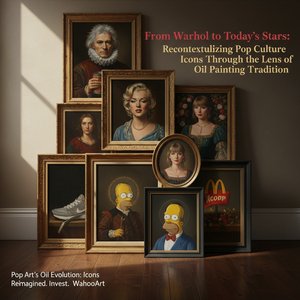 From Warhol to Today's Stars: Recontextualizing Pop Culture Icons Through the Lens of Oil Painting TraditionExplore the captivating evolution of Pop Art through oil painting! Discover contemporary artists reinterpreting iconic imagery & invest in …