The Rise of Pop: Challenging Artistic Conventions & Embracing Consumer Culture
Art pop is a loosely defined style of pop music that emerged in the mid-1960s, influenced by art theories as well as ideas from other art mediums, such as fashion, fine art, cinema, contemporary art and avant-garde literature. The genre draws on pop ...
The mid-20th century witnessed a seismic shift in artistic perception, a deliberate dismantling of established norms that reverberates through the art world even today. Before this upheaval, Abstract Expressionism reigned supreme – an intensely personal and often brooding exploration of the subconscious. Yet, as post-war prosperity bloomed and mass media saturated daily life, a new aesthetic sensibility began to emerge, one that embraced the commonplace rather than rejecting it. This was Pop Art, born not from a desire to transcend reality but to reflect it, in all its vibrant, commercial glory. Artists like Andy Warhol weren’t merely depicting objects; they were commenting on their ubiquity, their power as symbols of a burgeoning consumer society, and the very nature of fame itself. The silkscreen prints of Campbell's Soup cans and Marilyn Monroe weren’t simply images; they were provocations, challenging the traditional hierarchies that defined ‘high art.’ While the British Pop Art scene, with figures like Richard Hamilton, laid some of the intellectual groundwork through collage and critical analysis, it was in America that this movement truly exploded, fueled by a thriving commercial environment and an insatiable appetite for new imagery. It wasn’t about creating something beautiful in the classical sense; it was about holding up a mirror to society, reflecting its obsessions and anxieties back at itself.
Oil Painting's Enduring Legacy: A Surprising Medium for a Revolutionary Movement
Oil painting is a painting method involving the procedure of painting with pigments combined with a drying oil as the binder. It has been the most common technique for artistic painting on canvas, wood panel, or copper for several centuries. The adva...
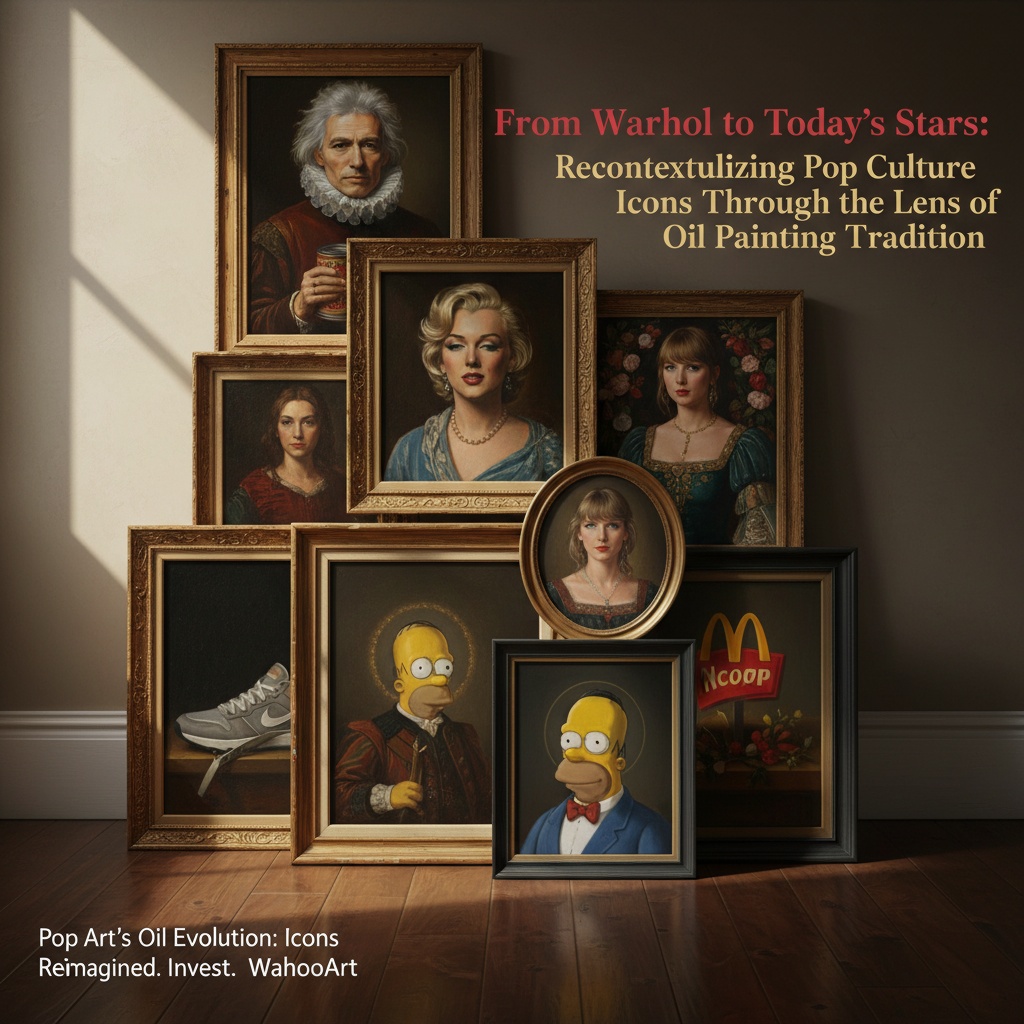
Oil painting, a technique steeped in centuries of tradition – from the meticulous realism of Jan van Eyck to the grand narratives of Renaissance masters – might seem an unlikely medium for Pop Art’s rebellious spirit. After all, oil paint had long been associated with detail, permanence, and the representation of significant subjects: religious scenes, historical events, portraits of the elite. Its development in Europe solidified its position as *the* dominant medium for capturing human expression and the natural world. Yet, this very history is what made its adoption by Pop artists so compelling. The ability to create subtle gradations of tone, build depth through layering, and achieve a lifelike quality – qualities often absent in mass-produced imagery – allowed them to imbue their subjects with a sense of gravitas and artistic authority. While silkscreen printing became synonymous with the movement, many artists also skillfully employed oil paint, either independently or in combination with these mechanical methods. The physicality of the paint itself—the visible brushstrokes, the texture, the richness of color—provided a tactile counterpoint to the flatness of commercial reproduction. This wasn’t about abandoning skill; it was about re-purposing it, using traditional techniques to explore new themes and challenge conventional notions of artistic value.
Recontextualizing Icons: Contemporary Artists and the Power of Oil Paint
The spirit of Pop Art didn't simply vanish with Warhol’s passing. Today, a new generation of artists continues to draw inspiration from its legacy, often employing oil painting as a powerful means of re-examining themes of identity, celebrity, and the impact of media on modern life. Consider the work of Víctor José Reyes, whose masterful blend of realism and cultural symbolism transforms iconic figures into potent statements about history and personal narrative – his ‘Wedding Portrait of Frida Kahlo & Diego Rivera’ is a particularly striking example. Bárbara Díaz Tapia similarly fuses traditional and contemporary styles to explore Puerto Rican identity through her evocative paintings, imbuing familiar imagery with new layers of meaning. Morag Bellingham’s vibrant portraits, while utilizing acrylics, share this same spirit in their focus on everyday people and the stories they embody. These artists aren't simply celebrating pop culture; they are critically examining its influence, challenging viewers to reconsider their own perceptions and biases. The choice of oil paint is deliberate – it elevates these images beyond mere reproductions, bestowing upon them a sense of permanence and artistic authority that demands attention.
High Art vs. Low Culture: Navigating the Dichotomy in Modern Portraiture
The tension between high art and low culture remains central to Pop Art’s enduring appeal. This wasn't merely about aesthetics; it was about questioning the very foundations of artistic value. Artists deliberately blurred the lines, appropriating imagery from advertising, comic books, and mass media – sources previously considered beneath consideration by the art establishment. This integration of commercial aesthetics into the gallery space was initially met with resistance but ultimately proved transformative, opening up new avenues for creative expression and challenging traditional hierarchies. Contemporary artists continue to explore this dichotomy, often employing techniques borrowed from both worlds. The use of silkscreen printing alongside oil paint allows for a compelling combination of mechanical precision and artistic nuance. Artists may also incorporate elements of collage or mixed media to further disrupt conventional boundaries, creating works that are visually striking and intellectually stimulating. The exploration of narrative within contemporary figurative painting, as highlighted in discussions surrounding artists like Gunning King, demonstrates how these techniques can be used to create works that are both aesthetically pleasing and deeply meaningful.
Emotional Realism & Narrative Depth: The Evolution of Pop-Inspired Portraits
Portraiture has long been considered a cornerstone of Western art history, serving as a powerful means of capturing individual identity and social status. From the meticulous detail of Renaissance portraits to the psychological depth of Rembrandt’s self-portraits, this tradition is rich with symbolism and artistic innovation. Contemporary artists are building upon this legacy by employing techniques borrowed from Pop Art to create works that are both visually striking and emotionally resonant. The exploration of emotional realism in portraiture – capturing not just likeness but also inner life – has become increasingly important. Oil paint allows for subtle gradations of tone and texture, creating portraits that possess a depth and complexity often lacking in mass-produced imagery. Artists may incorporate elements of symbolism or narrative to further enrich their work, transforming portraits into powerful statements about identity, culture, and personal history. The 'Moti Pictures' article exemplifies this trend, demonstrating how artists are using color, composition, and brushwork to convey a sense of inner life and psychological depth.
The Enduring Influence of Pop Art: From Fashion to Fine Art Collections
Pop Art’s legacy extends far beyond the confines of the art world. Its bold colors, simplified forms, and embrace of mass-produced imagery have profoundly influenced fashion, design, and broader cultural trends. From the vibrant patterns of 1960s Op Art to the contemporary streetwear inspired by Warhol's silkscreen prints, Pop Art continues to be a source of inspiration for creative professionals across disciplines. The work of Andy Warhol, in particular, captured the essence of American culture, transforming everyday objects into potent symbols that resonate deeply with a collective consciousness. This influence extends beyond aesthetics – Pop Art also challenged traditional notions of authorship and originality, paving the way for new forms of artistic expression. The 'Pop Mythology' series exemplifies this enduring power, demonstrating how Warhol’s iconic images continue to captivate audiences today. Ultimately, Pop Art wasn’t just a style; it was a cultural revolution that continues to shape our aesthetic landscape. At OriginalUniqueArt, we celebrate this legacy by offering both meticulously crafted reproductions of classic masterpieces and the opportunity to commission custom portraits inspired by your favorite artists and styles – bringing the vibrancy and energy of Pop Art into your own home.