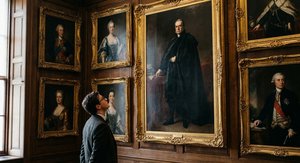
The Genesis of Likeness: Portraiture in Antiquity and the Early Renaissance
The desire to capture a likeness, to preserve the memory of an individual beyond the fleeting nature of life, is as old as civilization itself. While rudimentary forms existed in ancient Egypt – idealized representations intended more for the afterlife than strict portraiture – it was within the classical world of Greece and Rome that we begin to see a nascent understanding of capturing individual features. Roman portrait busts, often commissioned by wealthy families, weren’t merely aesthetic objects; they were statements of lineage, power, and civic duty. These sculptures, rendered with remarkable realism for their time, established a precedent for portraying not just *who* someone was, but also their character and social standing. However, the fall of Rome ushered in an era where artistic focus shifted away from individual representation, prioritizing religious iconography instead. The early Renaissance, beginning around the 14th century, marked a deliberate rediscovery of classical ideals – a ‘rebirth’ not just of form, but of the very concept of humanism that underpinned portraiture's initial rise.
The Italian Renaissance: Humanism, Patronage, and the Rise of Individual Representation
Florence, in the 15th century, became the epicenter of this artistic revolution. The burgeoning merchant class, fueled by wealth and a newfound intellectual curiosity, sought to emulate the classical elite – and commissioning portraits was central to that ambition. Jacob Burckhardt famously described Italy as “the place where the notion of the individual was born,” and this sentiment is powerfully reflected in the art of the period. Artists like Masaccio, though primarily known for his frescoes, laid the groundwork with their pioneering use of perspective and naturalism, creating a sense of depth and realism previously unseen. But it was artists such as Donatello who truly began to explore the psychological dimension of portraiture through sculpture, while painters like Piero della Francesca masterfully combined mathematical precision with an ethereal beauty. Crucially, patronage played a pivotal role. Families like the Medici didn’t simply commission portraits; they actively shaped their creation, influencing style, symbolism, and even the artist's approach.
Beyond Realism: Symbolism, Allegory, and the Psychological Depth of Renaissance Portraits
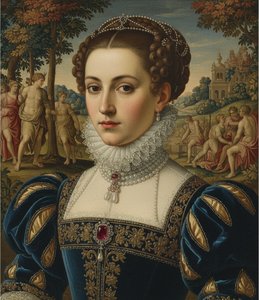
To view Renaissance portraiture solely as an exercise in technical skill is to miss its profound intellectual depth. These paintings were rarely just about *looking* like someone; they were carefully constructed narratives designed to convey status, virtue, education, and familial connections. Objects held by the sitter – a book signifying learning, a musical instrument representing refinement, or even specific flowers carrying symbolic meaning – all contributed to a layered interpretation of character. Consider Raphael’s Portrait of Jeanne d'Aragon, where her elegant pose, rich attire, and subtle gaze speak volumes about her noble lineage and inner strength. The inclusion of classical motifs, like architectural elements or mythological references, further elevated the sitter’s status, associating them with a glorious past. Artists also began to experiment with *sfumato* – a technique pioneered by Leonardo da Vinci that softened outlines and created an atmospheric haze, lending portraits a sense of mystery and psychological complexity. Raphael's Self-Portrait, for example, offers not just a depiction of his physical appearance but a glimpse into the mind of a master at work.
Courtly Display & Dynastic Power: Portraiture as a Tool of Status and Propaganda
As portraiture gained prominence, it became increasingly entwined with political power. Courts across Europe – from Florence to Venice to France – utilized portraits not just to commemorate rulers but also to project an image of authority and legitimacy. Titian’s Portrait of Francis I, for instance, is a masterful display of regal splendor, showcasing the French king as a powerful and sophisticated leader. The opulent fabrics, imposing pose, and carefully chosen background all contribute to this impression. Portraits were often exchanged between royal families as diplomatic gifts, serving as visual representations of alliances and marital prospects. The meticulous attention to detail – from the texture of clothing to the gleam of jewelry – wasn’t merely aesthetic; it was a deliberate attempt to impress upon viewers the wealth and power of the sitter and their court. This era saw the rise of specialized portrait painters who became highly sought-after for their ability to create flattering and persuasive representations.
Techniques and Materials: The Artistic Processes Behind Renaissance Portrait Mastery
The creation of a Renaissance portrait was a complex undertaking, demanding both technical skill and artistic vision. Artists typically began with detailed sketches, often based on preliminary drawings or studies from life. The use of oil paint, adopted from Northern European artists in the late 15th century, revolutionized portraiture. Oil allowed for greater detail, richer colors, and more subtle gradations of tone than previous mediums like tempera. Layers of glaze were painstakingly applied to build up depth and luminosity, creating a sense of realism that was previously unattainable. The choice of support – typically wood panels or canvas stretched over frames – also influenced the final result. Artists carefully prepared their surfaces with gesso and underpainting, ensuring a smooth and stable base for their work. The grinding of pigments, often sourced from rare and expensive materials like lapis lazuli and vermillion, was a laborious process in itself. The entire undertaking could take weeks or even months to complete, reflecting the value placed on these meticulously crafted artworks.
The Enduring Influence: Classical Portraiture's Legacy in Modern Art Collection
The legacy of Renaissance portraiture extends far beyond its historical context. The techniques and conventions developed during this period – the emphasis on realism, symbolism, and psychological depth – continue to influence artists today. From Velázquez’s courtly portraits to Sargent’s society paintings, we see echoes of Renaissance mastery in subsequent generations. Moreover, the very concept of portraiture as a means of exploring identity and social status remains central to contemporary art. At OriginalUniqueArt.com, we are dedicated to preserving this rich artistic heritage by offering meticulously crafted reproductions of Renaissance masterpieces. Whether you’re seeking a stunning oil painting reproduction of Raphael's Jeanne d'Aragon or commissioning a custom portrait in the style of your favorite artist, our team of skilled artisans ensures that every detail is faithfully rendered. Explore our extensive collection and discover the timeless beauty and enduring power of classical portraiture – a testament to the human desire for remembrance, representation, and lasting legacy.