Pop Art
Mickey Mouse (Andy Warhol)
Andy Warhol (1928–1987) made Mickey Mouse. It belongs to the Pop Art movement. It is made in acrylic on canvas.
- Acrylic On Canvas

 Preview

 Hand Made Oil Painting
 Send
 Share
 Fact sheet


 Download
 Similars
 X-Ray
 Diaporama
 Q&A

 Stats
Mickey Mouse, in brief
- Title
- Mickey Mouse
- Artist
- Andy Warhol (1928–1987)
- Artist born in
- Pittsburgh, United States
- Medium
- Acrylic On Canvas
- Movement
- Pop Art
- Period
- Contemporary
- Subject
- mickey mouse, andy warhol, pop art, celebrity, reproduction, consumerism
What does Mickey Mouse depict?
A Pop Icon Reimagined: Andy Warhol’s ‘Mickey Mouse’
Andy Warhol's vibrant reimagining of Mickey Mouse transcends mere representation; it is a potent statement on consumerism, celebrity culture, and the very nature of iconography in the 20th century. Painted in 1981 as part of his “Myths” series, this work doesn’t simply depict Disney’s beloved character—it dissects him, replicates him, and ultimately elevates him to the status of a high art subject. The image, often presented as a series of repeated panels, each subtly different yet undeniably Mickey Mouse, is instantly recognizable, tapping into a collective nostalgia and shared cultural experience. Warhol's choice of subject matter wasn’t accidental. He was fascinated by figures that permeated American consciousness, those readily consumed and endlessly reproduced – and few symbols embodied this more perfectly than the cheerful mouse created by Walt Disney.The Silk Screen and the Celebration of Reproduction
Warhol’s technique is integral to understanding the artwork's message. Employing his signature silkscreen printing process, he embraced mechanical reproduction—a deliberate rejection of traditional artistic notions of originality and authorship. The flat planes of color, often bold and contrasting, are applied with a precision that belies the seemingly effortless quality of Pop Art. In many versions of ‘Mickey Mouse’, Warhol further embellished the prints with diamond dust, adding a layer of shimmering glamour that ironically comments on the commercialization of art itself. This wasn’t about creating a unique masterpiece in the traditional sense; it was about exploring the possibilities of mass production and questioning the boundaries between high and low culture. The repetition within the work—multiple Mickeys arranged in grids or rows—mirrors the relentless reproduction inherent in advertising and popular media, reinforcing Warhol's commentary on a society saturated with images.Disney, Dreams, and American Myths
The “Myths” series, as a whole, explored figures deeply embedded in the American psyche – Superman, Santa Claus, Dracula, and others who represented idealized narratives or collective fantasies. Mickey Mouse, within this context, isn’t just a cartoon character; he's an embodiment of childhood innocence, American optimism, and the power of storytelling. Warhol himself was a collector of Disney animation cels, demonstrating a genuine appreciation for the artistry behind the iconic mouse. However, his artistic intervention transforms Mickey from a purely innocent figure into something more complex—a symbol of manufactured desire and the commodification of dreams. The work invites us to consider how these seemingly harmless icons shape our perceptions and influence our values.A Lasting Legacy: Warhol’s Impact on Contemporary Art
Andy Warhol's ‘Mickey Mouse’ remains a powerful and relevant artwork today, continuing to resonate with audiences across generations. It serves as a reminder of the artist’s profound impact on contemporary art, challenging conventional notions of artistic expression and paving the way for new forms of creative exploration. The work’s enduring appeal also lies in its accessibility—it's an image that everyone recognizes, making it a compelling conversation starter and a striking addition to any collection. For interior designers, a reproduction of ‘Mickey Mouse’ offers a playful yet sophisticated touch, injecting a dose of Pop Art energy into modern living spaces. It is not merely a decorative piece; it is a cultural artifact—a testament to the enduring power of images and the genius of Andy Warhol.High-resolution images of Mickey Mouse

Protected by copyright: these files are for personal reference, not a licence to republish.
Andy Warhol, Mickey Mouse.
Questions on Mickey Mouse, answered
What technique was used for "Mickey Mouse" by Andy Warhol?
"Mickey Mouse" is executed in acrylic on canvas.
What does "Mickey Mouse" by Andy Warhol depict?
The subjects of "Mickey Mouse" are mickey mouse, andy warhol, pop art, celebrity, reproduction, consumerism, diamond dust.
Is "Mickey Mouse" by Andy Warhol in the public domain?
The copyright answer for "Mickey Mouse" by Andy Warhol: the work is still protected by copyright. This determines whether reproductions of the image may be freely made.
Who created "Mickey Mouse"?
"Mickey Mouse" is attributed to Andy Warhol.
What art movement does "Mickey Mouse" by Andy Warhol belong to?
"Mickey Mouse" by Andy Warhol belongs to the Pop Art movement. This movement provides the stylistic context of the work.
Which period of Andy Warhol's career does "Mickey Mouse" belong to?
"Mickey Mouse" represents the Late Period of Andy Warhol.
Why is the copyright status of "Mickey Mouse" what it is?
"Mickey Mouse" by Andy Warhol is still protected by copyright. Copyright terms are measured from the artist's death, and Andy Warhol died in 1987.
What does "Mickey Mouse" share with the rest of Andy Warhol's output?
Within Andy Warhol's output, "Mickey Mouse" sits in the Pop Art style, alongside the themes of disney iconography, mass media, celebrity culture, consumerism, mythology, american identity, reproduction, mechanical process.
How does the subject of "Mickey Mouse" relate to Andy Warhol's usual themes?
Among Andy Warhol's recorded themes - disney iconography, mass media, celebrity culture, consumerism, mythology, american identity, reproduction, mechanical process - "Mickey Mouse" brings its own focus on mickey mouse, andy warhol, pop art, celebrity, reproduction, consumerism, diamond dust.
About the artist, Andy Warhol

1928–1987, United States
Andy Warhol
The Early Life of Andy Warhol To understand the mechanics of the modern image, one must look back to the industrial grit of Pittsburgh, Pennsylvania. Andy Warhol was born Andrew Warhola Jr. on August 6, 1928, into a working-class environment that lacked any pretense of high culture. He was the youngest of three sons, born to Andrej Warhola and Julia Zavacky Warhola.
Also by Andy Warhol
 Campbell's soup cans1962
 Marilyn Diptych1962
 White car crash 19 times, Private1963
 Marilyn, leo castelli gallery, new york1964
Essays around Mickey Mouse
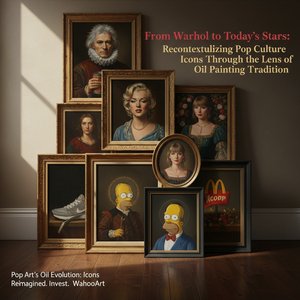 From Warhol to Today's Stars: Recontextualizing Pop Culture Icons Through the Lens of Oil Painting TraditionExplore the captivating evolution of Pop Art through oil painting! Discover contemporary artists reinterpreting iconic imagery & invest in …
 25 Essential Andy Warhol Works: The Ultimate Pop Art CollectionExplore 25 iconic Andy Warhol works and the stories behind his Pop Art. Discover the full collection online at OriginalUniqueArt.com.
 Top 10 Iconic Silkscreen Masterpieces That Defined Pop ArtExplore iconic Pop Art silkscreens by Warhol and Lichtenstein. Discover museum-quality masterpieces on OriginalUniqueArt.com.