Portrait of Spencer Gore

The 89 Most Famous Spencer Gore Paintings, a Gallery Selection

Updated October 2026 · ranked by our popularity score (searches, visits and orders for each work) · 89 works by Spencer Gore in our catalogue

In short

Of all the originals Spencer Gore left, the most famous is Mornington Crescent, London (1911). Close behind it come Panshanger Park (1908) and Harold Gilman's House at Letchworth, Hertfordshire (1912). Our catalog holds 89 works by Spencer Gore; the gallery has kept the 89 the world admires most, each shown with its date, its museum and its story.

1878 – 1914, Epsom Post-impressionism Most works: Tate Gallery

Spencer Gore's top 10 paintings: the gallery's choice

1
Mornington Crescent, London (1911) by Spencer Gore

Mornington Crescent, London

1911 · Oil On Canvas

Mornington Crescent, London is an oil on canvas work by Spencer Gore, dating to 1911. This piece captures a specific moment in the urban development of the city, focusing on the bustling activity of the Mornington Crescent area during the early twentieth century. The scene provides a view into the daily rhythms of London, documenting the transition of transportation methods as horse-drawn carriages share the street with early motor vehicles…

2
Panshanger Park (1908) by Spencer Gore

Panshanger Park

1908 · Oil On Canvas

In this 1908 oil on canvas, Spencer Gore presents us with Panshanger Park. The work captures a quiet moment within a forest landscape, where the natural world meets the subtle presence of human leisure. It is a scene defined by its greenery and the sprawling reach of the trees that populate the setting.

3
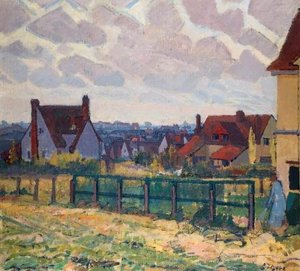
Harold Gilman's House at Letchworth, Hertfordshire (1912) by Spencer Gore

Harold Gilman's House at Letchworth, Hertfordshire

1912 · Oil On Canvas

The scene unfolds in the quietude of 1912, captured through the eyes of Spencer Gore in his painting, Harold Gilman's House at Letchworth, Hertfordshire. This work emerges from a period of intense creative movement, a moment when the artist is actively shaping the visual language of a new era. Gore, born in Epsom, United Kingdom, in 1878, brings a specific, lived perspective to this landscape. He moves through the world…

6
Inez and Taki (1910) by Spencer Gore

Inez and Taki

1910 · Oil On Canvas · Tate Gallery, London

In the heart of 1910, Spencer Frederick Gore captured more than just a street scene; he distilled the very essence of a burgeoning bohemian era. “Inez and Taki” serves as a vibrant window into a world where the urban bustle of Paris meets the intimate, artistic spirit of London’s Camden Town Group. The painting presents a captivating tableau: a musician, perhaps a self-portrait of Gore himself, lost in performance, playing…

The Spencer Gore selection continues, 11 to 89

11The Fig Tree (1912) by Spencer GoreThe Fig Tree1912 12The Artist’s Wife (1913) by Spencer GoreThe Artist’s Wife1913 13The Blue Petticoat (1912) by Spencer GoreThe Blue Petticoat1912 14The Green Dress (1908) by Spencer GoreThe Green Dress1908 · Fitzwilliam Museum 15Panshanger Park (1908) by Spencer GorePanshanger Park1908 16The Gas Cooker (1913) by Spencer GoreThe Gas Cooker1913 · Tate Gallery 17Portrait of a Lady (1830) by Spencer GorePortrait of a Lady1830 · Metropolitan Museum of Art 18Mary Ann Garrits (1834) by Spencer GoreMary Ann Garrits1834 · Metropolitan Museum of Art 19Frances Ludlum Morris (Mrs. Robert Morris) (?) (1838) by Spencer GoreFrances Ludlum Morris (Mrs. Robert Morris) (?)1838 · National Gallery of Art 20The Britannia Ballet, the Alhambra (1907) by Spencer GoreThe Britannia Ballet, the Alhambra1907 · Fenton House 21Autumn, Sussex (1907) by Spencer GoreAutumn, Sussex1907 · Art Gallery of South Australia 22Tennis In Mornington Crescent Gardens (1910) by Spencer GoreTennis In Mornington Crescent Gardens1910 · Auckland Art Gallery Toi o Tāmaki 23Ballet Scene from "On the Sands" (1910) by Spencer GoreBallet Scene from "On the Sands"1910 · Yale Center for British Art 24Tennis at Hertingfordbury (1910) by Spencer GoreTennis at Hertingfordbury1910 · Yale Center for British Art 25An Extensive Landscape in Yorkshire (1907) by Spencer GoreAn Extensive Landscape in Yorkshire1907 · Yale Center for British Art 26Mornington Crescent (1911) by Spencer GoreMornington Crescent1911 · Museum of Fine Arts 27Yorkshire Landscape (1907) by Spencer GoreYorkshire Landscape1907 28The Garden City, Letchworth by Spencer GoreThe Garden City, Letchworth 29Rule Britannia (1910) by Spencer GoreRule Britannia1910 30Landscape, Somerset (1909) by Spencer GoreLandscape, Somerset1909 31The Cricket Match (1909) by Spencer GoreThe Cricket Match1909 32Panshanger Park, Hertfordshire (1909) by Spencer GorePanshanger Park, Hertfordshire1909 33The Mimrain, Panshanger Park, Hertfordshire (1910) by Spencer GoreThe Mimrain, Panshanger Park, Hertfordshire1910 34Hertfordshire Landscape (1909) by Spencer GoreHertfordshire Landscape1909 35The Garden, Hertingfordbury (1909) by Spencer GoreThe Garden, Hertingfordbury1909 36Mornington Crescent (1911) by Spencer GoreMornington Crescent1911 · Amgueddfa Cymru - National Museum of Wales 37Interior with Nude (1907) by Spencer GoreInterior with Nude1907 38Hertingfordbury, Hertfordshire (1908) by Spencer GoreHertingfordbury, Hertfordshire1908 39Interior, Mornington Crescent (1910) by Spencer GoreInterior, Mornington Crescent1910 40Someone who Waits (1907) by Spencer GoreSomeone who Waits1907 41Somerset Landscape (1909) by Spencer GoreSomerset Landscape1909 42Garden at Hertingfordbury (1908) by Spencer GoreGarden at Hertingfordbury1908 43Portrait of the Artist's Wife (1911) by Spencer GorePortrait of the Artist's Wife1911 · Birmingham Museum and Art Gallery 44Mornington Crescent (1911) by Spencer GoreMornington Crescent1911 · Tate Gallery 45Landscape (1907) by Spencer GoreLandscape1907 46The Garden of Rowlandson House (1911) by Spencer GoreThe Garden of Rowlandson House1911 47View from a Window (1909) by Spencer GoreView from a Window1909 48Somerset Landscape (1910) by Spencer GoreSomerset Landscape1910 49Self portrait (1906) by Spencer GoreSelf portrait1906 · Birmingham Museum and Art Gallery 50The Cinder Path (1912) by Spencer GoreThe Cinder Path1912 51The Beanfield, Letchworth (1912) by Spencer GoreThe Beanfield, Letchworth1912 52Cambrian Road, Richmond (1913) by Spencer GoreCambrian Road, Richmond1913 · Yale Center for British Art 53Design for Deer Hunting Mural in the Cabaret Theatre Club (1912) by Spencer GoreDesign for Deer Hunting Mural in the Cabaret Theatre Club1912 · Yale Center for British Art 54Blue and Green Bottles and Orange (1914) by Spencer GoreBlue and Green Bottles and Orange1914 · Yale Center for British Art 55Back Gardens from Houghton Place (1913) by Spencer GoreBack Gardens from Houghton Place1913 · Museum of Fine Arts 56The Pond (1912) by Spencer GoreThe Pond1912 57Study for a Mural Decoration for 'The Cave of the Golden Calf' (1912) by Spencer GoreStudy for a Mural Decoration for 'The Cave of the Golden Calf'1912 58Letchworth Station (1912) by Spencer GoreLetchworth Station1912 59Richmond Park (1914) by Spencer GoreRichmond Park1914 · Tate Gallery 60In Berkshire (1912) by Spencer GoreIn Berkshire1912 61Icknield Way (1912) by Spencer GoreIcknield Way1912 · Art Gallery of New South Wales 62Still Life with Apples (1912) by Spencer GoreStill Life with Apples1912 · Ferens Art Gallery 63Letchworth, The Road (1912) by Spencer GoreLetchworth, The Road1912 64Wood in Richmond Park (1914) by Spencer GoreWood in Richmond Park1914 · Birmingham Museum and Art Gallery 65Harold Gilman's House at Letchworth (1912) by Spencer GoreHarold Gilman's House at Letchworth1912 66Self portrait (1914) by Spencer GoreSelf portrait1914 · National Portrait Gallery 67Harrington Square from No.2 Houghton Place (1913) by Spencer GoreHarrington Square from No.2 Houghton Place1913 68A Singer at the Bedford Music Hall (1912) by Spencer GoreA Singer at the Bedford Music Hall1912 · Tate Gallery 69The Terrace Gardens (1912) by Spencer GoreThe Terrace Gardens1912 70Letchworth (1912) by Spencer GoreLetchworth1912 · Tate Gallery 71Suburban Street (1913) by Spencer GoreSuburban Street1913 72North London Girl (1911) by Spencer GoreNorth London Girl1911 · Tate Gallery 73Interior, 31, Mornington Crescent, London (1910) by Spencer GoreInterior, 31, Mornington Crescent, London1910 74The Garden Path, Garth House (1910) by Spencer GoreThe Garden Path, Garth House1910 75Richmond Park (1914) by Spencer GoreRichmond Park1914 · Ashmolean Museum 76Houghton Place (1912) by Spencer GoreHoughton Place1912 · Tate Gallery 77Mornington Crescent, London (1911) by Spencer GoreMornington Crescent, London1911 78Harbour Scene (1906) by Spencer GoreHarbour Scene1906 · Ashmolean Museum 79The Garden, Garth House (1908) by Spencer GoreThe Garden, Garth House1908 · Walker Art Gallery 80Hampstead Road, Camden Town (1910) by Spencer GoreHampstead Road, Camden Town1910 · Te Papa 81Interior by Spencer GoreInterior 82The Gravel Pit by Spencer GoreThe Gravel Pit 83Nearing Euston Station by Spencer GoreNearing Euston Station 84Marie Hayes by Spencer GoreMarie Hayes 85Harold Gilman's House at Letchworth, Hertfordshire by Spencer GoreHarold Gilman's House at Letchworth, Hertfordshire 86A View from the Window at 6 Cambrian Road, Richmond by Spencer GoreA View from the Window at 6 Cambrian Road, RichmondFitzwilliam Museum 87Reclining Nude by Spencer GoreReclining Nude 88From a Window in Cambrian Road, Richmond (1913) by Spencer GoreFrom a Window in Cambrian Road, Richmond1913 · Tate Gallery 89Letchworth, Hertfordshire (1912) by Spencer GoreLetchworth, Hertfordshire1912

The subjects that held Spencer Gore's eye

The four subjects that come back most often in these originals, each with its finest example.

The museums that keep Spencer Gore's originals

The 8 museums that hold the most of the paintings on this page.

Museum City Works by Spencer Gore Paintings from this list
Tate Gallery, LondonTate Gallery London 9 Inez and Taki, The Gas Cooker, Mornington Crescent
Yale Center for British Art, New HavenYale Center for British Art New Haven 6 Ballet Scene from "On the Sands", Tennis at Hertingfordbury, An Extensive Landscape in Yorkshire
Birmingham Museum and Art Gallery, BirminghamBirmingham Museum and Art Gallery Birmingham 3 Portrait of the Artist's Wife, Self portrait, Wood in Richmond Park
Fenton House, LondonFenton House London 2 The Frenchwoman, The Britannia Ballet, the Alhambra
Scottish National Gallery of Modern Art, EdinburghScottish National Gallery of Modern Art Edinburgh 2 Mrs Spencer Frederick Gore in the Garden of Rowlandson House, Conversation Piece and Self-Portrait
Fitzwilliam MuseumFitzwilliam Museum 2 The Green Dress, A View from the Window at 6 Cambrian Road, Richmond
Metropolitan Museum of Art, New YorkMetropolitan Museum of Art New York 2 Portrait of a Lady, Mary Ann Garrits
Museum of Fine Arts, BostonMuseum of Fine Arts Boston 2 Mornington Crescent, Back Gardens from Houghton Place

Spencer Gore year by year: the originals that define each

Barely a decade, 1906 to 1914, gave the world every dated Spencer Gore original in this selection: here it is, year by year.

Works per year

Pick a year to see its originals.

Collectors' questions about Spencer Gore's paintings

Which work is Spencer Gore most famous for?Reveal the answer

Mornington Crescent, London (1911). Panshanger Park (1908) and Harold Gilman's House at Letchworth, Hertfordshire (1912) come next.

What age was Spencer Gore when Mornington Crescent, London was made?Reveal the answer

33 years old: Mornington Crescent, London dates from 1911, and Spencer Gore was born in 1878.

What are the ten most famous Spencer Gore paintings?Reveal the answer

Mornington Crescent, London, Panshanger Park, Harold Gilman's House at Letchworth, Hertfordshire, From a Canal Bridge, Chalk Farm Road, The Toilet, Inez and Taki, The Frenchwoman, Mrs Spencer Frederick Gore in the Garden of Rowlandson House, Conversation Piece and Self-Portrait and Landscape with Pond. The ranking above gives each one's year and museum.

How many paintings did Spencer Gore leave?Reveal the answer

Our catalog holds 89 works by Spencer Gore, dated from 1906 to 1914.

In which museums do Spencer Gore's masterpieces hang?Reveal the answer

Mostly in Tate Gallery (London), Yale Center for British Art (New Haven) and Birmingham Museum and Art Gallery (Birmingham). The museum table above lists them all.

In which years did Spencer Gore paint the most famous works?Reveal the answer

In 1912: 19 of the 89 works on this page were made then, Harold Gilman's House at Letchworth, Hertfordshire among them.

What are the first and the last famous originals of Spencer Gore?Reveal the answer

On this page, the earliest is Self portrait (1906) and the latest Blue and Green Bottles and Orange (1914).

Which subjects did Spencer Gore choose most often?Reveal the answer

Landscape (11), Gardens and parks (8) and Buildings (6), across the 89 works on this page.

Which technique did Spencer Gore use most?Reveal the answer

Oil On Canvas, for 12 of the 89 works on this page.

To which art movement does Spencer Gore belong?Reveal the answer

Post-impressionism, judging by the originals on this page.

Which Spencer Gore works hang at the Tate Gallery?Reveal the answer

Inez and Taki, The Gas Cooker and Mornington Crescent: the Tate Gallery, London holds 9 of the works on this page.

Spencer Gore: life and work

Spencer Gore (1878 – 1914): A Pioneer of Camden Town

Spencer Frederick Gore was a British painter who emerged as one of the foremost figures in the burgeoning Camden Town Group, marking a pivotal moment in early twentieth-century British art. Born on May 26th, 1878, at Epsom, Surrey, he descended from a family steeped in artistic tradition – his father, Spencer Gore (the Wimbledon tennis champion), was himself a painter, and his brother Charles Gore was a theologian, fostering an environment that nurtured creativity and intellectual curiosity. Gore’s formative years were shaped by attending Harrow School, where he honed his observational skills before pursuing formal training at the Slade School of Fine Art alongside contemporaries like Harold Gilman, cementing his connection to Impressionist ideals.
  • Early Influences: Gore's artistic sensibilities were profoundly impacted by Post-Impressionists such as Claude Monet and Vincent van Gogh, whose explorations of color and light served as a springboard for his own distinctive style.
  • The Camden Town Group: He spearheaded the formation of the Camden Town Group in 1904, alongside Walter Sickert, Lucien Pisarro, Harold Gilman, and Charles Ginner—a collective dedicated to capturing the atmosphere of London’s bohemian district with bold brushstrokes and vibrant palettes.
  • Notable Works: Gore's oeuvre comprises a remarkable collection of landscapes, music hall scenes, and interiors, characterized by meticulous detail and an unwavering commitment to portraying natural beauty. Particularly noteworthy are his thirty-two Richmond Park canvases completed in the final months of his life—a testament to his enduring fascination with the English countryside.

Technique and Style: Embracing Pictorial Construction

Gore’s artistic approach distinguished itself through a deliberate embrace of pictorial construction, mirroring the stylistic innovations championed by Impressionists and Post-Impressionists. He skillfully employed layering techniques—often applying thin glazes over underpaintings—to achieve luminous effects and imbue his canvases with depth and resonance. This meticulous attention to detail extended beyond mere representation; Gore sought to convey not just what he saw but also how he felt, reflecting the emotional intensity inherent in capturing fleeting moments of experience. His paintings like “Hartington Square” exemplify this stylistic commitment, demonstrating a masterful command of color and form.
  • Color Palette: Gore favored harmonious palettes dominated by muted greens, blues, and yellows—colors that evoked the tranquility and grandeur of the natural world.
  • Brushwork: His brushstrokes were characterized by fluidity and spontaneity, capturing the dynamism of light and air while simultaneously conveying a sense of stillness and contemplation.

Richmond Park Landscapes: A Legacy of Observation

The Richmond Park series represents Gore’s magnum opus—a poignant chronicle of his final years and an enduring symbol of British landscape painting. Executed with unwavering dedication during the autumn of 1913, these canvases capture the ethereal beauty of the park bathed in autumnal light. The resulting images are imbued with a palpable sense of melancholy yet simultaneously radiate warmth and vitality, reflecting Gore’s profound connection to his surroundings. Tate curator Helena Bonett noted that Gore's death from pneumonia was sudden, leaving behind an unfinished masterpiece—a testament to his unwavering pursuit of artistic excellence.

Frederick Gore: Son and Artist

Gore’s son, Frederick John Pym Gore CBE RA (1913–2009), followed in his father's footsteps as a painter, inheriting his artistic vision and establishing himself as a respected figure within the British art world. Like Spencer, he pursued formal training at Ruskin School of Art and developed a distinctive style rooted in Impressionist principles—a direct continuation of his father’s legacy. Gore’s influence extended beyond his own artistic endeavors; he served as a teacher, imparting invaluable knowledge to aspiring artists and fostering a tradition of observation and expressive painting that endured for generations.