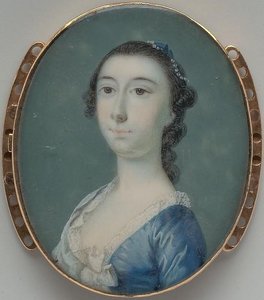
Portrait of Jeremiah Theus

Jeremiah Theus Paintings: The 28 Most Famous, Through a Gallery's Eye

Updated October 2026 · ranked by our popularity score (searches, visits and orders for each work) · 29 works by Jeremiah Theus in our catalogue

In short

To the gallery's eye, Jeremiah Theus's most famous painting is Captain William Richardson (1743-1786) (1757), whose original hangs in the Yale University Art Gallery, New Haven. William Wragg (1750) and Portrait of Amarinthia Elliott (1748) complete the trio every eye recognises. Of the 29 works by Jeremiah Theus in our catalog, the gallery presents the 28 most famous below, each original with its year, its museum and what makes it unique.

1716 – 1774, Chur Rococo Most works: Metropolitan Museum of Art

The gallery's top 10 Jeremiah Theus paintings

1
Captain William Richardson (1743-1786) (1757) by Jeremiah Theus

Captain William Richardson (1743-1786)

1757 · Oil On Canvas · Yale University Art Gallery, New Haven

A formal 18th-century portrait of a young man, presented within an oval vignette against a dark, monochromatic background. Captain William Richardson is depicted from the waist up, positioned at a slight angle while looking toward the viewer. The composition relies on a restrained color palette, dominated by the creamy white of his waistcoat and jacket, which contrasts sharply against a deep blue trim. This trim features intricate silver or gold…

2
William Wragg (1750) by Jeremiah Theus

William Wragg

1750 · Watercolor · Detroit Institute of Arts, Detroit

In this intimate portrait of William Wragg, the sitter meets our gaze from a time long passed. Painted around 1750, the work captures a man of status through a refined, oval-shaped bust-length composition. He sits slightly off-center, his body turned toward the right while his eyes remain fixed forward, creating a sense of quiet presence. The subject wears a cool lavender-grey frock coat that contrasts against the warm, shimmering gold…

3
Portrait of Amarinthia Elliott (1748) by Jeremiah Theus

Portrait of Amarinthia Elliott

1748 · Painting · Detroit Institute of Arts, Detroit

Portrait of Amarinthia Elliott, painted by Jeremiah Theus in 1748, captures a young woman in a formal, medium close-up composition. The subject is positioned slightly off-center, holding a small sprig of blue flowers against a muted, atmospheric background. This work originates from the mid-18th century, a period when Theus was establishing his presence within the colonial social hierarchy.

4
Mrs. Thomas Lynch (Elizabeh Allston Lynch) (1755) by Jeremiah Theus

Mrs. Thomas Lynch (Elizabeh Allston Lynch)

1755 · Oil On Canvas

In this oil on canvas portrait, we encounter Mrs. Thomas Lynch (Elizabeth Allston Lynch), a figure captured by the Swiss-American painter Jeremiah Theus. Created in 1755, the work offers a direct look at a woman of the colonial era. Theus, who established himself in Charleston, South Carolina, brought a refined sensibility to his depictions of the local elite. This specific piece reflects the quiet dignity of his portraiture from that…

Jeremiah Theus paintings, ranked 11 to 28

The subjects that held Jeremiah Theus's eye

The four subjects that come back most often in these originals, each with its finest example.

The museums that keep Jeremiah Theus's originals

The 8 museums that hold the most of the paintings on this page.

Museum City Works by Jeremiah Theus Paintings from this list
Metropolitan Museum of Art, New YorkMetropolitan Museum of Art New York 4 Mrs. Jacob Motte (Rebecca Brewton), Mrs. John Dart, Gabriel Manigault
National Gallery of Art, WashingtonNational Gallery of Art Washington 3 James Cuthbert (?), Mr. Motte, Mrs. Cuthbert
Gibbes Museum of Art, CharlestonGibbes Museum of Art Charleston 3 Benjamin Smith, Colonel Barnard Elliott, Jr., Mrs. Barnard Elliott, Jr. (Mary Elizabeth Bellinger Elliott)
Detroit Institute of Arts, DetroitDetroit Institute of Arts Detroit 2 William Wragg, Portrait of Amarinthia Elliott
Museum of Fine Arts, BostonMuseum of Fine Arts Boston 2 Mrs. Lionel Chalmers (Martha Logan), Dr. Lionel Chalmers
New York Historical Society, New York CityNew York Historical Society New York City 2 Mrs. Samuel Carne (1740-1805), Samuel Carne, MD (1725-1780)
Yale University Art Gallery, New HavenYale University Art Gallery New Haven 1 Captain William Richardson (1743-1786)
John and Mable Ringling Museum of Art, SarasotaJohn and Mable Ringling Museum of Art Sarasota 1 Portrait of John Faucheraud Grimké

Jeremiah Theus, one signature painting per decade

Works per decade

Pick a decade to see the original that defines it.

Jeremiah Theus's paintings: the gallery answers

Which Jeremiah Theus painting is the most famous of all?Reveal the answer

Captain William Richardson (1743-1786) (1757), Yale University Art Gallery, New Haven. William Wragg (1750) and Portrait of Amarinthia Elliott (1748) come next.

How old was Jeremiah Theus on completing Captain William Richardson (1743-1786)?Reveal the answer

41 years old: Captain William Richardson (1743-1786) dates from 1757, and Jeremiah Theus was born in 1716.

Which are Jeremiah Theus's top 10 paintings?Reveal the answer

Captain William Richardson (1743-1786), William Wragg, Portrait of Amarinthia Elliott, Mrs. Thomas Lynch (Elizabeh Allston Lynch), Mrs. Peter Manigault, Portrait of John Faucheraud Grimké, Portrait of Mrs. John Champneys (Anne Livingston, born 1746), Mrs. Lionel Chalmers (Martha Logan), Dr. Lionel Chalmers and Mrs. Samuel Carne (1740-1805). The ranking above gives each one's year and museum.

How many works did Jeremiah Theus create?Reveal the answer

Our catalog holds 29 works by Jeremiah Theus, dated from 1748 to 1772.

Where do Jeremiah Theus's most famous originals hang?Reveal the answer

Mostly in Metropolitan Museum of Art (New York), National Gallery of Art (Washington) and Gibbes Museum of Art (Charleston). The museum table above lists them all.

When did Jeremiah Theus create the most famous paintings?Reveal the answer

In 1760s: 13 of the 28 works on this page were made then, Portrait of John Faucheraud Grimké among them.

Which are Jeremiah Theus's earliest and latest famous works?Reveal the answer

On this page, the earliest is Portrait of Amarinthia Elliott (1748) and the latest Mrs. John Dart (1772).

Which subjects did Jeremiah Theus return to most?Reveal the answer

Man (5), 18th century (4) and Woman (3), across the 28 works on this page.

Which medium did Jeremiah Theus work in most?Reveal the answer

Oil On Canvas, for 8 of the 28 works on this page.

Which movement is Jeremiah Theus associated with?Reveal the answer

Rococo, judging by the originals on this page.

Which Jeremiah Theus originals does the Metropolitan Museum of Art hold?Reveal the answer

Mrs. Jacob Motte (Rebecca Brewton), Mrs. John Dart and Gabriel Manigault: the Metropolitan Museum of Art, New York holds 4 of the works on this page.

Jeremiah Theus: the artist

Jeremiah Theus: Charleston’s Rococo Portraitist

Jeremiah Theus (1716 – 1774) stands as a singular figure in the annals of early American art, primarily recognized for his prolific output of portraits executed during the flourishing Rococo period in Charleston, South Carolina. Born in Chur, Switzerland, he arrived in America with his family around 1740, driven by the promise of land grants and colonial opportunity offered by the British Crown. This migration marked the beginning of a career dedicated to capturing the elegance and sophistication of Charleston’s elite society—a remarkable feat considering the artistic landscape of the time.
  • Early Life & Training: Little is definitively known about Theus' formative years beyond his Swiss birthplace. However, circumstantial evidence suggests exposure to European artistic traditions, particularly Rococo style, which would profoundly influence his subsequent work.
  • Charleston Studio & Patronage: By 1740, Theus established a studio in Charleston’s bustling commercial district—a strategic location that ensured access to influential patrons and fueled his artistic endeavors. Advertisements in the South Carolina Gazette showcased his skills as a “limner,” or portrait painter, highlighting his commitment to serving the burgeoning colonial community.

A Master of Rococo Style & Technique

Theus’ distinctive style is characterized by its adherence to Rococo principles—a movement originating in France that prioritized grace, ornamentation, and pastel hues. He skillfully adapted English artistic conventions prevalent during the era, resulting in portraits imbued with a sense of refined elegance and meticulous detail. His canvases frequently employed geometric shapes and subtle tonal variations to create atmospheric depth and convey emotion—techniques honed through observation and experience.
  • Notable Commissions: Theus undertook numerous commissions throughout his career, demonstrating versatility and responsiveness to client needs. Among his accomplishments were the gilded steeple of St. Michael’s Episcopal Church (1756), a testament to his craftsmanship and artistic vision; the weather vane for Charleston’s City Hall; and contributions towards the construction of St. Michael's Cathedral.
  • Teaching & Artistic Legacy: Recognizing the importance of fostering artistic talent, Theus opened an evening drawing school in 1744—a pioneering initiative that nurtured aspiring artists within Charleston’s intellectual circles. This dedication to education solidified his legacy as not only a celebrated painter but also as a catalyst for artistic development.

Iconic Portraits & Charleston Society

Jeremiah Theus achieved enduring fame through his portraits of prominent Charlestonians—individuals who shaped the social, economic, and cultural fabric of the colony. Works such as “Mrs. Gabriel Manigault” (1757), “Captain John Reynolds” (c. 1758) and “Mrs. John Dart” (1772) exemplify his mastery of Rococo style and offer invaluable insights into Charleston’s aristocratic milieu during the mid-18th century. These paintings are treasured for their technical precision, expressive quality, and ability to convey the dignity and refinement associated with colonial leadership.

Historical Significance & Enduring Influence

Jeremiah Theus' contribution to American art history extends beyond his individual achievements; he represents a crucial link between European artistic traditions and the nascent cultural identity of the United States. His work serves as a compelling visual record of Charleston’s social landscape—a testament to the dynamism and sophistication of colonial America. Today, reproductions of his portraits continue to captivate audiences worldwide, ensuring that Theus' legacy persists as one of Charleston’s most distinguished artistic figures.