Portrait of Giuseppe Cades

The 28 Most Famous Giuseppe Cades Paintings, Each One of a Kind

Updated October 2026 · ranked by our popularity score (searches, visits and orders for each work) · 29 works by Giuseppe Cades in our catalogue

In short

Adam And Eve is the Giuseppe Cades painting that draws the most eyes; the original belongs to the Museo del Prado, Madrid. After it, the eye goes to School Of Athens and Alexander the Great Refuses to Take Water (1792). Among the 29 works of Giuseppe Cades in our catalog, these 28 are the most famous, each a unique original presented with its year, its museum and the reason it endures.

1750 – 1799, Rome Baroque Most works: Hermitage Museum

Top 10 paintings by Giuseppe Cades, through the gallery's eye

1
Adam And Eve by Giuseppe Cades

Adam And Eve

Oil On Canvas · Museo del Prado, Madrid

In this composition, we find ourselves witnessing a quiet, almost fragile moment between two figures. A man and a woman, both naked, are positioned beneath the sprawling branches of a tree that dominates the vertical space of the canvas. There is a palpable sense of connection as the man reaches toward the woman's hand, while she maintains a delicate balance, standing on one leg in a pose that suggests both…

2
School Of Athens by Giuseppe Cades

School Of Athens

Fresco

The Grandeur of Classical Scholarship Immerse yourself in the intellectual splendor of "School Of Athens," a masterful depiction of a grand architectural setting teeming with historical figures engaged in profound discourse. This artwork captures the essence of classical scholarship and the timeless pursuit of knowledge, making it a captivating addition to any sophisticated collection or interior space. A Masterpiece of Renaissance Revival Created by Giuseppe Cades, an Italian sculptor, painter,…

3
Alexander the Great Refuses to Take Water (1792) by Giuseppe Cades

Alexander the Great Refuses to Take Water

1792 · Acrylic On Canvas · Hermitage Museum, Saint Petersburg

A Moment of Stoicism Amidst Imperfection: Exploring Giuseppe Cades' Vision Giuseppe Cades (1750-1799) stands as a pivotal figure within the Roman Baroque revival, an artist who skillfully navigated the currents of Enlightenment thought while retaining the grandeur and expressive fervor characteristic of his predecessors. Born into a family steeped in Vatican patronage and blessed with prodigious artistic talent from infancy, Cades benefited from instruction under luminaries like Mancini and Domenico…

Giuseppe Cades's famous paintings, numbers 11 to 28

The subjects that held Giuseppe Cades's eye

The four subjects that come back most often in these originals, each with its finest example.

The museums that keep Giuseppe Cades's originals

The 5 museums that hold the most of the paintings on this page.

Museum City Works by Giuseppe Cades Paintings from this list
Hermitage Museum, Saint PetersburgHermitage Museum Saint Petersburg 2 Alexander the Great Refuses to Take Water, Alexander The Great In The Workshop Of Apelles
Museo del Prado, MadridMuseo del Prado Madrid 1 Adam And Eve
Toledo Museum of Art, ToledoToledo Museum of Art Toledo 1 The Virtue of Lucretia
Art Institute of Chicago, ChicagoArt Institute of Chicago Chicago 1 The Meeting Of Gautier, Count Of Antwerp, And His Daughter, Violante
Walters Art Museum, BaltimoreWalters Art Museum Baltimore 1 The Martyrdom Of The Blessed Signoretto Alliata

Giuseppe Cades across the decades: one unique original for each

Works per decade

Pick a decade to see the original that defines it.

Giuseppe Cades's paintings: questions for the gallery

What is the single most famous work of Giuseppe Cades?Reveal the answer

Adam And Eve, Museo del Prado, Madrid. School Of Athens and Alexander the Great Refuses to Take Water (1792) come next.

Which ten paintings by Giuseppe Cades are the most famous?Reveal the answer

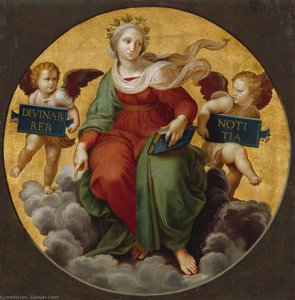
Adam And Eve, School Of Athens, Alexander the Great Refuses to Take Water, Astronomy, Cornelia, Mother of the Gracchi, Achilles in his Tent with Patroclus, Playing a Lyre, surprised by Ulysses and Nestor, The Virtue of Lucretia, Parnassus, Justice and Poetry. The ranking above gives each one's year and museum.

How many works by Giuseppe Cades are known?Reveal the answer

Our catalog holds 29 works by Giuseppe Cades, dated from 1776 to 1792.

Where can the most famous Giuseppe Cades originals be seen?Reveal the answer

Mostly in Hermitage Museum (Saint Petersburg), Museo del Prado (Madrid) and Toledo Museum of Art (Toledo). The museum table above lists them all.

Which famous Giuseppe Cades painting is the earliest, and which the latest?Reveal the answer

On this page, the earliest is Cornelia, Mother of the Gracchi (1776) and the latest Alexander the Great Refuses to Take Water (1792).

What subjects did Giuseppe Cades favour?Reveal the answer

Classical figures (3) and Woman (2), across the 28 works on this page.

Which movement does the work of Giuseppe Cades belong to?Reveal the answer

Baroque, judging by the originals on this page.

What Giuseppe Cades originals can I see at the Hermitage Museum?Reveal the answer

Alexander the Great Refuses to Take Water and Alexander The Great In The Workshop Of Apelles: the Hermitage Museum, Saint Petersburg holds 2 of the works on this page.

Giuseppe Cades: a portrait of the artist

Giuseppe Cades: A Roman Baroque Visionary

Giuseppe Cades (1750-1799) stands as a significant figure in Italian Baroque art, particularly within the context of Rome’s artistic revival during the Enlightenment. Born into a family with connections to the Vatican and possessing considerable talent from a young age, Cades honed his skills under influential masters like Mancini and Domenico Corvi, securing a prestigious prize for his depiction of Tobias recovering his sight – an early testament to his artistic promise. His formative years were spent absorbing the stylistic precepts of the era, preparing him for commissions that would solidify his reputation as one of Rome’s foremost painters.
  • Early Training & Influences: Cades' education at Mancini and Corvi instilled in him a deep understanding of classical ideals and Baroque techniques. He was particularly drawn to the grandeur and dramatic illusionism championed by Caravaggio, whose masterful use of chiaroscuro profoundly impacted his artistic approach.
  • Notable Commissions & Artistic Output: His involvement with prominent patrons like Cardinal Alessandro Velázquez resulted in ambitious projects – notably the altar-piece for San Benedetto in Turin (1771) and frescoes adorning Palazzo Chigi, depicting scenes from Tasso’s *Jerusalem Delivered*. These works exemplify Cades' ability to convey complex narratives through visual splendor.
  • Technical Mastery & Style: Cades excelled at capturing the emotional intensity of Baroque art. His canvases are characterized by rich color palettes, meticulous detail, and a masterful command of perspective—elements that contribute to an immersive experience for the viewer. He skillfully blended classical elements with Baroque dynamism, creating compositions that resonate with both intellectual depth and visual beauty.
  • Prints & Engravings: Beyond painting, Cades achieved recognition as an engraver, producing evocative prints such as “Christ Blessing Little Children” and “The Death of Leonardo da Vinci.” These engravings demonstrate his technical prowess and his fascination with capturing iconic figures from Western art history.

Recognition & Legacy

Cades joined the Accademia di San Luca in Rome in 1786, marking a pivotal moment in his artistic career and solidifying his position within Rome’s artistic elite. Although he died relatively young at the age of 49, Cades left behind an impressive body of work that continues to inspire admiration for its beauty and expressive power. His frescoes and paintings contribute significantly to understanding the artistic landscape of the late Baroque period and exemplify the enduring influence of classical ideals on European art. He is remembered as a skilled craftsman who skillfully blended tradition with innovation, securing his place among Rome’s most celebrated artists.

Further Exploration

For more information about Giuseppe Cades' life and artistic achievements, consult resources such as: