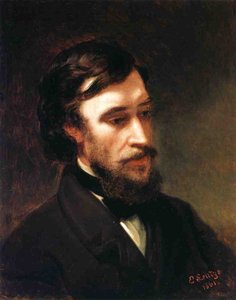
Portrait of Emanuel Leutze

The 100 Most Famous Emanuel Leutze Paintings, a Gallery Selection

Updated October 2026 · ranked by our popularity score (searches, visits and orders for each work) · 184 works by Emanuel Leutze in our catalogue

In short

Of all the originals Emanuel Leutze left, the most famous is Washington Crossing the Delaware (1851), in the collection of the Metropolitan Museum of Art, New York. Close behind it come Washington Crossing the Delaware (1851) and Westward The Course of Empire Takes Its Way (1861). Our catalog holds 184 works by Emanuel Leutze; the gallery has kept the 100 the world admires most, each shown with its date, its museum and its story.

1816 – 1868, Schwäbisch Gmünd Romanticism Most works: Metropolitan Museum of Art

Emanuel Leutze's top 10 paintings: the gallery's choice

1
Washington Crossing the Delaware (1851) by Emanuel Leutze

Washington Crossing the Delaware

1851 · Oil On Canvas · Metropolitan Museum of Art, New York

The scene unfolds with the heavy, cold tension of the American Revolutionary War. In this work, titled Washington Crossing the Delaware, the artist Emanuel Leutze captures a moment of profound struggle. The air feels thick with the weight of a nascent nation's fight for independence. We find ourselves watching as George Washington and his troops navigate the treacherous, icy waters of the Delaware River. It is a moment frozen in…

2
Washington Crossing the Delaware (1851) by Emanuel Leutze

Washington Crossing the Delaware

1851 · Oil On Canvas · Metropolitan Museum of Art, New York

In the grand tapestry of American iconography, few images command as much reverence and emotional gravity as Emanuel Gottlieb Leutze’s Washington Crossing the Delaware. Completed in 1851, this colossal masterpiece transcends its role as a historical record to become a profound allegory of courage and national identity. The canvas captures the breathless tension of December 25-26, 1776, a night when the fate of a nascent nation hung in the balance…

3
Westward The Course of Empire Takes Its Way (1861) by Emanuel Leutze

Westward The Course of Empire Takes Its Way

1861 · Oil On Canvas

In the sweeping expanse of Emanuel Gottlieb Leutze’s 1861 masterpiece, Westward The Course of Empire Takes Its Way, the viewer is transported to a pivotal moment in the American consciousness. This monumental oil on canvas serves as more than just a landscape; it is a profound historical narrative captured through the lens of Romanticism. As the sun dips below the horizon, casting long, dramatic shadows and bathing the desert in…

4
The Amazon and Her Children, (painting) (1851) by Emanuel Leutze

The Amazon and Her Children, (painting)

1851 · Oil On Canvas

The Amazon and Her Children, (painting) by Emanuel Leutze presents a scene centered on a woman reclining against a thick tree trunk. Two nude children cling to her body, their forms positioned in the foreground. The subject matter follows a classical or mythological theme, focusing on the figures within a natural setting. This work was created about 1851.

5
Edouard Rudolf Mayer, (painting) (1843) by Emanuel Leutze

Edouard Rudolf Mayer, (painting)

1843 · Oil

In Edouard Rudolf Mayer, (painting), Emanuel Leutze presents a formal portrait of a young boy, likely from a privileged social class, as indicated by his structured attire. The composition is tightly framed, focusing primarily on the child's head and upper body. This central emphasis on the face creates a direct engagement between the subject and the viewer. Set against a dark, undifferentiated background, the boy's features emerge with clarity, a…

6
Indians Attacking a Wagon Train, (painting) (1863) by Emanuel Leutze

Indians Attacking a Wagon Train, (painting)

1863 · Oil On Canvas

In this 1863 work, we find ourselves thrust into a moment of profound instability on the American frontier. The scene captures a sudden, violent disruption of the westward movement, as a party of pioneers is caught in the midst of an impending attack by Native American warriors. There is a palpable sense of suspense built into the very arrangement of the figures. The composition draws the eye toward the central…

7
George Washington As A Master Mason by Emanuel Leutze

George Washington As A Master Mason

Oil On Canvas

In this portrait, we find George Washington depicted not as a general on a battlefield, but as a man immersed in the quiet dignity of a master mason. He is presented in a black suit, accented by a blue sash that provides a subtle point of focus against the darker tones of his attire. A white hat rests nearby, adding to the sense of a moment captured in a private,…

8
The Storming Of The Teocalli by Emanuel Leutze

The Storming Of The Teocalli

Oil On Canvas

The Storming of the Teocalli by Cortez and his Troops is an oil on canvas painting created by the German American history painter Emanuel Leutze in 1848. The work depicts a specific historical episode: the Spanish assault on the pyramid temple of Yopico. This scene captures the intense combat occurring at the teocalli, focusing on the physical struggle between the Spanish forces and the indigenous defenders during the conquest.

9
Elizabeth and Raleigh (1848) by Emanuel Leutze

Elizabeth and Raleigh

1848 · Oil On Canvas

A Glimpse into the Past The painting Elizabeth and Raleigh by Emanuel Gottlieb Leutze is a captivating historical scene that transports viewers to the 16th century. Created in 1848, this oil on canvas masterpiece depicts Queen Elizabeth I of England and Sir Walter Raleigh engaged in conversation, surrounded by other figures from their era. The Main Figures At the center of the painting, Elizabeth I stands on the left side,…

10
Bird Nesting (1837) by Emanuel Leutze

Bird Nesting

1837 · Oil On Canvas · Smithsonian American Art Museum, Washington, D.C.

A young boy reaches upward into the dense, tangled architecture of a forest canopy. Clad in a light-colored jacket and blue trousers, his small form is framed by the dark, irregular silhouettes of branches and foliage. The composition draws the eye vertically, following his gaze toward a bird's nest tucked high within the shadows. This interaction between the child and the natural world is rendered with a sense of quiet…

The Emanuel Leutze selection continues, 11 to 100

11Portrait Sketch of Eastman Johnson by Emanuel LeutzePortrait Sketch of Eastman Johnson 12Washington Rallying the Troops at Monmouth (1854) by Emanuel LeutzeWashington Rallying the Troops at Monmouth1854 13George Washington At Dorchester Heights, Massachusetts by Emanuel LeutzeGeorge Washington At Dorchester Heights, Massachusetts 14Edward Stellwagen, (painting) (1838) by Emanuel LeutzeEdward Stellwagen, (painting)1838 15William H. Blackford, (painting) (1837) by Emanuel LeutzeWilliam H. Blackford, (painting)1837 16Eliza Birch Veacock, the Artist's Daughter, (painting) (1836) by Emanuel LeutzeEliza Birch Veacock, the Artist's Daughter, (painting)1836 17James Barton Langacre, Mrs. (Eliza Stiles) (1807 1850), (painting) (1839) by Emanuel LeutzeJames Barton Langacre, Mrs. (Eliza Stiles) (1807 1850), (painting)1839 18Byrd Charles Willis, Col, and his Son Achille Murat Willis, (painting) (1837) by Emanuel LeutzeByrd Charles Willis, Col, and his Son Achille Murat Willis, (painting)1837 19Portrait of a Gentleman (1839) by Emanuel LeutzePortrait of a Gentleman1839 · Metropolitan Museum of Art 20Forget Me Not, (painting) (1839) by Emanuel LeutzeForget Me Not, (painting)1839 21Nathan Flint Baker (1845) by Emanuel LeutzeNathan Flint Baker1845 · Cincinnati Museum Center at Union Terminal 22Elizabeth and Raleigh, (painting) (1845) by Emanuel LeutzeElizabeth and Raleigh, (painting)1845 23Return of Columbus in Chains to Cadiz, (painting) (1842) by Emanuel LeutzeReturn of Columbus in Chains to Cadiz, (painting)1842 24Image Breaker, (painting) (1847) by Emanuel LeutzeImage Breaker, (painting)1847 25Juliane Lottner, (painting) (1842) by Emanuel LeutzeJuliane Lottner, (painting)1842 · Bavarian State Painting Collections 26Henry FewSmith (1821 46), (painting) (1843) by Emanuel LeutzeHenry FewSmith (1821 46), (painting)1843 27Oliver Cromwell and his Daughter, (painting) (1843) by Emanuel LeutzeOliver Cromwell and his Daughter, (painting)1843 28Frau Maria Schulten Lottner (1794 1865), (painting) (1842) by Emanuel LeutzeFrau Maria Schulten Lottner (1794 1865), (painting)1842 29Emanuel Gottlieb Leutze, Mrs, (Juliane Lottner), (painting) (1846) by Emanuel LeutzeEmanuel Gottlieb Leutze, Mrs, (Juliane Lottner), (painting)1846 30The Amber Necklace (Juliane Leutze with her Child Ida), (painting) (1847) by Emanuel LeutzeThe Amber Necklace (Juliane Leutze with her Child Ida), (painting)1847 31Das Fest Der Deutschen Einheit (Festival of German Unity), (painting) (1848) by Emanuel LeutzeDas Fest Der Deutschen Einheit (Festival of German Unity), (painting)1848 32Nude, (painting) (1855) by Emanuel LeutzeNude, (painting)1855 33Cromwell at Milton's (painting) (1855) by Emanuel LeutzeCromwell at Milton's (painting)1855 34Washington Crossing the Delaware, (painting) (1851) by Emanuel LeutzeWashington Crossing the Delaware, (painting)1851 · Kunsthalle Bremen 35Washington Rallying the Troops At Monmouth, (painting) (1854) by Emanuel LeutzeWashington Rallying the Troops At Monmouth, (painting)1854 36Leutze Children in Swabian Costume, (painting) (1855) by Emanuel LeutzeLeutze Children in Swabian Costume, (painting)1855 37Washington Crossing the Delaware, Incomplete Study, (painting) (1850) by Emanuel LeutzeWashington Crossing the Delaware, Incomplete Study, (painting)1850 38Rheinfahrt, (painting) (1854) by Emanuel LeutzeRheinfahrt, (painting)1854 39The Rendezvous, (painting) (1850) by Emanuel LeutzeThe Rendezvous, (painting)1850 40The Hohenstaufen, (painting) (1854) by Emanuel LeutzeThe Hohenstaufen, (painting)1854 41Elizabeth Dunn Finney, (painting) (1851) by Emanuel LeutzeElizabeth Dunn Finney, (painting)1851 42Charlotte Stellwagen, (painting) (1851) by Emanuel LeutzeCharlotte Stellwagen, (painting)1851 43Cavalry Captain Barden, (painting) (1854) by Emanuel LeutzeCavalry Captain Barden, (painting)1854 44Eugene Henry Cozzens Leutze, (painting) (1850) by Emanuel LeutzeEugene Henry Cozzens Leutze, (painting)1850 45Quiet, (painting) (1855) by Emanuel LeutzeQuiet, (painting)1855 46George Washington, Study for Washington Crossing the Delaware, (painting) (1850) by Emanuel LeutzeGeorge Washington, Study for Washington Crossing the Delaware, (painting)1850 47William Henry Seward (1801-1872) (1861) by Emanuel LeutzeWilliam Henry Seward (1801-1872)1861 · New York Historical Society 48Princess Elizabeth in the Tower (1860) by Emanuel LeutzePrincess Elizabeth in the Tower1860 · New York Historical Society 49Frau Auguste Opitz, (painting) (1859) by Emanuel LeutzeFrau Auguste Opitz, (painting)1859 50Washington at Monmouth, (painting) (1857) by Emanuel LeutzeWashington at Monmouth, (painting)1857 51Afternoon in Venice, (painting) (1861) by Emanuel LeutzeAfternoon in Venice, (painting)1861 52Founding of Maryland, (painting) (1860) by Emanuel LeutzeFounding of Maryland, (painting)1860 53Titian on the Lagoons, (painting) (1857) by Emanuel LeutzeTitian on the Lagoons, (painting)1857 54William Henry Seward (1801 1872), (painting) (1859) by Emanuel LeutzeWilliam Henry Seward (1801 1872), (painting)1859 55Prairie Bluffs at Julesburg, South Platte, Storm at Sunset, (painting) (1863) by Emanuel LeutzePrairie Bluffs at Julesburg, South Platte, Storm at Sunset, (painting)1863 56Worthington Whittredge (1820 1910), (painting) (1856) by Emanuel LeutzeWorthington Whittredge (1820 1910), (painting)1856 57Last Soiree of Charles Ii at Whitehall, (painting) (1856) by Emanuel LeutzeLast Soiree of Charles Ii at Whitehall, (painting)1856 58Louis Lang, (painting) (1859) by Emanuel LeutzeLouis Lang, (painting)1859 59Bergrat Lottner, (painting) (1858) by Emanuel LeutzeBergrat Lottner, (painting)1858 60Worthington Whittredge, (painting) (1861) by Emanuel LeutzeWorthington Whittredge, (painting)1861 61Ambrose Everett Burnside, (painting) (1863) by Emanuel LeutzeAmbrose Everett Burnside, (painting)1863 62On the Banks of a Stream, (painting) (1860) by Emanuel LeutzeOn the Banks of a Stream, (painting)1860 63J. Warren Slaughter (1822 66), (painting) (1860) by Emanuel LeutzeJ. Warren Slaughter (1822 66), (painting)1860 64Nathaniel Hawthorne (1804 64), (painting) (1862) by Emanuel LeutzeNathaniel Hawthorne (1804 64), (painting)1862 65Princess Elizabeth in the Tower, (painting) (1860) by Emanuel LeutzePrincess Elizabeth in the Tower, (painting)1860 66Mrs. J. Warren Slaughter (1827 81), (painting) (1860) by Emanuel LeutzeMrs. J. Warren Slaughter (1827 81), (painting)1860 67Roger B. Taney, Chief Justice (1777 1864), (painting) (1859) by Emanuel LeutzeRoger B. Taney, Chief Justice (1777 1864), (painting)1859 68Head of an Officer of the Revolutionary War , (painting) (1858) by Emanuel LeutzeHead of an Officer of the Revolutionary War , (painting)1858 69Westward the Course of Empire Takes Its Way, (painting) (1862) by Emanuel LeutzeWestward the Course of Empire Takes Its Way, (painting)1862 70Worthington Whittredge (1856) by Emanuel LeutzeWorthington Whittredge1856 · Metropolitan Museum of Art 71John Augustus Sutter, Portrait Of, (painting) (1859) by Emanuel LeutzeJohn Augustus Sutter, Portrait Of, (painting)1859 72Light and Shadow, (painting) (1856) by Emanuel LeutzeLight and Shadow, (painting)1856 73Mrs. Murray, (painting) (1860) by Emanuel LeutzeMrs. Murray, (painting)1860 74Charles Kraft Stellwagen, (painting) (1861) by Emanuel LeutzeCharles Kraft Stellwagen, (painting)1861 75Portrait of Sanford Robinson Gifford (1861) by Emanuel LeutzePortrait of Sanford Robinson Gifford1861 76Frances Adeline Seward, (painting) (1867) by Emanuel LeutzeFrances Adeline Seward, (painting)1867 77Triumph of the Cross, (painting) (1868) by Emanuel LeutzeTriumph of the Cross, (painting)1868 78Signing of the Alaska Treaty, (painting) (1867) by Emanuel LeutzeSigning of the Alaska Treaty, (painting)1867 79Abraham Cozzens, (painting) (1865) by Emanuel LeutzeAbraham Cozzens, (painting)1865 · Het Prinsenhof 80Abraham Lincoln, (painting) (1865) by Emanuel LeutzeAbraham Lincoln, (painting)1865 81Indian Girl, (painting) (1864) by Emanuel LeutzeIndian Girl, (painting)1864 82Scene from the Merry Wives of Windsor, (painting) (1865) by Emanuel LeutzeScene from the Merry Wives of Windsor, (painting)1865 83Nathaniel Hawthorne (1862) by Emanuel LeutzeNathaniel Hawthorne1862 · National Portrait Gallery 84Sketch for a Life Saving Medal by Emanuel LeutzeSketch for a Life Saving Medal 85Angel on the Battlefield by Emanuel LeutzeAngel on the BattlefieldChrysler Museum of Art 86John Middleton, (painting) (1836) by Emanuel LeutzeJohn Middleton, (painting)1836 87James Barnett Dodson (1837) by Emanuel LeutzeJames Barnett Dodson1837 · Smithsonian American Art Museum 88The Countess (1838) by Emanuel LeutzeThe Countess1838 · Smithsonian American Art Museum 89Bacharach, (painting) (1841) by Emanuel LeutzeBacharach, (painting)1841 90Johann Gottlieb Mayer (1786 1862), (painting) (1843) by Emanuel LeutzeJohann Gottlieb Mayer (1786 1862), (painting)1843 91Few Smith, (painting) (1843) by Emanuel LeutzeFew Smith, (painting)1843 92Johann Gottlieb, Frau (Katherina Susanne Endriss) (1796 1867), (painting) (1843) by Emanuel LeutzeJohann Gottlieb, Frau (Katherina Susanne Endriss) (1796 1867), (painting)1843 93Maria Schulten Lottner, Frau, (painting) (1845) by Emanuel LeutzeMaria Schulten Lottner, Frau, (painting)1845 94Heinrich Lottner, Frau (Maria Schulten) (1794 1865), (painting) (1848) by Emanuel LeutzeHeinrich Lottner, Frau (Maria Schulten) (1794 1865), (painting)1848 95Columbus Before the Queen, (painting) (1843) by Emanuel LeutzeColumbus Before the Queen, (painting)1843 96Portrait of a Lady with Her Two Sons, (painting) (1844) by Emanuel LeutzePortrait of a Lady with Her Two Sons, (painting)1844 97The Courtship of Anne Boleyn (1846) by Emanuel LeutzeThe Courtship of Anne Boleyn1846 98Col. Heinrich Lottner, (painting) (1853) by Emanuel LeutzeCol. Heinrich Lottner, (painting)1853 99The Image Breaker, (painting) (1850) by Emanuel LeutzeThe Image Breaker, (painting)1850 100First News from Lexington, (painting) (1852) by Emanuel LeutzeFirst News from Lexington, (painting)1852

The subjects that held Emanuel Leutze's eye

The four subjects that come back most often in these originals, each with its finest example.

The museums that keep Emanuel Leutze's originals

The 8 museums that hold the most of the paintings on this page.

Museum City Works by Emanuel Leutze Paintings from this list
Metropolitan Museum of Art, New YorkMetropolitan Museum of Art New York 4 Washington Crossing the Delaware, Washington Crossing the Delaware, Portrait of a Gentleman
Smithsonian American Art Museum, Washington, D.C.Smithsonian American Art Museum Washington, D.C. 4 Bird Nesting, James Barnett Dodson, The Countess
New York Historical Society, New York CityNew York Historical Society New York City 3 William Henry Seward (1801-1872), Princess Elizabeth in the Tower
Cincinnati Museum Center at Union Terminal, CincinnatiCincinnati Museum Center at Union Terminal Cincinnati 1 Nathan Flint Baker
Bavarian State Painting Collections, MunichBavarian State Painting Collections Munich 1 Juliane Lottner, (painting)
Kunsthalle Bremen, BremenKunsthalle Bremen Bremen 1 Washington Crossing the Delaware, (painting)
Het Prinsenhof, DelftHet Prinsenhof Delft 1 Abraham Cozzens, (painting)
National Portrait Gallery, Washington, D.C.National Portrait Gallery Washington, D.C. 1 Nathaniel Hawthorne

Emanuel Leutze decade by decade: the original that defines each

Works per decade

Pick a decade to see the original that defines it.

Collectors' questions about Emanuel Leutze's paintings

Which work is Emanuel Leutze most famous for?Reveal the answer

Washington Crossing the Delaware (1851), Metropolitan Museum of Art, New York. Washington Crossing the Delaware (1851) and Westward The Course of Empire Takes Its Way (1861) come next.

What age was Emanuel Leutze when Washington Crossing the Delaware was made?Reveal the answer

35 years old: Washington Crossing the Delaware dates from 1851, and Emanuel Leutze was born in 1816.

What are the ten most famous Emanuel Leutze paintings?Reveal the answer

Washington Crossing the Delaware, Washington Crossing the Delaware, Westward The Course of Empire Takes Its Way, The Amazon and Her Children, (painting), Edouard Rudolf Mayer, (painting), Indians Attacking a Wagon Train, (painting), George Washington As A Master Mason, The Storming Of The Teocalli, Elizabeth and Raleigh and Bird Nesting. The ranking above gives each one's year and museum.

How many paintings did Emanuel Leutze leave?Reveal the answer

Our catalog holds 184 works by Emanuel Leutze, dated from 1836 to 1868.

In which museums do Emanuel Leutze's masterpieces hang?Reveal the answer

Mostly in Metropolitan Museum of Art (New York), Smithsonian American Art Museum (Washington, D.C.) and New York Historical Society (New York City). The museum table above lists them all.

In which years did Emanuel Leutze paint the most famous works?Reveal the answer

In 1850s: 35 of the 100 works on this page were made then, Washington Crossing the Delaware among them.

What are the first and the last famous originals of Emanuel Leutze?Reveal the answer

On this page, the earliest is Eliza Birch Veacock, the Artist's Daughter, (painting) (1836) and the latest Triumph of the Cross, (painting) (1868).

Which subjects did Emanuel Leutze choose most often?Reveal the answer

Portrait (5), Historical figure (5) and 19th century (5), across the 100 works on this page.

Which technique did Emanuel Leutze use most?Reveal the answer

Oil On Canvas, for 12 of the 100 works on this page.

To which art movement does Emanuel Leutze belong?Reveal the answer

Romanticism, judging by the originals on this page.

Which Emanuel Leutze works hang at the Metropolitan Museum of Art?Reveal the answer

Washington Crossing the Delaware, Washington Crossing the Delaware and Portrait of a Gentleman: the Metropolitan Museum of Art, New York holds 4 of the works on this page.

Emanuel Leutze: life and work

A Life Bridging Worlds: The Story of Emanuel Gottlieb Leutze

Emanuel Gottlieb Leutze’s life was a compelling narrative of cultural duality, a journey that saw him traverse the Atlantic and synthesize European artistic traditions with an emerging American identity. Born in 1816 in Schwäbisch Gmünd, Germany, his early years were marked by hardship; the illness and subsequent death of his father necessitated a premature immersion into the world of work. Yet, even amidst these challenges, a nascent artistic talent began to blossom, initially as a means of occupying time during his father’s sickness, evolving into a source of livelihood through modest portrait commissions. This early period instilled in him not only technical skill – he charged a mere $5 per portrait – but also a profound sense of self-reliance and the practical demands of an artist's existence. Formal training came later, with studies under John Rubens Smith in Philadelphia providing a foundational grounding before his pivotal move to Germany in 1840 and enrollment at the prestigious Kunstakademie Düsseldorf. This decision would irrevocably shape his artistic trajectory, exposing him to the currents of Romanticism that would define much of his oeuvre.

Düsseldorf and the Shaping of a Historical Vision

The years Leutze spent in Düsseldorf were formative. He wasn’t merely acquiring technique; he was absorbing an aesthetic philosophy. The influence of Karl Friedrich Lessing, a leading figure within German Romanticism, proved particularly potent. Lessing's emphasis on dramatic composition and emotional intensity resonated deeply with Leutze, informing the grand scale and narrative power that would characterize his later works. Further studies in Munich under Cornelius and Kaulbach broadened his artistic horizons, while journeys to Venice and Rome brought him face-to-face with the masters of the Renaissance – Titian and Michelangelo. These encounters weren’t simply about imitation; they were a rigorous education in form, color, and the enduring power of historical narrative. It was during this period that he completed “Columbus Before the Council of Salamanca,” a work that garnered early acclaim and signaled his arrival as a significant artistic voice. This painting wasn't just a display of technical prowess; it demonstrated an ambition to engage with weighty historical themes, a hallmark of his future career. The meticulous detail and dramatic lighting evident in earlier works like “Bird Nesting” (1837) foreshadowed the larger canvases he would soon undertake, revealing a developing mastery of both observation and emotional expression. Even smaller pieces such as "Game" demonstrate Leutze’s ability to imbue seemingly simple subjects with symbolic weight and Baroque influence.

Returning to America: Painting Patriotism and National Identity

In 1859, Leutze returned to the United States, establishing studios in both New York City and Washington D.C. This return wasn’t simply a geographical relocation; it represented a conscious decision to dedicate his art to the burgeoning American narrative. While he continued to accept portrait commissions – capturing the likenesses of figures like Chief Justice Roger Brooke Taney and fellow artist William Morris Hunt – his true passion lay in historical painting, specifically works that could embody the spirit of the nation. And no work embodies this ambition more powerfully than “Washington Crossing the Delaware.” Conceived over several years, it became an instant icon, a visual distillation of American courage, leadership, and the relentless pursuit of freedom. The painting’s enduring appeal lies not just in its dramatic depiction of a pivotal moment in history but also in its carefully constructed symbolism – the diverse group of soldiers representing the unity of the colonies, the perilous journey mirroring the risks inherent in revolution. Beyond “Washington Crossing the Delaware,” Leutze continued to explore themes of American heroism and sacrifice, notably with "Angel on the Battlefield," a poignant response to the human cost of the Civil War. This work, born from the grim realities reported in newspapers, sought to offer solace and honor those lost during that tumultuous period.

Legacy and Enduring Influence

Emanuel Gottlieb Leutze’s contribution to American art extends far beyond individual canvases. He played a crucial role in establishing a visual language for American history painting, creating powerful images that helped shape national identity during a period of profound social and political change. “Washington Crossing the Delaware” remains arguably the most recognizable image in American art, its reproduction ubiquitous across countless platforms. His ability to blend Romantic ideals with historical accuracy resulted in works that were both emotionally resonant and intellectually stimulating. Leutze’s paintings are now housed in prestigious institutions such as the Metropolitan Museum of Art, the Kunsthalle Bremen, and Harvard Law School, ensuring his legacy endures for generations to come. He wasn't simply a painter of history; he was a creator of myth, forging enduring symbols that continue to inspire and provoke dialogue about the American experience. His work serves as a potent reminder of the power of art to shape perceptions, ignite patriotism, and preserve collective memory. His influence continues to be felt in contemporary art and popular culture.