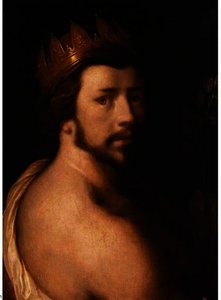
Portrait of Cornelis van Haarlem

Cornelis van Haarlem Paintings: The 100 Most Famous, Through a Gallery's Eye

Updated October 2026 · ranked by our popularity score (searches, visits and orders for each work) · 129 works by Cornelis van Haarlem in our catalogue

In short

To the gallery's eye, Cornelis van Haarlem's most famous painting is Portrait of Dirck Volckertsz. Coornhert (1590), whose original hangs in the Frans Hals Museum, Haren. Venus and Vulcan (1590) and Pomona Receives the Harvest of Fruit (1626) complete the trio every eye recognises. Of the 129 works by Cornelis van Haarlem in our catalog, the gallery presents the 100 most famous below, each original with its year, its museum and what makes it unique.

1562 – 1638, Haarlem Dutch golden age Most works: National Museum in Warsaw

The gallery's top 10 Cornelis van Haarlem paintings

1
Portrait of Dirck Volckertsz. Coornhert (1590) by Cornelis van Haarlem

Portrait of Dirck Volckertsz. Coornhert

1590 · Oil On Canvas · Frans Hals Museum, Haren

A single man occupies the center of this space, his presence anchored by a heavy, dark hat and a beard of stark, textured white. The light strikes the side of his face, carving deep valleys into the skin and highlighting the fine, etched lines around his eyes. He does not look away. His eyes hold a piercing, steady quality that demands a quiet confrontation with the viewer. Shadows pool in…

2
Venus and Vulcan (1590) by Cornelis van Haarlem

Venus and Vulcan

1590 · Oil On Canvas · Nationalmuseum, Stockholm

In this 1590 oil on canvas, we find ourselves drawn into the heat of a mythological forge. The composition is anchored by a profound physical presence, where the muscularity of the figures commands the space. On the left, Vulcan sits in a dynamic, heavy pose, his body a study of strength as he prepares to strike an anvil. His skin is rendered with a fleshy, tactile quality that contrasts sharply…

3
Pomona Receives the Harvest of Fruit (1626) by Cornelis van Haarlem

Pomona Receives the Harvest of Fruit

1626 · Oil On Panel · Rijksmuseum, Amsterdam

Cornelis van Haarlem captures a moment of seasonal abundance in Pomona Receives the Harvest of Fruit. This mythological painting, executed in 1626, centers on the Roman goddess of fruit trees. She exists within a lush, verdant landscape, surrounded by the heavy weight of a successful harvest. The scene is a quiet celebration of nature's bounty, rendered through the lens of the Dutch Renaissance.

4
Jester in a Fool's Cap (1596) by Cornelis van Haarlem

Jester in a Fool's Cap

1596 · Oil On Panel · Frans Hals Museum, Haren

The painting Jester in a Fool's Cap is a work by Cornelis van Haarlem. Created in 1596, this oil on panel piece functions as a tronie, focusing on the expressive potential of a specific character type rather than a formal portrait. The subject of this study is identified as Pieter Cornelisz van der Morsch.

5
The Fall of Ixion (1588) by Cornelis van Haarlem

The Fall of Ixion

1588 · Oil · Museum Boijmans Van Beuningen, Rotterdam

The Fall of Ixion is an oil painting by Cornelis van Haarlem, executed about 1588. The canvas captures a moment of violent descent rooted in Greek mythology. It depicts the punishment of Ixion, the king of the Lapiths and son of Perimele, who was cast down for his hubris against the gods.

6
Ceres and Bacchus (1610) by Cornelis van Haarlem

Ceres and Bacchus

1610 · Oil · Royal Museum of Fine Arts Antwerp, Antwerp

Cornelis van Haarlem’s Ceres and Bacchus, created about 1610, presents an intimate mythological encounter set against a near-black background. The composition relies on dramatic chiaroscuro to push the figures into the foreground, creating depth through light rather than perspective. Ceres is positioned looking upward with an expression of longing or contemplation, while Bacchus leans toward her, his head adorned with a crown of vine leaves.

7
Susanna at her Bath (1590) by Cornelis van Haarlem

Susanna at her Bath

1590 · Oil On Canvas · Germanisches Nationalmuseum, Nuremberg

is an oil on canvas work by the artist Cornelis van Haarlem. The painting captures a moment of profound intrusion, a scene where the quietude of a private ritual is shattered by the presence of others. It is also recognized by the title Susanna im Bade. The canvas holds a tension that resides in the space between the subject and the watchers.

8
Diana as Goddess of the Hunt (1607) by Cornelis van Haarlem

Diana as Goddess of the Hunt

1607 · Oil On Panel · Minneapolis Institute of Art, Minneapolis

The goddess Diana emerges from the shadows in Diana as Goddess of the Hunt, a work painted by Cornelis van Haarlem. She appears not as a distant myth, but as a presence caught in a singular, quiet moment of strength. This portrait, created by Cornelis van Haarlem in 1607, captures the Roman goddess in a way that feels immediate and alive. The subject carries the weight of her divinity through…

9
The Lamentation (1600) by Cornelis van Haarlem

The Lamentation

1600 · Oil On Panel · Städel Museum, Frankfurt

is a painting by Cornelis van Haarlem, executed in 1600. The work centers on the mourning over the dead Christ, a somber religious subject rendered during the transition between the late Mannerist period and the Dutch Golden Age.

10
Venus and Adonis (1603) by Cornelis van Haarlem

Venus and Adonis

1603 · Oil · Nationalmuseum, Stockholm

Venus and Adonis is an oil painting by Cornelis van Haarlem. The artist, born in 1562 in Haarlem, Netherlands, captured this mythological scene around 1603. His hand moved through the transition of styles in the Netherlands, a life that spanned from his birth in the mid-sixteenth century until his death in 1638.

Cornelis van Haarlem paintings, ranked 11 to 100

11Christ with the cross and the chalice (1591) by Cornelis van HaarlemChrist with the cross and the chalice1591 · National Museum in Warsaw 12Mars and Venus as lovers. (1609) by Cornelis van HaarlemMars and Venus as lovers.1609 · National Museum in Warsaw 13Allegory on the Brevity of Life (1617) by Cornelis van HaarlemAllegory on the Brevity of Life1617 · Statens Museum For Kunst 14Christ holding the Cross and a Chalice (1591) by Cornelis van HaarlemChrist holding the Cross and a Chalice1591 · National Museum in Warsaw 15De H. Familie met Elisabeth en de jonge Johannes de Doper als kind (1589) by Cornelis van HaarlemDe H. Familie met Elisabeth en de jonge Johannes de Doper als kind1589 · Staatliche Kunsthalle Karlsruhe 16Adam and Eve (1599) by Cornelis van HaarlemAdam and Eve1599 · National Museum in Warsaw 17The Judgment of Paris (1590) by Cornelis van HaarlemThe Judgment of Paris1590 · Rhode Island School of Design Museum of Art 18Baptism of Christ (1590) by Cornelis van HaarlemBaptism of Christ1590 · Centraal Museum 19Madonna and Child (1591) by Cornelis van HaarlemMadonna and Child1591 20St. Sebastian (1591) by Cornelis van HaarlemSt. Sebastian1591 21The First Family (Genesis 4:1-2) (1589) by Cornelis van HaarlemThe First Family (Genesis 4:1-2)1589 · Musée des Beaux-Arts de Quimper 22Venus and Cupid (1602) by Cornelis van HaarlemVenus and Cupid1602 · Worcester Art Museum 23Vanitas (1601) by Cornelis van HaarlemVanitas1601 · National Museum in Warsaw 24Portrait of a man (1595) by Cornelis van HaarlemPortrait of a man1595 25Juda and Tamar (1596) by Cornelis van HaarlemJuda and Tamar1596 · Frans Hals Museum 26The deluge (Genesis 7:17-24) (1592) by Cornelis van HaarlemThe deluge (Genesis 7:17-24)1592 · Herzog Anton Ulrich Museum 27The Prodigal Son among the Harlots (Luke 15:13-14) (1607) by Cornelis van HaarlemThe Prodigal Son among the Harlots (Luke 15:13-14)1607 28The Manalese (1610) by Cornelis van HaarlemThe Manalese1610 · Gemäldegalerie 29Portrait of Dirck Volckertsz. Coornhert (1618) by Cornelis van HaarlemPortrait of Dirck Volckertsz. Coornhert1618 · Fitzwilliam Museum 30Sine Cerere et Baccho friget Venus (Terentius, Eunuchus, 732) (1614) by Cornelis van HaarlemSine Cerere et Baccho friget Venus (Terentius, Eunuchus, 732)1614 · Staatliche Kunstsammlungen Dresden 31The prodigal son (Luke 15:11-13) (1614) by Cornelis van HaarlemThe prodigal son (Luke 15:11-13)1614 · Bavarian State Painting Collections 32Suffer the little children to come unto me (Matt. 19:14) (1614) by Cornelis van HaarlemSuffer the little children to come unto me (Matt. 19:14)1614 · Bavarian State Painting Collections 33Adonis (1620) by Cornelis van HaarlemAdonis1620 · Museum of Fine Arts 34Venus (1620) by Cornelis van HaarlemVenus1620 · Museum of Fine Arts 35Before the Deluge (1615) by Cornelis van HaarlemBefore the Deluge1615 · National Museum in Warsaw 36The last 5 commandeurs of the order of St John in Haarlem (1615) by Cornelis van HaarlemThe last 5 commandeurs of the order of St John in Haarlem1615 · Frans Hals Museum 37Venus and Adonis resting in an extensive landscape, with Cupid and hunting dogs and their quarries (1610) by Cornelis van HaarlemVenus and Adonis resting in an extensive landscape, with Cupid and hunting dogs and their quarries1610 38The Unequal Lovers (1619) by Cornelis van HaarlemThe Unequal Lovers1619 39Feast of the prodigal son (Luke 15:11-13) (1615) by Cornelis van HaarlemFeast of the prodigal son (Luke 15:11-13)1615 · National Museum in Warsaw 40Mars and Venus (1609) by Cornelis van HaarlemMars and Venus1609 · National Museum in Warsaw 41Female Semi-Nude with Rose (1623) by Cornelis van HaarlemFemale Semi-Nude with Rose1623 · Niedersächsisches Landesmuseum 42Rest on the Flight into Egypt (1634) by Cornelis van HaarlemRest on the Flight into Egypt1634 · Museum Catharijneconvent 43Portrait of Andries Pietersz van Souwen (1549/1550-1625) (1624) by Cornelis van HaarlemPortrait of Andries Pietersz van Souwen (1549/1550-1625)1624 · Museum Catharijneconvent 44Baptism of Christ (1623) by Cornelis van HaarlemBaptism of Christ1623 · Staatliche Kunsthalle Karlsruhe 45Sine Cerere et Baccho friget Venus (1624) by Cornelis van HaarlemSine Cerere et Baccho friget Venus1624 · Palais des Beaux-Arts de Lille 46The Mirror of Time (1628) by Cornelis van HaarlemThe Mirror of Time1628 · Nationalmuseum 47The Fall of Man (Genesis 3:4-6) (1625) by Cornelis van HaarlemThe Fall of Man (Genesis 3:4-6)1625 · Musée des Beaux-Arts de Quimper 48Noah's festival to thank God (1632) by Cornelis van HaarlemNoah's festival to thank God1632 49A Young Man with a Crown of Laurel Leaves (1632) by Cornelis van HaarlemA Young Man with a Crown of Laurel Leaves1632 · Harvard Art Museums 50Banquet of the Officers of both companies of the Haarlem Militia (1597) by Cornelis van HaarlemBanquet of the Officers of both companies of the Haarlem Militia1597 · Frans Hals Museum 51The Holy Family (1590) by Cornelis van HaarlemThe Holy Family1590 · Yale University Art Gallery 52Portrait of Pieter Cornelisz. van der Morsch (1650) by Cornelis van HaarlemPortrait of Pieter Cornelisz. van der Morsch1650 · Museum de Lakenhal 53The Wedding of Peleus and Thetis (detail) (12) (1593) by Cornelis van HaarlemThe Wedding of Peleus and Thetis (detail) (12)1593 · Frans Halsmuseum 54Portrait Of A Man As Apollo by Cornelis van HaarlemPortrait Of A Man As Apollo 55A Man and Woman Singing (1620) by Cornelis van HaarlemA Man and Woman Singing1620 · Hermitage Museum 56The Massacre of the Innocents (1591) by Cornelis van HaarlemThe Massacre of the Innocents1591 · Frans Hals Museum 57The Israelites release Achior (Judith 6:10) (1601) by Cornelis van HaarlemThe Israelites release Achior (Judith 6:10)1601 · Frans Hals Museum 58Bacchus and a Satyr (1608) by Cornelis van HaarlemBacchus and a Satyr1608 · Museum Boijmans Van Beuningen 59Adam and Eve (Genesis 3:1-7) (1616) by Cornelis van HaarlemAdam and Eve (Genesis 3:1-7)1616 · National Museum in Warsaw 60The baptism of Christ (Matt. 3:15) (1590) by Cornelis van HaarlemThe baptism of Christ (Matt. 3:15)1590 · Musée de la Chartreuse de Douai 61The Wedding of Peleus and Thetis (1597) by Cornelis van HaarlemThe Wedding of Peleus and Thetis1597 · Worcester Art Museum 62Bathsheba at her Toilet, Cornelis Cornelisz. van Haarlem, 1594 (1594) by Cornelis van HaarlemBathsheba at her Toilet, Cornelis Cornelisz. van Haarlem, 15941594 · Rijksmuseum 63Pieter Jansz Kies (c 1536-97). Burgomaster of Haarlem, Cornelis Cornelisz. van Haarlem, 1596 (1596) by Cornelis van HaarlemPieter Jansz Kies (c 1536-97). Burgomaster of Haarlem, Cornelis Cornelisz. van Haarlem, 15961596 · Rijksmuseum 64Madonna and Child (1617) by Cornelis van HaarlemMadonna and Child1617 · Amstelkring Museum 65The Mirror of Time (1631) by Cornelis van HaarlemThe Mirror of Time1631 · National Gallery of Canada 66The baptism of Christ (Matt. 3:13-17) (1627) by Cornelis van HaarlemThe baptism of Christ (Matt. 3:13-17)1627 · Pushkin State Museum 67Venus and Mars, Cornelis Cornelisz. van Haarlem, 1628 (1628) by Cornelis van HaarlemVenus and Mars, Cornelis Cornelisz. van Haarlem, 16281628 · Rijksmuseum 68The Good Samaritan (1627) by Cornelis van HaarlemThe Good Samaritan1627 69Nude Figure Studies (1630) by Cornelis van HaarlemNude Figure Studies1630 70Democritus (2000) by Cornelis van HaarlemDemocritus2000 · Teylers Museum 71The Golden Age (Bacchanal) or the Garden of Love (1614) by Cornelis van HaarlemThe Golden Age (Bacchanal) or the Garden of Love1614 · Szépművészeti Múzeum 72Hercules and Achelous by Cornelis van HaarlemHercules and Achelous 73The Wedding of Peleus and Thetis (detail) (10) (1593) by Cornelis van HaarlemThe Wedding of Peleus and Thetis (detail) (10)1593 · Frans Halsmuseum 74The Wedding of Peleus and Thetis (detail) (1593) by Cornelis van HaarlemThe Wedding of Peleus and Thetis (detail)1593 · Frans Halsmuseum 75Massacre of the Innocents (detail) (1590) by Cornelis van HaarlemMassacre of the Innocents (detail)1590 · Rijksmuseum 76A Scholar in his Study (1606) by Cornelis van HaarlemA Scholar in his Study1606 · The Ashmolean Museum of Art And Archaeology 77Venus (1617) by Cornelis van HaarlemVenus1617 · Museo de Arte de Ponce 78Venus, Instructing a Bacchante by Cornelis van HaarlemVenus, Instructing a BacchanteBomann-Museum 79Adoration with Three Kings by Cornelis van HaarlemAdoration with Three Kings 80Paris dom by Cornelis van HaarlemParis domNationalmuseum 81The Mirror of Time by Cornelis van HaarlemThe Mirror of Time 82Feast of the Gods by Cornelis van HaarlemFeast of the Gods 83Juno Appearing to Sea Gods by Cornelis van HaarlemJuno Appearing to Sea Gods 84Diana sleeping with her nymphs, spied on by satyrs by Cornelis van HaarlemDiana sleeping with her nymphs, spied on by satyrs 85Massacre of the Innocents 1 by Cornelis van HaarlemMassacre of the Innocents 1 86Temperance (1600) by Cornelis van HaarlemTemperance1600 · Schloss Sanssouci 87The Wedding of Peleus and Thetis (1593) by Cornelis van HaarlemThe Wedding of Peleus and Thetis1593 · Mauritshuis 88Banquet of Members of the Haarlem Calivermen Civic Guard (1583) by Cornelis van HaarlemBanquet of Members of the Haarlem Calivermen Civic Guard1583 · Frans Hals Museum 89Head of a Woman (1633) by Cornelis van HaarlemHead of a Woman1633 90The Fall of Man (detail) (1592) by Cornelis van HaarlemThe Fall of Man (detail)1592 · Rijksmuseum 91The Judgment of Paris (1628) by Cornelis van HaarlemThe Judgment of Paris1628 · Szépművészeti Múzeum 92Bathsheba by Cornelis van HaarlemBathshebaStaatliche Museen zu Berlin 93LE BAPTEME DU CHRIST (GRANDE VERSION) by Cornelis van HaarlemLE BAPTEME DU CHRIST (GRANDE VERSION)The Louvre 94LE BAPTEME DU CHRIST (PETITE VERSION) by Cornelis van HaarlemLE BAPTEME DU CHRIST (PETITE VERSION)The Louvre 95Two Male Nudes by Cornelis van HaarlemTwo Male Nudes 96Israelites Crossing the Red Sea by Cornelis van HaarlemIsraelites Crossing the Red Sea 97Study of a Male Nude, with Floating Drapery by Cornelis van HaarlemStudy of a Male Nude, with Floating Drapery 98Meeting of Jacob and Esau by Cornelis van HaarlemMeeting of Jacob and Esau 99Susanna and the Elders by Cornelis van HaarlemSusanna and the EldersNational Gallery of Canada 100A Scholar in his Study by Cornelis van HaarlemA Scholar in his Study

Cornelis van Haarlem's famous paintings, period by period

The subjects that held Cornelis van Haarlem's eye

The four subjects that come back most often in these originals, each with its finest example.

The museums that keep Cornelis van Haarlem's originals

The 8 museums that hold the most of the paintings on this page.

Museum City Works by Cornelis van Haarlem Paintings from this list
National Museum in Warsaw, WarsawNational Museum in Warsaw Warsaw 9 Christ with the cross and the chalice, Mars and Venus as lovers., Christ holding the Cross and a Chalice
Frans Hals Museum, HarenFrans Hals Museum Haren 8 Portrait of Dirck Volckertsz. Coornhert, Jester in a Fool's Cap, Juda and Tamar
Rijksmuseum, AmsterdamRijksmuseum Amsterdam 8 Pomona Receives the Harvest of Fruit, Bathsheba at her Toilet, Cornelis Cornelisz. van Haarlem, 1594, Pieter Jansz Kies (c 1536-97). Burgomaster of Haarlem, Cornelis Cornelisz. van Haarlem, 1596
Nationalmuseum, StockholmNationalmuseum Stockholm 4 Venus and Vulcan, Venus and Adonis, The Mirror of Time
Frans Halsmuseum, HarenFrans Halsmuseum Haren 4 The Wedding of Peleus and Thetis (detail) (12), The Wedding of Peleus and Thetis (detail) (10), The Wedding of Peleus and Thetis (detail)
The Louvre, ParisThe Louvre Paris 3 LE BAPTEME DU CHRIST (GRANDE VERSION), LE BAPTEME DU CHRIST (PETITE VERSION)
Museum Boijmans Van Beuningen, RotterdamMuseum Boijmans Van Beuningen Rotterdam 2 The Fall of Ixion, Bacchus and a Satyr
Staatliche Kunsthalle Karlsruhe, CarlsruheStaatliche Kunsthalle Karlsruhe Carlsruhe 2 De H. Familie met Elisabeth en de jonge Johannes de Doper als kind, Baptism of Christ

Cornelis van Haarlem, one signature painting per decade

Works per decade

Pick a decade to see the original that defines it.

Cornelis van Haarlem's paintings: the gallery answers

Which Cornelis van Haarlem painting is the most famous of all?Reveal the answer

Portrait of Dirck Volckertsz. Coornhert (1590), Frans Hals Museum, Haren. Venus and Vulcan (1590) and Pomona Receives the Harvest of Fruit (1626) come next.

How old was Cornelis van Haarlem on completing Portrait of Dirck Volckertsz. Coornhert?Reveal the answer

28 years old: Portrait of Dirck Volckertsz. Coornhert dates from 1590, and Cornelis van Haarlem was born in 1562.

Which are Cornelis van Haarlem's top 10 paintings?Reveal the answer

Portrait of Dirck Volckertsz. Coornhert, Venus and Vulcan, Pomona Receives the Harvest of Fruit, Jester in a Fool's Cap, The Fall of Ixion, Ceres and Bacchus, Susanna at her Bath, Diana as Goddess of the Hunt, The Lamentation and Venus and Adonis. The ranking above gives each one's year and museum.

How many works did Cornelis van Haarlem create?Reveal the answer

Our catalog holds 129 works by Cornelis van Haarlem, dated from 1583 to 1634.

Where do Cornelis van Haarlem's most famous originals hang?Reveal the answer

Mostly in National Museum in Warsaw (Warsaw), Frans Hals Museum (Haren) and Rijksmuseum (Amsterdam). The museum table above lists them all.

When did Cornelis van Haarlem create the most famous paintings?Reveal the answer

In 1590s: 27 of the 100 works on this page were made then, Portrait of Dirck Volckertsz. Coornhert among them.

Which are Cornelis van Haarlem's earliest and latest famous works?Reveal the answer

On this page, the earliest is Banquet of Members of the Haarlem Calivermen Civic Guard (1583) and the latest Rest on the Flight into Egypt (1634).

Which subjects did Cornelis van Haarlem return to most?Reveal the answer

Man (34), Woman (27) and People (16), across the 100 works on this page.

Which medium did Cornelis van Haarlem work in most?Reveal the answer

Oil On Canvas, for 28 of the 100 works on this page.

Which movement is Cornelis van Haarlem associated with?Reveal the answer

Dutch golden age, judging by the originals on this page.

Which Cornelis van Haarlem originals does the National Museum in Warsaw hold?Reveal the answer

Christ with the cross and the chalice, Mars and Venus as lovers. and Christ holding the Cross and a Chalice: the National Museum in Warsaw, Warsaw holds 9 of the works on this page.

Cornelis van Haarlem: the artist

A Forerunner of the Dutch Golden Age: The Life and Art of Cornelis Cornelisz van Haarlem

Cornelis Cornelisz van Haarlem, born in 1562 within the burgeoning artistic hub of Haarlem, Netherlands, stands as a pivotal figure bridging the late Mannerist period with the dawn of the Dutch Golden Age. His journey was one of stylistic evolution and significant influence, particularly on the celebrated portraitist Frans Hals. Initially steeped in the highly stylized conventions prevalent at the time, van Haarlem’s early training under Pieter Pietersz in his native city and later Gillis Coignet in Antwerp laid a foundation for a career marked by both technical prowess and an eventual embrace of more naturalistic representation. The political turmoil of the Eighty Years' War cast a long shadow over his youth; when Spanish forces besieged Haarlem in 1573, his parents fled, leaving young Cornelis to be raised by Pieter Pietersz, solidifying his artistic path. This early experience likely instilled within him a sense of resilience and a deep connection to the cultural identity of his hometown, themes that would subtly permeate his later work.

From Mannerist Grandeur to Netherlandish Realism

Van Haarlem’s initial artistic output was characterized by large-scale compositions featuring dramatically posed figures—often Italianate nudes—with an emphasis on artifice and exaggerated anatomy. These works, while demonstrating considerable skill, reflected the prevailing Northern Mannerist aesthetic heavily influenced by artists like Bartholomeus Spranger whose drawings were introduced to Haarlem by Carel van Mander in 1585. However, a distinct shift began to emerge as van Haarlem matured. He gradually moved away from these highly stylized forms towards a more grounded and realistic approach rooted in the Netherlandish tradition. This transformation wasn’t abrupt but rather a considered evolution, reflecting not only his artistic growth but also a broader cultural movement within the Netherlands toward greater naturalism and emotional depth. His evolving style mirrored a changing society—one increasingly focused on individual expression and observable reality.

Key Works and Civic Recognition

Throughout his career, van Haarlem secured numerous commissions that attest to his growing reputation and skill. One of his earliest significant works, The Banquet of the Haarlem Civic Guard (1583), showcased his emerging talent as a portraitist and ability to capture group dynamics with impressive detail. This piece, along with subsequent civic commissions, cemented his position within the community and established him as a reliable and capable artist. The Fall of the Titans (1588-1590), a monumental mythological scene, demonstrates his mastery of complex compositions and narrative storytelling. These large-scale paintings weren’t merely displays of technical skill; they were statements of civic pride and artistic ambition. He became deeply involved in the Haarlem art community, participating in informal drawing groups with Hendrick Goltzius and Carel van Mander—a collective often referred to as the “Haarlem Mannerists” or the "Haarlem Academy"—where ideas were exchanged and new artistic directions explored.

A Lasting Legacy: Influence on Frans Hals and Beyond

Cornelis van Haarlem’s influence extended far beyond his own prolific output. He is particularly remembered for his profound impact on Frans Hals, one of the most celebrated portrait painters of the Dutch Golden Age. While the exact nature of their relationship remains a subject of scholarly debate, it's clear that van Haarlem served as an important mentor and source of inspiration for the younger artist. His emphasis on capturing individual character and psychological depth in his portraits likely paved the way for Hals’s groundbreaking approach to portraiture—an approach characterized by spontaneity, vitality, and a remarkable ability to convey personality. Van Haarlem's role as city painter of Haarlem further solidified his legacy, ensuring that his artistic vision continued to shape the cultural landscape of the region. His students included Salomon de Bray, Cornelis Jacobsz Delff, and Gerrit Pietersz Sweelink, continuing his influence into subsequent generations. His work can be found in prominent museum collections today, including the Rijksmuseum in Amsterdam and the Frans Hals Museum in Haarlem, ensuring that his artistic contributions continue to inspire and captivate audiences worldwide.

Exploring Van Haarlem’s World Today

The enduring appeal of Cornelis van Haarlem's art is readily accessible through various online resources. Platforms like OriginalUniqueArt.com offer a comprehensive collection of his paintings, allowing enthusiasts to delve into the breadth and depth of his oeuvre. Detailed biographical information and critical analyses can be found on Wikipedia, providing valuable context for understanding his artistic development and historical significance. The Getty Museum and National Gallery websites also provide insights into specific works within their collections. Through these digital avenues, van Haarlem’s legacy is preserved and shared with a global audience, ensuring that this important forerunner of the Dutch Golden Age continues to receive the recognition he deserves. His paintings remain powerful testaments to an era of artistic innovation and cultural transformation.