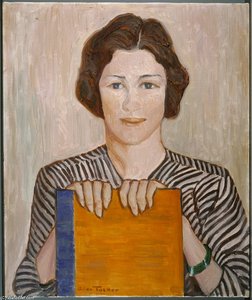
Portrait of Allen Tucker

Allen Tucker Paintings: The 33 Most Famous, Through a Gallery's Eye

Updated October 2026 · ranked by our popularity score (searches, visits and orders for each work) · 34 works by Allen Tucker in our catalogue

In short

To the gallery's eye, Allen Tucker's most famous painting is Watercolor no. 73, Blue and Lavender (1928). Interior (1921) and Cloudburst at Black Mesa, New Mexico (1925) complete the trio every eye recognises. Of the 34 works by Allen Tucker in our catalog, the gallery presents the 33 most famous below, each original with its year, its museum and what makes it unique.

1866 – 1939, Brooklyn Post-impressionism Most works: The Phillips Collection

The gallery's top 10 Allen Tucker paintings

4
Bagdad (1923) by Allen Tucker

Bagdad

1923

A Contemplative Moment: Unveiling Allen Tucker’s ‘Bagdad’ Allen Tucker's 1923 oil painting, *Bagdad*, is more than just a portrait; it’s an evocative exploration of mood and color. Measuring 64 x 77 cm, the work centers on a woman seated on the floor, her form dominating the composition against a striking red backdrop. Her dark hair frames a face turned inward, suggesting deep contemplation. While two figures are subtly present in…
5
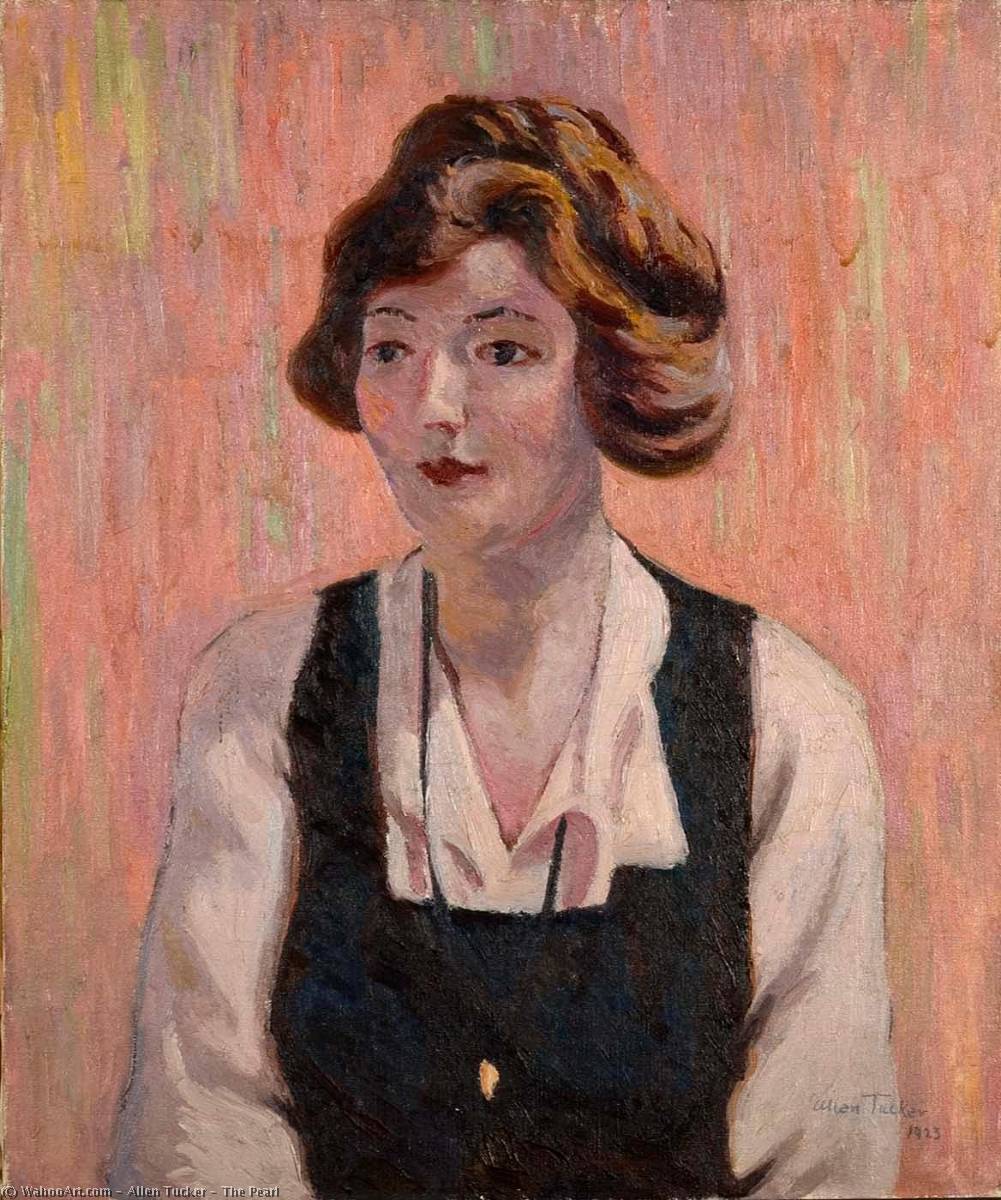
The Pearl (1923) by Allen Tucker

The Pearl

1923

The painting The Pearl by Allen Tucker is a stunning example of oil on canvas artwork, created in 1923. This beautiful piece measures 62 x 51 cm and features a portrait of a woman with brown hair, wearing a white shirt and black vest, adorned with a pearl necklace. The subject's gaze appears to be directed at the viewer, with a subtle smile or expression that invites the observer to…

Allen Tucker paintings, ranked 11 to 33

The subjects that held Allen Tucker's eye

The four subjects that come back most often in these originals, each with its finest example.

The museums that keep Allen Tucker's originals

The 6 museums that hold the most of the paintings on this page.

Museum City Works by Allen Tucker Paintings from this list
The Phillips Collection, Washington, D.C.The Phillips Collection Washington, D.C. 6 Red Barns, The Squall, Autumn Farm
Metropolitan Museum of Art, New YorkMetropolitan Museum of Art New York 4 Interior, Blue and Gold, Headland
Smithsonian American Art Museum, Washington, D.C.Smithsonian American Art Museum Washington, D.C. 3 Cloudburst at Black Mesa, New Mexico, Surf Breaking, Cranberry Island, Bagdad
National Gallery of Art, WashingtonNational Gallery of Art Washington 1 Madison Square, Snow
Rhode Island School of Design Museum of Art, ProvidenceRhode Island School of Design Museum of Art Providence 1 Beverly
Whitney Museum of American Art, New YorkWhitney Museum of American Art New York 1 Washington Crossing the Delaware

Allen Tucker, one signature painting per decade

Works per decade

Pick a decade to see the original that defines it.

Allen Tucker's paintings: the gallery answers

Which Allen Tucker painting is the most famous of all?Reveal the answer

Watercolor no. 73, Blue and Lavender (1928). Interior (1921) and Cloudburst at Black Mesa, New Mexico (1925) come next.

How old was Allen Tucker on completing Watercolor no. 73, Blue and Lavender?Reveal the answer

62 years old: Watercolor no. 73, Blue and Lavender dates from 1928, and Allen Tucker was born in 1866.

Which are Allen Tucker's top 10 paintings?Reveal the answer

Watercolor no. 73, Blue and Lavender, Interior, Cloudburst at Black Mesa, New Mexico, Bagdad, The Pearl, Madison Square, Snow, Beverly, Landscape, A Winter Pool and Surf Breaking, Cranberry Island. The ranking above gives each one's year and museum.

How many works did Allen Tucker create?Reveal the answer

Our catalog holds 34 works by Allen Tucker, dated from 1904 to 1937.

Where do Allen Tucker's most famous originals hang?Reveal the answer

Mostly in The Phillips Collection (Washington, D.C.), Metropolitan Museum of Art (New York) and Smithsonian American Art Museum (Washington, D.C.). The museum table above lists them all.

When did Allen Tucker create the most famous paintings?Reveal the answer

In 1930s: 9 of the 33 works on this page were made then, Washington Crossing the Delaware among them.

Which are Allen Tucker's earliest and latest famous works?Reveal the answer

On this page, the earliest is Madison Square, Snow (1904) and the latest Watercolor no. 35, Field with Two Pine Trees (1937).

Which subjects did Allen Tucker return to most?Reveal the answer

Landscape (2), Mountains (2) and Deserts (2), across the 33 works on this page.

Which movement is Allen Tucker associated with?Reveal the answer

Post-impressionism, judging by the originals on this page.

Which Allen Tucker originals does the The Phillips Collection hold?Reveal the answer

Red Barns, The Squall and Autumn Farm: the The Phillips Collection, Washington, D.C. holds 6 of the works on this page.

Allen Tucker: the artist

Early Life and Architectural Roots

Allen Tucker, often hailed as “the American Van Gogh,” embarked on a fascinating artistic journey that diverged from the conventional path of his time. Born in Brooklyn, New York, in 1866, Tucker initially pursued a career steeped in precision and structure—architecture. He graduated from the School of Mines at Columbia University in 1887, subsequently working as a draftsman for McIlvaine and Tucker, his father’s firm. This early exposure to design principles and spatial relationships would subtly but profoundly influence his later paintings, lending them an underlying sense of order even amidst their expressive brushwork. However, the rigid confines of architectural drafting couldn't contain Tucker’s burgeoning artistic spirit; he began studying painting at the Art Students League, laying the groundwork for a dramatic shift in his professional life.

The Embrace of Impressionism and Finding His Voice

Around 1904, at the age of thirty-eight, Tucker fully committed himself to painting, leaving behind the world of blueprints and elevations. Initially, his canvases resonated with the classical Impressionistic style—evocative poplar trees reminiscent of Van Gogh’s swirling landscapes and haystacks mirroring Claude Monet's luminous studies of light. Yet, Tucker wasn’t content to merely replicate these masters; he possessed an individualist streak that propelled him beyond imitation. He began exploring abstraction and reinterpreting architectural forms, forging a unique visual language that defied easy categorization. This period marked a crucial turning point, as Tucker moved away from strict representation towards a more emotionally charged and personal expression.

A Catalyst for Modernism: The Armory Show and Beyond

Tucker’s involvement in the burgeoning American modernist movement was pivotal. In 1908, he exhibited alongside prominent figures like Robert Henri, George Luks, and George Bellows—artists who were challenging academic traditions and embracing a more raw, realistic depiction of American life. He became deeply involved in organizing exhibitions that pushed boundaries, most notably the groundbreaking Armory Show of 1913. Tucker wasn’t simply an exhibitor; he was instrumental in its creation, serving as head of the catalogue committee and even featuring one of his landscapes on the show's iconic postcard announcement. This event introduced a shockwave of European avant-garde art to American audiences—Cubism, Fauvism, Futurism—and Tucker’s participation solidified his position as a key figure in shaping the nation’s artistic landscape. He continued this commitment to progressive art by founding the Society of Independent Artists in 1919, further championing artistic freedom and experimentation.

Service, Teaching, and Continued Artistic Exploration

Tucker's life wasn't confined solely to the studio and exhibition halls. During World War I, he demonstrated a profound sense of civic duty by serving with the American Ambulance Service in France, later working in a Red Cross hospital. This experience undoubtedly left an indelible mark on his psyche, though its direct influence on his art remains open to interpretation. Upon returning to civilian life, Tucker dedicated himself to education, becoming an instructor at the Art Students League of New York from 1921 to 1926. He fostered a close relationship with Wilhelmina Weber Furlong and her husband Thomas Furlong, both influential figures within the League’s administration. Throughout his career, he continued to paint prolifically, spending summers exploring diverse landscapes—from the rugged coast of New England to the majestic Rockies and the sun-drenched vistas of New Mexico. He also pursued literary endeavors, publishing books of verse and essays on art and design, revealing a multifaceted intellect beyond his visual artistry.

Legacy and Historical Significance

Allen Tucker’s work is now held in esteemed collections across America—the Albright-Knox Art Gallery, the Art Institute of Chicago, the Brooklyn Museum, the Metropolitan Museum of Art, the Phillips Collection, and the Whitney Museum of American Art, among others. His paintings stand as testaments to a restless spirit that embraced innovation while retaining a deeply personal vision. While often compared to Van Gogh for his expressive brushwork and emotional intensity, Tucker carved out his own distinct niche in American art history. He was not merely an imitator but a catalyst—a pivotal figure who helped introduce modernism to the United States, championed artistic independence, and inspired generations of artists with his unwavering commitment to creative expression. His legacy endures as a reminder that true artistry lies in forging one’s own path, even amidst the currents of established traditions.