The Genesis of Impressionism: Challenging Academic Traditions
Impressionism was a 19th-century art movement characterized by visible brush strokes, open composition, emphasis on accurate depiction of light in its changing qualities (often accentuating the effects of the passage of time), ordinary subject matter...
The story of Impressionism is, at its heart, a tale of rebellion. In the mid-19th century, the art world was dominated by the rigid standards of the Académie des Beaux-Arts in France. Historical and mythological scenes, meticulously rendered with precise detail and dramatic lighting, were favored above all else. Artists striving for recognition navigated a system that prioritized established conventions over innovation. A growing dissatisfaction simmered amongst a group of painters who felt constrained by these rules – they yearned to capture the fleeting beauty of modern life, the subtle nuances of light, and their own subjective experiences rather than adhering to prescribed narratives. This discontent would ultimately blossom into one of art history’s most beloved movements.
Figures like Gustave Courbet had already begun to challenge the status quo with Realism, depicting everyday scenes without idealization. However, it was a collective spirit – fostered amongst Claude Monet, Pierre-Auguste Renoir, Alfred Sisley, and Frédéric Bazille while studying under Charles Gleyre – that truly ignited the Impressionist spark. They began meeting in cafes and studios, sharing ideas and experimenting with new techniques. Their initial rejection from the official Salon exhibitions proved pivotal; rather than abandoning their vision, they forged their own path, organizing independent shows that would shock and ultimately transform the art world.
The very name “Impressionism” was initially derisive. It stemmed from Louis Leroy’s satirical review of Monet’s 1872 painting, Impression, soleil levant, where he mocked its seemingly unfinished quality. Yet, the label stuck, and with it came a powerful assertion: these artists weren't striving for photographic realism; they were capturing an *impression* – a momentary sensation, a fleeting glimpse of light and color.
En Plein Air: Painting the Ephemeral Effects of Light and Atmosphere
 Capturing Ephemeral Light: A Comprehensive Exploration of Plein Air Painting's History & Enduring Legacy
Explore the rich history of plein air painting, from its origins with Constable & Corot to Impressionism's revolution. Discover techniques, key artists, and the enduring legacy of capturing light outdoors. Learn more at OriginalUniqueArt.
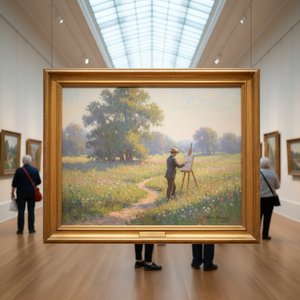
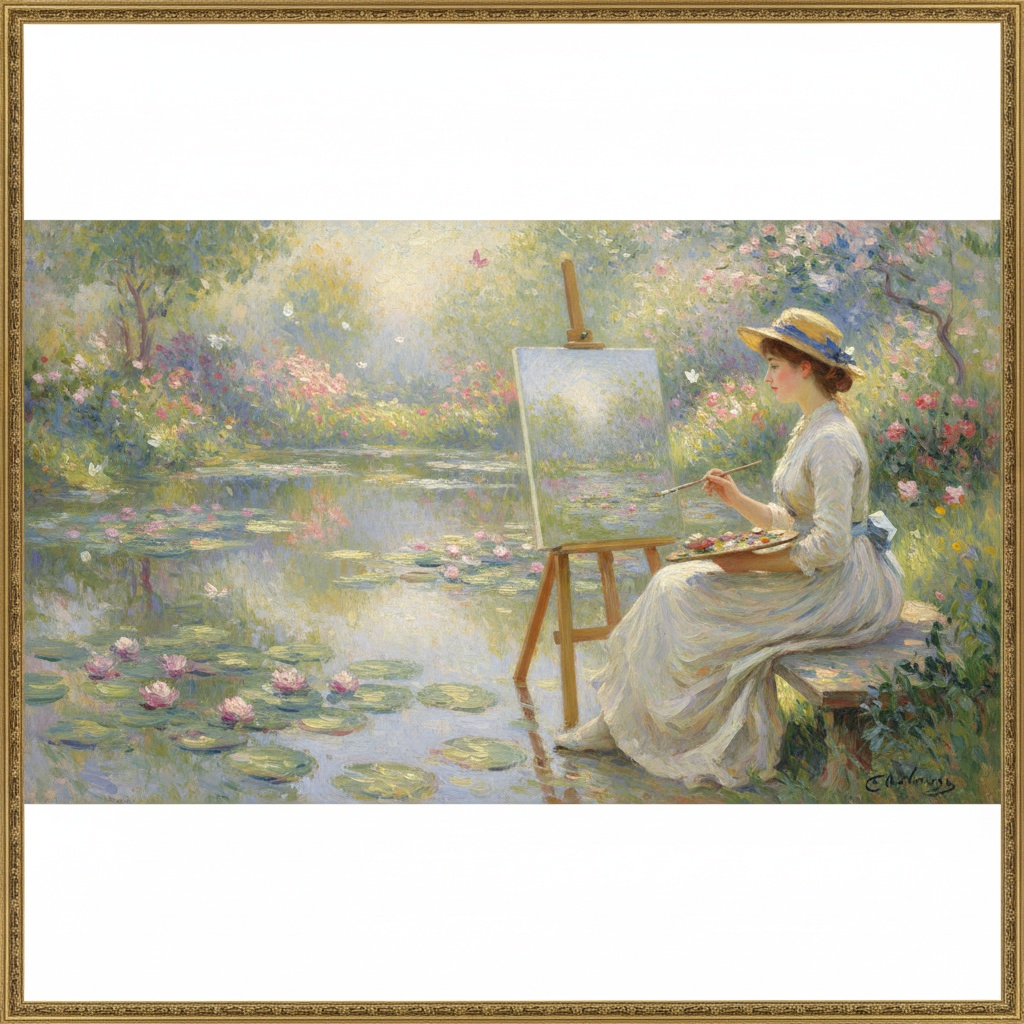
Central to the Impressionist revolution was the practice of en plein air, or painting outdoors. Prior to this, artists typically sketched outdoors but completed their works in the studio, relying on memory and imagination. The Impressionists, however, embraced the challenge of capturing the ever-changing effects of light and atmosphere directly from nature. This wasn’t merely a technical shift; it was a philosophical one.
Inspired by earlier landscape painters like Eugène Boudin – who encouraged Monet to observe and record the shifting conditions of light at Honfleur – they meticulously studied how sunlight played across surfaces, transforming colors and creating dynamic shadows. The invention of portable paint tubes in 1841 was crucial, allowing artists greater freedom and mobility. They set up easels in fields, along riversides, and in bustling city streets, attempting to seize the essence of a moment before it vanished.
This dedication to capturing the ephemeral led to a distinctive style characterized by broken brushstrokes, vibrant colors, and an emphasis on optical mixing – where colors are blended not on the palette but directly on the canvas, allowing the viewer’s eye to complete the fusion. Monet's series paintings, such as his haystacks or Rouen Cathedral, exemplify this pursuit; he painted the same subject repeatedly at different times of day and in varying weather conditions, revealing the transformative power of light.
Key Characteristics of Impressionist Technique: Brushwork, Color & Composition
 Capturing Fleeting Light: The Enduring Legacy of Impressionist Landscape Painting
Explore the captivating world of Impressionism! Discover its history, key artists, techniques & enduring legacy. Find museum-quality reproductions and expert art consultation at OriginalUniqueArt.
The techniques employed by the Impressionists were radical departures from academic tradition. Visible brushstrokes became a defining feature – not as imperfections to be concealed, but as integral elements of the artwork itself. These weren’t smooth, blended strokes aiming for seamless realism; they were short, broken dabs and flicks that captured the texture of light and movement.
Color played an equally crucial role. Impressionists rejected the use of traditional earth tones and embraced a brighter palette inspired by recent advances in color theory. They understood that colors aren’t fixed entities but are perceived relative to their surroundings. By juxtaposing complementary colors – such as blue and orange, or red and green – they created vibrant contrasts and optical illusions.
Compositionally, Impressionist paintings often defied convention. They embraced unusual angles, cropped perspectives, and asymmetrical arrangements, mirroring the spontaneity of modern life. The focus shifted from grand narratives to intimate scenes, capturing everyday moments with a fresh and unidealized perspective. This rejection of established rules wasn’t simply about stylistic innovation; it was about reflecting a changing world – one that valued individual perception and fleeting experiences.
Monet and Beyond: Exploring the Leading Figures of the Movement
While Claude Monet is arguably the most iconic figure of Impressionism, the movement encompassed a diverse group of artists each with their unique vision. Renoir, known for his depictions of Parisian social life, captured the warmth and joy of human connection through luminous colors and soft brushwork. His Luncheon of the Boating Party is a testament to this – a vibrant celebration of leisure and camaraderie.
Camille Pissarro, often considered the “father” of Impressionism, explored rural landscapes and urban scenes with equal sensitivity. Edgar Degas, though sometimes reluctant to be labeled an Impressionist, shared their interest in capturing fleeting moments but focused on subjects like ballet dancers and racehorses, employing dynamic compositions and unconventional perspectives.
Berthe Morisot, a pioneering female artist, brought a delicate sensibility to her depictions of domestic life and portraits. Her paintings often featured intimate scenes of women and children, rendered with subtle colors and expressive brushwork. These artists, along with others like Alfred Sisley and Mary Cassatt, collectively redefined the boundaries of painting, challenging traditional norms and paving the way for future generations.
The Enduring Legacy of Impressionism: Influence on Modern Art
The initial rejection faced by the Impressionists gradually gave way to widespread acclaim. Their independent exhibitions attracted a growing audience who were captivated by their fresh perspective and innovative techniques. By the late 19th century, Impressionism had become a dominant force in the art world, influencing countless artists and movements.
Post-Impressionism – exemplified by artists like Vincent van Gogh, Paul Cézanne, and Georges Seurat – built upon the foundations laid by the Impressionists but explored more subjective and expressive approaches. Fauvism, with its bold colors and simplified forms, owed a debt to Impressionist color theory. Even abstract art can trace its roots back to the Impressionists’ emphasis on capturing sensation rather than representation.
The legacy of Impressionism extends beyond painting itself. It fostered a new appreciation for individual perception, the beauty of everyday life, and the power of light and atmosphere. It continues to inspire artists today, reminding us to look closely at the world around us and to embrace the fleeting moments that make life so precious.
Collecting Impressionism: Finding Your Place in a Timeless Style
For those drawn to the beauty and vibrancy of Impressionism, collecting these works can be a deeply rewarding experience. While acquiring masterpieces by Monet or Renoir may be beyond reach for many, there are numerous avenues for building a collection. Prints and reproductions offer an accessible way to enjoy the style, while smaller works by lesser-known artists can provide excellent value.
When considering a purchase, pay attention to the artist’s technique – look for visible brushstrokes, vibrant colors, and a sense of spontaneity. Research the provenance of the artwork to ensure its authenticity. Consider your personal preferences and the space where you intend to display it. Do you prefer landscapes, portraits, or scenes of modern life? What colors and moods resonate with you?
At OriginalUniqueArt.com, we offer a curated selection of museum-quality reproductions of Impressionist masterpieces, as well as custom painting services that allow you to transform your favorite photos into artworks in the style of your chosen artist. Our team of experts can provide personalized guidance and ensure that your artwork is crafted with the highest standards of quality and care. Explore our collection today and discover the timeless beauty of Impressionism – a movement that continues to captivate and inspire generations.