Impressionism
The Path through the Irises (Claude Monet)
Claude Monet (1840–1926) made The Path through the Irises. It belongs to the Impressionism movement. It is made in oil on canvas.
- Oil On Canvas

 Preview

 Hand Made Oil Painting
 Send
 Share
 Fact sheet


 Download
 Similars
 X-Ray
 Diaporama
 Q&A

 Stats
The Path through the Irises, in brief
- Title
- The Path through the Irises
- Artist
- Claude Monet (1840–1926)
- Artist born in
- Paris, France
- Medium
- Oil On Canvas
- Movement
- Impressionism
- Period
- 19th Century
- Subject
- flowers, irises, landscape, monet, field, impressionism
What does The Path through the Irises depict?
A Symphony in Purple and Light: Exploring Claude Monet’s “The Path through the Irises”
Claude Monet's "The Path through the Irises" isn’t merely a depiction of flowers; it’s an immersion into a fleeting moment, a captured breath of summer. Painted around 1879, during his most fervent exploration of Impressionism, this work embodies the core tenets of the movement – a radical shift away from academic realism towards capturing the subjective experience of light and color as perceived by the artist's eye. The painting unfolds like a secret garden path, inviting the viewer into a world saturated with vibrant hues and delicate textures. Monet’s masterful use of broken brushstrokes and layering of pigments creates an astonishing sense of luminosity, mimicking the dappled sunlight filtering through the dense foliage of the iris beds. It’s a testament to his dedication to *plein air* painting – working directly from nature, allowing him to instinctively translate the ephemeral qualities of light onto canvas.Impressionist Techniques and Monet's Vision
Monet’s approach was revolutionary for its time. He wasn’t striving for photographic accuracy but rather to convey the *impression* of a scene – the feeling, the atmosphere, the transient beauty of a summer afternoon. Notice how he abandons sharp outlines in favor of soft edges and blurred forms. The irises themselves are not rendered with meticulous detail; instead, they're suggested through dabs and strokes of color, their purple shades subtly shifting depending on the angle of light. This technique, central to Impressionism, allows the eye to complete the image, creating a dynamic and engaging experience for the viewer. The background, hazy and indistinct, further emphasizes this sense of atmospheric perspective – a key element in Monet’s landscapes. He deliberately avoided blending colors completely, leaving visible brushstrokes that contribute to the painting's overall vibrancy and movement.Symbolism and the Garden as Sanctuary
Beyond its purely aesthetic qualities, “The Path through the Irises” resonates with a deeper symbolic meaning. Gardens, particularly those cultivated by artists like Monet, often represent an escape – a refuge from the complexities of urban life. The path itself suggests a journey, both literal and metaphorical, inviting contemplation and introspection. Irises, in particular, held special significance for Monet. He frequently depicted them in his paintings, drawn to their elegant form and rich color palette. They symbolized hope, faith, and nobility – qualities that resonated with the artist’s own evolving worldview. The inclusion of a small potted plant near the bottom left corner adds an element of domesticity and human presence within this natural setting, subtly reminding us of our connection to the earth.A Legacy of Light: Monet's Influence and Reproductions
Claude Monet’s impact on the course of art history is undeniable. His pioneering use of color and light paved the way for subsequent movements like Post-Impressionism and Fauvism, profoundly influencing generations of artists. “The Path through the Irises” stands as a prime example of his genius – a delicate balance between observation and imagination, capturing not just what he saw but also how he *felt* about it. Today, high-quality reproductions of this masterpiece are available at OriginalUniqueArt.com, offering art lovers the opportunity to bring this evocative scene into their homes. These meticulously crafted oil painting reproductions strive to faithfully recreate Monet’s original techniques and color palette, ensuring that the beauty and emotional resonance of “The Path through the Irises” can be enjoyed for years to come. You can explore similar works by Monet at the National Museum of Western Art in Tokyo, or delve deeper into his life and artistic journey on Wikipedia.High-resolution images of The Path through the Irises

Claude Monet, The Path through the Irises. Public domain.
Questions on The Path through the Irises, answered
What is "The Path through the Irises" made with?
"The Path through the Irises" is executed in oil on canvas.
What is "The Path through the Irises" about?
"The Path through the Irises" by Claude Monet depicts: flowers, irises, landscape, monet, field, impressionism, purple, yellow.
Is "The Path through the Irises" free of copyright?
Regarding copyright, "The Path through the Irises" is in the public domain - its copyright has expired.
Who is the artist behind "The Path through the Irises"?
The artist behind "The Path through the Irises" is Claude Monet. The work is catalogued under Claude Monet's name.
Which artistic current is "The Path through the Irises" by Claude Monet part of?
"The Path through the Irises" is a work of Impressionism. The movement indicates the artistic tradition the work is part of.
What stage of Claude Monet's development does "The Path through the Irises" represent?
"The Path through the Irises" represents the Mature Period of Claude Monet.
Why is the copyright status of "The Path through the Irises" what it is?
"The Path through the Irises" by Claude Monet is in the public domain - its copyright has expired. Copyright terms are measured from the artist's death, and Claude Monet died in 1926.
Where does "The Path through the Irises" sit within Claude Monet's body of work?
"The Path through the Irises" belongs to Claude Monet's Impressionism work, whose recorded themes include plein air observation, light & color studies, nature’s fleeting beauty, impressionist techniques, garden scenes, leisure, symbol of french summer, monet's floral series.
Is "The Path through the Irises" typical of what Claude Monet usually created?
Among Claude Monet's recorded themes - plein air observation, light & color studies, nature’s fleeting beauty, impressionist techniques, garden scenes, leisure, symbol of french summer, monet's floral series - "The Path through the Irises" brings its own focus on flowers, irises, landscape, monet, field, impressionism, purple, yellow.
About the artist, Claude Monet
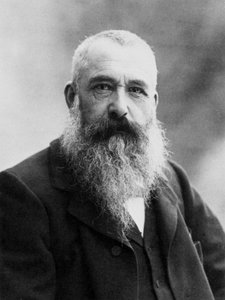
1840–1926, France
Claude Monet
Early Life, Family and Training Born in Paris, France, on 14 November 1840, Claude Monet entered a world of diverging expectations. While his father, Claude-Adolphe Monet, envisioned a more stable professional path for his son, his mother, Louise-Justine Aubrée Monet, offered a quiet support for his burgeoning creative inclinations. The family eventually settled in Le Havre, Normandy, where the coastal atmosphere would leave a lasting impression on the young boy. This period of childhood was marked by an early talent for drawing, a skill that would eventually lead him away from the commercial interests his father preferred.
Also by Claude Monet
 Water Lilies (or Nympheas)1916
 Impression, Sunrise1872
 Haystacks: Snow Effect1891
 The Walk. Lady with a Parasol1875
Essays around The Path through the Irises
 French artworks of the 1900sFrench artworks from the 1900s by Claude Monet, Henri Matisse, and Paul Cézanne. View the full collection online at OriginalUniqueArt.com.
 Capturing Fleeting Moments: A Comprehensive Exploration of Impressionism's Techniques & Enduring LegacyExplore the captivating world of Impressionism! Discover its history, key artists, techniques & enduring legacy. Find museum-quality reprod…
 Capturing Fleeting Moments: Light, Color & Emotion in Impressionistic ArtExplore the captivating world of Impressionism! Discover the techniques, artists (Monet, Renoir, Degas), and enduring legacy of this revolu…