
Giovanni Bellini is the best-known artist with works in the Museo Correr; next come Canaletto, Vittore Carpaccio and Antonello da Messina.
Below, the 15 best-known of the 45 artists with works of the Museo Correr in our catalogue (69 works), each with what the museum holds of them.
The masters of the originals
The 10 masters whose originals hang in the Museo Correr
For each master: where and when they were born, their movement, how many originals the museum keeps in our catalogue, a note from their life, and the originals to see.
-
Renaissance
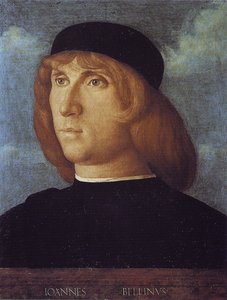
1. Giovanni Bellini 1430–1516
1430–1516 Born in Venice, Italy Renaissance 5 originals at the Museo Correr
In the winding streets of Venice, a city defined by its waters and its light, Giovanni Bellini began his life around 1430. While many know the name Bellini, it was Giovanni who likely achieved the greatest fame among his kin, carving out a presence that would define the Venetian Renaissance.
Originals at the Museo Correr
-
Rococo
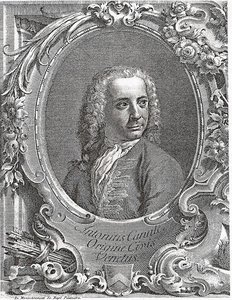
2. Canaletto 1697–1768
1697–1768 Born in Venice, Italy Rococo 2 originals at the Museo Correr
Giovanni Antonio Canal, known to many as Canaletto, was born in Venice, Italy, on October 18, 1697. The influence of his family's trade stayed with him as he moved toward more permanent subjects. In 1718, Canaletto left Venice for Rome. Between 1746 and 1756, Canaletto made several trips to England. From 1749 to 1752, he lived in London, staying at 41 Beak Street in the Soho district.
Originals at the Museo Correr
-

Venetian Renaissance
3. Vittore Carpaccio 1465–1526
1465–1526 Born in Venice, Italy Venetian Renaissance 4 originals at the Museo Correr
Born in Venice around 1465, Vittore Carpaccio grew up in a city defined by its maritime trade and its unique light. The training Carpaccio received under Bellini allowed him to develop a steady hand and an eye for the specific details of Venetian life. Carpaccio’s most productive years took place between 1490 and 1519.
Originals at the Museo Correr
-

Early Renaissance
4. Antonello da Messina 1430–1479
1430–1479 Born in Messina, Italy Early Renaissance 2 originals at the Museo Correr
Born and raised in the vibrant port city of Messina, Sicily, he forged a unique artistic identity, blending the meticulous realism of Early Netherlandish painting with the burgeoning humanist ideals of his time. While often overshadowed by his Venetian contemporaries, Antonello’s influence on subsequent generations of Italian painters—particularly those in Venice—is undeniable, marking him as a true innovator and a bridge between disparate artistic traditions.
Originals at the Museo Correr
-

Neoclassicism
5. Antonio Canova 1757–1822
1757–1822 Born in Possagno, Italy Neoclassicism 2 originals at the Museo Correr
Early commissions like the statues of Orpheus and Eurydice for Senator Giovanni Falier (1775-1777) demonstrated an emerging Rococo style, foreshadowing his later Neoclassical refinement. Canova’s unparalleled skill in carving marble pushed the boundaries of what was considered possible, setting a new standard for sculptural excellence.
Originals at the Museo Correr
-

Renaissance
6. Gentile Bellini 1429–1507
1429–1507 Born in Venice, Italy Renaissance 2 originals at the Museo Correr
Gentile Bellini, born in Venice in 1429, emerged from a family deeply entrenched in the artistic heart of the city. While often overshadowed by the fame of his brother Giovanni, Gentile Bellini’s contributions are now widely recognized as essential to understanding the evolution of Western painting.
Originals at the Museo Correr
-

Rococo
7. Francesco Guardi 1712–1793
1712–1793 Born in Venice, Italy Rococo 2 originals at the Museo Correr
The Guardi family workshop, established by his father Domenico, was a bustling center of artistic production, where Francesco initially collaborated with his elder brother Gian Antonio on religious paintings. However, while Canaletto prioritized topographical accuracy, Guardi gradually moved towards a more expressive and imaginative approach. Guardi’s most ambitious undertaking came in 1763 with his commission for The Doge's Feasts, a series of twelve monumental canvases celebrating the ceremonies surrounding the election of Alvise IV Mocenigo.
Originals at the Museo Correr
-

Early Renaissance
8. Cosimo Tura 1430–1495
1430–1495 Born in Ferrara, Italy Early Renaissance 2 originals at the Museo Correr
Born around 1430 in the vibrant ducal city of Ferrara, Italy, Cosmè Tura emerged from humble beginnings – his father was a shoemaker named Domenico – to become one of the most distinctive and influential painters of the Early Renaissance. While details surrounding his initial training remain somewhat elusive, art historians suggest a possible apprenticeship with Galasso Galassi, a shadowy figure connected to the renowned Piero della Francesca.
Originals at the Museo Correr
-

Romanticism
9. Francesco Hayez 1791–1882
1791–1882 Born in Venice, Italy Romanticism 4 originals at the Museo Correr
In the city of Venice, where the light dances upon the canals, Francesco Hayez entered the world on February 10, 1791. Even as a child, it was evident that the boy possessed a natural inclination toward drawing, a gift that would eventually lead him away from the simple life of his kin toward the complexities of the canvas.
Originals at the Museo Correr
-

Renaissance
10. Jacopo de Barbari 1460–1516
1460–1516 Born in Venice, Italy Renaissance 2 originals at the Museo Correr
While his precise origins are shrouded in the mists of history, contemporary accounts—including those from the legendary Albrecht Dürer —firmly anchor him to Venice. Leaving the canals of Venice behind, he traveled to Germany, where he served under Emperor Maximilian I in Nuremberg.
Originals at the Museo Correr


The masters, continued
No. 11 to No. 15: more masters of the Museo Correr
-

Venetian Renaissance painter of religious scenes and portraits, blending Quattrocento traditions with expansive, detailed landscapes.
-

12. Lorenzo Veneziano
Early Renaissance
1336–1379 · born in Venice, Italy · 2 originals at the Museo Correr
Venetian painter of the Gothic style, known for vibrant colors, expressive faces, and dynamic drapery in his polyptych altarpieces.
- Polyptych (1360)
- Christ Giving the Keys to St Peter (1369)
-

13. Theodore Poulakis
1622–1692 · born in Chania, Greece · 3 originals at the Museo Correr
Greek Renaissance painter and father of the Heptanese school, blending Byzantine tradition with Venetian realism in dramatic biblical scenes.
-

14. Joseph Heintz the Younger
Baroque
1600–1678 · born in Augsburg, Germany · 3 originals at the Museo Correr
German Baroque painter of Venetian festivities and fantastical capricci featuring mythological creatures and architectural ruins.
-

15. Francesco de' Franceschi
1443–1483 · born in Italy · 2 originals at the Museo Correr
The house in figures
The masters of the Museo Correr, in figures
The masters with the most originals at the Museo Correr
Masters with two originals or more, by century of birth
Masters with two originals or more, by country of birth
Masters with two originals or more, by movement
Asked of us
Questions on the masters of the Museo Correr
Open a question to read the answer.
Who is the most famous artist in the Museo Correr?
Giovanni Bellini (1430–1516): our catalogue holds 5 works by Giovanni Bellini at the Museo Correr, among them Transfiguration of Christ on Mount Tabor, Madonna with the Child and Crucifix. Canaletto and Vittore Carpaccio follow.
Which Giovanni Bellini works are in the Museo Correr?
Our catalogue lists 5 works by Giovanni Bellini at the Museo Correr, among them Transfiguration of Christ on Mount Tabor (1455), Madonna with the Child (1460), Crucifix (1455) and Pieta (1460).
Which Canaletto works are in the Museo Correr?
Our catalogue lists 2 works by Canaletto at the Museo Correr, among them Camera obscura (1700).
How many Vittore Carpaccio paintings are in the Museo Correr?
Our catalogue lists 4 works by Vittore Carpaccio at the Museo Correr, among them Two Venetian Ladies (1510), Courtesans, Portrait of an Unknown Man with Red Beret (1490) and Portrait of Doge Leonardo Loredan (1501).
Which famous artists are displayed in the Museo Correr?
By fame: Giovanni Bellini (5), Canaletto (2), Vittore Carpaccio (4), Antonello da Messina (2), Antonio Canova (2), Gentile Bellini (2), Francesco Guardi (2), Cosimo Tura (2), Francesco Hayez (4) and Jacopo de Barbari (2).
Who has the most paintings in the collection of the Museo Correr?
Our catalogue holds 5 works by Giovanni Bellini at the Museo Correr; next come Vittore Carpaccio (4), Francesco Hayez (4) and Theodore Poulakis (3).
Are there Leonardo da Vinci works in the Museo Correr?
No: the Museo Correr holds no work by Leonardo da Vinci in our catalogue.
Are there Pablo Picasso works in the Museo Correr?
No: the Museo Correr holds no work by Pablo Picasso in our catalogue.
Where do the artists of the Museo Correr come from?
By country of birth, the artists with two works or more at the Museo Correr are mostly from Italy (13), Greece (1) and Germany (1).
From which period are the artists of the Museo Correr?
Most of the artists with two works or more at the Museo Correr were born in the 15th century (8 artists); the earliest in this ranking is Lorenzo Veneziano (1336–1379), the latest Francesco Hayez (1791–1882).
How many artists does the collection of the Museo Correr cover?
45 artists have at least one work of the Museo Correr in our catalogue; 15 have two or more. They were born between 1336 and 1791, in 3 countries.
How were the artists of the Museo Correr ranked?
By recognition — Wikipedia articles in the most languages, page visits and our manual ranking — over the artists with two works or more of the Museo Correr in our catalogue. One entry per work; details, studies and copies are left out.
The house
The Museo Correr, Venice, in a few lines
A Venetian Tapestry: the Soul of the Serenissima
To enter this museum is to step beyond the veil of the modern world and into a meticulously curated chronicle of a maritime empire. The institution owes its existence to the visionary philanthropy of Teodoro Correr, a man whose passion for collecting was matched only by his devotion to the public good. As visitors traverse its graceful arcades and move through the opulent Napoleonic Wing—once the residence of kings and emperors—they encounter a space where architecture and art exist in a state of perpetual dialogue.
A Living Legacy of Venetian Heritage
What truly distinguishes the Museo Correr is its holistic approach to storytelling, weaving together the threads of political history, maritime glory, and daily existence. The museum does not isolate art from its context; instead, it presents every object as a vital component of the Venetian narrative. From meticulously preserved documents that chart the rise and fall of political dynasties to the costumes that reflect the shifting tastes of the aristocracy, the collection offers a multidimensional view of the Serenissima. It is a place where one can trace the evolution of a city that navigated centuries of transformation while maintaining its unique cultural essence. For those seeking a complete immersion into the Venetian experience, the museum offers a gateway to a broader cultural landscape. Through combined ticketing, visitors can bridge the gap between the Correr and other legendary landmarks such as the Doge's Palace, the Museo Archeologico Nazionale di Venezia, and the Biblioteca Marciana.
The famous originals of the Museo CorrerThe Museo Correr: the full page, 76 originalsThe museums of Venice
How the masters of the originals are ranked
The masters with two originals or more of the Museo Correr in our catalogue are ranked by fame: the Wikipedia language editions that describe them, the visits to their OriginalUniqueArt.com page and our studio's ranking. Originals are counted in our catalogue — one entry per work, without details, studies or copies — not in the museum's inventory. Every date, birthplace and movement is the catalogue's; the notes are drawn from the master's biography.
Go on