
The most famous artists with works in the Musée de Grenoble are Henri Matisse, Paul Gauguin, Paolo Veronese and Francisco de Zurbarán.
Our catalogue lists 274 works of the Musée de Grenoble by 188 artists; the 25 best known are ranked below, each with the works the museum holds.
The masters of the originals
The 10 masters whose originals hang in the Musée de Grenoble
For each master: where and when they were born, their movement, how many originals the museum keeps in our catalogue, a note from their life, and the originals to see.
-
Fauvism
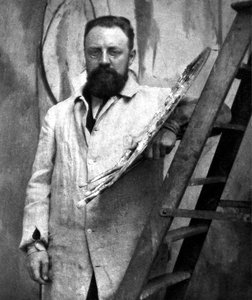
1. Henri Matisse 1869–1954
1869–1954 Born in Le Cateau-Cambrésis, France Fauvism 5 originals at the Musée de Grenoble
After finishing secondary school, Matisse moved to Paris to study law. In 1889, an attack of appendicitis forced a long recovery, and it was during this confinement that the act of painting first took hold. By around 1905, this approach had coalesced into the Fauvist movement.
Originals at the Musée de Grenoble
-
Post-Impressionism
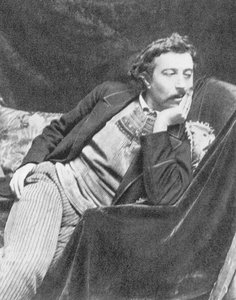
2. Paul Gauguin 1848–1903
1848–1903 Born in Paris, France Post-Impressionism 2 originals at the Musée de Grenoble
Born in Paris in 1848, Eugène Henri Paul Gauguin entered a world of shifting social and political currents. The boy spent his childhood in Peru until the age of six, a period that left an indelible mark on his memory. Before finding his footing in the art world, Gauguin’s life took a more rugged, maritime turn. Between 1879 and 1886, he was accepted into the Paris Salon, appearing in the prestigious exhibition annually.
Originals at the Musée de Grenoble
-

Renaissance
3. Paolo Veronese 1528–1588
1528–1588 Born in Verona, Italy Renaissance 2 originals at the Musée de Grenoble
In the city of Verona, the son of a stonecutter named Gabriele began a life that would eventually drape the grandest halls of Venice in color. Born in 1528, the boy known as Paolo Caliari grew up amidst the heavy, sculpted forms of his father's trade. By the time he moved to Venice in the 1550s, the shimmering waterways and the bustling marketplaces of the Serenissima had already begun to shape his vision.
Originals at the Musée de Grenoble
-

Baroque
4. Francisco de Zurbarán 1598–1664
1598–1664 Born in Fuente de Cantos, Spain Baroque 4 originals at the Musée de Grenoble
Francisco de Zurbarán was born in 1598 in the small town of Fuente de Cantos, located in the Extremadura region of Spain. By 1629, Zurbarán’s life in Seville had become a bustling affair. As his reputation grew, his workshop became a productive hub, eventually producing paintings intended for export to South America starting in the late 1630s.
Originals at the Musée de Grenoble
-

High Renaissance
5. Pietro Perugino 1448–1523
1448–1523 Born in Città della Pieve, Italy High Renaissance 2 originals at the Musée de Grenoble
Pietro Vannucci, commonly known as Le Perugino—a name derived from his birthplace—was a pivotal figure in the Florentine Renaissance, cementing his reputation as one of Italy’s most celebrated painters.
Originals at the Musée de Grenoble
-
Post-Impressionism
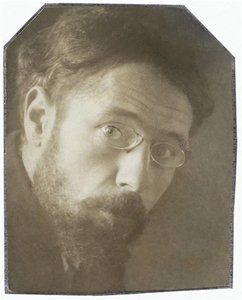
6. Pierre Bonnard 1867–1947
1867–1947 Born in Fontenay-aux-Roses, France Post-Impressionism 2 originals at the Musée de Grenoble
Pierre Bonnard entered the world on 3 October 1867 in Fontenay-aux-Roses, Hauts-de-Seine, France. While his lineage was rooted in the administrative stability of the state, Pierre’s domestic sphere was shaped by his mother, Élisabeth Mertzdorff, who hailed from Alsace. Bonnard’s early years were marked by a quiet departure from the legal path his father had envisioned.
Originals at the Musée de Grenoble
-

Orphism
7. Robert Delaunay 1885–1941
1885–1941 Born in Paris, France Orphism 3 originals at the Musée de Grenoble
Robert Delaunay, born in Paris in 1885, emerged as a pivotal figure in the radical artistic shifts of the early twentieth century. Delaunay’s artistic development was characterized by constant experimentation. However, he soon moved beyond simply replicating optical phenomena; he began to investigate the expressive potential of color itself.
Originals at the Musée de Grenoble
-

Expressionism
8. Chaim Soutine 1893–1943
1893–1943 Born in Smilavičy, Belarus Expressionism 2 originals at the Musée de Grenoble
Born into a large, impoverished Jewish family in Smilovichi, Russia (present-day Belarus) in 1893, Chaim Soutine’s early life was steeped in hardship. Though figural representation was discouraged within his religious upbringing, a nascent talent for drawing blossomed nonetheless, hinting at the passionate intensity that would come to define his work.
Originals at the Musée de Grenoble
-

Baroque
9. Hyacinthe Rigaud 1659–1743
1659–1743 Born in Perpignan, France Baroque 2 originals at the Musée de Grenoble
Born on July 18, 1659, in Perpignan, Pyrénées-Orientales, France, Rigaud’s family had artistic roots – his grandfather was a painter-gilder. Initially trained as a tailor in his father's workshop, he soon discovered his passion for painting. In 1675, he moved to Lyon, where he encountered the works of Flemish, Dutch, and Italian masters.
Originals at the Musée de Grenoble
-

Baroque
10. Simon Vouet 1590–1649
1590–1649 Born in Paris, France Baroque 2 originals at the Musée de Grenoble
His influence is undeniable in the development of French painting during the 17th century, and his contributions continue to be recognized by art historians today.
Originals at the Musée de Grenoble


The masters, continued
No. 11 to No. 25: more masters of the Musée de Grenoble
-

11. Henri Fantin-Latour
Realism
1836–1904 · born in Grenoble, France · 3 originals at the Musée de Grenoble
French Realist known for meticulous floral studies and intimate group portraits of intellectuals, rendered with photographic precision.
-

12. Philippe de Champaigne
Baroque
1602–1674 · born in Brussels, Belgium · 4 originals at the Musée de Grenoble
French Baroque painter of austere religious scenes and powerful portraits, known for capturing the psychological essence of his subjects.
- Portrait of Jean Duvergier de Hauranne (1647)
- Assumption of the Virgin (1650)
- The Raising of Lazarus (1650)
-
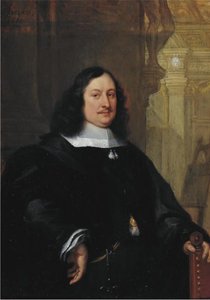
13. David Teniers the Younger
Flemish Baroque
1610–1690 · born in Antwerp, Belgium · 2 originals at the Musée de Grenoble
Flemish Baroque painter of lively peasant festivals, tavern interiors, and detailed singerie scenes featuring monkeys in human attire.
-

14. Francesco Albani
Baroque
1578–1660 · born in Bologna, Italy · 2 originals at the Musée de Grenoble
Italian Baroque painter of lyrical mythological scenes and luminous, porcelain-like figures set against sweeping, verdant landscapes.
-

15. Félix Vallotton
Post-Impressionism
1865–1925 · born in Lannes, Switzerland · 2 originals at the Musée de Grenoble
Swiss Nabi artist known for striking woodcuts and evocative, simplified scenes of domestic life, often featuring hard edges and flat color.
-

16. Albert Marquet
Fauvism
1875–1947 · born in Bordeaux, France · 2 originals at the Musée de Grenoble
French Fauvist known for atmospheric landscapes and serene port scenes using a muted palette and calligraphic, simplified lines.
-

17. Nicolas de Largillière
Baroque
1656–1746 · born in Paris, France · 2 originals at the Musée de Grenoble
French Baroque portraitist of the Parisian elite, known for meticulous textures and sitters posed against Doric columns or holding letters.
-

18. Pieter Coecke van Aelst
Northern Renaissance
1502–1550 · born in Aalst, Belgium · 2 originals at the Musée de Grenoble
-

19. Ary Scheffer
Romanticism
1795–1858 · born in Dordrecht, Netherlands · 3 originals at the Musée de Grenoble
Dutch-French Romantic painter of literary and religious scenes, blending classical structure with emotional, sentimental narratives.
-

20. Henri Edmond Cross
Neo-Impressionism
1856–1910 · born in Douai, France · 3 originals at the Musée de Grenoble
French Neo-Impressionist known for mosaic-like brushstrokes and luminous landscapes that capture a utopian vision of nature and light.
- Cape Layet, Provence (1904)
- Nude Sleeper in the Glade (1907)
- Antibes
-

21. Theo van Rysselberghe
Neo-Impressionism
1862–1926 · born in Ghent, Belgium · 2 originals at the Musée de Grenoble
Belgian Neo-Impressionist known for vibrant pointillist portraits and sun-drenched Moroccan scenes captured through meticulous divisionism.
- Woman in pink bathrobe (1910)
- Cavalaire Beach (1910)
-

22. Francesco Mochi
Baroque
1580–1654 · born in Montevarchi, Italy · 3 originals at the Musée de Grenoble
Italian Baroque sculptor known for dramatic bronze casting and emotive marble works like the equestrian statue of Alessandro Farnese.
-

23. Laurent de La Hyre
Baroque
1606–1656 · born in Paris, France · 2 originals at the Musée de Grenoble
-

24. Gerbrand van Den Eeckhout
Baroque
1621–1674 · born in Amsterdam, Netherlands · 2 originals at the Musée de Grenoble
Dutch Golden Age painter and Rembrandt protégé known for intimate portraits and biblical scenes rendered with soft, atmospheric light.
-

25. Jules Pascin
Expressionism
1885–1930 · born in Vidin, Bulgaria · 4 originals at the Musée de Grenoble
Bulgarian School of Paris painter known for intimate, sensual nudes and expressive watercolors that capture the melancholic soul of Montparnasse.
- A model (1912)
- Hermine in the Large Hat (1917)
- Seven Women (1923)
Famous artists in the Musée de Grenoble, No. 26 to 45
 Alexandre François Desportes1661–1743 · 2 originals at the Musée de Grenoble
 Charles Antoine Coypel1694–1752 · 2 originals at the Musée de Grenoble
 Osias Beert1580–1623 · 3 originals at the Musée de Grenoble
 Abraham Hondius Danielsz1631–1691 · 2 originals at the Musée de Grenoble
 Laurent Guetal1841–1892 · 8 originals at the Musée de Grenoble
 Georgette Agutte1867–1922 · 2 originals at the Musée de Grenoble
 Jean Jules Antoine Lecomte Du Nouy1842–1923 · 2 originals at the Musée de Grenoble
 Matthias Stom1600–1650 · 2 originals at the Musée de Grenoble
 Charles Paul Landon1761–1826 · 2 originals at the Musée de Grenoble
 Bernardo Zenale1450–1526 · 2 originals at the Musée de Grenoble
 Jean Achard1807–1884 · 7 originals at the Musée de Grenoble
 Leonardo Coccorante1680–1750 · 2 originals at the Musée de Grenoble
 Pandolfo Reschi1643–1696 · 2 originals at the Musée de Grenoble
 François Auguste Ravier1814–1895 · 3 originals at the Musée de Grenoble
 Jules Flandrin1871–1947 · 9 originals at the Musée de Grenoble
 Pierre Paul Girieud1876–1948 · 2 originals at the Musée de Grenoble
 Charles Bertier1860–1924 · 4 originals at the Musée de Grenoble
 Jean Célestin Tancrède Bastet1858–1942 · 6 originals at the Musée de Grenoble
 Jacques Gay1851–1925 · 2 originals at the Musée de Grenoble
 Diodore Rahoult1819–1874 · 3 originals at the Musée de Grenoble
The house in figures
The masters of the Musée de Grenoble, in figures
The masters with the most originals at the Musée de Grenoble
Masters with two originals or more, by century of birth
Masters with two originals or more, by country of birth
Masters with two originals or more, by movement
Women masters
The women whose originals hang in the Musée de Grenoble
5 women masters, 6 originals, in our catalogue of the Musée de Grenoble.
-
Georgette Agutte
1867–1922 · born in 4th arrondissement of Paris, France · 2 originals at the Musée de Grenoble
-

Jacqueline Marval
1866–1932 · born in Quaix-en-Chartreuse, France · 1 originals at the Musée de Grenoble
-

Lucie Cousturier
1876–1925 · born in 2nd arrondissement of Paris, France · 1 originals at the Musée de Grenoble
-

Adelaide Salles-Wagner
1825–1890 · born in Dresden, Germany · 1 originals at the Musée de Grenoble
- The Little Village Girl (1853)
-

Eugénie du Colombier
1806–1888 · born in Saint-Hilaire-du-Rosier, France · 1 originals at the Musée de Grenoble
Asked of us
Questions on the masters of the Musée de Grenoble
Open a question to read the answer.
Which artist in the Musée de Grenoble is the most famous?
Henri Matisse (1869–1954): our catalogue holds 5 works by Henri Matisse at the Musée de Grenoble, among them Intérieur aux aubergines Technique mixte sur toile Grenoble, Nude Seated and Vue sur la baie de Tanger. Paul Gauguin and Paolo Veronese follow.
What did Henri Matisse paint that hangs in the Musée de Grenoble?
Our catalogue lists 5 works by Henri Matisse at the Musée de Grenoble, among them Intérieur aux aubergines Technique mixte sur toile Grenoble, Nude Seated (1909), Vue sur la baie de Tanger (1912) and The Little Mulatta (1912).
What did Paul Gauguin paint that hangs in the Musée de Grenoble?
Our catalogue lists 2 works by Paul Gauguin at the Musée de Grenoble, among them Portrait of Madeline Bernard (1888) and Breton Boy by the Aven River (1888).
How many Paolo Veronese paintings are in the Musée de Grenoble?
Our catalogue lists 2 works by Paolo Veronese at the Musée de Grenoble, among them Do not touch me and Christ meeting the wife and the sons of Zebedee (1565).
Who are the top 10 artists in the Musée de Grenoble?
The ten best-known artists with works in the Musée de Grenoble are Henri Matisse (5), Paul Gauguin (2), Paolo Veronese (2), Francisco de Zurbarán (4), Pietro Perugino (2), Pierre Bonnard (2), Robert Delaunay (3), Chaim Soutine (2), Hyacinthe Rigaud (2) and Simon Vouet (2).
Which painter is most represented in the Musée de Grenoble?
Jules Flandrin (—), with 9 works in our catalogue of the Musée de Grenoble, ahead of Laurent Guetal (8), Jean Achard (7) and Jean Célestin Tancrède Bastet (6).
Are there Leonardo da Vinci works in the Musée de Grenoble?
No: the Musée de Grenoble holds no work by Leonardo da Vinci in our catalogue.
Is Pablo Picasso in the Musée de Grenoble?
No: the Musée de Grenoble holds no work by Pablo Picasso in our catalogue.
Which women artists are in the Musée de Grenoble?
5 women artists have works of the Musée de Grenoble in our catalogue, among them Georgette Agutte (2), Jacqueline Marval (1), Lucie Cousturier (1), Adelaide Salles-Wagner (1) and Eugénie du Colombier (1).
Where do the artists of the Musée de Grenoble come from?
Counting the artists with two works or more, the Musée de Grenoble holds painters born mostly in France (24), Italy (6), Belgium (5), Netherlands (3) and Spain (1).
From which period are the artists of the Musée de Grenoble?
The 19th century leads with 22 artists born then. In this ranking, Pietro Perugino (1448–1523) is the earliest born and Chaim Soutine (1893–1943) the latest.
How many artists does the collection of the Musée de Grenoble cover?
188 artists have at least one work of the Musée de Grenoble in our catalogue; 45 have two or more. They were born between 1448 and 1893, in 8 countries.
The house
The Musée de Grenoble, Grenoble, in a few lines
A Beacon of Modern Art: Exploring the Musée de Grenoble
A Legacy Rooted in Visionary Collecting: From its inception, the Musée’s curators recognized the importance of embracing new artistic movements. The museum’s current building, inaugurated in 1994 by architect Charles-Auguste Questel, is itself a remarkable achievement. the Musée’s holdings encompass an astonishing breadth of artistic expression. Ancient art artifacts alongside masterpieces from Impressionism, Modern Art, and Baroque periods demonstrate a remarkable ability to contextualize artistic developments across centuries.
Celebrating Artistic Luminaries: Collection Highlights
Among its most celebrated treasures are works by Claude Monet —capturing the ethereal beauty of light on water with unparalleled sensitivity—and Pablo Picasso, whose revolutionary explorations of form and perspective irrevocably altered the course of artistic history. Notably, Henri Matisse's “Saint Tropez Grenoble” exemplifies Fauvist principles— bold colors and simplified forms—while "Intérieur aux Aubergines" showcases geometric abstraction and vibrant hues.
The famous originals of the Musée de GrenobleThe Musée de Grenoble: the full page, 275 originalsThe museums of Grenoble
How the masters of the originals are ranked
The masters with two originals or more of the Musée de Grenoble in our catalogue are ranked by fame: the Wikipedia language editions that describe them, the visits to their OriginalUniqueArt.com page and our studio's ranking. Originals are counted in our catalogue — one entry per work, without details, studies or copies — not in the museum's inventory. Every date, birthplace and movement is the catalogue's; the notes are drawn from the master's biography.
Go on