
Michelangelo is the best-known artist with works in the Ashmolean Museum; next come Claude Monet, Peter Paul Rubens and Édouard Manet.
Our catalogue lists 244 works of the Ashmolean Museum by 152 artists; the 25 best known are ranked below, each with the works the museum holds.
The masters of the originals
The 10 masters whose originals hang in the Ashmolean Museum
For each master: where and when they were born, their movement, how many originals the museum keeps in our catalogue, a note from their life, and the originals to see.
-

High Renaissance
1. Michelangelo 1475–1564
1475–1564 Born in Caprese Michelangelo, Italy High Renaissance 6 originals at the Ashmolean Museum
Born in 1475, Michelangelo di Lodovico Buonarroti Simoni spent his early years near Settignano, where his father owned a quarry. There, among the ancient Greek and Roman fragments, he studied how light falls across muscle and bone. By the time he reached Rome in 1496, he was already carving figures that possessed a heavy, palpable presence.
Originals at the Ashmolean Museum
-
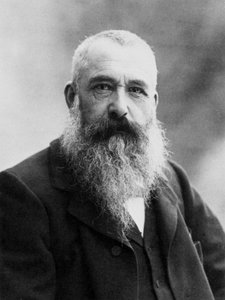
Impressionism
2. Claude Monet 1840–1926
1840–1926 Born in Paris, France Impressionism 2 originals at the Ashmolean Museum
Born in Paris, France, on 14 November 1840, Claude Monet entered a world of diverging expectations. Tragedy arrived in January 1857, when Monet was sixteen years old. In 1883, Monet moved to a house and property in Giverny, a village northwest of Paris. In 1892, he married Alice Hoschedé, a union that provided a sense of stability as he continued his obsessive study of light and atmosphere.
Originals at the Ashmolean Museum
-

Baroque
3. Peter Paul Rubens 1577–1640
1577–1640 Born in Siegen, Germany Baroque 9 originals at the Ashmolean Museum
Born on 28 June 1577 in Siegen, Germany, his early years were shaped by the religious instability of the era. By the time he began working with Otto van Veen between 1594 and 1598, Rubens had already acquired the technical vocabulary necessary to move beyond simple representation into the realm of sophisticated narrative art. In 1600, Rubens left the Low Countries for Italy, a move that fundamentally altered his visual language.
Originals at the Ashmolean Museum
-
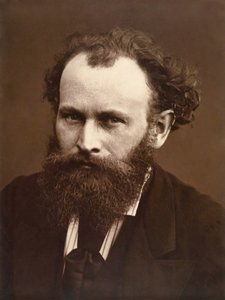
Impressionism
4. Édouard Manet 1832–1883
1832–1883 Born in former 10th arrondissement of Paris, France Impressionism 4 originals at the Ashmolean Museum
Édouard Manet was born in Paris on January 23, 1832. From 1850 to 1856, he trained in the studio of Thomas Couture. In 1863, the Salon des Refusés provided a stage for works that the official juries had rejected.
Originals at the Ashmolean Museum
-

High Renaissance
5. Titian 1490–1576
1490–1576 Born in Pieve di Cadore, Italy High Renaissance 3 originals at the Ashmolean Museum
In the rugged, mountainous reaches of Pieve di Cadore, a boy named Tiziano Vecellio began a life that would eventually reshape the very language of oil on canvas. Born around 1490, he was the son of Gregorio Vecellio, a man of the military, and a woman named Lucia.
Originals at the Ashmolean Museum
-

Realism
6. Gustave Courbet 1819–1877
1819–1877 Born in Ornans, France Realism 2 originals at the Ashmolean Museum
Jean Désiré Gustave Courbet was born on June 10, 1819, in Ornans, France. Growing up in the department of Doubs, his early years were shaped by the landscape of his home. In 1839, he moved to Paris. Later, Bruyas commissioned The Meeting, also known as Bonjour Monsieur Courbet, which reflected this established connection between patron and painter. In 1855, rather than retreating, Courbet took a more direct approach to his audience.
Originals at the Ashmolean Museum
-
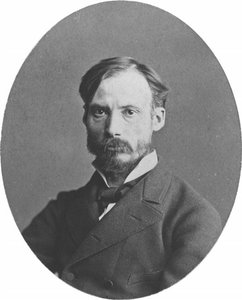
Impressionism
7. Pierre-Auguste Renoir 1841–1919
1841–1919 Born in Limoges, France Impressionism 5 originals at the Ashmolean Museum
Born on February 25, 1841, in Limoges, France, Pierre-Auguste Renoir entered a world of practical craftsmanship. In 1845, the family moved to Paris, seeking the opportunities offered by the capital. When the family moved to Paris in 1845, the necessity of supporting his kin dictated the direction of his youth. By the third exhibition in 1877, his commitment to this new way of seeing was evident as he presented twenty-one paintings to the public.
Originals at the Ashmolean Museum
-

Rococo
8. Jean-Antoine Watteau 1684–1721
1684–1721 Born in Valenciennes, France Rococo 2 originals at the Ashmolean Museum
It is also believed that he may have studied under Julien, further refining the skills that would eventually lead him away from the quiet life of Valenciennes.
Originals at the Ashmolean Museum
-
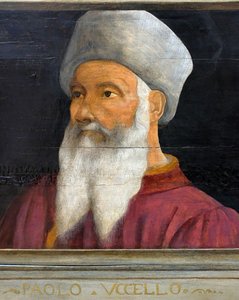
Early Renaissance
9. Paolo Uccello 1397–1475
1397–1475 Born in Pratovecchio, Italy Early Renaissance 2 originals at the Ashmolean Museum
Born Paolo di Dono in 1397, Paolo Uccello emerged from a background that blended practical skill with social standing. His formal artistic education began in earnest between 1412 and 1416, when he served as an apprentice to Lorenzo Ghiberti. By 1414, his professional standing was formalized when he was admitted to the painters' guild, Compagnia di San Luca.
Originals at the Ashmolean Museum
-

Romanticism
10. Jean-Baptiste-Camille Corot 1796–1875
1796–1875 Born in Paris, France Romanticism 5 originals at the Ashmolean Museum
French Realist of atmospheric landscapes and soft vegetation, using thin washes and loosely dabbed strokes to capture the play of light. Jean-Baptiste-Camille Corot was born in Paris in 1796. Between 1821 and 1822, he studied under Achille Etna Michallon.
Originals at the Ashmolean Museum


The masters, continued
No. 11 to No. 25: more masters of the Ashmolean Museum
-

11. Claude Lorrain
Baroque
1600–1682 · born in Chamagne, France · 2 originals at the Ashmolean Museum
Baroque landscape painter of luminous sunlight and idealized scenes of classical antiquity, often featuring Roman ruins and tranquil harbors.
-

12. Dante Gabriel Rossetti
Pre-Raphaelite
1828–1882 · born in London, United Kingdom · 3 originals at the Ashmolean Museum
Pre-Raphaelite leader of sensual, symbolic works featuring lush vegetation and female forms, often accompanied by his own evocative sonnets.
- Reverie (1868)
-
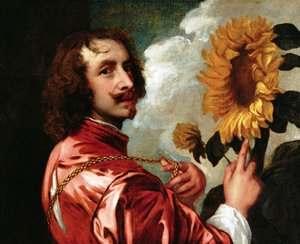
13. Anthony van Dyck
Baroque
1599–1641 · born in Antwerp, Belgium · 11 originals at the Ashmolean Museum
Flemish Baroque portraitist who defined the English court with effortless grace, capturing the dignity of royalty through refined oil and etching.
-

14. Camille Pissarro
Impressionism
1830–1903 · born in Charlotte Amalie, United States Virgin Islands · 15 originals at the Ashmolean Museum
Danish-French Impressionist who captured rural life and city streets through textured plein air landscapes and pointillist experiments.
- Pink Peonies (1873)
- Mme Pissarro sewing (1860)
- Farm at Montfoucault 2 (1874)
-
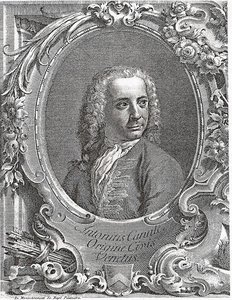
Venetian vedutista of precise architectural views and luminous cityscapes of canals and squares, capturing light on stone and water.
-

16. Jean-Baptiste-Siméon Chardin
Rococo
1699–1779 · born in Paris, France · 2 originals at the Ashmolean Museum
French painter of quiet domestic scenes and still lifes rendered with tactile, granular impasto and a soft diffusion of light.
- Still Life with Herrings (1731)
- Still Life of Kitchen Utensils (1733)
-

17. John Everett Millais
Pre-Raphaelite
1829–1896 · born in Southampton, United Kingdom · 2 originals at the Ashmolean Museum
Pre-Raphaelite founder known for luminous colors and a meticulous, faithful truth to nature, from Ophelia to detailed Victorian realism.
- John Ruskin (1854)
- The Return of the Dove to the Ark (1851)
-

18. Eugène Louis Boudin
Impressionism
1824–1898 · born in Honfleur, France · 5 originals at the Ashmolean Museum
French marine painter of atmospheric seascapes and shifting light, known for en plein air studies of the Normandy coast and sky.
- The Jetty at Trouville: Sunset (1862)
- A Beach Scene at Trouville (1865)
- Seagulls and Fishes (1873)
-

19. Edward Burne-Jones
Pre-Raphaelite
1833–1898 · born in Birmingham, United Kingdom · 2 originals at the Ashmolean Museum
Pre-Raphaelite painter of melancholic, elongated figures and medieval myths, known for intricate stained glass and ink wash techniques.
-

20. Henri Fantin-Latour
Realism
1836–1904 · born in Grenoble, France · 2 originals at the Ashmolean Museum
French Realist known for meticulous floral studies and intimate group portraits of intellectuals, rendered with photographic precision.
- Still Life: Pansies and Daisies (1880)
- Still Life: Pink (1894)
-

21. Piero di Cosimo
Renaissance
1462–1522 · born in Florence, Italy · 2 originals at the Ashmolean Museum
Florentine Renaissance painter blending mythological fantasy with meticulous natural realism and whimsical, hybrid forms of man and animal.
-

22. Rachel Ruysch
Baroque
1664–1750 · born in The Hague, Netherlands · 2 originals at the Ashmolean Museum
Dutch Golden Age painter of vibrant, asymmetrical floral bouquets with meticulous realism and dynamic, twisting stems against dark backgrounds.
- A Vase of Flowers (1750)
- A 'Forest Floor' Still Life of Flowers (1720)
-

23. Jan Davidsz de Heem
Baroque
1606–1684 · born in Utrecht, Netherlands · 2 originals at the Ashmolean Museum
Dutch Golden Age painter of opulent pronkstillevens, featuring luminous fruits, delicate flowers, and symbolic vanitas motifs.
-

24. Pieter Claesz
Dutch Golden Age
1596–1660 · born in Berchem, Belgium · 2 originals at the Ashmolean Museum
Dutch Golden Age painter of monochromatic breakfast pieces and vanitas still lifes, using subtle light to render textures of glass and pewter.
- Still Life with a Ham, 1642 (1642)
- Still Life with a gold Chain (1636)
-

25. Abraham van Beijeren
Baroque
1620–1690 · born in The Hague, Netherlands · 3 originals at the Ashmolean Museum
Dutch Baroque painter of sumptuous pronkstillevens, featuring glistening seafood, fine glassware, and opulent banquet scenes.
Famous artists in the Ashmolean Museum, No. 26 to 39
 Bartolomeo Montagna1450–1523 · 2 originals at the Ashmolean Museum
 Arthur Hughes1832–1915 · 2 originals at the Ashmolean Museum
 Walter Sickert1860–1942 · 4 originals at the Ashmolean Museum
 Francesco Granacci1469–1543 · 2 originals at the Ashmolean Museum
 Adriaen Coorte1665–1707 · 3 originals at the Ashmolean Museum
 Abraham Mignon1640–1679 · 2 originals at the Ashmolean Museum
 Samuel Palmer1805–1881 · 3 originals at the Ashmolean Museum
 Jan Jansz van de Velde1620–1662 · 3 originals at the Ashmolean Museum
 Alphonse Legros1837–1911 · 2 originals at the Ashmolean Museum
 Georges Michel1763–1843 · 2 originals at the Ashmolean Museum
 Spencer Gore1878–1914 · 2 originals at the Ashmolean Museum
 Robert Bevan1865–1925 · 3 originals at the Ashmolean Museum
 Gerrit van Vucht1610–1697 · 2 originals at the Ashmolean Museum
 Alexander Jamieson1873–1937 · 2 originals at the Ashmolean Museum
The house in figures
The masters of the Ashmolean Museum, in figures
The masters with the most originals at the Ashmolean Museum
Masters with two originals or more, by century of birth
Masters with two originals or more, by country of birth
Masters with two originals or more, by movement
Women masters
The women whose originals hang in the Ashmolean Museum
4 women masters, 5 originals, in our catalogue of the Ashmolean Museum.
-
Rachel Ruysch
1664–1750 · born in The Hague, Netherlands · 2 originals at the Ashmolean Museum
- A Vase of Flowers (1750)
- A 'Forest Floor' Still Life of Flowers (1720)
-

Clara Peeters
1587–1657 · born in Antwerp, Belgium · 1 originals at the Ashmolean Museum
-

Eleanor Fortescue Brickdale
1872–1945 · born in London, United Kingdom · 1 originals at the Ashmolean Museum
-

Elisabeth Sonrel
1874–1953 · born in Tours, France · 1 originals at the Ashmolean Museum
- Les Rameaux (1897)
Asked of us
Questions on the masters of the Ashmolean Museum
Open a question to read the answer.
Who is the most famous artist in the Ashmolean Museum?
Michelangelo (1475–1564): our catalogue holds 6 works by Michelangelo at the Ashmolean Museum, among them Battle Scene, Male Nude, Seen from the Rear (recto) and Descent from the Cross. Claude Monet and Peter Paul Rubens follow.
Which Michelangelo works are in the Ashmolean Museum?
Our catalogue lists 6 works by Michelangelo at the Ashmolean Museum, among them Battle Scene (1504), Male Nude, Seen from the Rear (recto) (1503), Descent from the Cross (1555) and Nude Rider Mounting a Horse and a Male Nude (verso) (1503).
Which Claude Monet works are in the Ashmolean Museum?
Our catalogue lists 2 works by Claude Monet at the Ashmolean Museum, among them Windmill near Zaandam (1871).
What did Peter Paul Rubens paint that hangs in the Ashmolean Museum?
Our catalogue lists 9 works by Peter Paul Rubens at the Ashmolean Museum, among them Annunciation (1609), A dead Child carried to Heaven by Angels (1620), Gemma Tiberiana (1625) and The Sacrifice of Noah (1620).
Which famous artists are displayed in the Ashmolean Museum?
By fame: Michelangelo (6), Claude Monet (2), Peter Paul Rubens (9), Édouard Manet (4), Titian (3), Gustave Courbet (2), Pierre-Auguste Renoir (5), Jean-Antoine Watteau (2), Paolo Uccello (2) and Jean-Baptiste-Camille Corot (5).
Which painter is most represented in the Ashmolean Museum?
Our catalogue holds 15 works by Camille Pissarro at the Ashmolean Museum; next come Anthony van Dyck (11), Peter Paul Rubens (9) and Michelangelo (6).
Are there Leonardo da Vinci works in the Ashmolean Museum?
No: the Ashmolean Museum holds no work by Leonardo da Vinci in our catalogue.
Does the Ashmolean Museum have any Pablo Picasso paintings?
No: the Ashmolean Museum holds no work by Pablo Picasso in our catalogue.
Are there any women painters in the Ashmolean Museum?
Our catalogue lists 4 women artists with works at the Ashmolean Museum: Rachel Ruysch (2), Clara Peeters (1), Eleanor Fortescue Brickdale (1) and Elisabeth Sonrel (1).
Are the artists in the Ashmolean Museum mostly French, Italian or Dutch?
Counting the artists with two works or more, the Ashmolean Museum holds painters born mostly in France (12), United Kingdom (8), Italy (7), Netherlands (6) and Germany (3).
From which period are the artists of the Ashmolean Museum?
The 19th century leads with 17 artists born then. In this ranking, Paolo Uccello (1397–1475) is the earliest born and Pierre-Auguste Renoir (1841–1919) the latest.
How many artists does the collection of the Ashmolean Museum cover?
Our catalogue lists 152 artists with at least one work at the Ashmolean Museum, 39 of them with two or more, born between 1397 and 1878 in 7 countries.
The house
The Ashmolean Museum, Oxford, in a few lines
Origins and History of the Ashmolean Museum
The Ashmolean Museum traces its origins to 1678, emerging from the private interests of Elias Ashmole. A wealthy eccentric and antiquarian, Ashmole was driven by a specific interest in the tangible traces of vanished civilizations and the pursuit of knowledge. His collection began as a private cabinet of curiosities, containing a diverse assemblage of objects that would eventually form the foundation of the institution. By 1683, this collection was established as Britain's first public museum. The institution holds a significant position in the history of academic collections. It is the world's second university museum, following the establishment of the Kunstmuseum Basel in 1661 by the University of Basel. What began as an individual's pursuit of beauty and history has evolved into a permanent repository for the University of Oxford. The museum's early development was shaped by the transition from a private assemblage to a public resource for scholarly inquiry.
The Building and its Architectural Grandeur
The Ashmolean Museum occupies a site steeped in history, having been founded on the grounds of Elias Ashmole’s former residence. The current structure, constructed between 1841 and 1845, reflects the values of the Enlightenment by prioritizing light, space, and accessibility. It is a harmonious blend of neoclassical grandeur and subtle Gothic detail. The original building was designed by Charles Cockerell, who ensured the architecture seamlessly integrates with the adjacent Taylor Institution. This creates a visual dialogue between scholarly purpose and aesthetic grace. Specific architectural elements provide character to the exterior. Subtle Gothic Revival details are located above St Giles’ Street, adding a layer of romanticism to the neoclassical framework. The building's design facilitates a sense of openness, a departure from the more enclosed cabinets of the past. This spatial arrangement supports the museum's role as a center for both research and public engagement.
The famous originals of the Ashmolean MuseumThe Ashmolean Museum: the full page, 246 originalsThe museums of Oxford
How the masters of the originals are ranked
The masters with two originals or more of the Ashmolean Museum in our catalogue are ranked by fame: the Wikipedia language editions that describe them, the visits to their OriginalUniqueArt.com page and our studio's ranking. Originals are counted in our catalogue — one entry per work, without details, studies or copies — not in the museum's inventory. Every date, birthplace and movement is the catalogue's; the notes are drawn from the master's biography.
Go on