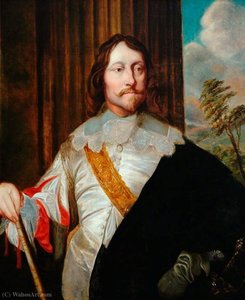
Portrait of William Dobson

William Dobson Paintings: The 58 Most Famous, Through a Gallery's Eye

Updated November 2026 · ranked by our popularity score (searches, visits and orders for each work) · 59 works by William Dobson in our catalogue

In short

To the gallery's eye, William Dobson's most famous painting is Sir Edward Nicholas (1645), whose original hangs in the National Portrait Gallery, London. Probably Nicholas Oudart (1645) and Probably Sir Thomas Aylesbury, Bt (1642) complete the trio every eye recognises. Of the 59 works by William Dobson in our catalog, the gallery presents the 58 most famous below, each original with its year, its museum and what makes it unique.

1610 – 1646, London Baroque Most works: National Portrait Gallery

The gallery's top 10 William Dobson paintings

1
Sir Edward Nicholas (1645) by William Dobson

Sir Edward Nicholas

1645 · Oil On Canvas · National Portrait Gallery, London

In this formal 17th-century oil portrait, William Dobson presents Sir Edward Nicholas within an oval composition. The bust-length view focuses on the subject positioned centrally against a dark, indistinct background. This arrangement utilizes chiaroscuro to create a sense of depth, isolating the figure from the void behind him. The style adheres to the principles of Baroque portraiture, emphasizing the dignity of the sitter through a highly realistic approach and meticulous…

2
Probably Nicholas Oudart (1645) by William Dobson

Probably Nicholas Oudart

1645 · Oil On Canvas · National Portrait Gallery, London

The gaze of an unidentified man meets us from the canvas in Probably Nicholas Oudart. Painted by William Dobson in 1645, this portrait captures a moment of quiet dignity. The subject holds a highly decorated book against his chest, a gesture that suggests a life defined by learning or perhaps a specific social standing. While the identity of the sitter remains a matter of speculation, the name Nicholas Oudart is…

3
Probably Sir Thomas Aylesbury, Bt (1642) by William Dobson

Probably Sir Thomas Aylesbury, Bt

1642 · Oil On Canvas · National Portrait Gallery, London

This oil on canvas portrait, titled Probably Sir Thomas Aylesbury, Bt, was executed by the artist William Dobson. The work dates to about 1642. The subject of the painting is likely Sir Thomas Aylesbury, Bt, who lived from 1576 to 1657. He was a known patron of mathematical learning.

4
Rest on the Flight into Egypt with Saint George (1633) by William Dobson

Rest on the Flight into Egypt with Saint George

1633 · Oil On Canvas · Hardwick Hall

The oil painting titled Rest on the Flight into Egypt with Saint George by William Dobson captures a moment of quietude amidst a turbulent sky. Created between 1621 and 1646, this religious art piece focuses on the proximity of a holy family. A knight in armor, identified as Saint George, stands to the left. He gazes toward a seated woman and a nude infant. The heavy, dark metal of his…

5
Portrait of a Man called Abraham Van Der Doort (d.1640) (1632) by William Dobson

Portrait of a Man called Abraham Van Der Doort (d.1640)

1632 · Oil · Royal Collection, London

The man stares out from a deep, dark void, his presence emerging through a sudden, sharp clarity of light. He is Abraham van der Doort, a man whose steady gaze carries the weight of a life spent among the treasures of kings. The light catches the texture of his wavy, light brown hair and the coarseness of his beard, pulling his features into sharp relief against an indistinct, shadowy background.…

6
Portrait of a Woman (1645) by William Dobson

Portrait of a Woman

1645 · Oil · Birmingham Museum and Art Gallery, Birmingham

In "Portrait of a Woman" by William Dobson, a single female figure occupies the center of a quiet, structured world. The bust-length portrait is encased within a painted dark oval frame, a trompe l'oeil device that functions as a window into a private moment. This framing device focuses the eye inward, stripping away the periphery to emphasize the subject's presence. The woman maintains an upright posture, her calm expression meeting…

7
Charles Gerard, 1st Earl of Macclesfield by William Dobson (1640) by William Dobson

Charles Gerard, 1st Earl of Macclesfield by William Dobson

1640 · Oil On Canvas · Dunedin Public Art Gallery

A three-quarter view portrait of Charles Gerard, 1st Earl of Macclesfield, captures the subject in a moment of quiet, steady gaze. Positioned slightly off-center against a dark, atmospheric background, the figure is defined by a strong light source that illuminates one side of the face and the crisp white of a lace collar. This chiaroscuro effect pulls the subject from the surrounding shadows, creating a profound sense of three-dimensionality. The…

8
An Unknown Officer  with a Page, possibly Sir Thomas Dallison (1591/2-1645), aged 50 (1642) by William Dobson

An Unknown Officer with a Page, possibly Sir Thomas Dallison (1591/2-1645), aged 50

1642 · Oil On Canvas · Knole House, Sevenoaks

The scene unfolds through An Unknown Officer with a Page, possibly Sir Thomas Dallison (1591/2-1645), aged 50, a work that captures a moment of quiet authority. The portrait, painted by William Dobson, presents a middle-aged officer and a young page set against a landscape. This encounter between the seasoned soldier and his attendant feels immediate, as if they have just paused their movement to face the viewer. The officer is…

9
Inigo Jones, 1573-1652 (1642) by William Dobson

Inigo Jones, 1573-1652

1642 · Oil On Canvas · National Maritime Museum, London

This oil on canvas work is titled Inigo Jones, 1573-1652. The portrait depicts the subject, Inigo Jones, who lived from 1573 to 1652. The artist responsible for this painting is William Dobson. The image presents a single male figure, captured in a close-up view that focuses on the head and shoulders.

10
Portrait of the Artist’s Wife (1637) by William Dobson

Portrait of the Artist’s Wife

1637 · Oil On Canvas

This bust-length oil portrait presents a woman positioned slightly off-center, her gaze directed toward the viewer. The subject wears an ornate white cap with ruffled edges and a dark veil or headpiece that falls behind her. A low-cut bodice is visible, accented by a single pearl necklace. The lighting is directional, illuminating one side of the face and the chest while casting the opposite side and the background into deep…

William Dobson paintings, ranked 11 to 58

11James II (1633-1701), when Duke of York (1644) by William DobsonJames II (1633-1701), when Duke of York1644 · Royal Collection 12Charles II (1630-85), when Prince of Wales (1644) by William DobsonCharles II (1630-85), when Prince of Wales1644 · Royal Collection 13Charles I (1600-1649) (1644) by William DobsonCharles I (1600-1649)1644 · Hampton Court Palace 14Dr Robert South (1634–1716) (1644) by William DobsonDr Robert South (1634–1716)1644 15Endymion Porter (1643) by William DobsonEndymion Porter1643 · Tate Gallery 16Portrait of Richard Streatfeild Family (1645) by William DobsonPortrait of Richard Streatfeild Family1645 · Yale Center for British Art 17Self-portrait (1645) by William DobsonSelf-portrait1645 · Osterley Park And House 18Portrait of Richard Neville (1643) by William DobsonPortrait of Richard Neville1643 · National Portrait Gallery 19Allegorical Portrait of Charles II of England When Prince of Wales (1643) by William DobsonAllegorical Portrait of Charles II of England When Prince of Wales1643 20Portrait of Abraham van der Doort (1640) by William DobsonPortrait of Abraham van der Doort1640 · Hermitage Museum 21The Alms-deeds Of Dorcas by William DobsonThe Alms-deeds Of Dorcas 22The Happy Days Of Job, by William DobsonThe Happy Days Of Job, 23Colonel richard neville by William DobsonColonel richard neville 24The Holy Family Returned from Egypt by William DobsonThe Holy Family Returned from Egypt 25Untitled (882) by William DobsonUntitled (882) 26Portrait of Sir Edward Dering by William DobsonPortrait of Sir Edward Dering 27Portrait of Nathaniel Lee by William DobsonPortrait of Nathaniel LeeNational Portrait Gallery 28Porträt Eines Marineoffiziers by William DobsonPorträt Eines MarineoffiziersNational Maritime Museum 29The Painter with Sir Charles Cottrell and Sir Balthasar Gerbier by William DobsonThe Painter with Sir Charles Cottrell and Sir Balthasar GerbierAlbury Park 30Endymion Porter (1642) by William DobsonEndymion Porter1642 · Tate Britain 31Rebecca by William DobsonRebecca 32The virgin by William DobsonThe virgin 33Julius lucius brenchely by William DobsonJulius lucius brenchely 34Portrait Of A Turkish Girl by William DobsonPortrait Of A Turkish Girl 35Portrait of an Officer by William DobsonPortrait of an Officer 36Self portrait by William DobsonSelf portrait 37A venetian girl by William DobsonA venetian girl 38Meditation by William DobsonMeditation 39Barnaby potter by William DobsonBarnaby potter 40Meditation by William DobsonMeditation 41Admiral robert blake by William DobsonAdmiral robert blake 42Jacob hall, rope dancer by William DobsonJacob hall, rope dancer 43Wild Flowers by William DobsonWild Flowers 44Fairy tales by William DobsonFairy tales 45Prince rupert by William DobsonPrince rupertAshdown House 46Kezia by William DobsonKezia 47Charles II by William DobsonCharles II 48Charles II by William DobsonCharles II 49Train Up a Child in the Way He Should Go by William DobsonTrain Up a Child in the Way He Should Go 50Robert buxton by William DobsonRobert buxton 51Cavendish, Duke of Newcastle by William DobsonCavendish, Duke of Newcastle 52Isaac pennington by William DobsonIsaac pennington 53General fairfax by William DobsonGeneral fairfax 54Saint Paul at Philippi by William DobsonSaint Paul at Philippi 55Babes In The Wood by William DobsonBabes In The Wood 56The Child Jesus Going Down with His Parents to Nazareth by William DobsonThe Child Jesus Going Down with His Parents to Nazareth 57Called 'Bertram Ashburnham' by William DobsonCalled 'Bertram Ashburnham' 58Richard Lovelace by William DobsonRichard LovelaceDulwich Picture Gallery

William Dobson's famous paintings, period by period

The subjects that held William Dobson's eye

The four subjects that come back most often in these originals, each with its finest example.

The museums that keep William Dobson's originals

The 8 museums that hold the most of the paintings on this page.

Museum City Works by William Dobson Paintings from this list
National Portrait Gallery, LondonNational Portrait Gallery London 5 Sir Edward Nicholas, Probably Nicholas Oudart, Probably Sir Thomas Aylesbury, Bt
Royal Collection, LondonRoyal Collection London 3 Portrait of a Man called Abraham Van Der Doort (d.1640), James II (1633-1701), when Duke of York, Charles II (1630-85), when Prince of Wales
National Maritime Museum, LondonNational Maritime Museum London 2 Inigo Jones, 1573-1652, Porträt Eines Marineoffiziers
Hardwick HallHardwick Hall 1 Rest on the Flight into Egypt with Saint George
Birmingham Museum and Art Gallery, BirminghamBirmingham Museum and Art Gallery Birmingham 1 Portrait of a Woman
Dunedin Public Art GalleryDunedin Public Art Gallery 1 Charles Gerard, 1st Earl of Macclesfield by William Dobson
Knole House, SevenoaksKnole House Sevenoaks 1 An Unknown Officer with a Page, possibly Sir Thomas Dallison (1591/2-1645), aged 50
Hampton Court Palace, LondonHampton Court Palace London 1 Charles I (1600-1649)

William Dobson, the signature paintings of each year

William Dobson's career on this page runs 14 years, 1632 to 1645: each year appears here with its most famous originals.

Works per year

Pick a year to see its originals.

William Dobson's paintings: the gallery answers

Which William Dobson painting is the most famous of all?Reveal the answer

Sir Edward Nicholas (1645), National Portrait Gallery, London. Probably Nicholas Oudart (1645) and Probably Sir Thomas Aylesbury, Bt (1642) come next.

How old was William Dobson on completing Sir Edward Nicholas?Reveal the answer

35 years old: Sir Edward Nicholas dates from 1645, and William Dobson was born in 1610.

Which are William Dobson's top 10 paintings?Reveal the answer

Sir Edward Nicholas, Probably Nicholas Oudart, Probably Sir Thomas Aylesbury, Bt, Rest on the Flight into Egypt with Saint George, Portrait of a Man called Abraham Van Der Doort (d.1640), Portrait of a Woman, Charles Gerard, 1st Earl of Macclesfield by William Dobson, An Unknown Officer with a Page, possibly Sir Thomas Dallison (1591/2-1645), aged 50, Inigo Jones, 1573-1652 and Portrait of the Artist’s Wife. The ranking above gives each one's year and museum.

How many works did William Dobson create?Reveal the answer

Our catalog holds 59 works by William Dobson, dated from 1632 to 1645.

Where do William Dobson's most famous originals hang?Reveal the answer

Mostly in National Portrait Gallery (London), Royal Collection (London) and National Maritime Museum (London). The museum table above lists them all.

When did William Dobson create the most famous paintings?Reveal the answer

In 1645: 5 of the 58 works on this page were made then, Sir Edward Nicholas among them.

Which are William Dobson's earliest and latest famous works?Reveal the answer

On this page, the earliest is Portrait of a Man called Abraham Van Der Doort (d.1640) (1632) and the latest Sir Edward Nicholas (1645).

Which subjects did William Dobson return to most?Reveal the answer

Man (15), White collar (7) and Landscape (5), across the 58 works on this page.

Which medium did William Dobson work in most?Reveal the answer

Oil On Canvas, for 16 of the 58 works on this page.

Which movement is William Dobson associated with?Reveal the answer

Baroque, judging by the originals on this page.

Which William Dobson originals does the National Portrait Gallery hold?Reveal the answer

Sir Edward Nicholas, Probably Nicholas Oudart and Probably Sir Thomas Aylesbury, Bt: the National Portrait Gallery, London holds 5 of the works on this page.

William Dobson: the artist

William Dobson: The Venetian Echoes of English Portraiture

William Dobson (4 March 1611 (baptised); 28 October 1646 (buried)) stands as a pivotal figure in the early history of English painting, recognized by contemporaries like John Aubrey as “the most excellent painter that England has yet bred.” His legacy resides not merely in his output—approximately sixty surviving portraits—but in establishing a distinctly Venetian aesthetic within British artistic circles during the turbulent years of the Restoration. Dobson’s career began amidst the burgeoning Nazarene school movement, which championed a return to classical ideals and a rejection of Mannerist excesses. He received formal training under William Peake and Francis Cleyn, absorbing stylistic cues from established masters like Titian and Anthony van Dyck—the latter serving as court painter for King Charles I.
  • Early Life & Training: Dobson was born in London, the son of a lawyer, shaping his artistic sensibilities within a privileged intellectual environment. His apprenticeship under Peake and Cleyn provided invaluable experience in mastering technical skills and understanding compositional principles.
  • Venetian Influence: Dobson’s formative years coincided with the ascendancy of Venetian art, profoundly impacting his visual vocabulary. Unlike van Dyck, who largely eschewed direct imitation, Dobson actively studied Titian's techniques—particularly his masterful use of color and glazing—incorporating these innovations into his own canvases.
  • Royal Commissions & Artistic Flourishing: Dobson’s fortunes shifted dramatically with Charles I’s reign, securing lucrative commissions from the royal court. He became Serjeant Painter to the King and Groom of the Privy Chamber, cementing his position as a leading artist of the era.

The Cromwellian Years & Cavalier Portraits

Dobson's artistic output during the English Civil War is marked by an unwavering commitment to portraying the nobility—primarily cavaliers—who defended the monarchy against Parliamentarian forces. His depictions capture not only physical likeness but also psychological nuance, reflecting the anxieties and aspirations of a nation embroiled in conflict. Notable portraits include those of Charles Lucas and John Byron, Prince Rupert of the Rhine, demonstrating Dobson’s ability to convey character through subtle gestures and expressions.
  • Oxford & The Cromwellian Court: Dobson established his studio at Oxford during the siege, immersing himself in the artistic milieu of the royalist stronghold.
  • Notable Commissions: He undertook numerous commissions documenting the lives of prominent figures on both sides of the divide—a testament to his reputation and versatility as an artist.

Dobson's Finest Work & Legacy

Dobson’s artistic zenith arrived during Charles II’s restoration, securing prestigious roles within the royal court and producing arguably his most celebrated masterpiece: a portrait of Prince Charles at around twelve years old. This ambitious composition exemplifies Dobson’s mastery of Baroque technique—characterized by dramatic lighting, rich color palettes, and an opulent textural surface—establishing him as one of England's foremost painters. His oeuvre includes portraits of Duke of York and other influential cavaliers, securing his place in art history as a pioneer of Venetian influence in British painting.
  • The Portrait of Prince Charles: Considered Dobson’s magnum opus, this portrait showcases exceptional detail and psychological insight—a hallmark of his artistic style.

Concluding Thoughts

Dobson's contribution to English art transcends mere stylistic imitation; he fostered a dialogue between Venetian tradition and British sensibility, shaping the visual landscape of the Restoration and securing his enduring reputation as “the most excellent painter that England has yet bred.” His work continues to inspire admiration for its beauty, technical prowess, and profound understanding of human character.