A Tapestry of Time: The Royal Grandeur of Hampton Court Palace
Hampton Court Palace stands not merely as a stately residence but as an extraordinary chronicle etched in brick and mortar, reflecting the ebb and flow of the English monarchy from Tudor magnificence to Baroque elegance. To approach its imposing façade is to engage in a profound visual dialogue between the steadfast strength of Henry VIII’s vision and the calculated refinement of William III. It is a place where history breathes through every corridor, inviting the observer on a journey through pivotal moments of British identity. The palace's narrative begins with the soaring ambitions of Cardinal Thomas Wolsey, whose initial designs sought to rival the most opulent courts in Europe. This legacy of power is still palpable within the Great Hall, where colossal hammer-beam roofs defy gravity, casting dramatic shadows across walls adorned with magnificent tapestries. These intricate textiles, depicting biblical scenes and heraldic emblems, served as much more than decoration; they were potent instruments of visual propaganda, designed to proclaim royal authority and reinforce the divine right of the Tudor monarchs.
As the centuries progressed, the palace underwent a dramatic metamorphosis that introduced a striking architectural duality. In the late 17th century, under the reign of William III and Mary II, the palace was transformed by the hand of Sir Christopher Wren. Moving away from the heavy, imposing Tudor style, Wren introduced the sophisticated aesthetics of the Baroque era, characterized by symmetrical designs, classical detailing, and expansive state apartments bathed in a soft, diffused light. This period of rebuilding aimed to surpass the splendor of Versailles, creating a harmonious blend of styles that remains one of the most unique architectural achievements in the United Kingdom. The introduction of the distinctive pink brick façade further distinguishes this complex from other royal residences, offering a warm, textured contrast to the more austere stone structures of the past.
Artistic Treasures and Landscape Mastery
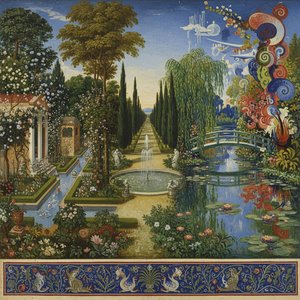
Beyond the architectural marvels of the interior lies a landscape designed for both spectacle and contemplation. The palace gardens are a breathtaking testament to the influence of French landscape design, embodying Baroque sensibilities through order, balance, and illusion. Meticulously planned formal flowerbeds arranged in geometric patterns, sprawling lawns punctuated by elegant fountains, and hidden corners of repose create a sensory experience akin to stepping into a living painted canvas. This mastery of nature is complemented by the palace's incomparable collection of royal treasures. Within these walls, art lovers can encounter masterpieces by renowned luminaries such as Rembrandt , Rubens , and Van Dyck . These works are not merely objects of aesthetic beauty for the collector or designer to admire; they are windows into the intellectual currents and courtly culture that propelled England onto the global stage.
The palace also offers unique mechanical and sculptural wonders that captivate the imagination:
- The Astronomical Clock: A sixteenth-century marvel installed in 1540, this pre-Copernican instrument features three separate copper dials revolving at different speeds to display the zodiac and the position of the sun.
- The King's Beasts: A series of heraldic animal statues that stand on the bridge over the moat, representing the royal ancestry of Henry VIII and Jane Seymour.
- Baroque Frescoes: Monumental works such as those found in the Kings' Staircase, which pay homage to the genius of artists like Antonio Verrio.
Today, Hampton Court Palace remains a living legacy, meticulously preserved by Historic Royal Palaces as a beacon of British heritage. It continues to inspire contemporary audiences through curated exhibitions that illuminate the private lives and public dramas of kings and queens. For the art historian, it is a site of unparalleled study; for the interior designer, it is an endless source of inspiration regarding scale, texture, and light; and for the visitor, it is a timeless journey through a world where every stone and every brushstroke tells a story of ambition, power, and enduring beauty.