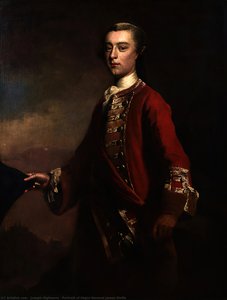
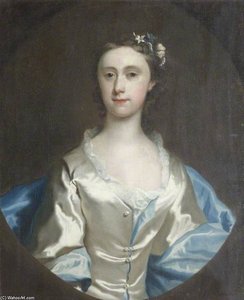
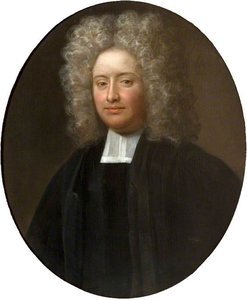
Portrait of Joseph Highmore

The 100 Most Famous Joseph Highmore Paintings, Each One of a Kind

Updated November 2026 · ranked by our popularity score (searches, visits and orders for each work) · 152 works by Joseph Highmore in our catalogue

In short

Pamela fainting (1743) is the Joseph Highmore painting that draws the most eyes; the original belongs to the National Gallery of Victoria, Melbourne. After it, the eye goes to Self-portrait (1740) and Miss Hamilton (1735). Among the 152 works of Joseph Highmore in our catalog, these 100 are the most famous, each a unique original presented with its year, its museum and the reason it endures.

1692 – 1780, London Rococo Most works: National Portrait Gallery

Top 10 paintings by Joseph Highmore, through the gallery's eye

1
Pamela fainting (1743) by Joseph Highmore

Pamela fainting

1743 · Oil On Canvas · National Gallery of Victoria, Melbourne

Joseph Highmore painted Pamela fainting between 1743 and 1744. This oil on canvas captures a heavy, breathless moment of crisis. The scene draws its narrative from the novel Pamela, or Virtue Rewarded. It focuses on the immediate aftermath of a failed attempt at sexual violence, a moment where the air in the room seems to have vanished.

2
Self-portrait (1740) by Joseph Highmore

Self-portrait

1740 · Oil On Canvas · National Gallery of Victoria, Melbourne

Joseph Highmore’s Self-portrait, executed in oil on canvas, dates to about 1745-1747. The work presents the artist in a dual capacity, projecting the persona of both a professional artist and an educated gentleman. This careful construction of identity reflects the social aspirations of the mid-eighteenth century.

3
Miss Hamilton (1735) by Joseph Highmore

Miss Hamilton

1735 · Oil On Canvas · Detroit Institute of Arts, Detroit

Miss Hamilton is an oil on canvas portrait by the English artist Joseph Highmore. Created in 1735, this European painting captures a moment of quiet poise. Highmore, who lived from 1692 to 1780, was a significant figure in the development of British portraiture during the eighteenth century.

4
Mr. Oldham and his Friends (1750) by Joseph Highmore

Mr. Oldham and his Friends

1750 · Oil On Canvas · Tate Gallery, London

In the soft, amber glow of an imagined mid-eighteenth-century evening, Joseph Highmore’s “Mr. Oldham and his Friends” invites the viewer to step into a world of refined leisure and quiet intellectual intimacy. Painted in 1750, this masterpiece serves as a window into the heart of Georgian England, capturing a moment that transcends mere portraiture to become a celebration of social bond and shared experience. The composition centers on four gentlemen…

5
Portr. of a lady (1738) by Joseph Highmore

Portr. of a lady

1738 · Oil On Canvas

A young woman sits in a quiet, suspended moment, her gaze meeting the viewer with a calm and poised expression. She is framed against a dark, neutral background that pushes her figure forward, making her presence feel immediate and intimate. Her dark, curly hair is styled away from her face, revealing the soft contours of her skin. She wears a voluminous, satin-like gown that catches the light in a way…

6
Mrs. Freeman Flower (1747) by Joseph Highmore

Mrs. Freeman Flower

1747 · Oil On Canvas · Art Institute of Chicago, Chicago

This oil on canvas portrait, titled Mrs. Freeman Flower, was executed by Joseph Highmore in 1747. The work functions as a formal representation of the sitter, Mrs. Freeman Flower, capturing her likeness during the mid-eighteenth century. Highmore, a significant figure in English portraiture, utilized this composition to document the subject's presence and social standing.

Joseph Highmore's famous paintings, numbers 11 to 100

11Portrait of Major-General James Wolfe by Joseph HighmorePortrait of Major-General James Wolfe 12Pamela and Lady Davers by Joseph HighmorePamela and Lady DaversNational Gallery of Victoria 13Pamela preparing to go home by Joseph HighmorePamela preparing to go homeNational Gallery of Victoria 14Sir John Barnard by Joseph HighmoreSir John Barnard 15Mrs Elizabeth Birch And Her Daughter by Joseph HighmoreMrs Elizabeth Birch And Her DaughterFitzwilliam Museum 16Equestrian Portrait Of King George Ii by Joseph HighmoreEquestrian Portrait Of King George Ii 17Anne by Joseph HighmoreAnne 18Portrait Of A Lady by Joseph HighmorePortrait Of A Lady 19The Good Samaritan by Joseph HighmoreThe Good Samaritan 20Mr Matthew Bell by Joseph HighmoreMr Matthew Bell 21Sir Willoughby Aston And His Wife by Joseph HighmoreSir Willoughby Aston And His Wife 22Sackville Tufton by Joseph HighmoreSackville Tufton 23An Unknown Man In Black by Joseph HighmoreAn Unknown Man In BlackYale Center for British Art 24Samuel Richardson by Joseph HighmoreSamuel RichardsonNational Portrait Gallery 25Portrait Of Thomas Fermor by Joseph HighmorePortrait Of Thomas Fermor 26Portrait Of A Lady by Joseph HighmorePortrait Of A Lady 27Isaac Hawkins Browne by Joseph HighmoreIsaac Hawkins Browne 28Captain William Gordon by Joseph HighmoreCaptain William GordonNational Maritime Museum 29Portrait Of A Gentleman by Joseph HighmorePortrait Of A Gentleman 30King George Ii by Joseph HighmoreKing George Ii 31Painting of British general James Wolfe by Joseph HighmorePainting of British general James Wolfe 32Pamela Shows Mr Williams A Hiding Place For Their Letters by Joseph HighmorePamela Shows Mr Williams A Hiding Place For Their LettersFitzwilliam Museum 33Portrait Of A Boy by Joseph HighmorePortrait Of A Boy 34Thomas Ripley by Joseph HighmoreThomas Ripley 35William Fellowes Of Shotesham by Joseph HighmoreWilliam Fellowes Of Shotesham 36General James Wolfe by Joseph HighmoreGeneral James Wolfe 37Thomas Ripley by Joseph HighmoreThomas RipleyNational Portrait Gallery 38Francis Godolphin Iv by Joseph HighmoreFrancis Godolphin Iv 39Pettifer by Joseph HighmorePettifer 40James Jurin by Joseph HighmoreJames Jurin 41Portrait Of A Lady by Joseph HighmorePortrait Of A Lady 42Portrait Of A Woman by Joseph HighmorePortrait Of A Woman 43John Owen by Joseph HighmoreJohn Owen 44Edward Young by Joseph HighmoreEdward Young 45George Ii by Joseph HighmoreGeorge Ii 46Mr Oldham And His Guests by Joseph HighmoreMr Oldham And His GuestsTate Britain 47John Duncombe by Joseph HighmoreJohn Duncombe 48Andrew Bell by Joseph HighmoreAndrew Bell 49A Gentleman In A Brown Velvet Coat by Joseph HighmoreA Gentleman In A Brown Velvet Coat 50Peg Woffington by Joseph HighmorePeg Woffington 51Four Men Seated At A Table by Joseph HighmoreFour Men Seated At A Table 52Captain William Gordon by Joseph HighmoreCaptain William Gordon 53Peter Upcher Of Sudbury, Jp by Joseph HighmorePeter Upcher Of Sudbury, Jp 54Arthur Onslow by Joseph HighmoreArthur Onslow 55Lancelot Blackburne by Joseph HighmoreLancelot Blackburne 56Jane Colchester by Joseph HighmoreJane Colchester 57Portrait Of A Man by Joseph HighmorePortrait Of A Man 58Samuel Richardson by Joseph HighmoreSamuel RichardsonNational Portrait Gallery 59Anne Furness by Joseph HighmoreAnne Furness 60William Wrightson by Joseph HighmoreWilliam Wrightson 61John Montagu by Joseph HighmoreJohn MontaguNational Portrait Gallery 62Rear Admiral Charles Fanshawe by Joseph HighmoreRear Admiral Charles Fanshawe 63Mrs Dulcibella Bell by Joseph HighmoreMrs Dulcibella Bell 64Abraham De Moivre by Joseph HighmoreAbraham De Moivre 65Frances Maria Fountayne by Joseph HighmoreFrances Maria Fountayne 66Sarah Morse by Joseph HighmoreSarah Morse 67William Duncombe by Joseph HighmoreWilliam Duncombe 68Miss Taylor by Joseph HighmoreMiss Taylor 69John St John by Joseph HighmoreJohn St John 70Portrait Of A Man by Joseph HighmorePortrait Of A ManBirmingham Museum and Art Gallery 71Pamela Is Married by Joseph HighmorePamela Is Married 72Portrait Of A Lady by Joseph HighmorePortrait Of A LadyDulwich Picture Gallery 73Charles Penruddocke by Joseph HighmoreCharles PenruddockeYale Center for British Art 74Admiral George Byng by Joseph HighmoreAdmiral George Byng 75Isaac Hawkins Browne by Joseph HighmoreIsaac Hawkins Browne 76The Children Of Hughes Minet by Joseph HighmoreThe Children Of Hughes Minet 77Portrait Of A Divine, Laurence Degge by Joseph HighmorePortrait Of A Divine, Laurence Degge 78John Collett by Joseph HighmoreJohn Collett 79Elizabeth Carter by Joseph HighmoreElizabeth Carter 80David Le Marchand, by Joseph HighmoreDavid Le Marchand,National Portrait Gallery 81Anthony highmore by Joseph HighmoreAnthony highmore 82Mr B. Finds Pamela Writing by Joseph HighmoreMr B. Finds Pamela Writing 83Morgan Morse by Joseph HighmoreMorgan Morse 84John Smith by Joseph HighmoreJohn Smith 85Elizabeth Lee by Joseph HighmoreElizabeth Lee 86Reverend Joseph Avery Of Kirby-le-soken by Joseph HighmoreReverend Joseph Avery Of Kirby-le-soken 87Reverend Edmund Tew by Joseph HighmoreReverend Edmund Tew 88Mary Alford, Nee Standish by Joseph HighmoreMary Alford, Nee Standish 89Thomas Pennant by Joseph HighmoreThomas PennantNational Library of Wales 90Robert Wynne by Joseph HighmoreRobert WynneNational Library of Wales 91Portrait Of A Lady Of The Fanshawe Family by Joseph HighmorePortrait Of A Lady Of The Fanshawe FamilyNetherlands Open Air Museum 92Henry Stebbing by Joseph HighmoreHenry StebbingNational Portrait Gallery 93Called 'john Beard by Joseph HighmoreCalled 'john Beard 94William Wilberforce by Joseph HighmoreWilliam Wilberforce 95Francis Swanton by Joseph HighmoreFrancis Swanton 96Elizabeth Rooper by Joseph HighmoreElizabeth RooperCanons Ashby House 97An Unknown Man by Joseph HighmoreAn Unknown ManYale Center for British Art 98Issac Welman by Joseph HighmoreIssac WelmanUpton House 99Portrait Of A Man by Joseph HighmorePortrait Of A Man 100John Whitehall Of Furnivall's Inn by Joseph HighmoreJohn Whitehall Of Furnivall's InnBirmingham Museum and Art Gallery

Joseph Highmore's famous paintings, period by period

The subjects that held Joseph Highmore's eye

The four subjects that come back most often in these originals, each with its finest example.

The museums that keep Joseph Highmore's originals

The 8 museums that hold the most of the paintings on this page.

Museum City Works by Joseph Highmore Paintings from this list
National Portrait Gallery, LondonNational Portrait Gallery London 6 Samuel Richardson, Thomas Ripley, Samuel Richardson
National Gallery of Victoria, MelbourneNational Gallery of Victoria Melbourne 4 Pamela fainting, Self-portrait, Pamela and Lady Davers
Yale Center for British Art, New HavenYale Center for British Art New Haven 11 An Unknown Man In Black, Charles Penruddocke, An Unknown Man
Fitzwilliam MuseumFitzwilliam Museum 5 Mrs Elizabeth Birch And Her Daughter, Pamela Shows Mr Williams A Hiding Place For Their Letters
Birmingham Museum and Art Gallery, BirminghamBirmingham Museum and Art Gallery Birmingham 2 Portrait Of A Man, John Whitehall Of Furnivall's Inn
National Library of Wales, AberystwythNational Library of Wales Aberystwyth 2 Thomas Pennant, Robert Wynne
Art Institute of Chicago, ChicagoArt Institute of Chicago Chicago 2 Mrs. Freeman Flower
Tate Britain, LondonTate Britain London 2 Mr Oldham And His Guests

Joseph Highmore across the decades: one unique original for each

Works per decade

Pick a decade to see the original that defines it.

Joseph Highmore's paintings: questions for the gallery

What is the single most famous work of Joseph Highmore?Reveal the answer

Pamela fainting (1743), National Gallery of Victoria, Melbourne. Self-portrait (1740) and Miss Hamilton (1735) come next.

At what age did Joseph Highmore create Pamela fainting?Reveal the answer

51 years old: Pamela fainting dates from 1743, and Joseph Highmore was born in 1692.

Which ten paintings by Joseph Highmore are the most famous?Reveal the answer

Pamela fainting, Self-portrait, Miss Hamilton, Mr. Oldham and his Friends, Portr. of a lady, Mrs. Freeman Flower, The Family Of E. Lancelot Lee, Portrait of a Lady, Portrait Of Queen Caroline Of Ansbach and James Wigley Of Scraptoft Hall. The ranking above gives each one's year and museum.

How many works by Joseph Highmore are known?Reveal the answer

Our catalog holds 152 works by Joseph Highmore, dated from 1735 to 1750.

Where can the most famous Joseph Highmore originals be seen?Reveal the answer

Mostly in National Portrait Gallery (London), National Gallery of Victoria (Melbourne) and Yale Center for British Art (New Haven). The museum table above lists them all.

During which period did Joseph Highmore create the best-known paintings?Reveal the answer

In 1730s: 3 of the 100 works on this page were made then, Miss Hamilton among them.

Which famous Joseph Highmore painting is the earliest, and which the latest?Reveal the answer

On this page, the earliest is Miss Hamilton (1735) and the latest Mr. Oldham and his Friends (1750).

What subjects did Joseph Highmore favour?Reveal the answer

18th century (15), Portrait (14) and Portraits (12), across the 100 works on this page.

What materials did Joseph Highmore paint with most?Reveal the answer

Oil On Canvas, for 6 of the 100 works on this page.

Which movement does the work of Joseph Highmore belong to?Reveal the answer

Rococo, judging by the originals on this page.

What Joseph Highmore originals can I see at the National Portrait Gallery?Reveal the answer

Samuel Richardson, Thomas Ripley and Samuel Richardson: the National Portrait Gallery, London holds 6 of the works on this page.

Joseph Highmore: a portrait of the artist

A Life Dedicated to Likeness and Narrative

Joseph Highmore, born in London in 1692, emerged as a pivotal figure within the evolving landscape of 18th-century English art. His journey began amidst familial expectations geared towards a legal career—a path he ultimately abandoned at seventeen to wholeheartedly pursue his artistic inclinations. This decisive turn led him to the studios of Sir Godfrey Kneller and anatomy lectures delivered by William Cheselden, foundational experiences that shaped his technical skill and profound understanding of the human form. Initially influenced by the grand Baroque tradition exemplified by Kneller, Highmore’s style would gradually embrace the more delicate aesthetics of the Rococo period, a shift reflective of broader cultural currents sweeping across Europe. He wasn't merely a painter; he was a keen observer of society, and his canvases became mirrors reflecting the lives, manners, and moral concerns of Georgian England.

From Royal Patrons to Middle-Class Commissions

Highmore’s early career benefited from patronage within royal circles, particularly during the 1730s and 40s. This afforded him opportunities to portray prominent figures like King George II and, famously, General James Wolfe—portraits that demonstrate not only his technical prowess but also a remarkable ability to capture character and presence. A formative journey through the Netherlands and France between 1732 and 1734 further broadened his artistic horizons, exposing him to the works of masters such as Rubens and van Dyck. However, Highmore’s adaptability proved crucial to his sustained success. As tastes evolved and a burgeoning middle class sought representation, he skillfully adjusted his focus, catering to their desire for portraits that reflected their social standing and domestic lives. This period saw the rise of his celebrated “conversation pieces”—group portraits depicting families or friends engaged in informal gatherings—a genre where Highmore excelled at conveying both individual personalities and the dynamics of social interaction. These works weren’t simply records of appearance; they were narratives frozen in time, offering glimpses into the everyday lives of his sitters. Mr Matthew Bell, for example, showcases a dignified composure typical of his Rococo realism, while portraits like Anthony Highmore reveal an elegant attire and timeless composition.

Illustrating Virtue: ‘Pamela’ and Beyond

While renowned for his portraiture, Joseph Highmore achieved widespread recognition through a unique project that bridged the worlds of art and literature. In 1744, he embarked on a series of twelve paintings inspired by Samuel Richardson's immensely popular novel, *Pamela, or Virtue Rewarded*. These illustrations weren’t merely decorative accompaniments to the text; they were carefully considered interpretations of key scenes, designed to amplify the story’s emotional impact and moral message. The engravings derived from these paintings, executed by Benoist and Louis Truchy, further disseminated Richardson's narrative to a wider audience, effectively making Highmore an instrumental figure in popularizing the novel. Beyond *Pamela*, Highmore also ventured into historical painting, exemplified by his donation of Hagar and Ishmael to the Foundling Hospital—a testament to both his artistic skill and his engagement with contemporary social issues. This work, along with others, reveals a willingness to explore complex themes and narratives beyond the realm of portraiture, reflecting a deep sensitivity to the vulnerabilities within society.

A Legacy of Realism and Refinement

In 1762, at the age of seventy, Highmore retired to Canterbury, where he lived with his daughter and son-in-law, continuing to engage intellectually through art historical writings—including a critical examination of Rubens’s work. He passed away in 1780, aged eighty-seven, and was buried in accordance with a statute designed to support the wool trade. Joseph Highmore's legacy rests on his significant contribution to English portraiture during the Rococo period. His paintings are characterized by a remarkable attention to detail, a sensitivity to individual character, and an ability to capture the essence of Georgian society. He wasn’t simply a recorder of appearances; he was a storyteller who used paint to illuminate the lives, values, and aspirations of his time.
  • Family Connections: Susanna Highmore (née Hiller): His wife, a poet whose works remain largely unpublished.
  • Anthony Highmore: His son, also an artist.
  • Anthony Highmore Jr.: A grandson who became a writer on legal affairs and a social activist.
His work continues to resonate today as a testament to the power of art to both reflect and shape our understanding of the past.