Portrait of Jean Jacques Caffiéri

The 14 Most Famous Jean Jacques Caffiéri Paintings, Each One of a Kind

Updated November 2026 · ranked by our popularity score (searches, visits and orders for each work) · 14 works by Jean Jacques Caffiéri in our catalogue

In short

Pierre Corneille (1778) is the Jean Jacques Caffiéri painting that draws the most eyes; the original belongs to the The Louvre, Paris. After it, the eye goes to Portrait of Claude Adrien Helvétius (1772) and Molière (1787). Among the 14 works of Jean Jacques Caffiéri in our catalog, these 14 are the most famous, each a unique original presented with its year, its museum and the reason it endures.

1678 – 1755, Paris Neoclassicism Most works: The Louvre

Top 10 paintings by Jean Jacques Caffiéri, through the gallery's eye

1
Pierre Corneille (1778) by Jean Jacques Caffiéri

Pierre Corneille

1778 · Clay / Terracotta · The Louvre, Paris

Before you stands a profound meditation on genius itself: a terracotta bust honoring Pierre Corneille. This sculpture does more than merely replicate a likeness; it captures the very essence of the dramatic mind—the thoughtful, sometimes burdened spirit of a master playwright from the Seconde moitié du XVIIe siècle. The subject is presented in a dignified profile, his gaze directed thoughtfully toward an unseen horizon to the left. Notice the meticulous…

2
Portrait of Claude Adrien Helvétius (1772) by Jean Jacques Caffiéri

Portrait of Claude Adrien Helvétius

1772 · Bronze · Labirinto della Masone, Fontanellato

The Portrait of Claude Adrien Helvétius by Jean Jacques Caffiéri is a portrait bust created in 1772. Commissioned by the widow of the subject, the sculpture captures the likeness and character of Claude Adrien Helvétius, a prominent French philosopher and writer. The work functions as a formal representation of the individual, intended to preserve his specific features and presence.

3
Molière (1787) by Jean Jacques Caffiéri

Molière

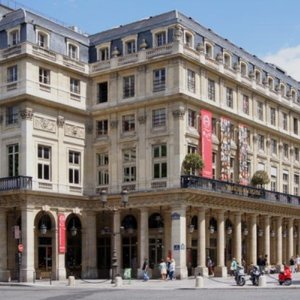
1787 · Sculpture · Comédie-Française, Paris

The year is 1787. Paris pulses with artistic fervor, the Rococo style dominating the courts and salons of the aristocracy. Within the hallowed halls of the Louvre, a sculptor named Jean-Jacques Caffiéri meticulously captures the essence of one of France's most celebrated playwrights: Molière. This isn’t merely a likeness; it’s an embodiment of wit, intellect, and theatrical genius, rendered in exquisite detail with a masterful understanding of light, shadow, and…

4
Bust of the Astronomer Chanoine Pingré (1788) by Jean Jacques Caffiéri

Bust of the Astronomer Chanoine Pingré

1788 · Bronze · The Louvre, Paris

The year is 1788, and within the hallowed halls of the Louvre Museum resides a captivating testament to Rococo artistry – Jean-Jacques Caffiéri's “Bust of the Astronomer Chanoine Pingré.” More than just a sculpted likeness, this terracotta masterpiece offers a poignant window into the intellectual climate of pre-revolutionary France, capturing not only the physical appearance but also the subtle character and contemplative spirit of a learned clergyman. It’s a work…

5
“Fidelity” (1769) by Jean Jacques Caffiéri

“Fidelity”

1769 · Marble · Musée Nissim de Camondo, Paris

In “Fidelity” by Jean Jacques Caffiéri, a quiet moment is frozen in stone. Created about 1769, the sculpture presents a woman in a graceful stance, her arms extended to cradle a small dog. This central gesture creates a sense of gentle interaction between the human and the animal. The subject matter centers on this pastoral connection, where the weight of the creature meets the steady hands of the woman.

6
Geometry and Architecture (1776) by Jean Jacques Caffiéri

Geometry and Architecture

1776 · Marble · National Trust, Waddesdon Manor

Geometry and Architecture is a marble sculpture by Jean Jacques Caffiéri, dating to about 1776. The work features two youthful figures, likely children, positioned in a dynamic interaction. One figure sits upon a base composed of various architectural elements, including cubes and cylinders, while the second figure stands and gestures toward the seated subject. This arrangement suggests a moment of instruction or a demonstration of mathematical principles.

7
Madame du Barry (1770) by Jean Jacques Caffiéri

Madame du Barry

1770 · Marble · Hermitage Museum, Saint Petersburg

Jean-Jacques Caffiéri's 1770 marble bust of Madame du Barry is more than a mere portrait; it’s a carefully constructed tableau vivant, a frozen moment brimming with the opulence and calculated charm of the French court. Carved by the master sculptor himself, this piece captures not just the physical likeness of the famed courtesan but also her aura – a potent blend of allure, power, and subtle melancholy. The sculpture resides…

8
Bust of Helvétius (1772) by Jean Jacques Caffiéri

Bust of Helvétius

1772 · Acrylic · Metropolitan Museum of Art, New York

Jean-Jacques Caffiéri's "Bust of Helvétius," created in 1772, is more than a mere portrait; it’s a profound distillation of the Enlightenment mind. This exquisite marble sculpture captures Claude Adrien Helvétius, a prominent French philosopher and writer, not just as an individual but as a symbol of intellectual rigor and philosophical inquiry. Crafted during the height of Rococo artistry – a period characterized by its opulent curves, playful ornamentation, and a…

9
Erythrean Sibyl (1759) by Jean Jacques Caffiéri

Erythrean Sibyl

1759 · Marble · The Louvre, Paris

Jean-Jacques Caffiéri’s “Erythrean Sibyl,” a marble sculpture crafted in 1759, isn't merely a depiction of a mythological figure; it’s an invitation to contemplate the very nature of prophecy and divine inspiration. The work embodies the height of Rococo artistry within the service of Louis XV’s court, showcasing a masterful blend of classical ideals and opulent ornamentation. The Sibyl, traditionally associated with delivering oracles from the gods, is presented here not…

Jean Jacques Caffiéri's famous paintings, numbers 11 to 14

Jean Jacques Caffiéri's famous paintings, period by period

The subjects that held Jean Jacques Caffiéri's eye

The four subjects that come back most often in these originals, each with its finest example.

The museums that keep Jean Jacques Caffiéri's originals

The 8 museums that hold the most of the paintings on this page.

Museum City Works by Jean Jacques Caffiéri Paintings from this list
The Louvre, ParisThe Louvre Paris 4 Pierre Corneille, Bust of the Astronomer Chanoine Pingré, Erythrean Sibyl
Comédie-Française, ParisComédie-Française Paris 2 Molière, Bust of Jean de Rotrou
Labirinto della Masone, FontanellatoLabirinto della Masone Fontanellato 1 Portrait of Claude Adrien Helvétius
Musée Nissim de Camondo, ParisMusée Nissim de Camondo Paris 1 “Fidelity”
National Trust, Waddesdon ManorNational Trust Waddesdon Manor 1 Geometry and Architecture
Hermitage Museum, Saint PetersburgHermitage Museum Saint Petersburg 1 Madame du Barry
Metropolitan Museum of Art, New YorkMetropolitan Museum of Art New York 1 Bust of Helvétius
Cleveland Museum of Art, ClevelandCleveland Museum of Art Cleveland 1 Pair of Andirons (Chenets)

Jean Jacques Caffiéri across the years: the unique originals of each

Every dated Jean Jacques Caffiéri original shown here was made in 3 years, between 1752 and 1754: year by year, here they are.

Works per year

Pick a year to see its originals.

Jean Jacques Caffiéri's paintings: questions for the gallery

What is the single most famous work of Jean Jacques Caffiéri?Reveal the answer

Pierre Corneille (1778), The Louvre, Paris. Portrait of Claude Adrien Helvétius (1772) and Molière (1787) come next.

Which ten paintings by Jean Jacques Caffiéri are the most famous?Reveal the answer

Pierre Corneille, Portrait of Claude Adrien Helvétius, Molière, Bust of the Astronomer Chanoine Pingré, “Fidelity”, Geometry and Architecture, Madame du Barry, Bust of Helvétius, Erythrean Sibyl and Pair of Andirons (Chenets). The ranking above gives each one's year and museum.

How many works by Jean Jacques Caffiéri are known?Reveal the answer

Our catalog holds 14 works by Jean Jacques Caffiéri, dated from 1752 to 1754.

Where can the most famous Jean Jacques Caffiéri originals be seen?Reveal the answer

Mostly in The Louvre (Paris), Comédie-Française (Paris) and Labirinto della Masone (Fontanellato). The museum table above lists them all.

Which famous Jean Jacques Caffiéri painting is the earliest, and which the latest?Reveal the answer

On this page, the earliest is Pair of Andirons (Chenets) (1752) and the latest Bust of Jean Restout (1754).

What subjects did Jean Jacques Caffiéri favour?Reveal the answer

Sculpture (5), Bust (3) and Baroque (3), across the 14 works on this page.

What materials did Jean Jacques Caffiéri paint with most?Reveal the answer

Marble, for 4 of the 14 works on this page.

Which movement does the work of Jean Jacques Caffiéri belong to?Reveal the answer

Neoclassicism and Rococo, judging by the originals on this page.

What Jean Jacques Caffiéri originals can I see at the The Louvre?Reveal the answer

Pierre Corneille, Bust of the Astronomer Chanoine Pingré and Erythrean Sibyl: the The Louvre, Paris holds 4 of the works on this page.

Jean Jacques Caffiéri: a portrait of the artist

Jean Jacques Caffiéri: A Rococo Sculptor at the Court of Louis XV

Jean Jacques Caffiéri (1678-1755) stands as a pivotal figure in French sculpture during the Rococo period, embodying the opulent aesthetic and masterful craftsmanship that defined the era. Born in Paris to Philippe Caffiéri, a prominent foundryman who established a lineage dedicated to metalworking artistry, Caffiéri’s artistic journey began within a family steeped in tradition—a heritage profoundly shaped by Italian influences. His early training under his father cemented his foundational skills as a fondeur-ciseleur (caster and finisher), granting him access to the prestigious Guilds of Paris that oversaw monumental sculptural projects alongside intricate decorative metalwork. This formative experience instilled in him an unparalleled understanding of technique and material manipulation, qualities that would characterize his entire oeuvre.
  • Early Life & Training: Caffiéri’s upbringing within a family renowned for its artistic prowess ensured he received comprehensive instruction in the art of bronze casting and finishing—skills honed under the watchful eye of Philippe Caffiéri himself.
  • Guild Recognition & Initial Commissions: By 1715, Caffiéri achieved maître fondeur-ciseleur status, marking his debut as a sculptor with a commission for the Corporation des Fondeurs-Ciseleurs—a testament to his burgeoning reputation and the esteem held by Parisian artisans.

The Caffieri Family’s Legacy: Bronze Sculpture & Decorative Arts

The Caffiéri family's contribution to French sculpture is undeniable, largely attributed to Jacques Caffiéri’s son, Philippe Caffiéri (1714–1777). Together they formed a formidable artistic duo, particularly active in the service of Louis XV. Their workshop in Rue des Canettes produced an astonishing volume of work—primarily gilt-bronze furniture mounts and decorative objects—that adorned residences across Paris and elevated the standards of Rococo craftsmanship. Notably, Caffiéri’s designs for Versailles, Fontainebleau, Marly, Compiegne, and Choisy exemplify the grandeur and elegance synonymous with Louis XV's court. The Château de la Muette retains a remarkable testament to their collaborative spirit—the gilded bronze chimney-piece remains an exemplar of Rococo style, characterized by dynamic movement and graceful ornamentation executed with exceptional skill.
  • Versailles Projects: Caffiéri’s involvement in the decoration of Versailles solidified his reputation as a sculptor of distinction, contributing significantly to the palace's opulent aesthetic.
  • Collaboration with Philippe Caffiéri: The partnership between Jacques and Philippe Caffiéri fostered innovation and elevated the quality of decorative arts during their time.

Royal Patronage & Artistic Achievements

Caffiéri’s dedication to royal service extended beyond architectural embellishments; he undertook numerous commissions for Louis XV, producing portraits and sculptures that captured the spirit of the era. His work gained considerable acclaim during his lifetime, securing him a place among France's most celebrated sculptors. The Wallace Collection houses Caffiéri’s masterpiece—the Royal Commode delivered by Antoine-Robert Gaudreau in 1739 for Louis XV’s bedchamber at Versailles—a stunning example of Rococo design and craftsmanship. Its intricate gilt bronze decorations continue to inspire admiration for their beauty and technical virtuosity.
  • Wallace Collection Commission: Caffiéri's Royal Commode exemplifies the pinnacle of Rococo artistry, showcasing exceptional skill in metalworking and decorative arts.
  • Notable Portraits: Caffiéri’s portraits demonstrate his ability to convey psychological depth and elegance—characteristics that define his artistic legacy.

Influence & Historical Significance

Jean Jacques Caffiéri's influence on subsequent generations of sculptors is considerable, establishing him as a cornerstone of Rococo art history. His meticulous attention to detail, combined with his mastery of bronze casting techniques—inherited from his father—established a tradition that endured for decades after his death in 1755. Caffiéri’s work serves as an enduring symbol of French artistic excellence during the Enlightenment, reflecting the period's fascination with naturalism and refined ornamentation. His legacy continues to inspire artists today, cementing his place among France’s most revered sculptors.