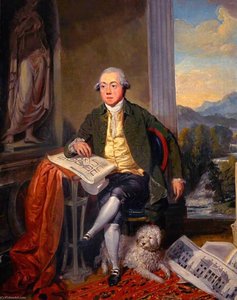
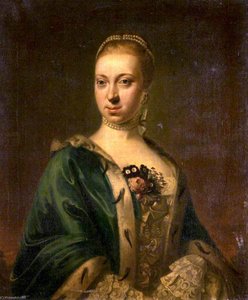
Portrait of David Allan

The 58 Most Famous David Allan Paintings, Each One of a Kind

Updated October 2026 · ranked by our popularity score (searches, visits and orders for each work) · 58 works by David Allan in our catalogue

In short

Lead Processing at Leadhills Pounding the Ore (1789) is the David Allan painting that draws the most eyes; the original belongs to the Scottish National Gallery, Edinburgh. After it, the eye goes to The Uncultivated Genius (1775) and Joseph Nolleken (1770). Among the 58 works of David Allan in our catalog, these 58 are the most famous, each a unique original presented with its year, its museum and the reason it endures.

1744 – 1796, Alloa Neoclassicism Most works: Scottish National Gallery

Top 10 paintings by David Allan, through the gallery's eye

1
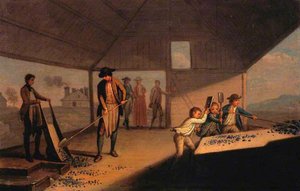
Lead Processing at Leadhills Pounding the Ore (1789) by David Allan

Lead Processing at Leadhills Pounding the Ore

1789 · Acrylic On Canvas · Scottish National Gallery, Edinburgh

Lead Processing at Leadhills Pounding the Ore David Allan’s “Lead Processing at Leadhills” isn't merely a depiction of labor; it’s a snapshot of Scotland grappling with the Enlightenment’s fascination for industry and observation. Painted in 1789, this monumental canvas captures a scene unfolding within the Leadhills Pounding – one of Scotland’s earliest lead smelting operations – offering a rare glimpse into the daily life of miners and craftsmen during a…

2
The Uncultivated Genius (1775) by David Allan

The Uncultivated Genius

1775 · Oil On Canvas · Scottish National Gallery, Edinburgh

A man sits anchored in a chair, his body a quiet weight against the backdrop of a working studio. Behind him, a woman stands, her presence a vertical counterpoint to his seated form. They are bound by the shared gravity of the canvas. Both hands grip paintbrushes, poised at the edge of creation. The air in the room feels thick with the scent of linseed oil and the silent tension…

David Allan's famous paintings, numbers 11 to 58

11James Abercromby of Tullibody, Esq (1779) by David AllanJames Abercromby of Tullibody, Esq1779 · University of Dundee 12The Children of David Allan (1790) by David AllanThe Children of David Allan1790 · Royal Scottish Academy of Art - Architecture 13John Francis, 7th Earl of Mar, and Family by David AllanJohn Francis, 7th Earl of Mar, and FamilyNational Trust For Scotland 14Faith (triptych, left wing) by David AllanFaith (triptych, left wing)Edinburgh City Chambers 15Lady Frances Erskine (1716–1776) (1764) by David AllanLady Frances Erskine (1716–1776)1764 16The Interior of the Foulis Academy of Fine Arts (1761) by David AllanThe Interior of the Foulis Academy of Fine Arts1761 17The Interior of the Foulis Academy of Fine Arts (1761) by David AllanThe Interior of the Foulis Academy of Fine Arts1761 18James Colvin (1768) by David AllanJames Colvin1768 · Scottish National Gallery 19Sir William Hamilton (1730–1803), and the First Lady Hamilton (1765–1815), in Their Apartment in Naples (1770) by David AllanSir William Hamilton (1730–1803), and the First Lady Hamilton (1765–1815), in Their Apartment in Naples1770 20The Continence of Scipio (1774) by David AllanThe Continence of Scipio1774 · Scottish National Gallery 21The Family of the Island of Procida with Vesuvius in the Background (1775) by David AllanThe Family of the Island of Procida with Vesuvius in the Background1775 · Clackmannanshire Council Museum And Heritage Service 22The Origin of Painting (The Maid of Corinth) (1775) by David AllanThe Origin of Painting (The Maid of Corinth)1775 · Scottish National Gallery 23The Vestals Attending the Sacred Fire (1772) by David AllanThe Vestals Attending the Sacred Fire1772 24James Tassie, Sculptor and Gem Engraver (1781) by David AllanJames Tassie, Sculptor and Gem Engraver1781 25Mrs James Tassie, probably Ann Harker (1779) by David AllanMrs James Tassie, probably Ann Harker1779 26James Tassie (1735–1799), Sculptor and Gem Engraver (1781) by David AllanJames Tassie (1735–1799), Sculptor and Gem Engraver1781 · Scottish National Portrait Gallery 27The Connoisseurs John Caw (d.1784), John Bonar (1747–1807) and James Bruce (1783) by David AllanThe Connoisseurs John Caw (d.1784), John Bonar (1747–1807) and James Bruce1783 · Scottish National Gallery 28Lead Processing at Leadhills Pounding the Ore (1780) by David AllanLead Processing at Leadhills Pounding the Ore1780 · Scottish National Gallery 29Jean Duff (1746–1805), Lady Grant (1780) by David AllanJean Duff (1746–1805), Lady Grant1780 30Lead Processing at Leadhills Smelting the Ore (1780) by David AllanLead Processing at Leadhills Smelting the Ore1780 · Scottish National Gallery 31Lead Processing at Leadhills Washing the Ore (1780) by David AllanLead Processing at Leadhills Washing the Ore1780 · Scottish National Gallery 32James Abercromby of Tullibody, Esq. (1776–1858) (1779) by David AllanJames Abercromby of Tullibody, Esq. (1776–1858)1779 · Museum of Fine Arts 33Lead Processing at Leadhills Weighing the Lead Bars (1780) by David AllanLead Processing at Leadhills Weighing the Lead Bars1780 · Scottish National Gallery 34Francesco Ravai, Known as 'Baiocco' (1777) by David AllanFrancesco Ravai, Known as 'Baiocco'1777 35Mrs James Tassie, probably Ann Harker (1730–1790) (1779) by David AllanMrs James Tassie, probably Ann Harker (1730–1790)1779 · Scottish National Gallery 36Portrait of Two Boys (perhaps the two elder sons of John Francis Erskine, later 7th Earl of Mar) (1783) by David AllanPortrait of Two Boys (perhaps the two elder sons of John Francis Erskine, later 7th Earl of Mar)1783 · Clackmannanshire Council Museum And Heritage Service 37Niel Gow (1727–1807), Violinist and Composer, with his Brother Donald Gow (active c.1780), Cellist (1780) by David AllanNiel Gow (1727–1807), Violinist and Composer, with his Brother Donald Gow (active c.1780), Cellist1780 · Scottish National Portrait Gallery 38Charles Watson, Esq. (1740–1804), and His Wife, Lady Mary (d.1793), with Their Two Children, James (1781–1823) and Anne (1782–1800), in a Landscape (1782) by David AllanCharles Watson, Esq. (1740–1804), and His Wife, Lady Mary (d.1793), with Their Two Children, James (1781–1823) and Anne (1782–1800), in a Landscape1782 39Lead Processing at Leadhills Smelting the Ore (1789) by David AllanLead Processing at Leadhills Smelting the Ore1789 · Scottish National Gallery 40The Spreull Family (1793) by David AllanThe Spreull Family1793 41William Inglis (c.1712–1792), Surgeon and Captain of the Honourable Company of Edinburgh Golfers (1787) by David AllanWilliam Inglis (c.1712–1792), Surgeon and Captain of the Honourable Company of Edinburgh Golfers1787 · Scottish National Portrait Gallery 42Lead Processing at Leadhills Weighing the Lead Bars (1789) by David AllanLead Processing at Leadhills Weighing the Lead Bars1789 · Scottish National Gallery 43James Erskine, Lord Alva, and his Family (1780) by David AllanJames Erskine, Lord Alva, and his Family1780 · Scottish National Gallery 44Faith (triptych, left wing) by David AllanFaith (triptych, left wing) 45Charity (triptych, right wing) by David AllanCharity (triptych, right wing) 46Lead Processing at Leadhills Washing the Ore (1789) by David AllanLead Processing at Leadhills Washing the Ore1789 · Scottish National Gallery 47David Allan (1744–1796), Artist (self portrait) (1770) by David AllanDavid Allan (1744–1796), Artist (self portrait)1770 · Royal Scottish Academy of Art - Architecture 48James Craig, Architect (1781) by David AllanJames Craig, Architect1781 · Scottish National Portrait Gallery 49The Forth at Alloa by David AllanThe Forth at Alloa 50The Forth at Alloa by David AllanThe Forth at AlloaNational Trust For Scotland 51Lady Charlotte Erskine by David AllanLady Charlotte Erskine 52Clackmann Pow and Hill with the River Forth Looking East by David AllanClackmann Pow and Hill with the River Forth Looking EastNational Trust For Scotland 53Mrs Scott, Mother of Sir Walter Scott by David AllanMrs Scott, Mother of Sir Walter Scott 54Thomas, Lord Erskine (d.1766) by David AllanThomas, Lord Erskine (d.1766)National Trust For Scotland 55John Francis, 7th Earl of Mar, and Family by David AllanJohn Francis, 7th Earl of Mar, and Family 56Portrait of a Young Man in a Green Jacket by David AllanPortrait of a Young Man in a Green JacketThe National Trust For Scotland 57Hope (triptych, centre panel) by David AllanHope (triptych, centre panel)Edinburgh City Chambers 58Sir William Hamilton (1775) by David AllanSir William Hamilton1775 · National Portrait Gallery

The subjects that held David Allan's eye

The four subjects that come back most often in these originals, each with its finest example.

The museums that keep David Allan's originals

The 8 museums that hold the most of the paintings on this page.

Museum City Works by David Allan Paintings from this list
Scottish National Gallery, EdinburghScottish National Gallery Edinburgh 17 Lead Processing at Leadhills Pounding the Ore, The Uncultivated Genius, Sir John Halkett of Pitfirrane (1720–1793), 4th Baronet, Mary Hamilton, Lady Halkett and their Family
Scottish National Portrait Gallery, EdinburghScottish National Portrait Gallery Edinburgh 5 Anne Forbes (1745–1834), Artist, James Tassie (1735–1799), Sculptor and Gem Engraver, Niel Gow (1727–1807), Violinist and Composer, with his Brother Donald Gow (active c.1780), Cellist
National Trust For Scotland, AlloaNational Trust For Scotland Alloa 4 John Francis, 7th Earl of Mar, and Family, The Forth at Alloa, Clackmann Pow and Hill with the River Forth Looking East
Clackmannanshire Council Museum And Heritage Service, AlloaClackmannanshire Council Museum And Heritage Service Alloa 3 The Family of the Island of Procida with Vesuvius in the Background, The Family of the Island of Procida with Vesuvius in the Background, Portrait of Two Boys (perhaps the two elder sons of John Francis Erskine, later 7th Earl of Mar)
Royal Scottish Academy of Art - Architecture, EdinburghRoyal Scottish Academy of Art - Architecture Edinburgh 2 The Children of David Allan, David Allan (1744–1796), Artist (self portrait)
Edinburgh City Chambers, EdinburghEdinburgh City Chambers Edinburgh 2 Faith (triptych, left wing), Hope (triptych, centre panel)
Yale Center for British Art, New HavenYale Center for British Art New Haven 1 Joseph Nolleken
Scottish National Gallery of Modern Art, EdinburghScottish National Gallery of Modern Art Edinburgh 1 Peasant woman of a town in the Kingdom of Naples

David Allan across the decades: one unique original for each

Works per decade

Pick a decade to see the original that defines it.

David Allan's paintings: questions for the gallery

What is the single most famous work of David Allan?Reveal the answer

Lead Processing at Leadhills Pounding the Ore (1789), Scottish National Gallery, Edinburgh. The Uncultivated Genius (1775) and Joseph Nolleken (1770) come next.

At what age did David Allan create Lead Processing at Leadhills Pounding the Ore?Reveal the answer

45 years old: Lead Processing at Leadhills Pounding the Ore dates from 1789, and David Allan was born in 1744.

Which ten paintings by David Allan are the most famous?Reveal the answer

Lead Processing at Leadhills Pounding the Ore, The Uncultivated Genius, Joseph Nolleken, Peasant woman of a town in the Kingdom of Naples, James Colvin, The Family of the Island of Procida with Vesuvius in the Background, Jean Duff (1746 1805), Lady Grant, Anne Forbes (1745–1834), Artist, Sir John Halkett of Pitfirrane (1720–1793), 4th Baronet, Mary Hamilton, Lady Halkett and their Family and James Erskine (1722–1796), Lord Alva, and his Family. The ranking above gives each one's year and museum.

How many works by David Allan are known?Reveal the answer

Our catalog holds 58 works by David Allan, dated from 1761 to 1793.

Where can the most famous David Allan originals be seen?Reveal the answer

Mostly in Scottish National Gallery (Edinburgh), Scottish National Portrait Gallery (Edinburgh) and National Trust For Scotland (Alloa). The museum table above lists them all.

During which period did David Allan create the best-known paintings?Reveal the answer

In 1780s: 22 of the 58 works on this page were made then, Lead Processing at Leadhills Pounding the Ore among them.

Which famous David Allan painting is the earliest, and which the latest?Reveal the answer

On this page, the earliest is The Interior of the Foulis Academy of Fine Arts (1761) and the latest The Spreull Family (1793).

What subjects did David Allan favour?Reveal the answer

18th century (10), Portraiture (6) and Portrait (4), across the 58 works on this page.

What materials did David Allan paint with most?Reveal the answer

Oil On Canvas, for 6 of the 58 works on this page.

Which movement does the work of David Allan belong to?Reveal the answer

Neoclassicism, judging by the originals on this page.

What David Allan originals can I see at the Scottish National Gallery?Reveal the answer

Lead Processing at Leadhills Pounding the Ore, The Uncultivated Genius and Sir John Halkett of Pitfirrane (1720–1793), 4th Baronet, Mary Hamilton, Lady Halkett and their Family: the Scottish National Gallery, Edinburgh holds 17 of the works on this page.

Where can I order a hand-painted David Allan reproduction?Reveal the answer

Yes, as a reproduction: the original stays in its museum, but any painting on this page can be painted by hand for you, made to order one at a time, from the painting's own page.

David Allan: a portrait of the artist

A Scottish Voice in the Age of Enlightenment

David Allan, born in Alloa, Scotland, in 1744, emerged as a significant figure during a period of profound artistic and intellectual change. His father’s position as harbor master instilled an early connection to the world beyond Scotland's shores, hinting at influences that would later shape his artistic vision. Though details of his earliest training remain scarce, it is clear that a natural talent blossomed from youth, setting him on a path toward becoming one of Scotland’s most celebrated painters. This path led him, in 1764, to Rome – a pivotal journey for any aspiring artist of the time. For ten years, Allan immersed himself in the study of classical art and architecture, diligently copying masterpieces like the Borghese Gladiator, honing his skills in form and technique under the guidance of Gavin Hamilton. This Italian sojourn wasn’t merely about technical mastery; it was an immersion into a world of ideals that would subtly permeate his later work.

Blending Worlds: Neoclassicism with Scottish Life

Upon returning to Scotland around 1770, Allan established himself in Edinburgh, quickly becoming a leading artist within the city’s vibrant cultural scene. His style is remarkable for its unique synthesis of Neoclassical precision and Rococo elegance. While embracing the classical ideals of order, balance, and clarity – hallmarks of the Neoclassical movement – he retained a decorative sensibility evident in his use of color and composition. This wasn't a rigid adherence to any single school but rather a thoughtful blending of influences. Allan excelled in both portraiture and genre painting, demonstrating a keen observational skill and an ability to capture the essence of his subjects. His portraits weren’t simply likenesses; they possessed psychological depth, revealing character and personality. However, it was perhaps in his genre scenes that Allan truly distinguished himself, offering intimate glimpses into 18th-century Scottish life – from bustling market days to quiet domestic moments. Works like “Lead Processing at Leadhills Washing the Ore” are not merely depictions of industry but insightful social commentaries rendered with remarkable realism and attention to detail. He also ventured into historical subjects, such as "Hope (triptych, centre panel)", showcasing his ambition and versatility while skillfully integrating classical influences with religious themes.

The ‘Scottish Hogarth’ and a Legacy Forged in Observation

Allan's dedication to depicting contemporary life earned him the moniker “the Scottish Hogarth,” a comparison that highlights his contributions to genre painting and social commentary through art. While not directly emulating Hogarth’s often satirical style, Allan shared a similar interest in portraying everyday scenes with honesty and insight. He possessed an exceptional ability to capture the nuances of human interaction and the textures of daily life, elevating seemingly ordinary subjects to artistic significance. His association with the Foulis Academy, a prominent center for artistic training in Edinburgh, further solidified his role in shaping Scottish art during this period. Allan wasn’t just creating paintings; he was contributing to the development of a distinct national artistic identity. He influenced subsequent generations of Scottish artists, encouraging them to look inward and find inspiration in their own culture and surroundings.

A Lasting Impression

David Allan's impact extends beyond his individual artworks. His illustrations for Allan Ramsay’s *The Gentle Shepherd* are particularly noteworthy, demonstrating a playful wit and an ability to capture the spirit of Scottish pastoral life. He was a master of both large-scale historical compositions and intimate domestic scenes, showcasing a remarkable range of skill and sensitivity. His death in 1796 marked the loss of a truly original voice in British art. Today, his paintings continue to be admired for their technical brilliance, insightful portrayals of Scottish society, and enduring artistic merit. Allan’s legacy lies not only in the beauty of his creations but also in his ability to bridge classical ideals with distinctly Scottish subject matter, leaving an indelible mark on the cultural landscape of his time and inspiring artists for generations to come. He remains a testament to the power of observation, the importance of artistic training, and the enduring appeal of capturing the human experience.
All 58 works by David Allan →