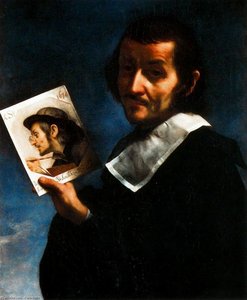
Portrait of Carlo Dolci

The 85 Most Famous Carlo Dolci Paintings, Each One of a Kind

Updated November 2026 · ranked by our popularity score (searches, visits and orders for each work) · 87 works by Carlo Dolci in our catalogue

In short

The Adoration of the Kings (1649) is the Carlo Dolci painting that draws the most eyes; the original belongs to the National Gallery, London. After it, the eye goes to The Guardian Angel (1675) and Madonna in Glory (1670). Among the 87 works of Carlo Dolci in our catalog, these 85 are the most famous, each a unique original presented with its year, its museum and the reason it endures.

1616 – 1686, Florence Baroque Most works: Bavarian State Painting Collections

Top 10 paintings by Carlo Dolci, through the gallery's eye

1
The Adoration of the Kings (1649) by Carlo Dolci

The Adoration of the Kings

1649 · Oil On Canvas · National Gallery, London

To stand before Carlo Dolci's depiction of The Adoration of the Kings is to step across the threshold of time and into a sanctuary of profound, quiet devotion. This magnificent work captures not the bombast of grand public spectacle, but the intimate, luminous moment where divinity meets earthly reverence. The composition centers on Mary cradling the infant Jesus, figures bathed in a soft, almost palpable glow that speaks volumes about…

2
The Guardian Angel (1675) by Carlo Dolci

The Guardian Angel

1675 · Oil On Canvas · Museum of the Cathedral, Prato

Carlo Dolci's “The Guardian Angel,” completed in 1675, transcends mere depiction; it embodies the spiritual fervor characteristic of Baroque art and stands as a testament to Dolci’s masterful artistic vision. Housed within the Museum of the Cathedral in Prato, Italy, this oil on canvas masterpiece invites contemplation and offers a glimpse into the profound symbolism woven throughout its composition.

3
Madonna in Glory (1670) by Carlo Dolci

Madonna in Glory

1670 · Oil On Canvas · Cantor Arts Center at Stanford University, Stanford

Carlo Dolci's "Madonna in Glory," painted around 1670, is not merely a depiction of the Virgin Mary; it’s an immersion into the heart of Florentine Baroque piety. This intimate portrait, likely intended for private devotion, reveals a masterclass in restrained emotion and meticulous technique – qualities that cemented Dolci's reputation as one of Florence’s most revered artists during his era. The painting immediately draws the viewer in with its dark,…

4
Vase of Flowers (1662) by Carlo Dolci

Vase of Flowers

1662 · Oil On Canvas · Galleria degli Uffizi, Florence

Carlo Dolci executed the Vase of Flowers in 1662. This oil on canvas work belongs to the genre of still life painting. It is currently held within the collection of the Galleria degli Uffizi in Florence, Italy.

5
Ecce Homo (1651) by Carlo Dolci

Ecce Homo

The figure of Christ is presented in a vertical bust-length portrait, his gaze directed slightly upward in a state of profound suffering. A crown of thorns encircles his head, the sharp points protruding into the space around him. He is draped in a deep crimson mantle over a blue undergarment, with a thick rope tied around his neck. The composition focuses on the immediate, intimate connection between the subject and…

6
Saint Philip Neri (1515–1595) (1645) by Carlo Dolci

Saint Philip Neri (1515–1595)

1645 · Oil · Metropolitan Museum of Art, New York

The room falls away into an indeterminate darkness, leaving only the figure of an elderly man to meet the eye. He sits in a quiet, heavy stillness, his face emerging from the gloom as if caught in a sudden, soft beam of light from the upper left. This is Saint Philip Neri, and even in this frozen moment, there is a sense of profound, inward movement. His skin, rendered with…

7
Portrait of Vittoria della Rovere (1622-1694) as St. Catherine (1640) by Carlo Dolci

Portrait of Vittoria della Rovere (1622-1694) as St. Catherine

1640 · Oil On Canvas · Kunsthistorisches Museum, Vienna

Vittoria della Rovere is presented within an octagonal frame, her likeness transformed through the lens of religious iconography. Portrayed as St. Catherine, she gazes directly at the viewer with a poised, calm expression. The composition centers on her bust-length figure, where the light focuses intensely upon her face and chest. This use of tenebrism creates a deep sense of three-dimensionality, pulling the subject forward from a dark, warm background.

8
Mattias de' Medici (1613-1667) (1635) by Carlo Dolci

Mattias de' Medici (1613-1667)

1635 · Oil On Canvas · Kunsthistorisches Museum, Vienna

A Presence in Polished Steel The figure of Mattias de' Medici commands the space, frozen in a moment of quiet authority. He stands centrally, his body encased in the dark, reflective weight of black plate armor that catches the light from the upper left. This metallic surface gleams with subtle highlights, contrasting sharply against the deep scarlet red of his breeches. A decorative sash and a fine lace collar add…

9
Saint Andrew the Apostle (1658) by Carlo Dolci

Saint Andrew the Apostle

1658 · Oil On Canvas · Statens Museum For Kunst, Copenhagen

In Saint Andrew the Apostle by Carlo Dolci, the viewer meets a figure caught in a moment of profound spiritual weight. The composition follows a vertical arrangement, pulling the gaze upward toward the saint's head and upper torso. He sits slightly off-center, creating a sense of natural, unforced presence. A large, dark wooden saltire cross cuts diagonally across the frame, its heavy shape anchoring the saint within the shadows. A…

10
The Virgin (1658) by Carlo Dolci

The Virgin

1658 · Oil On Canvas · Statens Museum For Kunst, Copenhagen

The Virgin is a somber and deeply emotive Baroque portrait of a woman, likely the Virgin Mary, rendered in oil on canvas. The composition is a close-up, centered on the subject's downward-looking face, which is partially shrouded by a heavy dark blue mantle. The color palette is restrained, dominated by deep blues, shadows, and warm skin tones, with a single highlight of white fabric at the neck.

Carlo Dolci's famous paintings, numbers 11 to 85

11Christ and Mary Magdalen in the House of Simon (1645) by Carlo DolciChrist and Mary Magdalen in the House of Simon1645 · Nationalmuseum 12Christ's Agony in the Garden of Gethsemane (1658) by Carlo DolciChrist's Agony in the Garden of Gethsemane1658 · Statens Museum For Kunst 13Archduchess Claudia Felicitas (1653-1676) (1672) by Carlo DolciArchduchess Claudia Felicitas (1653-1676)1672 · Kunsthistorisches Museum 14The boy Jesus invites the Christian soul to crown it according to the Song of Songs (1674) by Carlo DolciThe boy Jesus invites the Christian soul to crown it according to the Song of Songs1674 · Kunsthistorisches Museum 15Allegory of Sincerity (1665) by Carlo DolciAllegory of Sincerity1665 · Kunsthistorisches Museum 16St Andrew Praying before his Martyrdom (1643) by Carlo DolciSt Andrew Praying before his Martyrdom1643 · Birmingham Museum and Art Gallery 17The Flight into Egypt (1648) by Carlo DolciThe Flight into Egypt1648 · Detroit Institute of Arts 18The Trinity in Glory (1640) by Carlo DolciThe Trinity in Glory1640 · Rhode Island School of Design Museum of Art 19Saint John the Baptist (1645) by Carlo DolciSaint John the Baptist1645 · Hatchlands Park 20Saint John the Evangelist (1647) by Carlo DolciSaint John the Evangelist1647 · Pushkin State Museum 21Saint Agnes (1651) by Carlo DolciSaint Agnes1651 · Bavarian State Painting Collections 22The Penitent Mary Magdalene (1651) by Carlo DolciThe Penitent Mary Magdalene1651 · Bavarian State Painting Collections 23Penitent Mary Magdalene (1651) by Carlo DolciPenitent Mary Magdalene1651 · Bavarian State Painting Collections 24Christ Carrying the Cross (1651) by Carlo DolciChrist Carrying the Cross1651 · Bavarian State Painting Collections 25Saint Agnes (1651) by Carlo DolciSaint Agnes1651 · Bavarian State Painting Collections 26Christ Child with Flower Wreath (1651) by Carlo DolciChrist Child with Flower Wreath1651 · Bavarian State Painting Collections 27Diogenes (1650) by Carlo DolciDiogenes1650 · Galleria Palatina 28Saint Christina of Bolsena (1652) by Carlo DolciSaint Christina of Bolsena1652 · Kedleston Hall 29Maria With Child (1665) by Carlo DolciMaria With Child1665 · Kunsthistorisches Museum 30Saint Sebastian (1650) by Carlo DolciSaint Sebastian1650 · Schloss Weissenstein 31Saint Agnes (1670) by Carlo DolciSaint Agnes1670 · National Gallery of Ireland 32Adoration of the Shepherds (1670) by Carlo DolciAdoration of the Shepherds1670 · Cleveland Museum of Art 33Sir Thomas Baines, F.R.S., F.R.C.P. 1622-1681 (1667) by Carlo DolciSir Thomas Baines, F.R.S., F.R.C.P. 1622-16811667 · Fitzwilliam Museum 34Sir John Finch F.R.S., F.R.C.P. 1626-1682 (1667) by Carlo DolciSir John Finch F.R.S., F.R.C.P. 1626-16821667 · Fitzwilliam Museum 35Salome with the Head of John the Baptist (1667) by Carlo DolciSalome with the Head of John the Baptist1667 · Royal Collection 36The Penitent Magdalen (1670) by Carlo DolciThe Penitent Magdalen1670 · Royal Collection 37David with the Head of Goliath (1680) by Carlo DolciDavid with the Head of Goliath1680 · Museum of Fine Arts 38Blessing Christ (1680) by Carlo DolciBlessing Christ1680 39Portrait of Vittoria della Rovere in Widow's Weeds (1680) by Carlo DolciPortrait of Vittoria della Rovere in Widow's Weeds1680 40St Cecilia at the Organ (1671) by Carlo DolciSt Cecilia at the Organ1671 · Gemäldegalerie 41Head of Christ (1658) by Carlo DolciHead of Christ1658 · Statens Museum For Kunst 42Moses (1640) by Carlo DolciMoses1640 43Self-Portrait (1674) by Carlo DolciSelf-Portrait1674 · Galleria degli Uffizi 44Saint Paul the hermit (1640) by Carlo DolciSaint Paul the hermit1640 · National Museum in Warsaw 45The Holy Family with God the Father and the Holy Spirit (1630) by Carlo DolciThe Holy Family with God the Father and the Holy Spirit1630 46Madonna And Child (1600) by Carlo DolciMadonna And Child1600 · Patrick and Beatrice Haggerty Museum of Art 47Italian, ) (1616) by Carlo DolciItalian, )1616 48Italian, dolci) (1616) by Carlo DolciItalian, dolci)1616 49Portrait of Ainolfo de' Bardi (1632) by Carlo DolciPortrait of Ainolfo de' Bardi1632 50St Mary Magdalene (1644) by Carlo DolciSt Mary Magdalene1644 · Hermitage Museum 51Saint John the Evangelist by Carlo DolciSaint John the Evangelist 52Magdalene (1660) by Carlo DolciMagdalene1660 · Galleria Palatina 53St. Mary Magdalene by Carlo DolciSt. Mary Magdalene 54St Catherine Of Siena by Carlo DolciSt Catherine Of SienaDulwich Picture Gallery 55Salome with the Head of St John the Baptist (1665) by Carlo DolciSalome with the Head of St John the Baptist1665 · Royal Collection 56Head of Christ by Carlo DolciHead of ChristStatens Museum For Kunst 57Allegory of Patience by Carlo DolciAllegory of PatienceBiennale Internazionale dell'Antiquariato di Firenze 58Self-Portrait (1674) by Carlo DolciSelf-Portrait1674 · Galleria degli Uffizi 59Saint John the Evangelist by Carlo DolciSaint John the EvangelistGemäldegalerie 60Mater Dolorosa by Carlo DolciMater DolorosaFitzwilliam Museum 61Virgin and Child with the Infant Saint John the Baptist by Carlo DolciVirgin and Child with the Infant Saint John the BaptistMuseum of Fine Arts 62The Penitent Mary Magdalene by Carlo DolciThe Penitent Mary MagdaleneNationalmuseum 63Madonna med barnet by Carlo DolciMadonna med barnetNationalmuseum 64The artist's wife, Teresa Bucherelli, as Saint Agnes by Carlo DolciThe artist's wife, Teresa Bucherelli, as Saint Agnes 65Saint Mark by Carlo DolciSaint Mark 66He Mourning Virgin by Carlo DolciHe Mourning Virgin 67Thistle by Carlo DolciThistleKunsthistorisches Museum 68Self portrait by Carlo DolciSelf portrait 69Rescuing a mother and her child by Carlo DolciRescuing a mother and her child 70Madonna and Child by Carlo DolciMadonna and ChildDetroit Institute of Arts 71Portrait of Agata Dolci by Carlo DolciPortrait of Agata Dolci 72The Flight into Egypt by Carlo DolciThe Flight into Egypt 73Saint Jerome In Prayer by Carlo DolciSaint Jerome In Prayer 74Virgin with Child by Carlo DolciVirgin with Child 75Portrait of Stefano Della Bella by Carlo DolciPortrait of Stefano Della BellaGalleria Palatina 76St. Cathrine reading a book by Carlo DolciSt. Cathrine reading a bookWallace Collection 77The Virgin and Child with Flowers by Carlo DolciThe Virgin and Child with Flowers 78The Child Jesus with a crown of flowers by Carlo DolciThe Child Jesus with a crown of flowersThyssen-Bornemisza Museum 79Death nature with flowers by Carlo DolciDeath nature with flowers 80The Penitent Magdalen by Carlo DolciThe Penitent Magdalen 81Mater Dolorosa (1655) by Carlo DolciMater Dolorosa1655 · National Museum of Western Art 82The Angel of the Annunciation (1653) by Carlo DolciThe Angel of the Annunciation1653 83The Virgin of the Annunciation (1653) by Carlo DolciThe Virgin of the Annunciation1653 84St. Cecil by Carlo DolciSt. CecilHermitage Museum 85St. Andrew kneeling before his cross by Carlo DolciSt. Andrew kneeling before his crossGalleria Palatina

Carlo Dolci's famous paintings, period by period

The subjects that held Carlo Dolci's eye

The four subjects that come back most often in these originals, each with its finest example.

The museums that keep Carlo Dolci's originals

The 8 museums that hold the most of the paintings on this page.

Museum City Works by Carlo Dolci Paintings from this list
Bavarian State Painting Collections, MunichBavarian State Painting Collections Munich 7 Ecce Homo, Saint Agnes, The Penitent Mary Magdalene
Kunsthistorisches Museum, ViennaKunsthistorisches Museum Vienna 7 Portrait of Vittoria della Rovere (1622-1694) as St. Catherine, Mattias de' Medici (1613-1667), Archduchess Claudia Felicitas (1653-1676)
Statens Museum For Kunst, CopenhagenStatens Museum For Kunst Copenhagen 5 Saint Andrew the Apostle, The Virgin, Christ's Agony in the Garden of Gethsemane
Galleria Palatina, FlorenceGalleria Palatina Florence 4 Diogenes, Magdalene, Portrait of Stefano Della Bella
Galleria degli Uffizi, FlorenceGalleria degli Uffizi Florence 3 Vase of Flowers, Self-Portrait, Self-Portrait
Nationalmuseum, StockholmNationalmuseum Stockholm 3 Christ and Mary Magdalen in the House of Simon, The Penitent Mary Magdalene, Madonna med barnet
Fitzwilliam MuseumFitzwilliam Museum 3 Sir Thomas Baines, F.R.S., F.R.C.P. 1622-1681, Sir John Finch F.R.S., F.R.C.P. 1626-1682, Mater Dolorosa
Royal Collection, LondonRoyal Collection London 3 Salome with the Head of John the Baptist, The Penitent Magdalen, Salome with the Head of St John the Baptist

Carlo Dolci across the decades: one unique original for each

Works per decade

Pick a decade to see the original that defines it.

Carlo Dolci's paintings: questions for the gallery

What is the single most famous work of Carlo Dolci?Reveal the answer

The Adoration of the Kings (1649), National Gallery, London. The Guardian Angel (1675) and Madonna in Glory (1670) come next.

At what age did Carlo Dolci create The Adoration of the Kings?Reveal the answer

33 years old: The Adoration of the Kings dates from 1649, and Carlo Dolci was born in 1616.

Which ten paintings by Carlo Dolci are the most famous?Reveal the answer

The Adoration of the Kings, The Guardian Angel, Madonna in Glory, Vase of Flowers, Ecce Homo, Saint Philip Neri (1515–1595), Portrait of Vittoria della Rovere (1622-1694) as St. Catherine, Mattias de' Medici (1613-1667), Saint Andrew the Apostle and The Virgin. The ranking above gives each one's year and museum.

How many works by Carlo Dolci are known?Reveal the answer

Our catalog holds 87 works by Carlo Dolci, dated from 1630 to 1680.

Where can the most famous Carlo Dolci originals be seen?Reveal the answer

Mostly in Bavarian State Painting Collections (Munich), Kunsthistorisches Museum (Vienna) and Statens Museum For Kunst (Copenhagen). The museum table above lists them all.

During which period did Carlo Dolci create the best-known paintings?Reveal the answer

In 1650s: 17 of the 85 works on this page were made then, Ecce Homo among them.

Which famous Carlo Dolci painting is the earliest, and which the latest?Reveal the answer

On this page, the earliest is The Holy Family with God the Father and the Holy Spirit (1630) and the latest David with the Head of Goliath (1680).

What subjects did Carlo Dolci favour?Reveal the answer

Man (26), Woman (23) and Beard (11), across the 85 works on this page.

What materials did Carlo Dolci paint with most?Reveal the answer

Oil On Canvas, for 38 of the 85 works on this page.

Which movement does the work of Carlo Dolci belong to?Reveal the answer

Baroque, judging by the originals on this page.

What Carlo Dolci originals can I see at the Bavarian State Painting Collections?Reveal the answer

Ecce Homo, Saint Agnes and The Penitent Mary Magdalene: the Bavarian State Painting Collections, Munich holds 7 of the works on this page.

Carlo Dolci: a portrait of the artist

A Florentine Master of Baroque Piety

Carlo Dolci, born in Florence in 1616, stands as a compelling figure within the Italian Baroque landscape—a painter whose intensely devotional works and meticulous technique secured his place among the most sought-after artists of his era. Unlike many contemporaries drawn to the dramatic grandeur of Rome, Dolci remained steadfastly rooted in Florentine tradition, cultivating a style characterized by quiet intensity and profound spiritual depth. His life unfolded against a backdrop of artistic fervor, yet he carved a unique path defined not by prolific output but by an unwavering commitment to detail and emotional resonance. From his earliest training under Jacopo Vignali, Dolci demonstrated a precocious talent, quickly establishing a reputation for precision that would become the hallmark of his oeuvre. He wasn’t driven by expansive compositions or dynamic narratives; instead, he focused on intimate portrayals of religious subjects, often repeating favored themes across multiple versions—a testament to their enduring appeal and perhaps reflective of his methodical approach.

Early Life and Artistic Formation

Dolci's artistic journey began within a family already touched by creativity, providing an early nurturing ground for his innate abilities. Apprenticed to Jacopo Vignali at a remarkably young age, he absorbed the lessons of a master known for dramatic flair, yet Dolci soon began to forge his own distinct voice. Even as a boy, his dedication to capturing minute details and conveying emotional weight was evident. Stories abound of his painstaking approach—a commitment so thorough that it reportedly took weeks to complete even a single limb on a figure. This deliberate pace wasn’t born of slowness but rather an intense desire for perfection, a striving to imbue each brushstroke with spiritual significance. He quickly gained recognition within Florentine circles, attracting commissions from prominent families and establishing his workshop before reaching adulthood. While other artists sought the bustling artistic scene of Rome, Dolci remained in Florence, deeply connected to its traditions and patrons. This steadfast loyalty to his native city shaped not only his career but also the very essence of his art.

Style and Notable Works

Dolci’s style is immediately recognizable—a harmonious blend of rich color, meticulous detail, and profound emotional expression. His paintings aren't about grand spectacle; they are intimate encounters with faith, rendered with a tenderness that invites contemplation. He frequently depicted scenes from the lives of saints and biblical narratives, focusing on moments of quiet devotion or poignant suffering. St Sebastian, for example, is not portrayed as a heroic martyr but as a figure consumed by spiritual anguish, his body exquisitely rendered to emphasize vulnerability rather than strength. Similarly, his depictions of the four Evangelists reveal a deep understanding of human psychology, capturing their individual personalities with remarkable sensitivity. Christ Breaking the Bread, another celebrated work, exemplifies his ability to convey sacred moments with understated grace and emotional power. His daughter, Agnese Dolci, played an important role in disseminating his artistic vision, skillfully creating copies of her father’s paintings that further extended his reach and influence. These reproductions, while not original creations, attest to the demand for Dolci's work and the enduring appeal of his style.

Legacy and Historical Significance

Carlo Dolci’s impact on Florentine art is undeniable. He stands as a key figure in the development of the Baroque style within the city, contributing significantly to its rich artistic heritage. While influenced by earlier masters like Giovanni Bellini and Bramantino, he forged his own unique path, characterized by a quiet intensity and devotional focus that set him apart from many of his contemporaries. His paintings continue to grace prestigious institutions such as the Uffizi Gallery in Florence, where the Contini Bonacossi Collection offers a particularly rich representation of his oeuvre. The enduring appeal of Dolci’s work lies not only in its technical brilliance but also in its ability to evoke profound spiritual emotions. He wasn't merely painting religious scenes; he was creating visual meditations on faith, inviting viewers to connect with the divine on a deeply personal level. His legacy extends beyond his paintings—he represents a commitment to artistic excellence and a belief in the power of art to inspire piety and contemplation. Even today, exploring Dolci’s masterpieces offers a glimpse into the heart of 17th-century Florence and the enduring power of Baroque artistry.