Portrait of Auguste Rodin

The 100 Most Famous Auguste Rodin Paintings, Each One of a Kind

Updated October 2026 · ranked by our popularity score (searches, visits and orders for each work) · 205 works by Auguste Rodin in our catalogue

In short

The Temptation of Saint Anthony (back) (1900) is the Auguste Rodin painting that draws the most eyes; the original belongs to the Museum of Fine Arts, Lyon. After it, the eye goes to The three shades (1973) and The Thinker (1910). Among the 205 works of Auguste Rodin in our catalog, these 100 are the most famous, each a unique original presented with its year, its museum and the reason it endures.

1840 – 1917, Paris Most works: Legion of Honor

Top 10 paintings by Auguste Rodin, through the gallery's eye

1
The Temptation of Saint Anthony (back) (1900) by Auguste Rodin

The Temptation of Saint Anthony (back)

1900 · Marble · Museum of Fine Arts, Lyon

François Auguste René Rodin’s “The Temptation of Saint Anthony (back)” is not merely a sculpture; it's an immersive experience, a visceral portrayal of the internal struggle between faith and desire. Completed around 1900, this powerful marble work transcends its religious subject matter to become a universal meditation on human vulnerability and the seductive pull of temptation. Rodin, already a revolutionary figure in sculpting the emotional landscape of his time, masterfully…

2
The three shades (1973) by Auguste Rodin

The three shades

1973 · Oil On Canvas · Art Gallery of South Australia, Adelaide

WahooArt presents a meticulously crafted hand-painted reproduction of François Auguste René Rodin's iconic sculpture, "The Three Shades," a work that transcends mere representation to embody profound human emotion and connection. Executed in 1973, this piece captures the essence of Rodin’s genius – his ability to translate psychological depth into enduring sculptural form. The photograph itself reveals three nude male figures intertwined in a poignant tableau, their postures suggesting both vulnerability…

3
The Thinker (1910) by Auguste Rodin

The Thinker

1910 · Bronze · Metropolitan Museum of Art, New York

The bronze sculpture known as The Thinker by Auguste Rodin emerged from a larger vision. It was commissioned in 1880 as a component of The Gates of Hell. This figure was not always known by its current name. In its early stages, the work was called The Poet. The bronze captures a nude male figure of heroic size. He sits upon a large rock.

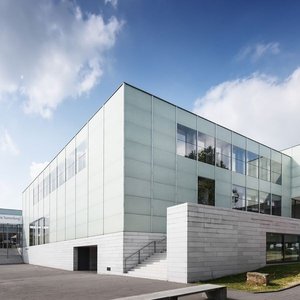
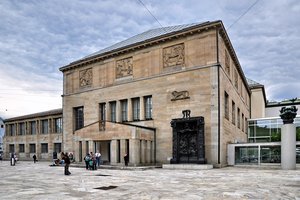
4
Man and his Thought (1900) by Auguste Rodin

Man and his Thought

1900 · Marble · Alte Nationalgalerie, Berlin

François Auguste Rodin's "Man and His Thought," completed in 1900, is not merely a sculpture; it’s a profound meditation on the very act of artistic creation. This arresting work, housed within the Musée Rodin in Paris, captures a pivotal moment – the genesis of an idea struggling to manifest into physical form. The scene depicts a bearded artist, rendered with remarkable anatomical detail and a palpable sense of intensity, kneeling…

5
Man with the Broken Nose (1864) by Auguste Rodin

Man with the Broken Nose

1864 · Sculpture Bronze · Legion of Honor, San Francisco

Man with the Broken Nose: A Study in Grief and Resilience The sculpture “Man with the Broken Nose,” created by Auguste Rodin in 1864, stands as a haunting testament to human vulnerability and an enduring symbol of contemplation. More than just a depiction of physical injury—a fractured nose—the piece delves into profound psychological themes, capturing the essence of sorrow and striving for inner peace within a meticulously crafted bronze form.…

6
The Fallen Angel (1890) by Auguste Rodin

The Fallen Angel

1890 · Bronze · Legion of Honor, San Francisco

A Portrait of Sorrow: Examining Rodin’s “The Fallen Angel” François Auguste René Rodin's "The Fallen Angel," completed in 1890, stands as a cornerstone of Romantic sculpture and an enduring testament to the artist’s ability to convey profound emotion through form. More than just a depiction of a biblical figure—the angel Gabriel wrestling with despair—it embodies a complex tapestry of themes exploring grief, compassion, and the confrontation with mortality. The sculpture…

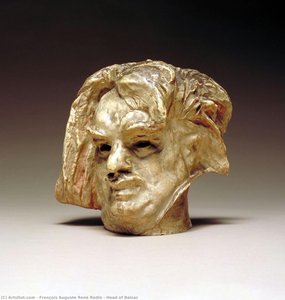
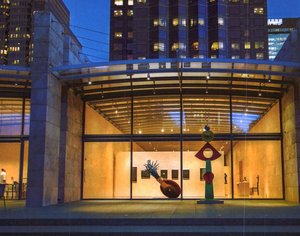
7
Victor Hugo (1917) by Auguste Rodin

Victor Hugo

1917 · Marble · Legion of Honor, San Francisco

In the quiet, hallowed halls of sculptural history, few encounters are as visceral as witnessing Auguste Rodin’s “Victor Hugo.” Completed in 1917, during the twilight of the master sculptor's life, this marble masterpiece is far more than a mere anatomical likeness of France’s most luminous literary titan. It is an arresting testament to Rodin’s profound ability to translate the intangible weight of human thought into the permanence of stone. As…

8
Danaide (1885) by Auguste Rodin

Danaide

1885 · Sculpture Bronze · Cantor Arts Center at Stanford University, Stanford

To stand before this sculpture is to encounter a moment suspended in time—a profound meditation on repose, perhaps even oblivion. The piece, titled Danaide, presents a breathtakingly intimate close-up study of the human head and shoulders. Rendered in a deeply textured, dark material suggestive of aged bronze, the surface whispers tales of oxidation and the passage of years. It is not merely a likeness; it is an emotional echo captured…

9
The Prodigal Son (1970) by Auguste Rodin

The Prodigal Son

1970 · Sculpture Bronze · Art Gallery of New South Wales, Sydney

To stand before The Prodigal Son is not merely to observe bronze; it is to encounter a raw, visceral outpouring of the human spirit. François Auguste René Rodin captured in this magnificent sculpture something far more ephemeral than metal—he has rendered the very moment of profound reckoning. The figure seems caught mid-exhalation, arms flung upward as if reaching for an impossible grace or perhaps embracing the weight of years of…

10
Minotaur (1886) by Auguste Rodin

Minotaur

1886 · Sculpture · Cantor Arts Center at Stanford University, Stanford

To stand before Rodin’s Minotaur is not merely to observe stone; it is to confront a raw, visceral moment wrested from the depths of myth and human emotion. This monumental sculpture, born in 1886, captures an entanglement so charged with unspoken narrative that it seems to breathe its own history into the cool, dark material. Rodin, ever the master of the psychological portrait rendered in durable stone, has gifted us…

Auguste Rodin's famous paintings, numbers 11 to 100

11Seated Female Nude (1887) by Auguste RodinSeated Female Nude1887 · Cantor Arts Center at Stanford University 12La femme accroupie (The Crouching Woman) by Auguste RodinLa femme accroupie (The Crouching Woman)Museum Folkwang 13Monumental Head of Jean d (1971) by Auguste RodinMonumental Head of Jean d1971 · Los Angeles County Museum of Art 14Torso of a man (Study for (1979) by Auguste RodinTorso of a man (Study for1979 · Art Gallery of South Australia 15The Thinker by Auguste RodinThe ThinkerThe Baltimore Museum of Art 16The Gates of Hell by Auguste RodinThe Gates of HellShizuoka Prefectural Museum of Art 17The Hand of God by Auguste RodinThe Hand of GodMaryhill Museum of Art 18Balzac Nude with his Arms Crossed (1892) by Auguste RodinBalzac Nude with his Arms Crossed1892 19The Age of Bronze (1876) by Auguste RodinThe Age of Bronze1876 · Museu Nacional d'Art de Catalunya 20Torso of a Young Woman (1886) by Auguste RodinTorso of a Young Woman1886 · Cantor Arts Center at Stanford University 21The Call to Arms (1879) by Auguste RodinThe Call to Arms1879 · Legion of Honor 22The Age of Bronze (1876) by Auguste RodinThe Age of Bronze1876 · Kunsthaus Zürich 23Small head of Jean de Fiennes with hand (1985) by Auguste RodinSmall head of Jean de Fiennes with hand1985 · Art Gallery of South Australia 24Danaid (The spring) (1800) by Auguste RodinDanaid (The spring)1800 · National Museum of Ancient Art 25Eternal Springtime (L’Eternel Printemps) (1898) by Auguste RodinEternal Springtime (L’Eternel Printemps)1898 · Calouste Gulbenkian Foundation 26The age of bronze (1876) by Auguste RodinThe age of bronze1876 · Kunstmuseum 27Pens (1895) by Auguste RodinPens1895 · Musée d'Orsay 28Eternal Springtime (1901) by Auguste RodinEternal Springtime1901 · Szépművészeti Múzeum 29Saint John the Baptist (1880) by Auguste RodinSaint John the Baptist1880 · Kunsthalle Bremen 30Head of Jean de Fiennes (1984) by Auguste RodinHead of Jean de Fiennes1984 · Art Gallery of South Australia 31The Thinker by Auguste RodinThe ThinkerMaryhill Museum of Art 32The Thinker (1888) by Auguste RodinThe Thinker1888 · Legion of Honor 33St. John the Baptist - Sant Jean - Babtiste préchant (1878) by Auguste RodinSt. John the Baptist - Sant Jean - Babtiste préchant1878 · National Gallery Prague 34Iris, Messenger of the Gods (1891) by Auguste RodinIris, Messenger of the Gods1891 · Kunsthaus Zürich 35Pierre de Wiessant (1895) by Auguste RodinPierre de Wiessant1895 · Kitakyushu Municipal Museum of Art 36Christ and the Magdalene (1894) by Auguste RodinChrist and the Magdalene1894 · Legion of Honor 37Head of Balzac (1897) by Auguste RodinHead of Balzac1897 · Nasher Sculpture Center 38Striding Man (1900) by Auguste RodinStriding Man1900 · Staatliche Kunsthalle Karlsruhe 39The Thinker (1888) by Auguste RodinThe Thinker1888 · Legion of Honor 40Hanako (1908) by Auguste RodinHanako1908 · Nasher Sculpture Center 41Balzac (1898) by Auguste RodinBalzac1898 42Portrait bust of Victor Hugo (1886) by Auguste RodinPortrait bust of Victor Hugo1886 · Calouste Gulbenkian Foundation 43Pierre de Wissant nude (1985) by Auguste RodinPierre de Wissant nude1985 · Art Gallery of South Australia 44The Sculptor and His Muse by Auguste RodinThe Sculptor and His MuseLegion of Honor 45The Bronze Age (1875) by Auguste RodinThe Bronze Age1875 · Kunsthalle Bremen 46Squatting woman (1882) by Auguste RodinSquatting woman1882 · Kröller-Müller Museum 47Ève by Auguste RodinÈveMuseum Folkwang 48The Kiss by Auguste RodinThe KissLegion of Honor 49Nude by Auguste RodinNudeColección de Arte Amalia Lacroze de Fortabat 50Pierre de Wiessant (1912) by Auguste RodinPierre de Wiessant1912 · Metropolitan Museum of Art 51The Age of Bronze (1876) by Auguste RodinThe Age of Bronze1876 · Nasher Sculpture Center 52Monument to Victor Hugo by Auguste RodinMonument to Victor HugoShimane Art Museum 53The Walking Man (1900) by Auguste RodinThe Walking Man1900 · Aichi Prefectural Museum of Art 54Jean de Fiennes by Auguste RodinJean de FiennesMaryhill Museum of Art 55Registration form from Auguste Rodin for the 9th exhibition (1901) by Auguste RodinRegistration form from Auguste Rodin for the 9th exhibition1901 · Secession 56Head of Eustache de Saint-Pierre by Auguste RodinHead of Eustache de Saint-Pierre 57The Thinker by Auguste RodinThe ThinkerCa' Pesaro - International Gallery of Modern Art 58Bust of Victor Hugo (1883) by Auguste RodinBust of Victor Hugo1883 · Cleveland Museum of Art 59The Gates of Hell (1917) by Auguste RodinThe Gates of Hell1917 · Kunsthaus Zürich 60Spirit of Eternal Rest (Head no.33) (1984) by Auguste RodinSpirit of Eternal Rest (Head no.33)1984 · Art Gallery of South Australia 61Toilet of Venus and Andromeda (1987) by Auguste RodinToilet of Venus and Andromeda1987 · Art Gallery of South Australia 62Eve by Auguste RodinEveDetroit Institute of Arts 63L by Auguste RodinLMuseum Folkwang 64The Age of Bronze (L by Auguste RodinThe Age of Bronze (LLegion of Honor 65First Maquette for the Monument to the Burghers of Calais (1884) by Auguste RodinFirst Maquette for the Monument to the Burghers of Calais1884 · Cantor Arts Center at Stanford University 66Iris, messenger of the gods (with head) (1970) by Auguste RodinIris, messenger of the gods (with head)1970 · Art Gallery of South Australia 67Minotaur by Auguste RodinMinotaurMaryhill Museum of Art 68The Kiss by Auguste RodinThe KissWarsaw National Museum 69Bust of Victor Hugo by Auguste RodinBust of Victor Hugo 70Le Minotaure (Faune et nymphe) by Auguste RodinLe Minotaure (Faune et nymphe)Museum Folkwang 71The Burghers of Calais by Auguste RodinThe Burghers of CalaisCa' Pesaro - International Gallery of Modern Art 72Eternal Idol (1889) by Auguste RodinEternal Idol1889 73Cupid and Psyche (1905) by Auguste RodinCupid and Psyche1905 74Bust of Helene von Nostitz by Auguste RodinBust of Helene von Nostitz 75Eternal Springtime by Auguste RodinEternal SpringtimeHuntington Museum of Art 76Bust of Gustav Mahler by Auguste RodinBust of Gustav Mahler 77One of the Danaides (1889) by Auguste RodinOne of the Danaides1889 · Ateneum Art Museum 78Age of Bronze (1876) by Auguste RodinAge of Bronze1876 79Fugitive Love by Auguste RodinFugitive LoveShizuoka Prefectural Museum of Art 80Eve (1881) by Auguste RodinEve1881 · Nasher Sculpture Center 81Adam (1881) by Auguste RodinAdam1881 82Minotaur or Faun and Nymph (1886) by Auguste RodinMinotaur or Faun and Nymph1886 83Andromeda (1886) by Auguste RodinAndromeda1886 84Psyche (1886) by Auguste RodinPsyche1886 85The Prodigal Son (1889) by Auguste RodinThe Prodigal Son1889 86Portrait Mask of Rose Beuret (1890) by Auguste RodinPortrait Mask of Rose Beuret1890 · Lehmbruck Museum 87Pallas with the Parthenon (1896) by Auguste RodinPallas with the Parthenon1896 88Assemblage: Mask of Camille Claudel and Left Hand of Pierre de Wissant (1895) by Auguste RodinAssemblage: Mask of Camille Claudel and Left Hand of Pierre de Wissant1895 89Balzac (1897) by Auguste RodinBalzac1897 90Youth Triumphant (La jeneusse triomphante) (1894) by Auguste RodinYouth Triumphant (La jeneusse triomphante)1894 · Reading Public Museum 91Miss Jean Simpson, Seated (1903) by Auguste RodinMiss Jean Simpson, Seated1903 · Brooklyn Museum 92Romeo and Juliet (1905) by Auguste RodinRomeo and Juliet1905 93Assembly: Female nude Slavic woman's head emerging from a Vase (1910) by Auguste RodinAssembly: Female nude Slavic woman's head emerging from a Vase1910 94Mask of Hanako, the Japanese Actress (1911) by Auguste RodinMask of Hanako, the Japanese Actress1911 95Portrait Of The Japanese Dancer Hanako (1908) by Auguste RodinPortrait Of The Japanese Dancer Hanako1908 96The female model (1917) by Auguste RodinThe female model1917 · National Gallery of Armenia 97Man with Broken Nose (1863) by Auguste RodinMan with Broken Nose1863 · Kunsthalle Bremen 98Reclining man, back arched (1985) by Auguste RodinReclining man, back arched1985 · Art Gallery of South Australia 99Bathing Woman (1902) by Auguste RodinBathing Woman1902 · National Gallery Prague 100Eve (view 2) (2000) by Auguste RodinEve (view 2)2000

Auguste Rodin's famous paintings, period by period

The subjects that held Auguste Rodin's eye

The four subjects that come back most often in these originals, each with its finest example.

The museums that keep Auguste Rodin's originals

The 8 museums that hold the most of the paintings on this page.

Museum City Works by Auguste Rodin Paintings from this list
Legion of Honor, San FranciscoLegion of Honor San Francisco 10 Man with the Broken Nose, The Fallen Angel, Victor Hugo
Art Gallery of South Australia, AdelaideArt Gallery of South Australia Adelaide 11 The three shades, Torso of a man (Study for, Small head of Jean de Fiennes with hand
Cantor Arts Center at Stanford University, StanfordCantor Arts Center at Stanford University Stanford 6 Danaide, Minotaur, Seated Female Nude
Museum Folkwang, EssenMuseum Folkwang Essen 5 La femme accroupie (The Crouching Woman), Ève, L
Maryhill Museum of Art, GoldendaleMaryhill Museum of Art Goldendale 5 The Hand of God, The Thinker, Jean de Fiennes
Nasher Sculpture Center, DallasNasher Sculpture Center Dallas 4 Head of Balzac, Hanako, The Age of Bronze
Kunsthaus Zürich, ZurichKunsthaus Zürich Zurich 3 The Age of Bronze, Iris, Messenger of the Gods, The Gates of Hell
Kunsthalle Bremen, BremenKunsthalle Bremen Bremen 3 Saint John the Baptist, The Bronze Age, Man with Broken Nose

Auguste Rodin across the decades: one unique original for each

Works per decade

Pick a decade to see the original that defines it.

Auguste Rodin's paintings: questions for the gallery

What is the single most famous work of Auguste Rodin?Reveal the answer

The Temptation of Saint Anthony (back) (1900), Museum of Fine Arts, Lyon. The three shades (1973) and The Thinker (1910) come next.

At what age did Auguste Rodin create The Temptation of Saint Anthony (back)?Reveal the answer

60 years old: The Temptation of Saint Anthony (back) dates from 1900, and Auguste Rodin was born in 1840.

Which ten paintings by Auguste Rodin are the most famous?Reveal the answer

The Temptation of Saint Anthony (back), The three shades, The Thinker, Man and his Thought, Man with the Broken Nose, The Fallen Angel, Victor Hugo, Danaide, The Prodigal Son and Minotaur. The ranking above gives each one's year and museum.

How many works by Auguste Rodin are known?Reveal the answer

Our catalog holds 205 works by Auguste Rodin, dated from 1863 to 1917.

Where can the most famous Auguste Rodin originals be seen?Reveal the answer

Mostly in Legion of Honor (San Francisco), Art Gallery of South Australia (Adelaide) and Cantor Arts Center at Stanford University (Stanford). The museum table above lists them all.

During which period did Auguste Rodin create the best-known paintings?Reveal the answer

In 1880s: 19 of the 100 works on this page were made then, Danaide among them.

Which famous Auguste Rodin painting is the earliest, and which the latest?Reveal the answer

On this page, the earliest is Man with Broken Nose (1863) and the latest Victor Hugo (1917).

What subjects did Auguste Rodin favour?Reveal the answer

Sculpture (47), Bronze (29) and Bronze sculpture (16), across the 100 works on this page.

What materials did Auguste Rodin paint with most?Reveal the answer

Bronze, for 42 of the 100 works on this page.

What Auguste Rodin originals can I see at the Legion of Honor?Reveal the answer

Man with the Broken Nose, The Fallen Angel and Victor Hugo: the Legion of Honor, San Francisco holds 10 of the works on this page.

Auguste Rodin: a portrait of the artist

The Sculptor of Souls: A Life Forged in Clay

François Auguste René Rodin, a name synonymous with modern sculpture, emerged from 19th-century France as a revolutionary force. Born in Paris on November 12, 1840, to modest beginnings, young Rodin’s path wasn't immediately destined for artistic greatness. He initially struggled to gain acceptance into the prestigious École des Beaux-Arts, facing rejection three times before ultimately finding his footing through practical training as a decorative stonemason. This early experience, however, proved invaluable, honing his technical skills and fostering an intimate understanding of form and material. It was a period of quiet apprenticeship, a necessary prelude to the seismic shifts he would later introduce into the world of sculpture. The seeds of his future innovation were sown not in academic halls but in the tangible reality of stone and clay. A profound personal loss – the death of his sister Marie – deeply affected him, leading to a brief contemplation of religious life before fully committing himself to art. This emotional depth would become a defining characteristic of his work, imbuing it with a raw, human quality rarely seen before.

Breaking with Tradition: A New Language in Stone

Rodin’s artistic journey was marked by a deliberate departure from the prevailing academic standards of his time. While trained in classical techniques, he rejected the idealized forms and narrative rigidity that dominated sculpture. He sought instead to capture the fleeting nuances of human emotion, the weight of thought, and the complexities of the inner life. His early works, such as *The Age of Bronze* (1877), initially sparked controversy for their realism and lack of mythological or allegorical subject matter. Critics found his figures too naturalistic, too devoid of the polished perfection expected of sculpture. However, Rodin persevered, driven by an unwavering belief in his artistic vision. He began to explore fragmented forms, rough surfaces, and dynamic compositions that conveyed a sense of movement and psychological intensity. This innovative approach challenged conventional notions of beauty and paved the way for a new era in sculptural expression. His ability to model complex, turbulent surfaces in clay was unparalleled, allowing him to capture the play of light and shadow with remarkable sensitivity.

Iconic Forms: The Thinker, The Kiss, and Beyond

Rodin’s legacy is cemented by a series of iconic sculptures that continue to resonate with audiences worldwide. *The Thinker* (1880-1882), originally conceived as part of *The Gates of Hell*, became an emblem of philosophical contemplation, its powerful form embodying the weight of human thought and existential questioning. *The Kiss* (1886-1898), a celebration of passionate love, is renowned for its sensual beauty and emotional intimacy. And *The Burghers of Calais* (1884-1895), a monumental tribute to courage and sacrifice, stands as a testament to Rodin’s ability to convey profound human drama through sculptural form. These works weren't merely representations of physical bodies; they were explorations of the human condition, imbued with psychological depth and emotional resonance. He didn’t shy away from portraying imperfection or suffering, recognizing that these qualities are integral to the human experience. His sculptures often featured unfinished surfaces, deliberately leaving traces of the artist’s hand as a testament to the creative process itself.

A Lasting Influence: Rodin's Place in Art History

By the turn of the 20th century, Rodin had achieved international acclaim, becoming arguably the most celebrated sculptor of his time. His work profoundly influenced generations of artists, inspiring them to break free from traditional constraints and explore new avenues of artistic expression. He is widely considered a pivotal figure in the transition from 19th-century realism to modern sculpture. His emphasis on emotional intensity, psychological depth, and innovative use of form laid the groundwork for movements such as Expressionism and Cubism. Today, Rodin’s sculptures can be found in museums and collections around the globe, most notably at the Musée Rodin in Paris, a dedicated space showcasing his life's work. His influence extends beyond sculpture, impacting painting, literature, and even film.

Exploring Further: Museums & Key Works

Rodin’s legacy is not merely one of artistic innovation; it's a testament to the power of art to connect us to our shared humanity. He dared to explore the depths of human emotion and experience, leaving behind a body of work that continues to inspire, challenge, and move audiences today. His sculptures are not simply objects to be admired; they are windows into the soul, inviting us to contemplate the complexities of life, love, loss, and everything in between.