Portrait of Max Pechstein

The 50 Most Famous Max Pechstein Paintings, a Gallery Selection

Updated October 2026 · ranked by our popularity score (searches, visits and orders for each work) · 62 works by Max Pechstein in our catalogue

In short

Of all the originals Max Pechstein left, the most famous is Lupow Estuary. Close behind it come Wiesental in the Mountains with Road and Castle (1911) and Nude in Tent (1911). Our catalog holds 62 works by Max Pechstein; the gallery has kept the 50 the world admires most, each shown with its date, its museum and its story.

1881 – 1955, Zwickau Expressionism Most works: Bavarian State Painting Collections

Max Pechstein's top 10 paintings: the gallery's choice

1
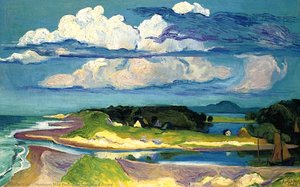
Lupow Estuary by Max Pechstein

Lupow Estuary

Oil On Canvas

The water of the Lupow Estuary rests in a state of profound stillness, its surface a mirror for the shifting moods of the sky. A small boat floats near the center, a solitary presence that anchors the vastness of the landscape. Around this quiet center, the land reaches out in lush, verdant strokes, where trees dot the shoreline like silent witnesses to the passing of time. The air feels heavy…

The Max Pechstein selection continues, 11 to 50

The subjects that held Max Pechstein's eye

The four subjects that come back most often in these originals, each with its finest example.

The museums that keep Max Pechstein's originals

The 8 museums that hold the most of the paintings on this page.

Museum City Works by Max Pechstein Paintings from this list
Bavarian State Painting Collections, MunichBavarian State Painting Collections Munich 5 Wiesental in the Mountains with Road and Castle, Nude in Tent, White House
Franz Marc Museum, Kochel am SeeFranz Marc Museum Kochel am See 3 Sitting Nude, Sitting Female Nude, Two lying Nudes
Israel Museum, JerusalemIsrael Museum Jerusalem 2 The Red House, Fishermen in a Boat
Museum Folkwang, EssenMuseum Folkwang Essen 2 Girl at a Table, Dancers
Brücke Museum, BerlinBrücke Museum Berlin 1 Young Girl
Germanisches Nationalmuseum, NurembergGermanisches Nationalmuseum Nuremberg 1 Two Girls
Wallraf-Richartz-Museum, CologneWallraf-Richartz-Museum Cologne 1 Vase with Flowers and Small Sculpture
Westfälishes Landesmuseum, MunsterWestfälishes Landesmuseum Munster 1 Portrait of Frau Dr. Plietzsch

Max Pechstein decade by decade: the original that defines each

Works per decade

Pick a decade to see the original that defines it.

Collectors' questions about Max Pechstein's paintings

Which work is Max Pechstein most famous for?Reveal the answer

Lupow Estuary. Wiesental in the Mountains with Road and Castle (1911) and Nude in Tent (1911) come next.

What are the ten most famous Max Pechstein paintings?Reveal the answer

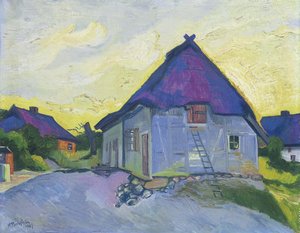
Lupow Estuary, Wiesental in the Mountains with Road and Castle, Nude in Tent, The Artist's Wife, Nude on the Beach, East German Village Landscape (Fishing Village), The Red Stockings, Women with Boat, Young Girl and The Red House. The ranking above gives each one's year and museum.

How many paintings did Max Pechstein leave?Reveal the answer

Our catalog holds 62 works by Max Pechstein, dated from 1908 to 1926.

In which museums do Max Pechstein's masterpieces hang?Reveal the answer

Mostly in Bavarian State Painting Collections (Munich), Franz Marc Museum (Kochel am See) and Israel Museum (Jerusalem). The museum table above lists them all.

In which years did Max Pechstein paint the most famous works?Reveal the answer

In 1910s: 26 of the 50 works on this page were made then, Wiesental in the Mountains with Road and Castle among them.

What are the first and the last famous originals of Max Pechstein?Reveal the answer

On this page, the earliest is Young Girl (1908) and the latest Self portrait (1926).

Which subjects did Max Pechstein choose most often?Reveal the answer

Landscape (2), Woman (2) and Chair (2), across the 50 works on this page.

Which technique did Max Pechstein use most?Reveal the answer

Oil On Canvas, for 2 of the 50 works on this page.

To which art movement does Max Pechstein belong?Reveal the answer

Expressionism, judging by the originals on this page.

Which Max Pechstein works hang at the Bavarian State Painting Collections?Reveal the answer

Wiesental in the Mountains with Road and Castle, Nude in Tent and White House: the Bavarian State Painting Collections, Munich holds 5 of the works on this page.

Max Pechstein: life and work

The Vibrant Pulse of German Expressionism

Born in the industrial heart of Zwickau in 1881, Hermann Max Pechstein emerged from a working-class background to become one of the most commanding figures of the early twentieth-century avant-garde. His journey into the soul of modern art began not with grand academic pretension, but through a grounded connection to craftsmanship and the raw textures of life. As the son of a textile worker, Pechstein’s early sensibilities were shaped by the rhythmic, tactile world of industry, a foundation that would later manifest in his bold, uninhibited use of line and color. His formal education at the Royal Academy of Applied Arts and the Royal Academy of Fine Arts in Dresden provided him with a technical rigor that set him apart from many of his contemporaries; he was, uniquely, the only member of the legendary Die Brücke group to have undergone such comprehensive academic training.

The trajectory of Pechstein’s career was irrevocably altered in 1906 when a chance encounter at a Dresden exhibition introduced him to Erich Heckel and the burgeoning collective known as Die Brücke. This fellowship of artists sought to bridge the gap between the past and a new, visceral modernity, stripping away the polite veneers of academicism to reveal the emotional truth beneath. Pechstein’s work during this period began to vibrate with a newfound energy, shedding the lingering decorative influences of Art Nouveau in favor of something far more primal. His travels through Italy and France acted as a powerful catalyst, where the sun-drenched palettes of the Fauves and the structural clarity of the Renaissance masters merged within his mind, resulting in a style characterized by simplified forms and an intense, unmixed application of pigment.

A Legacy Forged in Color and Conflict

As his reputation grew, Pechstein’s canvases became windows into the shifting spirit of post-WWI Germany. His art was never merely decorative; it was a profound exploration of human existence, captured through scenes of lively dancers, tranquil landscapes, and intimate portraits. In works such as Girl at a Table, one can witness his mastery of expressive lines and a sophisticated use of color that breathes life into the subject, often utilizing models like Lotte Kaprolat to ground his visionary abstractions in human warmth. His ability to capture the vitality of everyday life—from the rhythmic movement in his Dancers series to the vibrant, sun-soaked atmospheres of his island scenes—cemented his status as a master of the Expressionist idiom.

However, the brilliance of Pechstein’s vision was met with profound darkness during the rise of the Nazi regime. His commitment to emotional honesty and formal experimentation led the state to label his work as Degenerate Art. This period of persecution saw more than 300 of his paintings stripped from German museums, a devastating blow to both the artist and the cultural fabric of his nation. Despite this systematic attempt to erase his contribution, Pechstein’s spirit remained unbroken. He continued to paint through the turbulence of war and political upheaval, leaving behind a legacy that serves as a testament to the resilience of the creative impulse. Today, we recognize Max Pechstein not just as a painter, but as a pioneer who dared to use color as a language of liberation, ensuring that the vibrant pulse of German Expressionism continues to resonate through the halls of art history.