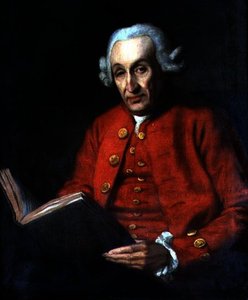
Portrait of Mather Brown

Mather Brown Paintings: The 72 Most Famous, Through a Gallery's Eye

Updated November 2026 · ranked by our popularity score (searches, visits and orders for each work) · 73 works by Mather Brown in our catalogue

In short

To the gallery's eye, Mather Brown's most famous painting is Sir Francis Buller, 1st Bt (1792), whose original hangs in the National Portrait Gallery, London. Master Charles William Park (1785) and Untitled (D2X2CK) (1790) complete the trio every eye recognises. Of the 73 works by Mather Brown in our catalog, the gallery presents the 72 most famous below, each original with its year, its museum and what makes it unique.

1761 – 1831, Boston Neoclassicism Most works: National Portrait Gallery

The gallery's top 10 Mather Brown paintings

1
Sir Francis Buller, 1st Bt (1792) by Mather Brown

Sir Francis Buller, 1st Bt

1792 · Oil On Canvas · National Portrait Gallery, London

The gaze of Sir Francis Buller, 1st Bt, meets the viewer from within this 1792 oil on canvas. Mather Brown captures the man who lived from 1746 to 1800, freezing a moment of judicial authority upon the fabric of the late eighteenth century. The sitter occupies the space with a quiet, heavy presence, his identity tied to the legal weight of his station. One senses the gravity of his life's…

2
Master Charles William Park (1785) by Mather Brown

Master Charles William Park

1785 · Oil On Canvas · Detroit Institute of Arts, Detroit

In this 1785 portrait, we encounter a young boy seated with a composure that feels far beyond his years. There is a stillness here, a sense of a moment caught in the soft light of a receding landscape. He is positioned centrally, his figure anchored by a rugged stone seat that suggests a connection to the natural world, even as his attire speaks of high social standing. The boy’s gaze…

3
Untitled (D2X2CK) (1790) by Mather Brown

Untitled (D2X2CK)

1790 · Metropolitan Museum of Art, New York

A Commanding Presence: Mather Brown’s Portrait of General Cornwallis This large-scale oil painting (249 x 164 cm), created in 1790 by American artist Mather Brown, offers a compelling and dramatic portrayal of British General Charles Cornwallis – a key figure in the American Revolutionary War. More than just a likeness, this is a carefully constructed statement about power, military leadership, and the lingering echoes of conflict. Brown, who spent much…

4
William Temple Franklin painting (1782) by Mather Brown

William Temple Franklin painting

1782 · Oil On Canvas · Gilcrease Museum, Tulsa

The William Temple Franklin painting by Mather Brown utilizes a three-quarter view to establish the subject's presence. Positioned slightly off-center, the gentleman is seated at a desk cluttered with papers and books, a configuration that emphasizes literacy and intellectual status. This Neoclassical portraiture employs an eye-level perspective to create an intimate connection between the sitter and the viewer. Depth is constructed through a deliberate layering of elements: the subject occupies…

5
A Commander in the East India Company (1786) by Mather Brown

A Commander in the East India Company

1786 · Oil On Canvas · Museum of Fine Arts, Boston

A middle-aged man is positioned in a three-quarter length portrait, oriented slightly to the left of the center. He wears a dark navy or black military coat, accented by gold embroidery on the lapels. Beneath the coat, a white waistcoat and a powdered wig provide a sharp contrast to the darker tones of his uniform. The lighting originates from the upper left, casting shadows across the right side of his…

7
Charles Bulfinch (1763-1844) (1786) by Mather Brown

Charles Bulfinch (1763-1844)

1786 · Oil · Harvard Art Museums, Cambridge

This formal 18th-century portrait, painted in 1786, presents a three-quarter view of a young man positioned slightly off-center. Facing towards the right while looking directly at the viewer, the subject exudes an air of elegance and aristocratic poise. The composition utilizes a deep brown background to create a strong chiaroscuro effect, which serves to highlight the subject's face and his white powdered wig.

8
Self-portrait (1812) by Mather Brown

Self-portrait

1812 · Oil On Canvas

The oil-on-canvas work titled Self-portrait is a direct encounter with the artist, Mather Brown. Created about 1812, this bust-length portrait captures the man as he appeared during the early nineteenth century. The subject gazes out from the frame, meeting the observer's eyes with a steady, quiet presence.

9
William Vans Murray (1787) by Mather Brown

William Vans Murray

1787 · Oil On Canvas · National Gallery of Art, Washington

In this 1787 oil on canvas, a young man is positioned in a three-quarter view from the chest upward. He wears a dark black coat that contrasts against a crisp white cravat wrapped around his neck. A powdered wig with soft, defined curls frames his face. Behind him, a heavy red drapery falls in deep folds, providing a saturated backdrop to the figure. The lighting is directional, casting one side…

10
Sir George Augustus Elliott, Baron Heathfield (1788) by Mather Brown

Sir George Augustus Elliott, Baron Heathfield

1788 · Oil On Canvas · Detroit Institute of Arts, Detroit

This oil on canvas presents Sir George Augustus Elliott, Baron Heathfield, as rendered by the American-born painter Mather Brown. The work was executed between 1788 and 1791, a period during which Brown was establishing his presence within the London art scene. The portrait captures the likeness of a man whose military career was defined by service in three major eighteenth-century wars.

Mather Brown paintings, ranked 11 to 72

11Portrait of Augustin Prevost in Uniform (for pair see - (109326)) (1723) by Mather BrownPortrait of Augustin Prevost in Uniform (for pair see - (109326))1723 12Thomas Dawson, Viscount Cremorne (1788) by Mather BrownThomas Dawson, Viscount Cremorne1788 · National Gallery of Art 13George, Prince of Wales (1762-1830), later George IV by Mather BrownGeorge, Prince of Wales (1762-1830), later George IVBuckingham Palace 14Portrait of a Man by Mather BrownPortrait of a ManMuseum of Fine Arts 15Portrait Of Sir George Yonge by Mather BrownPortrait Of Sir George Yonge 16Portrait Of Charles Bulfinch by Mather BrownPortrait Of Charles Bulfinch 17Sir John Colpoys by Mather BrownSir John Colpoys 18Sir John Eamer, Lord Mayor Of London by Mather BrownSir John Eamer, Lord Mayor Of London 19Thomas Fitzherbert by Mather BrownThomas Fitzherbert 20Rear Admiral Sir Home Popham by Mather BrownRear Admiral Sir Home Popham 21Henry Blundell by Mather BrownHenry Blundell 22Portrait Of Major John Norton As Mohawk Chief Teyoninhokarawen by Mather BrownPortrait Of Major John Norton As Mohawk Chief TeyoninhokarawenYale Center for British Art 23Lord Cornwallis Receiving The Sons Of Tipu As Hostages by Mather BrownLord Cornwallis Receiving The Sons Of Tipu As Hostages 24Romeo And Juliet by Mather BrownRomeo And Juliet 25Lady with a Dog (1786) by Mather BrownLady with a Dog1786 · Metropolitan Museum of Art 26Portrait of a Young Woman (1801) by Mather BrownPortrait of a Young Woman1801 · Metropolitan Museum of Art 27Portrait Of Sir John Eamer, Lord Mayor Of London by Mather BrownPortrait Of Sir John Eamer, Lord Mayor Of London 28Lord Loughborough by Mather BrownLord Loughborough 29Richard Clark by Mather BrownRichard Clark 30William Thomas by Mather BrownWilliam Thomas 31Peter Mellish, Sheriff by Mather BrownPeter Mellish, Sheriff 32Ohn Williams A.K.A. Anthony Pasquin by Mather BrownOhn Williams A.K.A. Anthony Pasquin 33John Bridge Aspinall by Mather BrownJohn Bridge Aspinall 34Sir William Dolben by Mather BrownSir William Dolben 35Captain George Miller Bligh by Mather BrownCaptain George Miller BlighNational Maritime Museum 36Thomas Hugh Clifford Of Tixall by Mather BrownThomas Hugh Clifford Of Tixall 37Anne Watts, Wife Of The 11th Earl Of Cassillis by Mather BrownAnne Watts, Wife Of The 11th Earl Of Cassillis 38Thomas Lowton by Mather BrownThomas Lowton 39Portrait Of George Fermor by Mather BrownPortrait Of George Fermor 40Frederick Augustus by Mather BrownFrederick Augustus 41Anne Brunton And Joseph Holman As Romeo And Juliet In 'romeo And Juliet' by Mather BrownAnne Brunton And Joseph Holman As Romeo And Juliet In 'romeo And Juliet' 42Portrait of Hon. Harrison Gray by Mather BrownPortrait of Hon. Harrison Gray 43Sir John William Anderson by Mather BrownSir John William Anderson 44Portrait of Sir Richard Arkwright by Mather BrownPortrait of Sir Richard ArkwrightNew Britain Museum of American Art 45Captain The Honourable Archibald Kennedy by Mather BrownCaptain The Honourable Archibald Kennedy 46The Reverend Alban Thomas Gwynne by Mather BrownThe Reverend Alban Thomas GwynneThe Homewood 47Mary Anne Vevers), Mrs Alban Thomas Jones Gwynne by Mather BrownMary Anne Vevers), Mrs Alban Thomas Jones GwynneThe Homewood 48Sir Christopher Wray by Mather BrownSir Christopher Wray 49Thomas Howard, Earl Of Surrey, Defending His Allegiance To Richard Iii Before Henry Vii After The Ba by Mather BrownThomas Howard, Earl Of Surrey, Defending His Allegiance To Richard Iii Before Henry Vii After The Ba 50Henry Angelo by Mather BrownHenry AngeloNational Portrait Gallery 51Viscount Mount Stuart, Provost Of Rothesay by Mather BrownViscount Mount Stuart, Provost Of Rothesay 52Portrait Of An Unknown Man by Mather BrownPortrait Of An Unknown Man 53Portrait Of Joseph Bologne De Saint-george by Mather BrownPortrait Of Joseph Bologne De Saint-georgeMetropolitan Museum of Art 54Susannah Jones, Mrs Alban Thomas Gwynne by Mather BrownSusannah Jones, Mrs Alban Thomas GwynneThe Homewood 55John Smeaton by Mather BrownJohn Smeaton 56Colonel Alban Thomas Jones Gwynne by Mather BrownColonel Alban Thomas Jones GwynneThe Homewood 57John Adams by Mather BrownJohn Adams 58Miss Mary Barbara, Miss Mary Isabella, And Master Thomas Aston Clifford by Mather BrownMiss Mary Barbara, Miss Mary Isabella, And Master Thomas Aston Clifford 59Lord Mountstuart by Mather BrownLord Mountstuart 60John Howard by Mather BrownJohn HowardNational Portrait Gallery 61Alexander Wedderburn by Mather BrownAlexander WedderburnScottish National Portrait Gallery 62Garrick Between Tragedy And Comedy by Mather BrownGarrick Between Tragedy And Comedy 63A Girl At A Harpsichord by Mather BrownA Girl At A HarpsichordPollok House 64Sir Charles Morgan by Mather BrownSir Charles Morgan 65Purveyor, Army Medical Department by Mather BrownPurveyor, Army Medical Department 66Lord George Augustus Cavendish by Mather BrownLord George Augustus Cavendish 67Franz Joseph Haydn by Mather BrownFranz Joseph Haydn 68Sir Francis Buller, 1st Bt by Mather BrownSir Francis Buller, 1st Bt 69The Baptism Of Henry Viii by Mather BrownThe Baptism Of Henry Viii 70The Battle Of The Nile - Destruction Of 'l'orient' by Mather BrownThe Battle Of The Nile - Destruction Of 'l'orient'National Maritime Museum 71Lord Howe On The Deck Of The 'queen Charlotte' by Mather BrownLord Howe On The Deck Of The 'queen Charlotte'National Maritime Museum 72Thomas Jefferson (1786) by Mather BrownThomas Jefferson1786 · National Portrait Gallery

Mather Brown's famous paintings, period by period

The subjects that held Mather Brown's eye

The four subjects that come back most often in these originals, each with its finest example.

The museums that keep Mather Brown's originals

The 8 museums that hold the most of the paintings on this page.

Museum City Works by Mather Brown Paintings from this list
National Portrait Gallery, LondonNational Portrait Gallery London 4 Sir Francis Buller, 1st Bt, Henry Angelo, John Howard
Metropolitan Museum of Art, New YorkMetropolitan Museum of Art New York 4 Untitled (D2X2CK), Lady with a Dog, Portrait of a Young Woman
The HomewoodThe Homewood 4 The Reverend Alban Thomas Gwynne, Mary Anne Vevers), Mrs Alban Thomas Jones Gwynne, Susannah Jones, Mrs Alban Thomas Gwynne
National Maritime Museum, LondonNational Maritime Museum London 3 Captain George Miller Bligh, The Battle Of The Nile - Destruction Of 'l'orient', Lord Howe On The Deck Of The 'queen Charlotte'
Detroit Institute of Arts, DetroitDetroit Institute of Arts Detroit 2 Master Charles William Park, Sir George Augustus Elliott, Baron Heathfield
Museum of Fine Arts, BostonMuseum of Fine Arts Boston 2 A Commander in the East India Company, Portrait of a Man
National Gallery of Art, WashingtonNational Gallery of Art Washington 2 William Vans Murray, Thomas Dawson, Viscount Cremorne
Gilcrease Museum, TulsaGilcrease Museum Tulsa 1 William Temple Franklin painting

Mather Brown, one signature painting per decade

Works per decade

Pick a decade to see the original that defines it.

Mather Brown's paintings: the gallery answers

Which Mather Brown painting is the most famous of all?Reveal the answer

Sir Francis Buller, 1st Bt (1792), National Portrait Gallery, London. Master Charles William Park (1785) and Untitled (D2X2CK) (1790) come next.

How old was Mather Brown on completing Sir Francis Buller, 1st Bt?Reveal the answer

31 years old: Sir Francis Buller, 1st Bt dates from 1792, and Mather Brown was born in 1761.

Which are Mather Brown's top 10 paintings?Reveal the answer

Sir Francis Buller, 1st Bt, Master Charles William Park, Untitled (D2X2CK), William Temple Franklin painting, A Commander in the East India Company, William von Freytag (1711-1798), Charles Bulfinch (1763-1844), Self-portrait, William Vans Murray and Sir George Augustus Elliott, Baron Heathfield. The ranking above gives each one's year and museum.

How many works did Mather Brown create?Reveal the answer

Our catalog holds 73 works by Mather Brown, dated from 1782 to 1812.

Where do Mather Brown's most famous originals hang?Reveal the answer

Mostly in National Portrait Gallery (London), Metropolitan Museum of Art (New York) and The Homewood. The museum table above lists them all.

When did Mather Brown create the most famous paintings?Reveal the answer

In 1780s: 9 of the 72 works on this page were made then, Master Charles William Park among them.

Which are Mather Brown's earliest and latest famous works?Reveal the answer

On this page, the earliest is William Temple Franklin painting (1782) and the latest Self-portrait (1812).

Which subjects did Mather Brown return to most?Reveal the answer

Portrait (10), Man (9) and Men (9), across the 72 works on this page.

Which medium did Mather Brown work in most?Reveal the answer

Oil On Canvas, for 10 of the 72 works on this page.

Which movement is Mather Brown associated with?Reveal the answer

Neoclassicism, judging by the originals on this page.

Which Mather Brown originals does the National Portrait Gallery hold?Reveal the answer

Sir Francis Buller, 1st Bt, Henry Angelo and John Howard: the National Portrait Gallery, London holds 4 of the works on this page.

Mather Brown: the artist

The Transatlantic Legacy of Mather Brown

Mather Brown stands as a fascinating bridge between two eras, a painter whose life and work embodied the shifting tides of the late 18th and early 19th centuries. Born in Boston in 1761, his artistic identity was forged in the intellectual crucible of colonial America before finding its ultimate expression in the grand studios of London. His journey represents more than just a personal career; it reflects the movement of artistic ideals from the rigorous, structured principles of Neoclassicism toward the emotive, dramatic spirit of Romanticism. This transition allowed Brown to become a versatile storyteller, capable of capturing both the quiet dignity of an individual portrait and the chaotic grandeur of historical conflict.

The foundation of Brown’s mastery can be traced back to his early mentorship under the legendary John Singleton Copley. Under Copley’s watchful eye, Brown learned the importance of meticulous detail and a profound understanding of classical form. This training provided him with the technical discipline required to navigate the competitive European art market. When he relocated to London in 1790, he did not merely arrive as an outsider but as a prepared professional, quickly earning his place within the prestigious Royal Academy. This membership was a defining achievement, signaling his acceptance into the highest echelons of the British art establishment and providing him with a platform to interact with the most influential figures of his age.

A Master of Portraiture and Historical Narrative

Brown’s body of work is characterized by an extraordinary ability to adapt his technique to the needs of his subject matter. In his portraiture, he possessed a remarkable gift for rendering the subtle nuances of character and social standing. His portraits of luminaries such as Thomas Jefferson and Benjamin West demonstrate a keen eye for the political and social currents of the era, imbuing his subjects with a sense of permanence and gravitas. Whether capturing the refined elegance in Lady with a Dog or the dignified presence in his portrait of Thomas Lowton, Brown utilized light and texture to create lifelike, breathing presences on canvas.

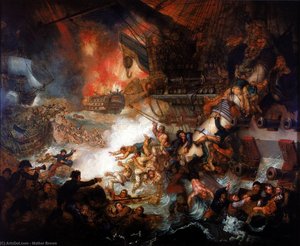
Beyond the intimate scale of portraiture, Brown sought to capture the epic. He was a painter of great ambition, often turning his attention to historical canvases that demanded a command of complex composition and dramatic movement. His work The Battle of the Nile serves as a pinnacle of this approach, where he moved away from static classical forms to embrace the swirling energy and visceral intensity of naval warfare. In these larger works, one can see the emergence of a Romantic sensibility—a focus on the sublime, the powerful, and the transformative nature of historical events.

Artistic Significance and Enduring Impression

The significance of Mather Brown lies in his role as a cultural conduit. By blending the precision of his American training with the stylistic innovations of the London art scene, he helped shape the visual language of an era defined by revolution and transition. His ability to navigate between the formal requirements of commissioned portraiture and the narrative demands of history painting allowed him to leave a lasting mark on both the British and American artistic consciousness.

Today, his works remain vital touchstones for understanding the evolution of Western art. Through his canvases, we witness:

  • The intersection of styles: The seamless blending of Neoclassical structure with Romantic emotion.
  • Historical documentation: The preservation of the likenesses and legacies of the Enlightenment's most important figures.
  • Technical mastery: An enduring excellence in the rendering of fabric, light, and human expression that continues to captivate modern viewers.