Portrait of Joseph Stella

Joseph Stella Paintings: The 95 Most Famous, Through a Gallery's Eye

Updated November 2026 · ranked by our popularity score (searches, visits and orders for each work) · 101 works by Joseph Stella in our catalogue

In short

To the gallery's eye, Joseph Stella's most famous painting is Untitled (432). Untitled (691) and Portrait of a Young Man (1909) complete the trio every eye recognises. Of the 101 works by Joseph Stella in our catalog, the gallery presents the 95 most famous below, each original with its year, its museum and what makes it unique.

1877 – 1946, Muro Lucano Futurism Most works: Smithsonian American Art Museum

The gallery's top 10 Joseph Stella paintings

1
Untitled (432) by Joseph Stella

Untitled (432)

Painting

In the work titled Untitled (432), the artist Joseph Stella turns his gaze toward a singular, quiet presence. This portrait captures a woman caught in a moment of stillness. A blue veil rests upon her head, casting a cool shadow over her features. She wears a necklace that catches the light, and flowers are woven into her hair. The subject does not meet the viewer's eye. Instead, she looks downward,…

2
Untitled (691) by Joseph Stella

Untitled (691)

The composition centers on a large, singular tree that anchors the visual field. This central botanical form is surrounded by a dense arrangement of smaller trees and various plant life. The scene is populated by numerous flowers of varying scales and hues, distributed from the central axis toward the periphery of the frame. These botanical elements create a thick, layered landscape of green and multicolored vegetation. The arrangement suggests a…

3
Portrait of a Young Man (1909) by Joseph Stella

Portrait of a Young Man

1909 · Oil · Smithsonian American Art Museum, Washington, D.C.

A quiet intensity radiates from the face of this young man, emerging from a heavy, shadowed void. The light catches the warmth of his skin, casting a golden, ochre glow that feels almost tactile against the darkness. He does not look away; instead, his gaze remains fixed in a state of deep introspection, caught in a moment of silent thought. The texture of the work is rugged, with vertical striations…

5
Cypresses Tree Trunk (1927) by Joseph Stella

Cypresses Tree Trunk

1927 · Oil

The sky hangs heavy with the color of amber and honey. Below this luminous canopy, a stone church rests in the quietude of a late afternoon. Its blue roof provides a cool, rhythmic anchor against the warmth of the sun-drenched air. A single bird drifts through the space above the verdant canopy, a small movement in an otherwise still world. The scene feels caught in a breath, a moment where…

6
Madonna (1920) by Joseph Stella

Madonna

1920 · Pastel · Brauer Museum of Art, Porter County

In Madonna, Joseph Stella moves away from the industrial structures of his later years toward a more spiritual, semi-abstract language. The composition centers on a vertical, elongated figure that evokes the presence of a religious icon. This figure is rendered through an expressionistic lens, prioritizing emotional resonance over anatomical precision. The silhouette is defined by fluid, sketchy lines that suggest a sense of movement and ethereal grace. A circular motif…

7
Purissima (1927) by Joseph Stella

Purissima

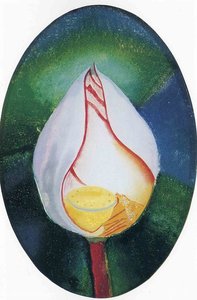
1927 · Oil On Canvas · High Museum of Art, Atlanta

Purissima is an oil on canvas painting by Joseph Stella. Created in 1927, this work is categorized within the Precisionist movement. The composition features a central female figure, and the subject matter is tagged as The Virgin Mary.

8
The Quencher (Night Fires) (1919) by Joseph Stella

The Quencher (Night Fires)

1919 · Drawing

The drawing relies on high-contrast tones to convey the heat and light of the fire against the nocturnal backdrop. There is a palpable urgency in the way the smoke and light interact with the structural lines of the city. The presence of the train introduces a sense of relentless, indifferent motion, contrasting the human struggle against the fire with the steady pulse of urban transit. It is a study of…

9
Steel Mill (1919) by Joseph Stella

Steel Mill

1919 · Gouache · Smithsonian American Art Museum, Washington, D.C.

The industrial landscape takes shape in Steel Mill, a work by Joseph Stella. Created about 1919-1920, this piece captures a specific moment of mechanical power. The composition focuses on the architecture of industry, specifically the structures of a mill. It exists as a study of the heavy, functional forms that define the modern era.

10
Dance of Spring (Song of the Birds) (1924) by Joseph Stella

Dance of Spring (Song of the Birds)

1924 · Oil · Kemper Museum of Contemporary Art, Kansas City

In the delicate brushstrokes of "Dance of Spring (Song of the Birds)," we encounter a moment of profound serenity captured by the Italian-American master, Joseph Stella. Painted in 1924, this work serves as a breathtaking departure from the industrial dynamism and Futurist steel structures for which Stella is often celebrated. Instead, the canvas invites us into an intimate, pastoral sanctuary where the boundaries between the human spirit and the natural…

Joseph Stella paintings, ranked 11 to 95

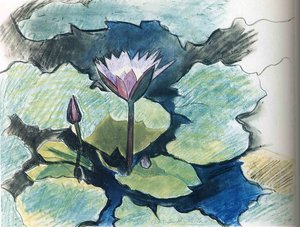
11Coney Island (1914) by Joseph StellaConey Island1914 · Metropolitan Museum of Art 12Bridge (1936) by Joseph StellaBridge1936 · San Francisco Museum of Modern Art 13Still Life (1910) by Joseph StellaStill Life1910 · Reading Public Museum 14Untitled (249) by Joseph StellaUntitled (249) 15Untitled (334) by Joseph StellaUntitled (334) 16Untitled (835) by Joseph StellaUntitled (835) 17Untitled (113) by Joseph StellaUntitled (113) 18Untitled (847) by Joseph StellaUntitled (847) 19Untitled (589) by Joseph StellaUntitled (589) 20Street in Allegheny (1908) by Joseph StellaStreet in Allegheny1908 21Song of the Nightingale (1917) by Joseph StellaSong of the Nightingale1917 · Dallas Museum of Art 22Spring  (The Procession) (1915) by Joseph StellaSpring (The Procession)1915 · Yale University Art Gallery 23Dog in Motion (1914) by Joseph StellaDog in Motion1914 · Harvard Art Museums 24Building Forms (1915) by Joseph StellaBuilding Forms1915 25Abstraction Mardi Gras (1916) by Joseph StellaAbstraction Mardi Gras1916 26Skyscrapers (1920) by Joseph StellaSkyscrapers1920 · Buffalo AKG Art Museum 27The White Heron (1919) by Joseph StellaThe White Heron1919 · Yale University Art Gallery 28Study for New York Interpreted Brooklyn Bridge (1922) by Joseph StellaStudy for New York Interpreted Brooklyn Bridge1922 29Nocturne (1928) by Joseph StellaNocturne1928 · Metropolitan Museum of Art 30Cypress Tree (1927) by Joseph StellaCypress Tree1927 31Landscape (Waterlily) (1924) by Joseph StellaLandscape (Waterlily)1924 32Children's Toys (Marionettes) (1930) by Joseph StellaChildren's Toys (Marionettes)1930 · Museum of Fine Arts 33Torso (1929) by Joseph StellaTorso1929 34Lotus (1929) by Joseph StellaLotus1929 35Serenade, A Christmas Fantasy (La Fontaine) (1937) by Joseph StellaSerenade, A Christmas Fantasy (La Fontaine)1937 36Old Brooklyn Bridge (1941) by Joseph StellaOld Brooklyn Bridge1941 · Museum of Fine Arts 37Brooklyn Bridge (1950) by Joseph StellaBrooklyn Bridge1950 · Yale University Art Gallery 38Barrage by Joseph StellaBarrage 39Untitled (363) by Joseph StellaUntitled (363) 40Untitled (144) by Joseph StellaUntitled (144) 41Untitled (394) by Joseph StellaUntitled (394) 42Untitled (191) by Joseph StellaUntitled (191) 43Untitled (853) by Joseph StellaUntitled (853) 44Untitled (482) by Joseph StellaUntitled (482) 45Untitled (191) by Joseph StellaUntitled (191) 46Untitled (471) by Joseph StellaUntitled (471) 47Untitled (268) by Joseph StellaUntitled (268) 48Untitled (194) by Joseph StellaUntitled (194) 49Untitled (942) by Joseph StellaUntitled (942) 50Untitled (839) by Joseph StellaUntitled (839) 51Untitled (643) by Joseph StellaUntitled (643) 52Untitled (572) by Joseph StellaUntitled (572) 53Untitled (845) by Joseph StellaUntitled (845) 54Untitled (286) by Joseph StellaUntitled (286) 55Untitled (993) by Joseph StellaUntitled (993) 56Untitled (106) by Joseph StellaUntitled (106) 57Untitled (336) by Joseph StellaUntitled (336) 58Untitled (205) by Joseph StellaUntitled (205)Smithsonian American Art Museum 59Untitled (128) by Joseph StellaUntitled (128) 60Untitled (390) by Joseph StellaUntitled (390)Art Institute of Chicago 61Untitled (607) by Joseph StellaUntitled (607) 62Untitled (914) by Joseph StellaUntitled (914) 63Untitled (995) by Joseph StellaUntitled (995) 64Untitled (218) by Joseph StellaUntitled (218) 65Untitled (850) by Joseph StellaUntitled (850) 66Untitled (282) by Joseph StellaUntitled (282) 67Untitled (581) by Joseph StellaUntitled (581) 68Untitled (871) by Joseph StellaUntitled (871) 69Untitled (620) by Joseph StellaUntitled (620)Smithsonian American Art Museum 70Untitled (392) by Joseph StellaUntitled (392) 71Untitled (751) by Joseph StellaUntitled (751) 72Untitled (391) by Joseph StellaUntitled (391) 73Untitled (581) by Joseph StellaUntitled (581) 74Untitled (168) by Joseph StellaUntitled (168) 75Untitled (666) by Joseph StellaUntitled (666) 76Untitled (786) by Joseph StellaUntitled (786) 77Battle of Lights by Joseph StellaBattle of Lights 78Untitled (447) by Joseph StellaUntitled (447) 79Untitled (210) by Joseph StellaUntitled (210) 80Untitled (762) by Joseph StellaUntitled (762) 81Untitled (436) by Joseph StellaUntitled (436) 82Untitled (497) by Joseph StellaUntitled (497) 83Untitled (156) by Joseph StellaUntitled (156) 84Untitled (440) by Joseph StellaUntitled (440) 85Untitled (278) by Joseph StellaUntitled (278) 86Untitled (839) by Joseph StellaUntitled (839) 87Untitled (764) by Joseph StellaUntitled (764) 88Untitled (203) by Joseph StellaUntitled (203)Yale University Art Gallery 89Untitled (173) by Joseph StellaUntitled (173) 90Untitled (768) by Joseph StellaUntitled (768) 91The Voice of the City of New York Interpreted: The Bridge (Brooklyn Bridge) by Joseph StellaThe Voice of the City of New York Interpreted: The Bridge (Brooklyn Bridge)The Newark Museum of Art 92The Voice of the City of New York Interpreted: The White Way II by Joseph StellaThe Voice of the City of New York Interpreted: The White Way IIThe Newark Museum of Art 93The Voice of the City of New York Interpreted by Joseph StellaThe Voice of the City of New York InterpretedThe Newark Museum of Art 94Pyrotechnic Fires by Joseph StellaPyrotechnic Fires 95Futurist Composition (1914) by Joseph StellaFuturist Composition1914 · Amon Carter Museum of American Art

Joseph Stella's famous paintings, period by period

The subjects that held Joseph Stella's eye

The four subjects that come back most often in these originals, each with its finest example.

The museums that keep Joseph Stella's originals

The 8 museums that hold the most of the paintings on this page.

Museum City Works by Joseph Stella Paintings from this list
Smithsonian American Art Museum, Washington, D.C.Smithsonian American Art Museum Washington, D.C. 4 Portrait of a Young Man, Steel Mill, Untitled (205)
Yale University Art Gallery, New HavenYale University Art Gallery New Haven 4 Spring (The Procession), The White Heron, Brooklyn Bridge
The Newark Museum of Art, NewarkThe Newark Museum of Art Newark 3 The Voice of the City of New York Interpreted: The Bridge (Brooklyn Bridge), The Voice of the City of New York Interpreted: The White Way II, The Voice of the City of New York Interpreted
Metropolitan Museum of Art, New YorkMetropolitan Museum of Art New York 2 Coney Island, Nocturne
Museum of Fine Arts, BostonMuseum of Fine Arts Boston 2 Children's Toys (Marionettes), Old Brooklyn Bridge
Brauer Museum of Art, Porter CountyBrauer Museum of Art Porter County 1 Madonna
High Museum of Art, AtlantaHigh Museum of Art Atlanta 1 Purissima
Kemper Museum of Contemporary Art, Kansas CityKemper Museum of Contemporary Art Kansas City 1 Dance of Spring (Song of the Birds)

Joseph Stella, one signature painting per decade

Works per decade

Pick a decade to see the original that defines it.

Joseph Stella's paintings: the gallery answers

Which Joseph Stella painting is the most famous of all?Reveal the answer

Untitled (432). Untitled (691) and Portrait of a Young Man (1909) come next.

Which are Joseph Stella's top 10 paintings?Reveal the answer

Untitled (432), Untitled (691), Portrait of a Young Man, Study for Battle Of Lights, Coney Island, Mardi Gras, Cypresses Tree Trunk, Madonna, Purissima, The Quencher (Night Fires), Steel Mill and Dance of Spring (Song of the Birds). The ranking above gives each one's year and museum.

How many works did Joseph Stella create?Reveal the answer

Our catalog holds 101 works by Joseph Stella, dated from 1908 to 1941.

Where do Joseph Stella's most famous originals hang?Reveal the answer

Mostly in Smithsonian American Art Museum (Washington, D.C.), Yale University Art Gallery (New Haven) and The Newark Museum of Art (Newark). The museum table above lists them all.

When did Joseph Stella create the most famous paintings?Reveal the answer

In 1910s: 12 of the 95 works on this page were made then, Study for Battle Of Lights, Coney Island, Mardi Gras among them.

Which are Joseph Stella's earliest and latest famous works?Reveal the answer

On this page, the earliest is Street in Allegheny (1908) and the latest Old Brooklyn Bridge (1941).

Which subjects did Joseph Stella return to most?Reveal the answer

Flowers (5), Birds (3) and Landscape (3), across the 95 works on this page.

Which medium did Joseph Stella work in most?Reveal the answer

Oil, for 3 of the 95 works on this page.

Which movement is Joseph Stella associated with?Reveal the answer

Futurism, judging by the originals on this page.

Which Joseph Stella originals does the Smithsonian American Art Museum hold?Reveal the answer

Portrait of a Young Man, Steel Mill and Untitled (205): the Smithsonian American Art Museum, Washington, D.C. holds 4 of the works on this page.

Joseph Stella: the artist

A Bridge Between Worlds: The Life and Art of Joseph Stella

Born in the small Italian village of Muro Lucano in 1877, Joseph Stella’s journey was one of constant reinvention and a passionate embrace of modernity. Initially destined for a career in medicine after his family emigrated to New York City in 1896, Stella quickly found himself drawn to the world of art, abandoning medical studies to enroll at the Art Students League and later the New York School of Art under the tutelage of William Merritt Chase. His early work reflected a gritty realism, depicting the harsh realities of immigrant life in the city’s slums – a far cry from the vibrant dynamism that would come to define his mature style. These initial paintings, though significant for their social commentary, served as a foundation upon which he would build a truly unique artistic vision. He honed his skills as an illustrator during this period, contributing drawings to various magazines, but a yearning for something more profound began to stir within him.

The Allure of Europe and the Embrace of Modernism

A sense of dissatisfaction with American life prompted Stella’s return to Italy in 1909, seeking reconnection with his roots. However, this journey proved transformative in unexpected ways. It was during his time in Europe, particularly in Paris, that he encountered the burgeoning modernist movements – Fauvism, Cubism, and most importantly, Futurism – which would irrevocably alter the course of his artistic development. The Parisian salon of Gertrude Stein became a pivotal hub, introducing him to key figures like Umberto Boccioni and Gino Severini, artists who championed the dynamism and technological fervor of the modern age. Stella was captivated by the Futurist manifesto’s celebration of speed, machinery, and urban life, principles that resonated deeply with his own evolving artistic sensibilities. He began incorporating these ideas into his work, forging a style that blended European avant-garde aesthetics with an distinctly American subject matter.

Dynamic Visions: Key Works and Artistic Style

Stella’s breakthrough came with Battle of Lights, Coney Island (1913-14), widely considered one of the earliest and most significant examples of Futurist painting in America. This work captures the exhilarating energy of the amusement park, translating its flashing lights, swirling crowds, and mechanical rides into a dazzling display of color and motion. It wasn’t merely a depiction of Coney Island; it was an attempt to convey the sensation of being *in* Coney Island. He continued this exploration in works like Der Rosenkavalier (1914) and Spring (The Procession – A Chromatic Sensation) (1914-16), pushing towards increasingly vigorous color abstractions. While closely associated with Futurism, Stella’s style also demonstrated elements of Precisionism, characterized by clean lines and geometric forms, particularly evident in his iconic depictions of the Brooklyn Bridge. He wasn't simply replicating what he saw; he was interpreting it through a lens of dynamic energy and structural clarity. The bridge became for him a symbol of American ingenuity and progress, a testament to the power of modern engineering. His paintings weren’t just images; they were statements about the changing world around him.

Legacy and Lasting Influence

Joseph Stella's participation in the landmark Armory Show of 1913 catapulted him into the spotlight, gaining recognition for his innovative approach to painting and influencing a generation of American artists. His work was further championed by Katherine Dreier’s Societe Anonyme, New York's first museum dedicated to advanced contemporary art, solidifying his position within the avant-garde movement. Stella is now recognized as a seminal figure in the development of early 20th-century American modernism, successfully synthesizing European modernist movements with an American sensibility and subject matter. He died in 1946, leaving behind a legacy of vibrant and dynamic depictions of industrial America. His later works, including Pyrotechnic Fires and various untitled pieces, continued to explore new stylistic avenues, demonstrating his unwavering commitment to artistic exploration. Joseph Stella remains a pivotal figure who helped bridge the gap between European modernism and American art, forever changing the landscape of 20th-century painting.