Portrait of Jacob Vrel

Jacob Vrel Paintings: The 17 Most Famous, Through a Gallery's Eye

Updated November 2026 · ranked by our popularity score (searches, visits and orders for each work) · 19 works by Jacob Vrel in our catalogue

In short

To the gallery's eye, Jacob Vrel's most famous painting is Street Scene (1658), whose original hangs in the J. Paul Getty Museum, Los Angeles. An Old Woman by a Fireplace (1550) and Old woman seated with a young girl before a window (1645) complete the trio every eye recognises. Of the 19 works by Jacob Vrel in our catalog, the gallery presents the 17 most famous below, each original with its year, its museum and what makes it unique.

1630 – 1681, Friesland Dutch golden age Most works: Hermitage Museum

The gallery's top 10 Jacob Vrel paintings

1
Street Scene (1658) by Jacob Vrel

Street Scene

1658 · Oil · J. Paul Getty Museum, Los Angeles

is a somber and atmospheric Dutch Golden Age street scene dating from 1658. The composition utilizes a vertical orientation to emphasize the height of the surrounding architecture, creating a sense of enclosure within a narrow, cobblestone alleyway. This urban setting is lined with tall, weathered brick buildings that recede into the shadows through a one-point perspective, providing a sense of depth.

2
An Old Woman by a Fireplace (1550) by Jacob Vrel

An Old Woman by a Fireplace

1550 · Oil · Hermitage Museum, Saint Petersburg

In the quiet shadows of a rural dwelling, An Old Woman by a Fireplace brings a solitary moment of domestic life into view. This work by Jacob Vrel captures a portrait of an old woman, her presence felt through the stillness of her surroundings. The scene unfolds around the warmth of a hearth, a fireplace scene that anchors the entire composition. It is a glimpse into a private, unhurried existence,…

3
Old woman seated with a young girl before a window (1645) by Jacob Vrel

Old woman seated with a young girl before a window

1645 · Oil On Canvas

In a quiet corner of history, the painting Old woman seated with a young girl before a window brings a domestic moment to life. This work, created by the Dutch artist Jacob Vrel, captures a gentle interaction between two generations. The scene unfolds within a dimly lit interior, where the presence of the two figures creates a sense of immediate, lived experience. It is a work that likely finds its…

4
An Old Woman by a Fireplace (1550) by Jacob Vrel

An Old Woman by a Fireplace

1550 · Oil · Hermitage Museum, Saint Petersburg

An elderly woman sits positioned before the hearth, seeking warmth from the glowing embers. The composition captures a private instance of domestic life, where the soft light of the fire illuminates her features and the surrounding room. Two bowls rest near her, suggesting a simple meal or drink, while a bottle stands nearby in the shadows. A clock hangs upon the wall above the mantel, its presence marking the steady…

5
The Little Nurse (1655) by Jacob Vrel

The Little Nurse

1655 · Oil On Panel · National Gallery of Art, Washington

The Little Nurse is an oil on panel painting executed by the artist Jacob Vrel. This work dates to 1655 and originates from the Dutch Golden Age. The piece is currently held within the collection at the Ashmolean Museum in Oxford, United Kingdom.

6
Women at the window by Jacob Vrel

Women at the window

In the quiet stillness of a domestic interior, Women at the window unfolds before us. This painting, created by the Dutch artist Jacob Vrel, captures a moment of profound introspection. A woman sits at her desk, her gaze drifting toward the world beyond a barred window, while the presence of others in the room adds a layer of lived-in complexity to the scene. The air feels heavy with a sense…

7
View of a street (1633) by Jacob Vrel

View of a street

1633 · Oil On Panel · Bavarian State Painting Collections, Munich

In "View of a street" by Jacob Vrel, the composition is defined by a strong verticality. Tall, narrow buildings flank a central cobblestone alleyway, creating an enclosed urban environment. This arrangement utilizes a one-point linear perspective that directs the eye toward the center of the street. The architectural contours of the gabled houses follow diagonal lines that recede into the background, establishing a sense of depth within the narrow space.

8
Interior Scene (Woman Seated by a Hearth) (1654) by Jacob Vrel

Interior Scene (Woman Seated by a Hearth)

1654 · Oil On Canvas · Thyssen-Bornemisza Museum, Madrid

A single beam of light enters from a large window positioned in the upper portion of the composition, cutting through the dimness of a Dutch interior. This light falls upon a woman who is bent over a washbasin, her form defined by the sharp contrast between the illuminated surfaces and the deep shadows of the room. The setting is a structured space characterized by linear perspective, where the receding lines…

9
Sleeping Woman (The Convalescent) (1654) by Jacob Vrel

Sleeping Woman (The Convalescent)

1654 · Oil

The room holds its breath. A woman sits deeply recessed in a chair, her body surrendered to the heavy pull of sleep. She is a figure in repose, caught in that fragile moment between consciousness and the deep stillness of rest. Beside her, the fireplace breathes a soft, steady warmth into the space, its brickwork casting gentle shadows against the walls. The scene feels private, almost stolen, as if we…

10
Interior with a Woman Combing a Little Girl's Hair (1662) by Jacob Vrel

Interior with a Woman Combing a Little Girl's Hair

1662 · Oil · Detroit Institute of Arts, Detroit

The air in the room feels heavy with the scent of aged wood and the soft, rhythmic sound of a comb passing through fine strands. A woman sits poised in her chair, her focus entirely absorbed by the small child before her. The little girl remains still, a silent participant in this intimate ritual of grooming. Sunlight filters through the space, catching the textures of the wooden walls and the…

Jacob Vrel paintings, ranked 11 to 17

The subjects that held Jacob Vrel's eye

The four subjects that come back most often in these originals, each with its finest example.

The museums that keep Jacob Vrel's originals

The 8 museums that hold the most of the paintings on this page.

Museum City Works by Jacob Vrel Paintings from this list
Hermitage Museum, Saint PetersburgHermitage Museum Saint Petersburg 2 An Old Woman by a Fireplace, An Old Woman by a Fireplace
Thyssen-Bornemisza Museum, MadridThyssen-Bornemisza Museum Madrid 2 Interior Scene (Woman Seated by a Hearth), Interior with a Woman Seated by a Hearth
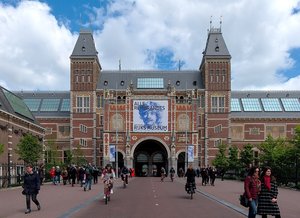
Rijksmuseum, AmsterdamRijksmuseum Amsterdam 2 Woman at the hearth, City view
J. Paul Getty Museum, Los AngelesJ. Paul Getty Museum Los Angeles 1 Street Scene
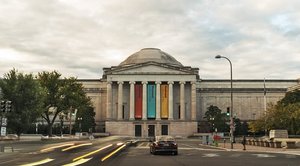
National Gallery of Art, WashingtonNational Gallery of Art Washington 1 The Little Nurse
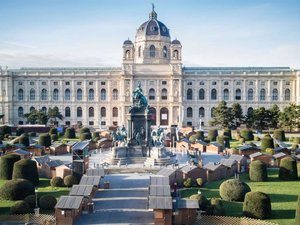
Kunsthistorisches Museum, ViennaKunsthistorisches Museum Vienna 1 Women at the window
Bavarian State Painting Collections, MunichBavarian State Painting Collections Munich 1 View of a street
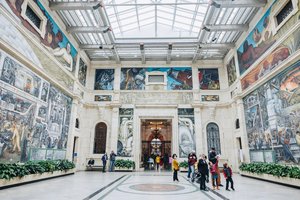
Detroit Institute of Arts, DetroitDetroit Institute of Arts Detroit 1 Interior with a Woman Combing a Little Girl's Hair

Jacob Vrel, one signature painting per decade

Works per decade
Pick a decade to see the original that defines it.

Jacob Vrel's paintings: the gallery answers

Which Jacob Vrel painting is the most famous of all?Reveal the answer

Street Scene (1658), J. Paul Getty Museum, Los Angeles. An Old Woman by a Fireplace (1550) and Old woman seated with a young girl before a window (1645) come next.

How old was Jacob Vrel on completing Street Scene?Reveal the answer

28 years old: Street Scene dates from 1658, and Jacob Vrel was born in 1630.

Which are Jacob Vrel's top 10 paintings?Reveal the answer

Street Scene, An Old Woman by a Fireplace, Old woman seated with a young girl before a window, An Old Woman by a Fireplace, The Little Nurse, Women at the window, View of a street, Interior Scene (Woman Seated by a Hearth), Sleeping Woman (The Convalescent) and Interior with a Woman Combing a Little Girl's Hair. The ranking above gives each one's year and museum.

How many works did Jacob Vrel create?Reveal the answer

Our catalog holds 19 works by Jacob Vrel, dated from 1645 to 1662.

Where do Jacob Vrel's most famous originals hang?Reveal the answer

Mostly in Hermitage Museum (Saint Petersburg), Thyssen-Bornemisza Museum (Madrid) and Rijksmuseum (Amsterdam). The museum table above lists them all.

When did Jacob Vrel create the most famous paintings?Reveal the answer

In 1650s: 5 of the 17 works on this page were made then, Street Scene among them.

Which are Jacob Vrel's earliest and latest famous works?Reveal the answer

On this page, the earliest is Old woman seated with a young girl before a window (1645) and the latest Interior with a Woman Combing a Little Girl's Hair (1662).

Which subjects did Jacob Vrel return to most?Reveal the answer

Woman (8), Chair (6) and Fireplace (5), across the 17 works on this page.

Which medium did Jacob Vrel work in most?Reveal the answer

Oil On Panel, for 7 of the 17 works on this page.

Which movement is Jacob Vrel associated with?Reveal the answer

Dutch golden age, judging by the originals on this page.

Which Jacob Vrel originals does the Hermitage Museum hold?Reveal the answer

An Old Woman by a Fireplace and An Old Woman by a Fireplace: the Hermitage Museum, Saint Petersburg holds 2 of the works on this page.

Jacob Vrel: the artist

Jacobus Vrel: The Shadow Painter Who Illuminated Vermeer’s Legacy

Jacobus Vrel (c. 1617 – 1681) remains an artist shrouded in mystery, a figure whose brilliance was largely eclipsed by the towering presence of Johannes Vermeer during his lifetime and subsequently overshadowed by scholarly debates about his artistic lineage. Despite the initial confusion surrounding his identity—often mistaken for Vermeer’s imitator—recent research has definitively established Vrel as a genuine innovator, a precursor to Vermeer who subtly reshaped the landscape of Dutch Baroque painting. This rediscovery marks a pivotal moment in art history, prompting historians and critics alike to reconsider our understanding of artistic influences and creative processes.
  • Early Life & Origins: Little is known about Vrel’s birthdate or place of origin. Records indicate he was born around 1617 in Delft, the Netherlands—a city renowned for its artistic patronage during the Golden Age. However, definitive proof of his familial background remains elusive, fueling speculation and prompting ongoing investigations into his ancestry.
  • Training & Artistic Influences: Vrel’s formative years were spent under the tutelage of Rembrandt Harmenszoon van Rijn, arguably the most celebrated painter of his era. This association profoundly impacted Vrel's artistic style, imparting a meticulous attention to detail and fostering an appreciation for dramatic lighting—characteristics that would become hallmarks of Vermeer’s oeuvre. Beyond Rembrandt, Vrel absorbed influences from Pieter Janssens Elinga and Gerard Ter Borch, artists who championed the genre scene and contributed to shaping the visual vocabulary of their time.

A Distinctive Style: Interiors & Atmospheric Perspective

Vrel's artistic vision centered on capturing the essence of domestic life—particularly interiors bathed in soft light—a stylistic preoccupation that anticipated Vermeer’s groundbreaking explorations of spatial illusion and psychological realism. Unlike Rembrandt, who favored grand narratives and theatrical compositions, Vrel opted for understated elegance, prioritizing subtle nuances of color and texture to convey mood and atmosphere. His paintings are characterized by a remarkable sensitivity to natural illumination, achieved through masterful use of chiaroscuro—the interplay between light and shadow—a technique that Vermeer perfected with unparalleled precision.
  • Genre Scenes: Vrel excelled in depicting genre scenes—scenes from everyday life—featuring women engaged in domestic activities such as cooking, sewing, and caring for children. These paintings are imbued with a palpable sense of intimacy and immediacy, reflecting Vrel’s fascination with capturing the subtleties of human emotion and behavior.
  • Atmospheric Perspective: Vrel skillfully employed atmospheric perspective—the gradual blurring of distant objects due to haze—to create depth and realism in his landscapes and interiors alike. This technique demonstrates Vrel's mastery of optical principles and underscores his commitment to conveying a convincing illusion of space.

Rediscovery & Recognition: The Vermeer Connection

The attribution of Vrel’s paintings to Vermeer initially sparked considerable controversy within the art historical community. However, meticulous dendrochronological analyses—the dating of wooden panels using tree ring patterns—have conclusively proven that Vrel predated Vermeer by several years. This groundbreaking discovery revolutionized our understanding of artistic chronology and challenged prevailing assumptions about Vermeer's stylistic development.
  • Théophile Thoré & Cornelis Hofstede de Groot: The pivotal role played by Théophile Thoré and Cornelis Hofstede de Groot in establishing Vrel’s identity cannot be overstated. Thoré, recognizing the similarities between Vrel's paintings and Vermeer’s work—particularly the use of atmospheric perspective—challenged the conventional wisdom that Vermeer was merely a follower of Rembrandt. Hofstede de Groot further solidified Vrel’s reputation by publishing an influential article in 1903 that definitively refuted the Vermeer attribution, marking a watershed moment in art scholarship.

Legacy & Significance: A Quiet Genius Ahead of His Time

Despite his obscurity during his lifetime, Jacobus Vrel has emerged as a celebrated figure in contemporary art history—a testament to the enduring power of artistic innovation and the importance of revisiting overlooked masterpieces. His paintings continue to captivate viewers with their serene beauty, psychological depth, and subtle mastery of technique—qualities that resonate powerfully with Vermeer’s legacy. Vrel stands as an exemplar of Dutch Baroque painting, demonstrating a profound understanding of human experience and a remarkable ability to convey emotion through visual imagery—a quiet genius who illuminated the path toward Vermeer's unparalleled artistic achievement.

Notable Works