Early Life and Apprenticeship: The Foundations of a Master
 Wikipedia: Rembrandt
Rembrandt Harmenszoon van Rijn (; Dutch: [ˈrɛmbrɑnt ˈɦɑrmə(n)ˌsoːɱ vɑn ˈrɛin] ; 15 July 1606 – 4 October 1669), mononymously known as Rembrandt, was a Dutch Golden Age painter, printmaker, and draughtsman. He is generally considered one of the greate...
Rembrandt Harmenszoon van Rijn, a name synonymous with artistic genius, wasn’t born into a world of privilege but rather one steeped in the practicalities of 17th-century Leiden. Born in 1606, his early life was marked by a blend of academic pursuit – enrollment at the Latin School and later the University – and an undeniable pull towards the visual arts. While his parents initially envisioned a scholarly path for their son, it quickly became apparent that Rembrandt’s true calling lay not within the confines of books but in the expressive power of paint and brushstroke. His apprenticeship with local painter Jacob van Swanenburgh provided the initial grounding, instilling fundamental techniques and an understanding of composition. However, it was his subsequent brief tutelage under Pieter Lastman in Amsterdam that proved pivotal. Lastman, a master of historical painting, ignited within Rembrandt a passion for dramatic narrative and detailed storytelling – elements that would become hallmarks of his mature style.
This formative period wasn’t merely about technical skill; it was about cultivating an observant eye and a sensitivity to the human condition. Even in these early works, a nascent talent for capturing psychological nuance began to emerge, foreshadowing the profound emotional depth that would characterize his later portraits and biblical scenes. The seeds of Rembrandt's unique artistic voice were sown not just through instruction but also through independent study and an innate ability to perceive the world with remarkable clarity.
The Dutch Golden Age Context: A Flourishing Artistic Landscape
The Dutch Golden Age (Dutch: Gouden Eeuw [ˈɣʌudən ˈeːu, ˈɣʌudə ˈʔeːu]) was a period in the history of the Netherlands which roughly lasted from 1588, when the Dutch Republic was established, to 1672, when the Rampjaar occurred. During this period, Du...
To understand Rembrandt is to understand the context in which he flourished – the Dutch Golden Age. Spanning roughly from 1588 to 1672, this period witnessed an unprecedented surge in trade, scientific innovation, and artistic expression within the Netherlands. The newly established Dutch Republic, freed from Spanish rule, experienced a remarkable economic prosperity that fueled a burgeoning middle class eager to commission art for their homes. Unlike many other European courts where religious or aristocratic patronage dictated subject matter, the Dutch market was largely driven by individual taste.
This freedom allowed artists like Rembrandt to explore a wider range of themes – portraits, landscapes, genre scenes, and biblical narratives – catering to the desires of a diverse clientele. The emphasis shifted towards realism and everyday life, reflecting the values of a pragmatic society. The rise of printmaking also played a crucial role, allowing for broader dissemination of artistic ideas and establishing Rembrandt as a highly sought-after etcher alongside his painting prowess. This vibrant cultural climate provided both the opportunity and the demand for an artist of Rembrandt’s exceptional talent to thrive.
Chiaroscuro and Psychological Depth: Rembrandt’s Revolutionary Technique
In art, chiaroscuro (English: kee-AR-ə-SKOOR-oh, -SKURE-, Italian: [ˌkjaroˈskuːro]; lit. 'light-dark') is the use of strong contrasts between light and dark, usually bold contrasts affecting a whole composition. It is also a technical term used by ...
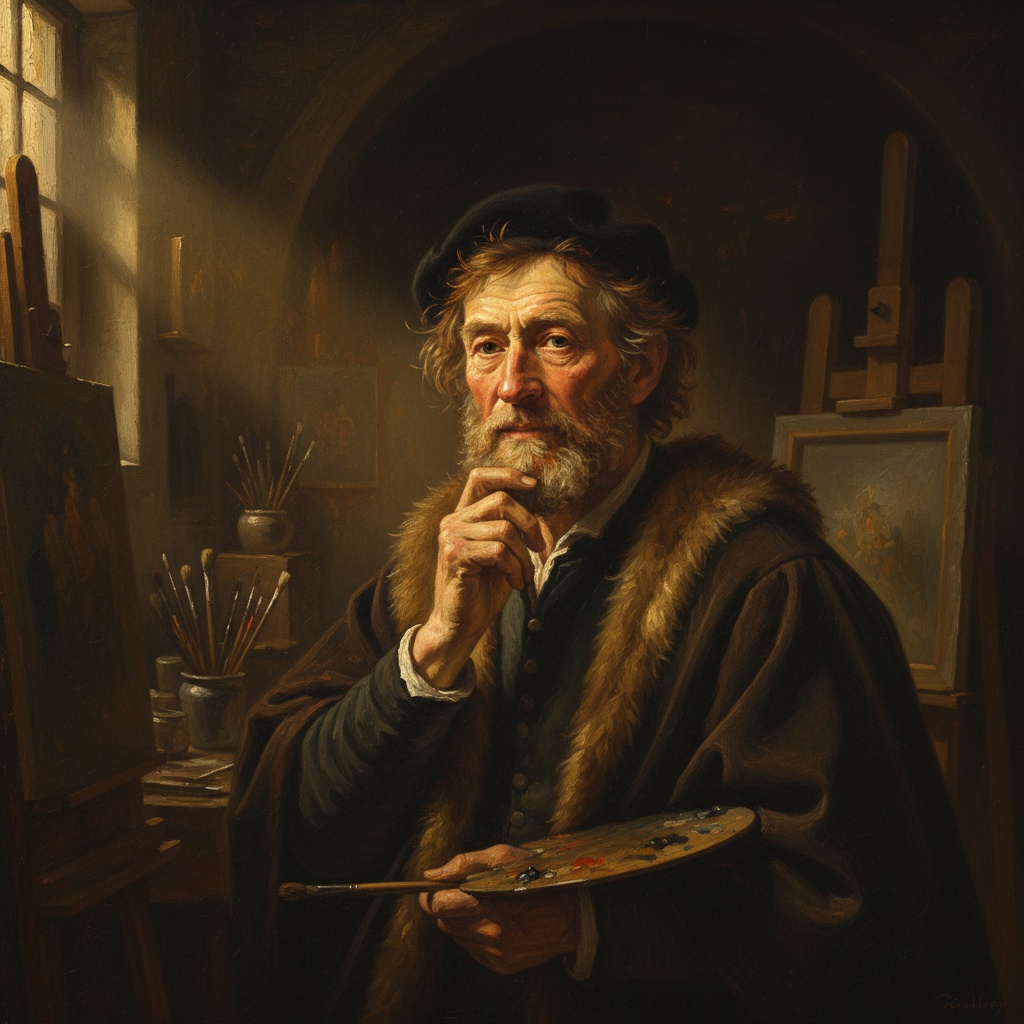
Rembrandt's most defining characteristic, the technique that irrevocably altered the course of art history, is his masterful use of chiaroscuro. Derived from the Italian for “light-dark,” this wasn’t simply about contrasting illumination and shadow; it was a deeply expressive tool used to sculpt form, create atmosphere, and most importantly, reveal inner character. Unlike earlier Renaissance applications that focused on realistic modeling, Rembrandt employed chiaroscuro with an almost theatrical intensity.
He didn't merely illuminate his subjects; he *directed* the light, using it as a spotlight to draw attention to key features – a furrowed brow, a knowing glance, a gesture of vulnerability. This selective illumination wasn’t arbitrary; it was deeply symbolic, often representing divine grace or inner turmoil. The darkness surrounding his figures wasn't simply an absence of light but rather a palpable presence that heightened the emotional impact and invited viewers to contemplate the complexities of the human psyche. His technique went beyond visual representation; it delved into the realm of psychological realism, capturing not just *what* people looked like but *how* they felt.
Iconic Works and Enduring Themes: Exploring Night Watch and Self-Portraits
No discussion of Rembrandt is complete without acknowledging two cornerstones of his oeuvre: The Night Watch (1642) and his prolific series of self-portraits. The Night Watch, formally known as *Militia Company of District II under the Command of Captain Frans Banninck Cocq*, is a monumental group portrait that transcends the conventions of its genre. Its dynamic composition, dramatic lighting, and sheer scale were revolutionary for their time. The painting isn’t merely a depiction of civic guards; it's a vibrant tableau teeming with life, movement, and symbolic detail.
However, perhaps even more revealing are Rembrandt’s self-portraits – nearly one hundred surviving examples spanning his entire career. These aren’t simply exercises in technical skill but rather an unflinching exploration of the artist himself. He documented not just his physical appearance but also his evolving emotional state, his successes and failures, his aging process, and his profound introspection. Each self-portrait is a window into Rembrandt's soul, offering a rare glimpse into the mind of a genius grappling with life’s complexities. They are testaments to his relentless pursuit of self-understanding and artistic truth.
Rembrandt's Legacy and Influence on Subsequent Artists
The impact of Rembrandt van Rijn on subsequent generations of artists is immeasurable. His innovative use of chiaroscuro, his psychological depth, and his commitment to realism profoundly influenced painters across Europe and beyond. From the Baroque masters who followed in his wake to 19th-century Romantic artists captivated by his emotional intensity, Rembrandt’s legacy can be traced through centuries of artistic innovation.
Artists like Govaert Teuniszoon Flinck, a student of Rembrandt, initially emulated his style before developing his own distinct voice. Even beyond painting, his influence extended to printmaking and drawing, inspiring artists to explore the expressive possibilities of these mediums. His emphasis on capturing the inner lives of his subjects paved the way for modern psychological portraiture, while his dramatic lighting techniques continue to be studied and emulated by filmmakers and photographers today. Rembrandt didn’t just create paintings; he created a new language of visual expression that continues to resonate with audiences worldwide.
Collecting Rembrandt Today: A Guide for Enthusiasts
Acquiring a genuine Rembrandt is, understandably, a pursuit reserved for the most discerning collectors. With an estimated surviving oeuvre of around 300 paintings, three hundred etchings, and several hundred drawings, scarcity naturally drives value. However, experiencing the power of Rembrandt’s art isn't limited to owning an original masterpiece.
High-quality reproductions offer a compelling alternative for those seeking to appreciate his work on a more accessible scale. At OriginalUniqueArt, we specialize in handmade oil paintings meticulously crafted by skilled artists, capturing the brushstrokes and textures that define Rembrandt’s style. We also provide museum-quality prints, allowing you to bring his iconic images into your home or office. Whether you're a seasoned collector or simply an admirer of fine art, exploring the world of Rembrandt is a journey worth undertaking. Consider focusing on specific themes – portraits, biblical scenes, or etchings – and researching the provenance and historical context of any potential acquisition. Our team of art consultants is available to provide personalized guidance, helping you navigate the complexities of the art market and discover pieces that resonate with your individual taste.