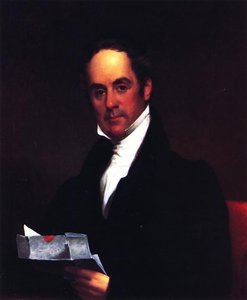
Portrait of Jacob Eichholtz

The 75 Most Famous Jacob Eichholtz Paintings, Each One of a Kind

Updated November 2026 · ranked by our popularity score (searches, visits and orders for each work) · 83 works by Jacob Eichholtz in our catalogue

In short

Mr. Benjamin Schaum (1809) is the Jacob Eichholtz painting that draws the most eyes; the original belongs to the Art Institute of Chicago, Chicago. After it, the eye goes to Isabella Hodgkiss Norvell (1823) and Mrs. Benjamin Schaum (Anna Maria Heckensweiler) (1809). Among the 83 works of Jacob Eichholtz in our catalog, these 75 are the most famous, each a unique original presented with its year, its museum and the reason it endures.

1776 – 1842, Pennsylvania Neoclassicism Most works: National Gallery of Art

Top 10 paintings by Jacob Eichholtz, through the gallery's eye

1
Mr. Benjamin Schaum (1809) by Jacob Eichholtz

Mr. Benjamin Schaum

1809 · Oil On Panel · Art Institute of Chicago, Chicago

This portrait of Mr. Benjamin Schaum is a significant work by the artist Jacob Eichholtz. Created around 1808, the painting captures a man who was a fellow resident and coppersmith in Lancaster, Pennsylvania. It is a quiet, formal study of a man deeply embedded in the local community of the early American frontier.

2
Isabella Hodgkiss Norvell (1823) by Jacob Eichholtz

Isabella Hodgkiss Norvell

1823 · Oil On Canvas · Detroit Institute of Arts, Detroit

This oil on canvas portrait, titled Isabella Hodgkiss Norvell, was executed by the American artist Jacob Eichholtz. Created circa 1823, the work presents a formal likeness of the subject, Isabella Hodgkiss Freeman Norvell. She was the wife of Senator John Norvell, and her life spanned from 1805 to 1873.

3
Mrs. Benjamin Schaum (Anna Maria Heckensweiler) (1809) by Jacob Eichholtz

Mrs. Benjamin Schaum (Anna Maria Heckensweiler)

1809 · Oil On Panel · Art Institute of Chicago, Chicago

In this formal portrait, an older woman is presented in profile, her gaze directed away from the viewer. The composition is contained within an oval format, focusing the attention on her features and the delicate textures of her attire. Soft, directional light enters from the upper left, illuminating the pale skin of her face and the crisp white fabric of her bonnet and neckerchief. This lighting casts gentle shadows that…

4
Master Schaum (1809) by Jacob Eichholtz

Master Schaum

1809 · Oil On Panel · Art Institute of Chicago, Chicago

This oil on panel, titled Master Schaum, was executed by the American artist Jacob Eichholtz around 1809. Eichholtz, who lived from 1776 to 1842, was a figure of significant presence in the early American portrait tradition. His work often emerged from a background of practical craftsmanship, having been trained as a coppersmith before turning his attention to the canvas.

5
Miss Schaum (1809) by Jacob Eichholtz

Miss Schaum

1809 · Oil On Panel · Art Institute of Chicago, Chicago

Miss Schaum is a portrait of a young woman executed by Jacob Eichholtz in 1809. The work captures the subject in a profile view, focusing on the contours of her face and neck against a neutral, atmospheric background. This composition emphasizes the sitter's serene expression and contemplative gaze as she looks slightly upward.

7
Portrait of Mr. Christopher B. Mayer (1814) by Jacob Eichholtz

Portrait of Mr. Christopher B. Mayer

1814 · Oil On Canvas · Reading Public Museum, Reading

In the Portrait of Mr. Christopher B. Mayer by Jacob Eichholtz, a formal and dignified presence emerges from the shadows. The composition follows a three-quarter view, focusing on the gentleman from the waist up to capture a sense of poised stability. He is framed against a background of deep browns and ochres, a palette of warm, earthy tones that recedes into the darkness. This muted environment pushes the subject forward,…

8
Abraham Freeman (1821) by Jacob Eichholtz

Abraham Freeman

1821 · Oil On Canvas · Cincinnati Museum Center at Union Terminal, Cincinnati

In this medium close-up portrait of Abraham Freeman, Jacob Eichholtz positions the subject slightly off-center, lending the figure a heavy, commanding presence within the frame. The man is captured from the waist up, his form anchored by the quiet weight of his posture. A soft, directional light pours in from the upper left, casting gentle shadows across the right side of his face and neck. This play of light and…

9
Portrait of Catharine Mayer (or Meyer) Eichholtz (1819) by Jacob Eichholtz

Portrait of Catharine Mayer (or Meyer) Eichholtz

1819 · Oil On Canvas · Palmer Museum of Art, Centre County

This oil portrait, executed in 1819, presents a three-quarter view of an elderly woman, Catharine Mayer (or Meyer) Eichholtz, positioned slightly off-center and facing toward the left. The composition is characterized by a somber and dignified atmosphere, utilizing a dark, near-black background that creates high contrast and focuses all attention on the subject. The lighting is directional, appearing to originate from the upper left, which casts soft shadows across the…

10
Frederick Eichelberger (1783-1836) (1819) by Jacob Eichholtz

Frederick Eichelberger (1783-1836)

1819 · Oil On Canvas · New York Historical Society, New York City

In this 1819 oil on canvas, we encounter Frederick Eichelberger, a man whose presence commands a quiet, somber respect. He is presented in a three-quarter length portrait, positioned slightly off-center as he turns his gaze toward the observer. There is a certain stillness here, a moment caught in the soft, atmospheric light of a twilight sky. The background, composed of dusky pinks, blues, and earthy browns, provides a gentle contrast…

Jacob Eichholtz's famous paintings, numbers 11 to 75

11An Incident of the Revolution (1831) by Jacob EichholtzAn Incident of the Revolution1831 · Museum of Fine Arts 12Man in a Yellow Waistcoat (1824) by Jacob EichholtzMan in a Yellow Waistcoat1824 · Museum of Fine Arts 13Portrait of a Young Woman in a Fur Trimmed Blue Cape (1823) by Jacob EichholtzPortrait of a Young Woman in a Fur Trimmed Blue Cape1823 · Palmer Museum of Art 14Portrait of James Porter (1825) by Jacob EichholtzPortrait of James Porter1825 · New Britain Museum of American Art 15Mrs. Pierre Louis Laguerenne (1827) by Jacob EichholtzMrs. Pierre Louis Laguerenne1827 · El Paso Museum of Art 16Portrait of Mrs. George May Keim (Julia C. Mayer) (1827) by Jacob EichholtzPortrait of Mrs. George May Keim (Julia C. Mayer)1827 · Reading Public Museum 17Portrait of Mrs. Christopher B. Mayer (Susan B. Mayer) (1827) by Jacob EichholtzPortrait of Mrs. Christopher B. Mayer (Susan B. Mayer)1827 · Reading Public Museum 18Henry Eichholtz Leman (1835) by Jacob EichholtzHenry Eichholtz Leman1835 · National Gallery of Art 19Ann Old Coleman (Mrs. Robert Coleman) (1820) by Jacob EichholtzAnn Old Coleman (Mrs. Robert Coleman)1820 · National Gallery of Art 20The Ragan Sisters by Jacob EichholtzThe Ragan SistersNational Gallery of Art 21Portrait of a Woman (1809) by Jacob EichholtzPortrait of a Woman1809 22Portrait of a Man (1809) by Jacob EichholtzPortrait of a Man1809 · Smithsonian American Art Museum 23Mrs. Frederick Eichelberger (1782-1869) (1819) by Jacob EichholtzMrs. Frederick Eichelberger (1782-1869)1819 · New York Historical Society 24Julianna Hazlehurst (1820) by Jacob EichholtzJulianna Hazlehurst1820 · National Gallery of Art 25Joshua Tevis (1827) by Jacob EichholtzJoshua Tevis1827 26Conestoga Creek and Lancaster (1833) by Jacob EichholtzConestoga Creek and Lancaster1833 · Pennsylvania Academy of Fine Arts 27Serena Mayer Franklin (1838) by Jacob EichholtzSerena Mayer Franklin1838 28James Buchanan (1834) by Jacob EichholtzJames Buchanan1834 29John Stone (1842) by Jacob EichholtzJohn Stone1842 · Augustiner Museum 30Jane Evans Tevis (1827) by Jacob EichholtzJane Evans Tevis1827 31Portrait of Standish Barry (1763–1842) by Jacob EichholtzPortrait of Standish Barry (1763–1842)Museum of Fine Arts 32Mrs. Robert Jenkins (Catharine Carmichael) by Jacob EichholtzMrs. Robert Jenkins (Catharine Carmichael)Museum of Fine Arts 33Portrait of James Burd Hubley (1788-1825) by Jacob EichholtzPortrait of James Burd Hubley (1788-1825) 34Gilbert Tennent (1703–1764), Trustee (1747–64) by Jacob EichholtzGilbert Tennent (1703–1764), Trustee (1747–64) 35Samuel Humes by Jacob EichholtzSamuel Humes 36Anna Maria Eichholtz by Jacob EichholtzAnna Maria Eichholtz 37Dorothea 1841 by Jacob EichholtzDorothea 1841 38Mathias Musser by Jacob EichholtzMathias Musser 39William Clark Frazer by Jacob EichholtzWilliam Clark FrazerNational Gallery of Art 40John Rudolph Neff by Jacob EichholtzJohn Rudolph Neff 41Admiral David Dixon Porter by Jacob EichholtzAdmiral David Dixon Porter 42Andrew Jackson by Jacob EichholtzAndrew Jackson 43CAPTAIN GEORGE BUMM by Jacob EichholtzCAPTAIN GEORGE BUMM 44Mrs. Andrew Ellicott by Jacob EichholtzMrs. Andrew EllicottNew York Historical Society 45Samuel Humes (1825) by Jacob EichholtzSamuel Humes1825 · Metropolitan Museum of Art 46Portrait of a Woman by Jacob EichholtzPortrait of a WomanChrysler Museum of Art 47Joseph Leman by Jacob EichholtzJoseph LemanNational Gallery of Art 48Self-Portrait by Jacob EichholtzSelf-Portrait 49Mr. Kline by Jacob EichholtzMr. KlineNational Gallery of Art 50Andrew Ellicott by Jacob EichholtzAndrew EllicottNew York Historical Society 51Catharine Hatz Eichholtz by Jacob EichholtzCatharine Hatz Eichholtz 52Cape Henlopen by Jacob EichholtzCape Henlopen 53Robert Coleman by Jacob EichholtzRobert ColemanNational Gallery of Art 54Conestoga Creek and Lancaster by Jacob EichholtzConestoga Creek and Lancaster 55Mrs. John Frederick Lewis by Jacob EichholtzMrs. John Frederick Lewis 56Mrs. Walter Franklin by Jacob EichholtzMrs. Walter Franklin 57John Frederick Lewis by Jacob EichholtzJohn Frederick Lewis 58Edward Eichholtz by Jacob EichholtzEdward Eichholtz 59Self-Portrait 1810 by Jacob EichholtzSelf-Portrait 1810Pennsylvania Academy of Fine Arts 60Henry Eichholtz Leman by Jacob EichholtzHenry Eichholtz LemanHarvard Art Museums 61Eliza Schaum by Jacob EichholtzEliza Schaum 62Jacob Leman by Jacob EichholtzJacob LemanNational Gallery of Art 63A Wealthy Gentleman by Jacob EichholtzA Wealthy Gentleman 64Miss Leman by Jacob EichholtzMiss LemanNational Gallery of Art 65Miss Thompson by Jacob EichholtzMiss ThompsonWestfälishes Landesmuseum 66Mrs. Elizabeth Wurtz Elder and Her Three Children by Jacob EichholtzMrs. Elizabeth Wurtz Elder and Her Three Children 67Mrs. Jacob Eichholtz by Jacob EichholtzMrs. Jacob Eichholtz 68Mrs. Victor René Value; Her Daughter Victoria Matilda; and Her Stepson Jesse René by Jacob EichholtzMrs. Victor René Value; Her Daughter Victoria Matilda; and Her Stepson Jesse René 69Jane Buchanan Lane by Jacob EichholtzJane Buchanan LaneLos Angeles County Museum of Art 70Julianna Hazlehurst by Jacob EichholtzJulianna Hazlehurst 71James P. Smith by Jacob EichholtzJames P. SmithNational Gallery of Art 72Elliott Tole Lane by Jacob EichholtzElliott Tole LaneLos Angeles County Museum of Art 73Portrait of a Woman by Jacob EichholtzPortrait of a Woman 74Portrait of a Man by Jacob EichholtzPortrait of a Man 75Phoebe Cassidy Freeman (Mrs. Clarkson Freeman) by Jacob EichholtzPhoebe Cassidy Freeman (Mrs. Clarkson Freeman)National Gallery of Art

Jacob Eichholtz's famous paintings, period by period

The subjects that held Jacob Eichholtz's eye

The four subjects that come back most often in these originals, each with its finest example.

The museums that keep Jacob Eichholtz's originals

The 8 museums that hold the most of the paintings on this page.

Museum City Works by Jacob Eichholtz Paintings from this list
National Gallery of Art, WashingtonNational Gallery of Art Washington 12 Henry Eichholtz Leman, Ann Old Coleman (Mrs. Robert Coleman), The Ragan Sisters
New York Historical Society, New York CityNew York Historical Society New York City 5 William Darlington, MD (1782–1863), Frederick Eichelberger (1783-1836), Mrs. Frederick Eichelberger (1782-1869)
Art Institute of Chicago, ChicagoArt Institute of Chicago Chicago 4 Mr. Benjamin Schaum, Mrs. Benjamin Schaum (Anna Maria Heckensweiler), Master Schaum
Reading Public Museum, ReadingReading Public Museum Reading 3 Portrait of Mr. Christopher B. Mayer, Portrait of Mrs. George May Keim (Julia C. Mayer), Portrait of Mrs. Christopher B. Mayer (Susan B. Mayer)
Museum of Fine Arts, BostonMuseum of Fine Arts Boston 3 An Incident of the Revolution, Man in a Yellow Waistcoat, Mrs. Robert Jenkins (Catharine Carmichael)
Palmer Museum of Art, Centre CountyPalmer Museum of Art Centre County 2 Portrait of Catharine Mayer (or Meyer) Eichholtz, Portrait of a Young Woman in a Fur Trimmed Blue Cape
Pennsylvania Academy of Fine Arts, PhiladelphiaPennsylvania Academy of Fine Arts Philadelphia 2 Conestoga Creek and Lancaster, Self-Portrait 1810
Los Angeles County Museum of Art, Los AngelesLos Angeles County Museum of Art Los Angeles 2 Jane Buchanan Lane, Elliott Tole Lane

Jacob Eichholtz across the decades: one unique original for each

Works per decade

Pick a decade to see the original that defines it.

Jacob Eichholtz's paintings: questions for the gallery

What is the single most famous work of Jacob Eichholtz?Reveal the answer

Mr. Benjamin Schaum (1809), Art Institute of Chicago, Chicago. Isabella Hodgkiss Norvell (1823) and Mrs. Benjamin Schaum (Anna Maria Heckensweiler) (1809) come next.

At what age did Jacob Eichholtz create Mr. Benjamin Schaum?Reveal the answer

33 years old: Mr. Benjamin Schaum dates from 1809, and Jacob Eichholtz was born in 1776.

Which ten paintings by Jacob Eichholtz are the most famous?Reveal the answer

Mr. Benjamin Schaum, Isabella Hodgkiss Norvell, Mrs. Benjamin Schaum (Anna Maria Heckensweiler), Master Schaum, Miss Schaum, William Darlington, MD (1782–1863), Portrait of Mr. Christopher B. Mayer, Abraham Freeman, Portrait of Catharine Mayer (or Meyer) Eichholtz and Frederick Eichelberger (1783-1836). The ranking above gives each one's year and museum.

How many works by Jacob Eichholtz are known?Reveal the answer

Our catalog holds 83 works by Jacob Eichholtz, dated from 1809 to 1842.

Where can the most famous Jacob Eichholtz originals be seen?Reveal the answer

Mostly in National Gallery of Art (Washington), New York Historical Society (New York City) and Art Institute of Chicago (Chicago). The museum table above lists them all.

During which period did Jacob Eichholtz create the best-known paintings?Reveal the answer

In 1820s: 13 of the 75 works on this page were made then, Isabella Hodgkiss Norvell among them.

Which famous Jacob Eichholtz painting is the earliest, and which the latest?Reveal the answer

On this page, the earliest is Mr. Benjamin Schaum (1809) and the latest John Stone (1842).

What subjects did Jacob Eichholtz favour?Reveal the answer

Portrait (20), Woman (11) and Men (11), across the 75 works on this page.

What materials did Jacob Eichholtz paint with most?Reveal the answer

Oil On Canvas, for 8 of the 75 works on this page.

Which movement does the work of Jacob Eichholtz belong to?Reveal the answer

Neoclassicism and Romanticism, judging by the originals on this page.

What Jacob Eichholtz originals can I see at the National Gallery of Art?Reveal the answer

Henry Eichholtz Leman, Ann Old Coleman (Mrs. Robert Coleman) and The Ragan Sisters: the National Gallery of Art, Washington holds 12 of the works on this page.

Jacob Eichholtz: a portrait of the artist

Early Life and Apprenticeship in Lancaster

Jacob Eichholtz’s story begins not within the hallowed halls of an art academy, but amidst the practical trades of 18th-century Pennsylvania. Born in Lancaster, a burgeoning town on the edge of the frontier, he entered the world as Leonard Eichholtz's son, inheriting a family legacy intertwined with both commerce and community. His father, Leonard, operated the bustling Bull’s Head Tavern, a vital hub for social interaction and trade – a life that instilled in young Jacob an understanding of human connection and the rhythms of daily life. However, from his earliest years, a different current flowed within him: a deep-seated fascination with drawing and a nascent artistic sensibility. Recognizing this inclination, his parents, mindful of their son’s burgeoning talent, apprenticed him to a coppersmith at the tender age of eleven. This seemingly pragmatic step – securing a stable trade – was, in reality, a carefully considered investment in Jacob's potential. The craft of metalworking provided a grounding in precision and technique, while simultaneously nurturing his eye for detail and an appreciation for form. Crucially, it also offered him a space to indulge his artistic impulses, sketching designs on copper panels during downtime, a quiet rebellion against the demands of his apprenticeship. His father’s involvement in the American Revolutionary War further shaped Jacob's perspective, exposing him to ideals of liberty and self-determination – values that would later inform his approach to portraiture.

Transitioning from Craft to Canvas: The Rise of a Portraitist

The transition from coppersmith to painter was not immediate or entirely seamless. Jacob’s initial forays into painting were largely self-taught, fueled by an unwavering passion and a keen observation of the world around him. He sought guidance from local sign painters, absorbing techniques and developing his skills in charcoal and ink. However, it was the arrival of Thomas Sully, a prominent portraitist traveling through Lancaster in 1808, that proved to be a pivotal moment in Jacob’s artistic journey. Sully, recognizing Eichholtz's potential, offered him invaluable instruction and access to his studio – a generous act that dramatically accelerated his development. As Sully himself later remarked, “Eichholtz would have made a first-rate painter had he begun early in life with the usual advantages.” This mentorship provided Jacob with critical insights into composition, lighting, and the art of capturing the likeness and character of his subjects. The experience solidified his commitment to portraiture, transforming it from a personal pursuit into a viable profession. Eichholtz’s decision to establish his own workshop in Lancaster reflected this newfound confidence – a bold step towards independence and self-sufficiency.

A Portraitist for Pennsylvania Society

By the early 1800s, Jacob Eichholtz had established himself as a respected portrait painter within the burgeoning communities of Pennsylvania and Maryland. He wasn’t merely replicating appearances; he was striving to capture the essence of his subjects – their personalities, aspirations, and social standing. His portraits became windows into the lives of prominent figures: lawyers, merchants, landowners, and members of the gentry. He skillfully navigated the conventions of the Romantic Victorian tradition, employing dramatic lighting, rich textures, and carefully rendered details to create images that were both aesthetically pleasing and psychologically revealing. Eichholtz’s work was particularly sought after by those who wished to document their family histories or commemorate significant life events. His portraits adorned the walls of grand homes and public buildings, serving as tangible reminders of social connections and familial legacies. His ability to portray a range of emotions – from quiet contemplation to exuberant joy – contributed significantly to his popularity and enduring appeal.

Notable Works and Legacy

Over the course of three decades, Jacob Eichholtz produced an astonishing number of portraits—estimates suggest over 800—a testament to his prolific output and unwavering dedication. His paintings are now housed in major museums and private collections across the United States, offering a valuable glimpse into the social and cultural landscape of early America. Among his most celebrated works is “Jane Evans Tevis” (circa 1827), a stunningly evocative portrait that captures the serene beauty and quiet dignity of its subject. His portraits of Chief Justice John Marshall and Nicholas Biddle, prominent figures in Philadelphia’s political and financial circles, are particularly noteworthy for their meticulous detail and psychological depth. Eichholtz's legacy extends beyond his individual artistic achievements; he represents a crucial link in the chain of American portraiture—a self-taught artist who rose to prominence through talent, perseverance, and an astute understanding of his clientele’s desires. He stands as a reminder that artistic excellence can emerge from unexpected places, transforming humble beginnings into lasting recognition.

Later Years and Remembrance

In 1830, Jacob Eichholtz relocated to Philadelphia, seeking new opportunities and a fresh start. He continued to paint prolifically until his death in 1842, leaving behind a remarkable body of work that reflects the spirit of an era. His final years were marked by a desire for simplicity and connection with his roots, leading him back to Lancaster where he was interred alongside his family in Woodward Hill Cemetery. Today, Jacob Eichholtz’s portraits remain treasured artifacts—testaments to his skill, vision, and enduring contribution to the art of American portraiture. They offer us a poignant glimpse into the lives of those who shaped the nation's history, reminding us of the power of art to capture not just appearances but also the very essence of human experience.