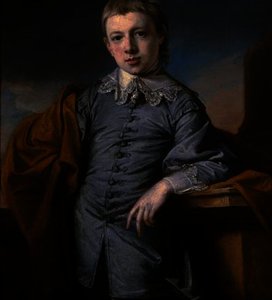
Portrait of Francis Cotes

The 100 Most Famous Francis Cotes Paintings, Each One of a Kind

Updated November 2026 · ranked by our popularity score (searches, visits and orders for each work) · 124 works by Francis Cotes in our catalogue

In short

Portrait of Martha Seymer as Modesty (1755) is the Francis Cotes painting that draws the most eyes. After it, the eye goes to Princess Louisa and Princess Caroline (1767) and Mrs. Thomas Horne (1768). Among the 124 works of Francis Cotes in our catalog, these 100 are the most famous, each a unique original presented with its year, its museum and the reason it endures.

1726 – 1770, London Neoclassicism Most works: Scottish National Portrait Gallery

Top 10 paintings by Francis Cotes, through the gallery's eye

1
Portrait of Martha Seymer as Modesty (1755) by Francis Cotes

Portrait of Martha Seymer as Modesty

1755 · Oil On Canvas

We are looking at the Portrait of Martha Seymer as Modesty, a work executed by Francis Cotes. This piece dates to 1755 and offers a quiet glimpse into the portraiture of the Georgian era. It is an oil on canvas, measuring 76 x 64 cm.

2
Princess Louisa and Princess Caroline (1767) by Francis Cotes

Princess Louisa and Princess Caroline

1767 · Oil On Canvas · Buckingham Palace, London

In this 1767 oil on canvas, two aristocratic figures, Princess Louisa and Princess Caroline, are captured within a staged, elegant interior. The composition relies on a strong diagonal movement, anchored by a heavy crimson drapery that descends from a classical marble column. This deep red fabric provides a stark contrast to the lighter tones of the subjects' attire. One woman is seated in a gown of cerulean blue, while the…

3
Mrs. Thomas Horne (1768) by Francis Cotes

Mrs. Thomas Horne

1768 · Oil On Canvas · National Gallery of Art, Washington

In this 1768 oil portrait, we encounter Mrs. Thomas Horne, presented in a delicate oval format that focuses our attention entirely upon her presence. She is captured in a bust-length profile, her gaze directed softly toward the left, away from the viewer. There is a quiet dignity in her posture, a stillness that suggests a moment of private reflection. Her skin is rendered with a luminous quality, featuring soft tones…

4
Charles Collyer as a Boy, with a Cricket Bat (1766) by Francis Cotes

Charles Collyer as a Boy, with a Cricket Bat

1766 · Oil On Canvas · Yale Center for British Art, New Haven

The work before us is titled Charles Collyer as a Boy, with a Cricket Bat, a portrait painted by Francis Cotes in 1766. This painting captures the young Charles Collyer, presented in a manner that reflects the specific social customs of the mid-eighteenth century. It is a fine example of the artist's ability to render a youthful subject with a sense of poise and quiet dignity.

5
James Rivington Sr. (c. 1724-1802) (1756) by Francis Cotes

James Rivington Sr. (c. 1724-1802)

1756 · Oil On Canvas

This portrait depicts James Rivington Sr. (c. 1724-1802), a publisher and bookseller, as rendered by the artist Francis Cotes. Created in 1756, the work presents the sitter in a formal, three-quarter length pose. Rivington was a figure involved in the London publishing trade before his later activities in Philadelphia, New York, and Boston. The painting captures him against a dark, undefined background that focuses attention on the subject's physical presence…

6
The Right Honorable Lady Mary Radcliffe (1732-98), Wife of Francis Eyre, Esq. (1755) by Francis Cotes

The Right Honorable Lady Mary Radcliffe (1732-98), Wife of Francis Eyre, Esq.

1755 · Oil On Canvas · Cleveland Museum of Art, Cleveland

Lady Mary Radcliffe sits in a moment of quiet poise, her presence filling the space with an effortless elegance. The light, drifting in from the upper left, brushes against the porcelain smoothness of her skin and catches the delicate translucency of a single feather. She is captured in a three-quarter view, her gaze meeting the viewer with an intimacy that feels almost private. Her attire speaks of a high station,…

7
Portrait of Joseph (1741–1786) and his Brother John Gulston (1750–1764) (1754) by Francis Cotes

Portrait of Joseph (1741–1786) and his Brother John Gulston (1750–1764)

1754 · Oil On Canvas · J. Paul Getty Museum, Los Angeles

This oil on canvas portrait, dated 1754, depicts two young brothers, Joseph and John Gulston, positioned within a serene landscape. The figure on the left, Joseph, is oriented slightly toward the viewer with a direct gaze. He wears an ochre doublet featuring a white lace collar and cuffs, partially covered by a voluminous blue cloak. To his right, John is shown in profile, looking toward his brother. He is dressed…

8
Miss Walpole, Afterwards the Hon. Mrs. Keppel (one of pair) (1753) by Francis Cotes

Miss Walpole, Afterwards the Hon. Mrs. Keppel (one of pair)

1753 · Oil

A young woman is captured in a three-quarter view, her presence defined by a luminous complexion set against a dark, atmospheric background. She wears a teal silk gown that catches a directional light from the upper left, creating a sharp contrast between the lustrous sheen of the fabric and the deep shadows of the composition. A black ribbon encircles her neck, providing a stark anchor for the soft, creamy tones…

9
Miss C. Walpole, Afterwards Countess Dysart (one of pair) (1753) by Francis Cotes

Miss C. Walpole, Afterwards Countess Dysart (one of pair)

1753 · Oil On Canvas

In this three-quarter view portrait, Francis Cotes presents Miss C. Walpole, Afterwards Countess Dysart (one of pair) with a quiet, poised grace. The subject is positioned slightly off-center, captured from the waist up in a manner that feels both intimate and formal. This arrangement allows the viewer to observe the subtle tilt of her head and her upright, noble posture. The composition relies on a careful balance of light and…

10
Portrait of the Daughter of Richard Tucker (1764) by Francis Cotes

Portrait of the Daughter of Richard Tucker

1764 · Oil On Canvas

The young woman turns her head in a soft three-quarter profile, her gaze drifting toward the left as if caught in a quiet moment of reflection. She exists within a space of deep, neutral shadows that push her luminous skin to the very front of the viewer's vision. Every detail of her presence speaks of a refined life, from the delicate lace that trims her bodice to the subtle shimmer…

Francis Cotes's famous paintings, numbers 11 to 100

11William Phillips (1731-1781) (1761) by Francis CotesWilliam Phillips (1731-1781)1761 · New York Historical Society 12Francis Vernon (1757) by Francis CotesFrancis Vernon1757 · The Frick Collection 13Jane Colchester (1760) by Francis CotesJane Colchester1760 14Francis Burdett of Foremarke Hall (1764) by Francis CotesFrancis Burdett of Foremarke Hall1764 15Elizabeth Rushout (1762) by Francis CotesElizabeth Rushout1762 16Miss Elizabeth Adney (1760) by Francis CotesMiss Elizabeth Adney1760 · New Walk Museum - Art Gallery 17Portrait of Anne Hamilton, Countess of Donegall (1731-1780) (1766) by Francis CotesPortrait of Anne Hamilton, Countess of Donegall (1731-1780)1766 · National Gallery of Ireland 18Lady Dering (Deborah Winchester) (1767) by Francis CotesLady Dering (Deborah Winchester)1767 · Carnegie Museum of Art 19Portrait of William, Sixth Baron Craven (1768) by Francis CotesPortrait of William, Sixth Baron Craven1768 · Worcester Art Museum 20Queen Charlotte with the Infant Princess Charlotte, Princess Royal (1767) by Francis CotesQueen Charlotte with the Infant Princess Charlotte, Princess Royal1767 · Royal Collection 21Portrait of a Baby, possibly Prince Edward (1767-1820), later Duke of Kent (1768) by Francis CotesPortrait of a Baby, possibly Prince Edward (1767-1820), later Duke of Kent1768 · Royal Collection 22Hannah Vaughan (1766) by Francis CotesHannah Vaughan1766 · Museum of Fine Arts 23Benjamin Vaughan (1768) by Francis CotesBenjamin Vaughan1768 · Museum of Fine Arts 24Mary, Lady Cunliffe (1768) by Francis CotesMary, Lady Cunliffe1768 25Henry Charles Somerset (1770) by Francis CotesHenry Charles Somerset1770 · The Library And Museum of Freemasonry 26Maria Wicker, Lady Broughton (1770) by Francis CotesMaria Wicker, Lady Broughton1770 · Attingham Park 27Miss Frances Lee (1769) by Francis CotesMiss Frances Lee1769 28Anne Sawbridge (1767) by Francis CotesAnne Sawbridge1767 · Museo del Prado 29Portrait of a gentleman considered to be Sir Peter Byrne Leicester Baronet ) (1732) by Francis CotesPortrait of a gentleman considered to be Sir Peter Byrne Leicester Baronet )1732 30Topham beauclerk ) (1739) by Francis CotesTopham beauclerk )1739 31Mary Anne Colmore (1764) by Francis CotesMary Anne Colmore1764 32The Honourable Harriet Molesworth (1764) by Francis CotesThe Honourable Harriet Molesworth1764 33Lieutenant Colonel William Phillips (1764) by Francis CotesLieutenant Colonel William Phillips1764 34The Honourable Lady Stanhope and the Countess of Effingham as Diana, and Her Companion (1765) by Francis CotesThe Honourable Lady Stanhope and the Countess of Effingham as Diana, and Her Companion1765 · York Museums Trust 35Lieutenant Colonel Francis Smith (1764) by Francis CotesLieutenant Colonel Francis Smith1764 36Portrait of a Gentleman (1763) by Francis CotesPortrait of a Gentleman1763 37Portrait of Sir Robert Pigot (1765) by Francis CotesPortrait of Sir Robert Pigot1765 38George Harry Grey (1760) by Francis CotesGeorge Harry Grey1760 · Dunham Massey 39Elizabeth Campbell (1762) by Francis CotesElizabeth Campbell1762 · Scottish National Portrait Gallery 40Portrait of Maria Walpole (1765) by Francis CotesPortrait of Maria Walpole1765 41Burdett ) (1770) by Francis CotesBurdett )1770 42Elizabeth Cust (1770) by Francis CotesElizabeth Cust1770 43Portrait of Maria Gunning, Countess of Coventry (1733-1760), Wife of the 6th Earl by Francis CotesPortrait of Maria Gunning, Countess of Coventry (1733-1760), Wife of the 6th EarlNational Gallery of Ireland 44William Denison by Francis CotesWilliam DenisonMuseum of Fine Arts 45Dr. Connell by Francis CotesDr. ConnellMuseum of Fine Arts 46Luke gardiner by Francis CotesLuke gardiner 47Miss Catherine Eld by Francis CotesMiss Catherine EldBirmingham Museum and Art Gallery 48Sir Brownlow Cust by Francis CotesSir Brownlow CustBelton House 49Portrait of Mrs Richard Miles by Francis CotesPortrait of Mrs Richard Miles 50Sarah Robinson by Francis CotesSarah Robinson 51Portrait Of A Lady - by Francis CotesPortrait Of A Lady - 52Purley hall, berks by Francis CotesPurley hall, berks 53Sarah Bacon - by Francis CotesSarah Bacon - 54Portrait of Charles Colmore by Francis CotesPortrait of Charles ColmoreMusée Cognacq-Jay 55Daniel collyer by Francis CotesDaniel collyer 56Edward Knowles, captain of the HMS Peregrine by Francis CotesEdward Knowles, captain of the HMS Peregrine 57Josiah Child by Francis CotesJosiah Child 58Henrietta Child, nee Henrietta Knight by Francis CotesHenrietta Child, nee Henrietta Knight 59Sarah Bacon by Francis CotesSarah BaconScottish National Portrait Gallery 60Portrait of Taylor White, Treasurer of the Foundling Hospital by Francis CotesPortrait of Taylor White, Treasurer of the Foundling Hospital 61Mrs Hamilton of Raploch by Francis CotesMrs Hamilton of Raploch 62Kitty Fisher by Francis CotesKitty Fisher 63The Honourable John Smith Barry by Francis CotesThe Honourable John Smith BarryTabley House Collection 64Portrait of a lady and her child by Francis CotesPortrait of a lady and her child 65Colonel Alexander Campbell by Francis CotesColonel Alexander CampbellScottish National Portrait Gallery 66Sir Edward Astley by Francis CotesSir Edward Astley 67Rhoda Delaval by Francis CotesRhoda Delaval 68Anna Maria Astley by Francis CotesAnna Maria Astley 69Selina Chambers by Francis CotesSelina Chambers 70Mary Colby - by Francis CotesMary Colby - 71Catherine Fleming by Francis CotesCatherine Fleming 72Mary Colby by Francis CotesMary Colby 73Portrait Of A Lady - by Francis CotesPortrait Of A Lady - 74Portrait Of A Lady by Francis CotesPortrait Of A Lady 75John Hobart by Francis CotesJohn Hobart 76The Children Of Sir Edward And Dame Ann Astley by Francis CotesThe Children Of Sir Edward And Dame Ann Astley 77Sir William Jones by Francis CotesSir William JonesWimpole Hall 78Paul Sandby by Francis CotesPaul Sandby 79Portrait Of A Lady With A Statuette Of Cupid by Francis CotesPortrait Of A Lady With A Statuette Of Cupid 80Portrait Of An Officer by Francis CotesPortrait Of An Officer 81Burdett by Francis CotesBurdett 82Sir William Chambers by Francis CotesSir William Chambers 83David Burton Fowler by Francis CotesDavid Burton Fowler 84Kitty Fisher by Francis CotesKitty Fisher 85Bernard Ward by Francis CotesBernard Ward 86Sir Peter Byrne Leicester by Francis CotesSir Peter Byrne Leicester 87Portrait Of A Gentleman - by Francis CotesPortrait Of A Gentleman - 88Portrait Of A Gentleman by Francis CotesPortrait Of A Gentleman 89The Honourable Arthur Barry by Francis CotesThe Honourable Arthur Barry 90Admiral Edward Hawke by Francis CotesAdmiral Edward HawkeNational Maritime Museum 91Portrait of Sir James Napier by Francis CotesPortrait of Sir James Napier 92John Harvey Thursby, Verderer Of Rockingham Forest by Francis CotesJohn Harvey Thursby, Verderer Of Rockingham Forest 93Thomas Knight by Francis CotesThomas Knight 94Anna Maria Astley, Aged Seven, And Her Brother Edward, Aged Five And A Half by Francis CotesAnna Maria Astley, Aged Seven, And Her Brother Edward, Aged Five And A Half 95Pryse Campbell by Francis CotesPryse CampbellScottish National Portrait Gallery 96Mrs James Mcewan, Née Clara Ellen Cotes by Francis CotesMrs James Mcewan, Née Clara Ellen Cotes 97William Romaine by Francis CotesWilliam RomaineNational Portrait Gallery 98Portrait Of A Noblewoman by Francis CotesPortrait Of A Noblewoman 99Portrait of the Son of the Barwell Family by Francis CotesPortrait of the Son of the Barwell Family 100John Jervis, Earl Of St Vincent by Francis CotesJohn Jervis, Earl Of St VincentNational Portrait Gallery

The subjects that held Francis Cotes's eye

The four subjects that come back most often in these originals, each with its finest example.

The museums that keep Francis Cotes's originals

The 8 museums that hold the most of the paintings on this page.

Museum City Works by Francis Cotes Paintings from this list
Scottish National Portrait Gallery, EdinburghScottish National Portrait Gallery Edinburgh 5 Elizabeth Campbell, Sarah Bacon, Colonel Alexander Campbell
Museum of Fine Arts, HoustonMuseum of Fine Arts Houston 3 William Denison, Dr. Connell
National Gallery of Ireland, Dublin CityNational Gallery of Ireland Dublin City 2 Portrait of Anne Hamilton, Countess of Donegall (1731-1780), Portrait of Maria Gunning, Countess of Coventry (1733-1760), Wife of the 6th Earl
Royal Collection, LondonRoyal Collection London 2 Queen Charlotte with the Infant Princess Charlotte, Princess Royal, Portrait of a Baby, possibly Prince Edward (1767-1820), later Duke of Kent
Museum of Fine Arts, BostonMuseum of Fine Arts Boston 2 Hannah Vaughan, Benjamin Vaughan
National Portrait Gallery, LondonNational Portrait Gallery London 2 William Romaine, John Jervis, Earl Of St Vincent
Buckingham Palace, LondonBuckingham Palace London 1 Princess Louisa and Princess Caroline
National Gallery of Art, WashingtonNational Gallery of Art Washington 1 Mrs. Thomas Horne

Francis Cotes across the decades: one unique original for each

Works per decade

Pick a decade to see the original that defines it.

Francis Cotes's paintings: questions for the gallery

What is the single most famous work of Francis Cotes?Reveal the answer

Portrait of Martha Seymer as Modesty (1755). Princess Louisa and Princess Caroline (1767) and Mrs. Thomas Horne (1768) come next.

At what age did Francis Cotes create Portrait of Martha Seymer as Modesty?Reveal the answer

29 years old: Portrait of Martha Seymer as Modesty dates from 1755, and Francis Cotes was born in 1726.

Which ten paintings by Francis Cotes are the most famous?Reveal the answer

Portrait of Martha Seymer as Modesty, Princess Louisa and Princess Caroline, Mrs. Thomas Horne, Charles Collyer as a Boy, with a Cricket Bat, James Rivington Sr. (c. 1724-1802), The Right Honorable Lady Mary Radcliffe (1732-98), Wife of Francis Eyre, Esq., Portrait of Joseph (1741–1786) and his Brother John Gulston (1750–1764), Miss Walpole, Afterwards the Hon. Mrs. Keppel (one of pair), Miss C. Walpole, Afterwards Countess Dysart (one of pair) and Portrait of the Daughter of Richard Tucker. The ranking above gives each one's year and museum.

How many works by Francis Cotes are known?Reveal the answer

Our catalog holds 124 works by Francis Cotes, dated from 1739 to 1770.

Where can the most famous Francis Cotes originals be seen?Reveal the answer

Mostly in Scottish National Portrait Gallery (Edinburgh), Museum of Fine Arts (Houston) and National Gallery of Ireland (Dublin City). The museum table above lists them all.

During which period did Francis Cotes create the best-known paintings?Reveal the answer

In 1760s: 29 of the 100 works on this page were made then, Princess Louisa and Princess Caroline among them.

Which famous Francis Cotes painting is the earliest, and which the latest?Reveal the answer

On this page, the earliest is Topham beauclerk ) (1739) and the latest Henry Charles Somerset (1770).

What subjects did Francis Cotes favour?Reveal the answer

Woman (17), 18th century (11) and Portraits (11), across the 100 works on this page.

What materials did Francis Cotes paint with most?Reveal the answer

Oil On Canvas, for 27 of the 100 works on this page.

Which movement does the work of Francis Cotes belong to?Reveal the answer

Neoclassicism, judging by the originals on this page.

What Francis Cotes originals can I see at the Scottish National Portrait Gallery?Reveal the answer

Elizabeth Campbell, Sarah Bacon and Colonel Alexander Campbell: the Scottish National Portrait Gallery, Edinburgh holds 4 of the works on this page.

Francis Cotes: a portrait of the artist

Francis Cotes: A Master of Pastel and Subtle Charm

Born in London in 1726, Francis Cotes (1726–1770) stands as a pivotal figure in the development of English art during the Georgian era. More than just a portrait painter, he was a true innovator, particularly recognized for his pioneering work with pastel and crayon – mediums that he pushed to their expressive limits. His legacy lies not only in the beauty of his finished works but also in his meticulous approach to technique and his profound influence on subsequent generations of artists.

Cotes’s early artistic training began under the tutelage of George Knapton, a respected portrait painter of the time. This foundation provided him with essential skills, yet Cotes quickly sought to forge his own distinctive style. A keen observer and student of Rosalba Carriera, the celebrated Venetian pastelist, he was deeply influenced by her delicate handling of color and her ability to capture fleeting expressions. He embraced pastel as his primary medium, experimenting with its unique qualities – its luminosity, its capacity for subtle gradations, and its suitability for rendering soft textures. Interestingly, his apprenticeship also involved a practical understanding of chemistry, knowledge that proved invaluable in formulating his own pastels, ensuring consistent color and tone.

Cotes’s career blossomed during the 1760s, a period marked by significant stylistic shifts in English portraiture. He developed a distinctive technique characterized by thinly applied paint—often mimicking the appearance of pastel—creating an ethereal quality that belied his use of oil. This approach earned him comparisons to Allan Ramsay and Sir Joshua Reynolds, both masters of their time, though Cotes’s style possessed a unique charm and intimacy. His portraits were renowned for their clarity, warmth, and remarkable attention to detail, particularly in the rendering of costume – a skill often outsourced to the specialist drapery painter Peter Toms after 1746, ensuring an accurate representation of fashion trends.

The Royal Academy and Artistic Circles

Beyond his individual artistic achievements, Cotes played a crucial role in shaping the cultural landscape of London. He was a founding member of the Society of Artists of Great Britain (later the Royal Academy) in 1768, demonstrating his commitment to establishing a formal institution for artists. His election as one of the first members of the Royal Academy in 1769, though tragically occurring just two years before his death, underscored his standing within the artistic community. He was known for his convivial nature and active participation in social gatherings, fostering connections with prominent figures of the era.

Cotes’s influence extended beyond his own studio. He mentored John Russell, who meticulously documented Cotes' techniques in “The Elements of Painting with Crayon,” providing a valuable insight into the artist’s methods and philosophies. This legacy ensured that Cotes’s approach to pastel remained relevant long after his death.

Notable Works and Artistic Style

Several of Cotes’s portraits stand as testaments to his skill and artistry. “Lieutenant Colonel Francis Smith” (1763), now housed at the National Gallery, exemplifies his neoclassical style – a formal depiction of rank and military status rendered with meticulous detail and dramatic lighting. “Francis Burdett of Foremarke Hall” (1764) showcases his mastery of pastel technique, capturing the elegance and refinement of Georgian society. These works, along with numerous other portraits, reveal Cotes’s ability to imbue his subjects with personality and character through subtle gestures and expressions.

Throughout his career, Cotes continued to experiment with crayon, pushing its boundaries as a medium. While he ultimately embraced oil painting for larger-scale works, he never abandoned crayon entirely, recognizing its unique qualities for capturing delicate details and nuanced effects. His work reflects a constant striving for innovation and a deep appreciation for the expressive potential of color.

A Tragic End and Lasting Legacy

Francis Cotes’s life was tragically cut short in 1770 at the age of 44, succumbing to illness in Richmond. Despite his untimely death, his impact on English art remains profound. He helped establish pastel as a respected medium, influenced countless artists, and left behind a body of work that continues to captivate viewers with its charm, elegance, and technical brilliance. His contributions to the Royal Academy and his dedication to artistic excellence cemented his place as one of the most important figures in Georgian portraiture.

Further exploration into Cotes’s life and work can be found at Art UK, where a comprehensive biography and image gallery are available. His portraits, including “Lieutenant Colonel Francis Smith” and “Francis Burdett of Foremarke Hall,” can also be viewed at the National Gallery.