Portrait of Filarete

The 9 Most Famous Filarete Paintings, a Gallery Selection

Updated November 2026 · ranked by our popularity score (searches, visits and orders for each work) · 9 works by Filarete in our catalogue

In short

Of all the originals Filarete left, the most famous is Bronze door (detail) (1433), in the collection of the St. Peter's Basilica, Vatican City. Close behind it come Bronze door (1433) and Equestrian statue of Marcus Aurelius (1465). Our catalog holds 9 works by Filarete; the gallery has kept the 9 the world admires most, each shown with its date, its museum and its story.

1400 – 1469, Florence Most works: St. Peter's Basilica

Filarete's top 10 paintings: the gallery's choice

1
Bronze door (detail) (1433) by Filarete

Bronze door (detail)

1433 · Sculpture Bronze · St. Peter's Basilica, Vatican City

To stand before this fragment of the Bronze Doors of St. Peter's Basilica is to encounter history rendered in immutable metal. This exquisite detail, crafted by Filarete in 1433, does not merely depict a scene; it encapsulates an entire epoch—the breathtaking transition from the soaring spirituality of the Gothic age into the burgeoning humanism of the Renaissance. The sheer density of life captured here is overwhelming, drawing the viewer into…

2
Bronze door (1433) by Filarete

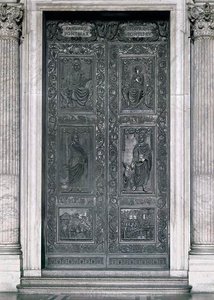
Bronze door

1433 · Bronze · St. Peter's Basilica, Vatican City

The artwork titled Bronze door is a work of relief sculpture created by the artist Filarete. This piece is located within St. Peter's Basilica in Vatican City. The commission for these bronze doors was granted by Pope Eugenius IV. The creation of the work is dated to about 1433.

3
Equestrian statue of Marcus Aurelius (1465) by Filarete

Equestrian statue of Marcus Aurelius

1465 · Bronze · Staatliche Kunstsammlungen, Dresden

This remarkable bronze sculpture captures the commanding presence of a Roman emperor on horseback, embodying strength, leadership, and divine authority. The figure, likely representing Marcus Aurelius, exudes a sense of calm confidence and regal dignity, inviting viewers to reflect on the grandeur of ancient Rome and its enduring legacy. The dynamic pose of the horse, mid-stride, adds a sense of movement and vitality, making this piece a powerful focal point…

4
Bronze door (detail) (1433) by Filarete

Bronze door (detail)

1433 · Bronze · St. Peter's Basilica, Vatican City

The bronze doors of the main entrance to St. Peter's Basilica in Vatican City are not merely portals; they are monumental testaments to a confluence of artistic influences, whispering tales of empires, faiths, and the enduring power of human craftsmanship. Crafted primarily by Filarete during the mid-15th century, these imposing gates represent a fascinating intersection between Byzantine grandeur, Roman classical ideals, and the nascent spirit of the Italian Renaissance. More…

5
Bronze door (1433) by Filarete

Bronze door

1433 · Acrylic On Canvas · St. Peter's Basilica, Vatican City

Standing before the bronze door, a sense of profound stillness descends. It’s not merely a barrier; it's a monumental statement, a frozen narrative carved into metal and imbued with the spirit of 15th-century Florence. This isn’t simply a doorway; it’s a portal – a gateway to a world of biblical drama, Byzantine splendor, and the audacious vision of Antonio di Pietro Aver(u)lino, better known as Filarete.

6
Page from the Trattato d'architettura (1465) by Filarete

Page from the Trattato d'architettura

1465 · Ink On Paper · Galleria degli Uffizi, Florence

The meticulously rendered drawing, “Page from the Trattato d’Architettura,” offers a captivating window into the mind of Filarete, a Florentine architect and military engineer who profoundly influenced Renaissance urban planning. Dating back to 1465, this intricate sketch isn't merely an architectural plan; it’s a visionary depiction of a utopian city – a testament to the burgeoning humanist ideals that sought to reconcile classical principles with practical innovation. The drawing, executed…

7
Page from the Trattato d'architettura (1465) by Filarete

Page from the Trattato d'architettura

1465 · Acrylic On Canvas · Galleria degli Uffizi, Florence

The fifteenth century witnessed an artistic awakening unlike any seen before, a gradual shedding of medieval constraints in favor of the humanist spirit that would define the coming centuries. Among the luminaries shaping this burgeoning era was Filarete (c. 1400-1469), Florentine architect and engineer whose magnum opus – *Trattato d'architettura* – remains an unparalleled testament to Renaissance architectural thought.

8
Cortile della Speziera (1467) by Filarete

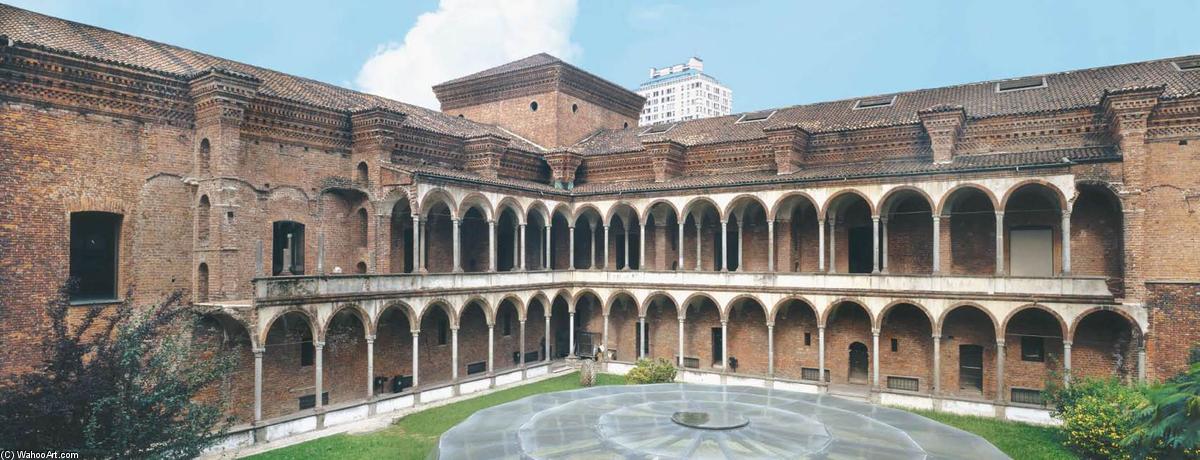
Cortile della Speziera

1467 · Ospedale Maggiore, Milan

The Cortile della Speziera is a work attributed to the artist Filarete. This architectural creation dates to about 1467. The structure is part of the larger Ospedale Maggiore complex located in Milan, Italy. The site is currently the headquarters of the University of Milan.

9
Equestrian figure of Hector (1456) by Filarete

Equestrian figure of Hector

The equestrian figure of Hector, a work by the Florentine artist Antonio Averlino, ‘Filarete’, is a masterpiece of Renaissance bronze. Its creator was a scholar, architect and sculptor from the Quattrocento who initiated a popular new genre of sculpture in the Modern Age that involved creating small or medium-size bronze sculptures, perfecting the ancient Roman technique of lost-wax casting to create figures inspired by Antiquity. Filarete’s Hector shows the victorious…

The subjects that held Filarete's eye

The four subjects that come back most often in these originals, each with its finest example.

The museums that keep Filarete's originals

The 5 museums that hold the most of the paintings on this page.

Museum City Works by Filarete Paintings from this list
St. Peter's Basilica, Vatican CitySt. Peter's Basilica Vatican City 4 Bronze door (detail), Bronze door, Bronze door (detail)
Galleria degli Uffizi, FlorenceGalleria degli Uffizi Florence 2 Page from the Trattato d'architettura, Page from the Trattato d'architettura
Staatliche Kunstsammlungen, DresdenStaatliche Kunstsammlungen Dresden 1 Equestrian statue of Marcus Aurelius
Ospedale Maggiore, MilanOspedale Maggiore Milan 1 Cortile della Speziera
Museo Arqueológico Nacional, MadridMuseo Arqueológico Nacional Madrid 1 Equestrian figure of Hector

Filarete decade by decade: the original that defines each

Works per decade

Pick a decade to see the original that defines it.

Collectors' questions about Filarete's paintings

Which work is Filarete most famous for?Reveal the answer

Bronze door (detail) (1433), St. Peter's Basilica, Vatican City. Bronze door (1433) and Equestrian statue of Marcus Aurelius (1465) come next.

What age was Filarete when Bronze door (detail) was made?Reveal the answer

33 years old: Bronze door (detail) dates from 1433, and Filarete was born in 1400.

How many paintings did Filarete leave?Reveal the answer

Our catalog holds 9 works by Filarete, dated from 1433 to 1467.

In which museums do Filarete's masterpieces hang?Reveal the answer

Mostly in St. Peter's Basilica (Vatican City), Galleria degli Uffizi (Florence) and Staatliche Kunstsammlungen (Dresden). The museum table above lists them all.

In which years did Filarete paint the most famous works?Reveal the answer

In 1430s: 4 of the 9 works on this page were made then, Bronze door (detail) among them.

What are the first and the last famous originals of Filarete?Reveal the answer

On this page, the earliest is Bronze door (detail) (1433) and the latest Cortile della Speziera (1467).

Which subjects did Filarete choose most often?Reveal the answer

Byzantine influence (3), Renaissance art (2) and Relief sculpture (2), across the 9 works on this page.

Which technique did Filarete use most?Reveal the answer

Bronze, for 3 of the 9 works on this page.

Which Filarete works hang at the St. Peter's Basilica?Reveal the answer

Bronze door (detail), Bronze door and Bronze door (detail): the St. Peter's Basilica, Vatican City holds 4 of the works on this page.

Filarete: life and work

The Dawn of a New Era: Exploring the Art of the 1400s

The fifteenth century stands as a pivotal moment in art history, a time of profound transformation where the rigid formality of the Gothic era began to yield to the burgeoning dynamism and humanism of the Renaissance. While often viewed as a singular “Renaissance,” this period was far more nuanced, unfolding differently across Europe and marked by a fascinating interplay between established traditions and revolutionary innovations. This article delves into the world of artists who shaped this transformative century, exploring their lives, works, and lasting legacy. It’s crucial to remember that labeling art movements is often an oversimplification; the 1400s witnessed a gradual shift rather than a sudden revolution, with various styles and approaches coexisting within a complex artistic landscape.

Early Influences: Gothic Legacy and Emerging Styles

The artists of the early 1400s were deeply rooted in the traditions of the late Medieval period, particularly the Gothic style. Gothic art, characterized by its soaring verticality, intricate ornamentation, and emphasis on religious symbolism, provided a foundational framework for subsequent developments. However, even during this time, subtle changes were already taking place. Artists like Gentile da Fabriano (c. 1370-1427) exemplified the late Gothic style with his elaborate illuminated manuscripts and panel paintings—works like *The Carrying of the Cross* – a testament to the meticulous detail and rich color palettes characteristic of the period. Robert Campin, also known as the Master of Flémalle (ca. 1375-1444), further refined this style with his realistic depictions of everyday life within religious settings, showcasing an increasing interest in portraying human figures with greater naturalism. Simultaneously, in Northern Europe, artists like Jan van Eyck were experimenting with oil paints, a medium that would revolutionize painting techniques and allow for unprecedented levels of detail and luminosity. The influence of Byzantine art, particularly its use of gold leaf and symbolic imagery, continued to be felt throughout the century, providing a rich source of inspiration for many artists.

Florentine Innovation: The Rise of Humanism

Florence emerged as the epicenter of artistic innovation during the 1400s, largely due to the patronage of wealthy families like the Medici. This city-state fostered an environment where humanist ideals—a renewed interest in classical antiquity and a celebration of human potential—were embraced by artists and intellectuals alike. Filippo Brunelleschi (1377-1446), initially known for his architectural achievements, including the innovative design of the Florence Baptistery doors, also contributed significantly to painting through his meticulous study of perspective – a technique that would become central to Renaissance art. Lorenzo Ghiberti (ca. 1378-1455) won the competition for those same Baptistery doors, demonstrating the power of artistic skill and patronage in shaping Florentine culture. Donatello (c. 1386-1466), a sculptor who profoundly influenced subsequent generations, pushed the boundaries of realism and emotional expression in his works, notably his iconic bronze statue of David – a revolutionary depiction of the biblical hero that challenged traditional notions of beauty and heroism. Masaccio (1401-1428) is considered one of the pioneers of Renaissance painting, introducing linear perspective and chiaroscuro (the use of light and shadow) to create a sense of depth and volume in his frescoes, such as those in the Brancacci Chapel.

Beyond Italy: Artistic Developments Across Europe

While Florence led the charge, artistic developments were not confined to Italy. In Flanders (modern-day Belgium), artists like Jan van Eyck (c. 1390-1441) and Rogier van der Weyden (c. 1390-1464) pioneered oil painting techniques, achieving remarkable levels of detail and realism in their portraits and religious scenes. The Limbourg Brothers, working in Bruges, created exquisitely detailed illuminated manuscripts that showcased a sophisticated understanding of perspective and color theory. In Spain, artists like Pedro Berruguete (c. 1407-1463) continued to develop the Gothic style while incorporating elements of Italian Renaissance art. Throughout Europe, artists were experimenting with new materials, techniques, and subject matter, reflecting the changing social, political, and intellectual landscape of the time.

Legacy and Historical Significance

The 1400s witnessed a fundamental shift in artistic thinking—a move away from purely symbolic representation towards a more naturalistic and human-centered approach. The innovations in perspective, anatomy, and color theory laid the groundwork for the High Renaissance of the following century. Artists like Donatello and Masaccio challenged established conventions and paved the way for future generations of artists to explore new possibilities. While the period was marked by continuity with the Gothic tradition, it also represented a crucial step towards the artistic achievements that would define the Renaissance—a testament to the enduring power of human creativity and innovation. The legacy of these 1400s artists continues to inspire and influence art today, reminding us of the rich and complex history of Western art.