The Dawn of Byzantium: From Roman Roots to a New Aesthetic
The Byzantine Empire, also known as the Eastern Roman Empire, was the continuation of the Roman Empire centred on Constantinople during late antiquity and the Middle Ages. Having survived the events that caused the fall of the Western Roman Empire in...
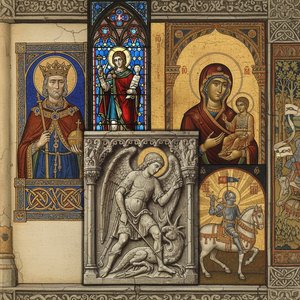
The story of Byzantine art isn’t one of abrupt creation, but rather a graceful evolution—a metamorphosis from the classical grandeur of Rome into something uniquely its own. Following Constantine I's pivotal decision to legalize Christianity and relocate the imperial capital to Constantinople in 330 AD, a fascinating cultural shift began. While the Western Roman Empire grappled with decline, the East flourished, inheriting and transforming Greco-Roman artistic traditions. The early centuries witnessed a blending of pagan motifs with emerging Christian iconography, a delicate dance between old beliefs and new faith. This wasn’t simply a replacement of one aesthetic for another; it was a synthesis, a layering of styles that would define the Byzantine visual language for over a millennium. The foundations were laid in monumental architecture – early churches like those commissioned by Constantine himself—structures designed not merely as places of worship but as tangible expressions of imperial power and divine authority. These spaces, though still echoing Roman forms, began to incorporate elements that foreshadowed the distinctive character of Byzantine art: richer ornamentation, a greater emphasis on interior space, and an increasing use of mosaics to adorn walls with shimmering depictions of biblical scenes.
Iconography & Symbolism: The Language of Divine Communication
At the heart of Byzantine artistic expression lies a profound commitment to symbolism. Unlike Western art’s pursuit of naturalistic representation, Byzantine artists prioritized conveying spiritual truths over accurate depiction. Icons—painted images of Christ, Mary, and the saints—were not merely portraits but windows into the divine realm, believed to possess sacred power. Gold backgrounds weren't simply decorative; they represented the unearthly light of heaven, enveloping figures in an aura of transcendence. The elongated proportions of bodies, often with large eyes and serene expressions, were deliberate choices intended to evoke a sense of otherworldliness and spiritual contemplation. Every detail held meaning: the direction of a gaze, the color of robes, the arrangement of hands—all served as visual cues guiding viewers towards deeper theological understanding. Consider the *Deesis* mosaic in Hagia Sophia, where Christ is flanked by Mary and John the Baptist pleading for humanity’s salvation; it's not just an image, but a powerful statement about intercession and divine mercy. This emphasis on symbolism extended beyond icons to encompass all aspects of Byzantine art, transforming every surface into a carefully constructed theological narrative.
Architectural Marvels: Hagia Sophia and the Byzantine Cathedral
 Dumbarton Oaks
Discover Dumbarton Oaks in Washington, D.C.! Renowned for Byzantine & Pre-Columbian art, historic gardens, and world-class collections. Explore rich history, stunning architecture, and cultural exhibitions in a unique museum experience.
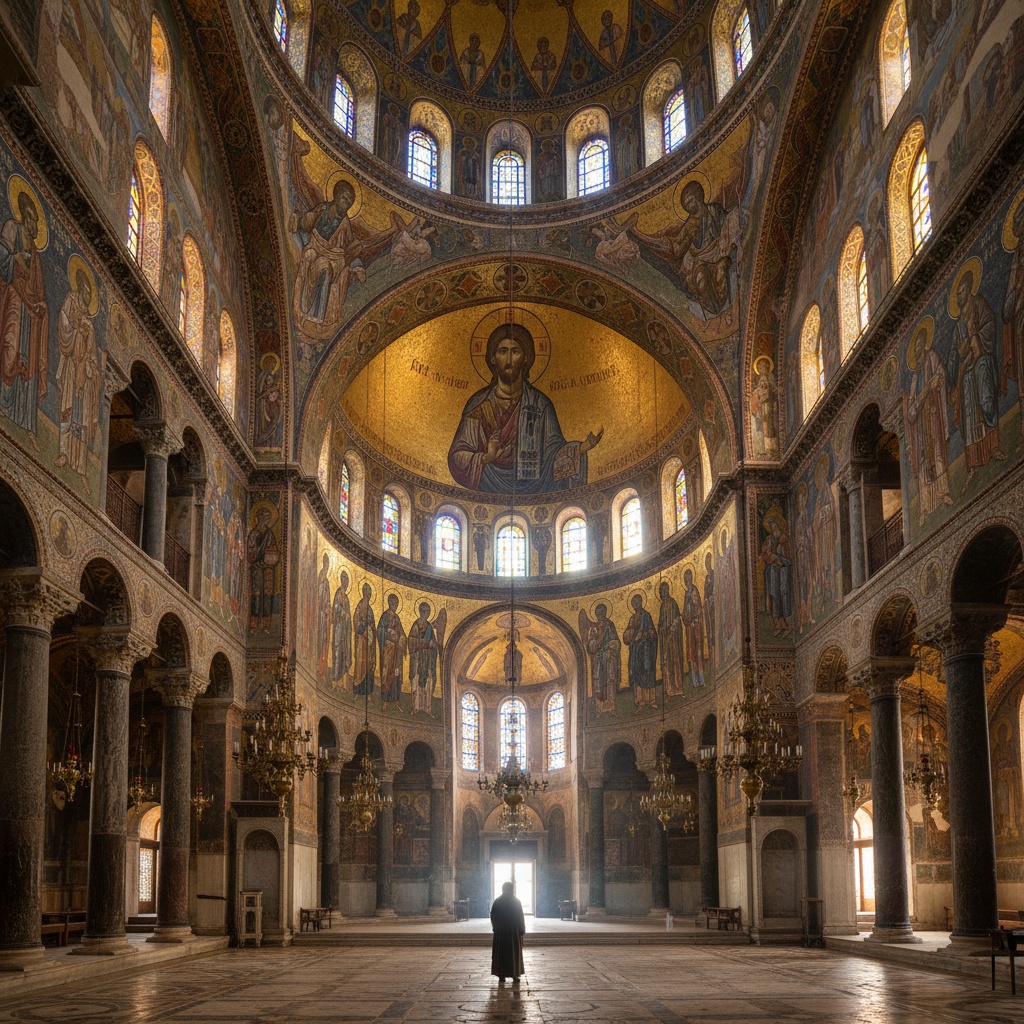
No discussion of Byzantine art is complete without acknowledging the architectural masterpiece that is Hagia Sophia in Constantinople. Commissioned by Emperor Justinian I in 537 AD, it stands as a testament to the empire’s ambition, wealth, and engineering prowess. The sheer scale of the structure—its massive dome soaring over an expansive interior—was intended to inspire awe and convey the power of God. The innovative use of pendentives allowed for the construction of this enormous dome without relying on traditional Roman buttressing systems, creating a sense of weightlessness and ethereal beauty. Light flooded the space through hundreds of windows, illuminating the shimmering mosaics that adorned the walls and ceilings. Hagia Sophia wasn’t just a church; it was a symbol of imperial authority, a reflection of Constantinople's status as the “New Rome.” The design influenced countless churches throughout the Byzantine world, establishing a distinctive architectural style characterized by its central dome, elaborate ornamentation, and emphasis on interior space. The basilica of San Vitale in Ravenna, Italy, though built under different political circumstances, exemplifies this influence with its stunning mosaics and complex theological programs.
The Iconoclastic Controversy: A Crisis of Faith and Artistic Expression
The 8th and 9th centuries witnessed a period of intense religious and artistic turmoil known as the Iconoclastic Controversy. Driven by theological debates over the veneration of icons, iconoclasts—those who opposed their use—argued that images violated divine law and encouraged idolatry. This led to widespread destruction of religious art, with countless mosaics and icons being removed or defaced. The controversy wasn’t simply a matter of artistic preference; it was a fundamental clash over the nature of faith and the role of imagery in worship. For nearly a century, Byzantine art suffered a significant setback, with artists focusing on less controversial forms like geometric patterns and architectural decoration. However, the eventual triumph of iconophiles—those who supported the veneration of icons—in 843 AD marked a turning point. Icons were restored to their central role in religious life, and a renewed emphasis was placed on iconography as a means of divine communication. Images such as *Christ Pantocrator* became increasingly standardized, reflecting a desire for theological consistency and artistic purity.
Byzantine Art Beyond Constantinople: Regional Variations and Influence
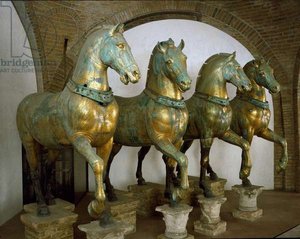 Museo Marciano
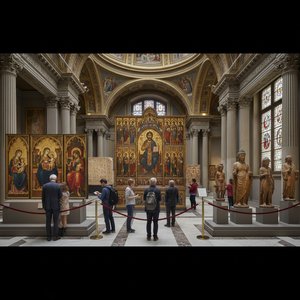
Discover Museo Marciano in Venice, home to stunning Byzantine art, the iconic St. Mark's Horses (Quadriga), ancient sculptures, liturgical treasures, and masterpieces by Paolo Veneziano. A must-visit for art and history lovers!
While Constantinople served as the heart of the Byzantine Empire, its artistic influence extended far beyond its walls. Regional variations emerged throughout the empire, reflecting local traditions and cultural influences. In Italy, particularly in cities like Ravenna and Venice—as exemplified by the Museo Marciano with its stunning collection including works by Paolo Veneziano—Byzantine art blended with Western styles, resulting in unique hybrid forms. In Egypt and Syria, Coptic and Syrian artistic traditions influenced mosaic techniques and icon painting. The Macedonian dynasty (867–1056 AD) oversaw a period of renewed expansion and cultural flourishing, spreading Byzantine art throughout the Balkans and Russia. It was through this influence that Eastern Orthodox Christianity—and its associated artistic traditions—took root in Slavic lands. The mosaics and frescoes found in churches across Greece, Serbia, Bulgaria, and Russia bear witness to the enduring legacy of Byzantine artistry.
A Lasting Legacy: Byzantium's Enduring Impact on Western Art
Despite the fall of Constantinople to the Ottoman Empire in 1453 AD, the legacy of Byzantine art continues to resonate today. Its influence can be seen in countless works of Western art, from medieval illuminated manuscripts and mosaics to Renaissance paintings and architecture. The emphasis on symbolism, rich ornamentation, and spiritual depth—characteristics that defined Byzantine art—found their way into Western artistic traditions, shaping the aesthetic sensibilities of generations of artists. The techniques developed by Byzantine mosaicists were adopted and adapted by Italian artists, contributing to the splendor of Romanesque and Gothic churches. Even in modern art, echoes of Byzantine style can be found in abstract expressionism and other movements that prioritize emotional impact over naturalistic representation. OriginalUniqueArt.com offers a unique opportunity to explore this rich artistic heritage through high-quality reproductions of iconic Byzantine masterpieces, allowing you to bring the beauty and spiritual power of this extraordinary civilization into your own home. From custom paintings inspired by ancient icons to detailed recreations of Hagia Sophia’s mosaics, we strive to make the art of Byzantium accessible to all.